(7% discount is applied at checkout)
Cart is empty
Your go-to destination for cutting-edge server products
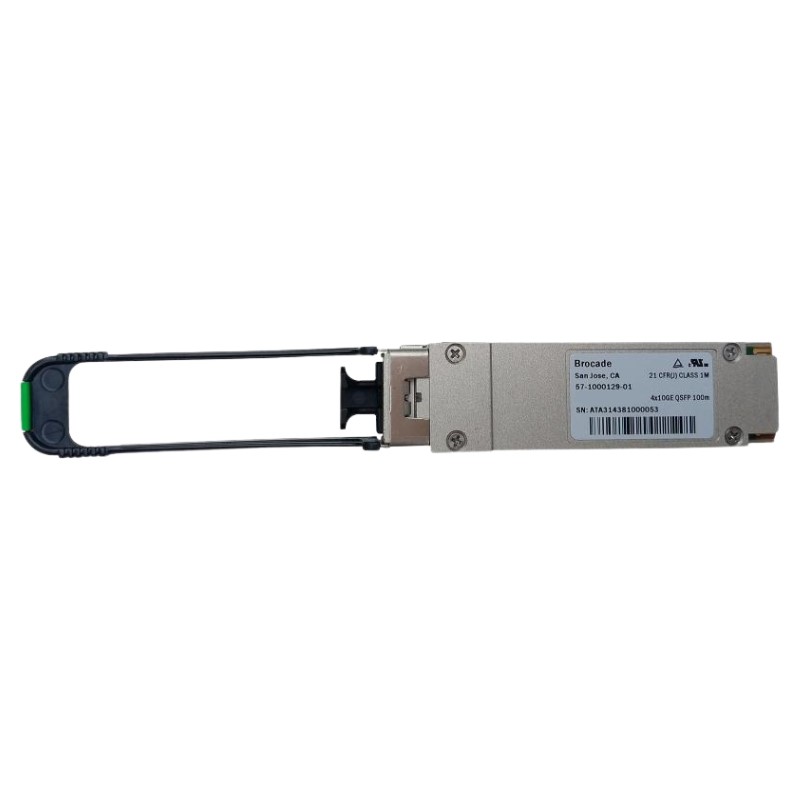


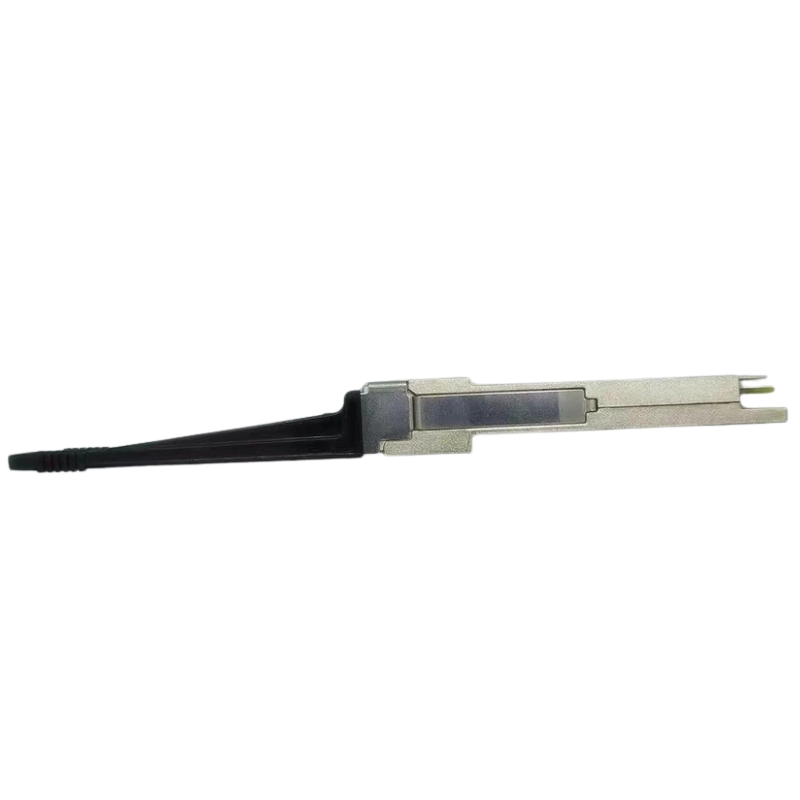
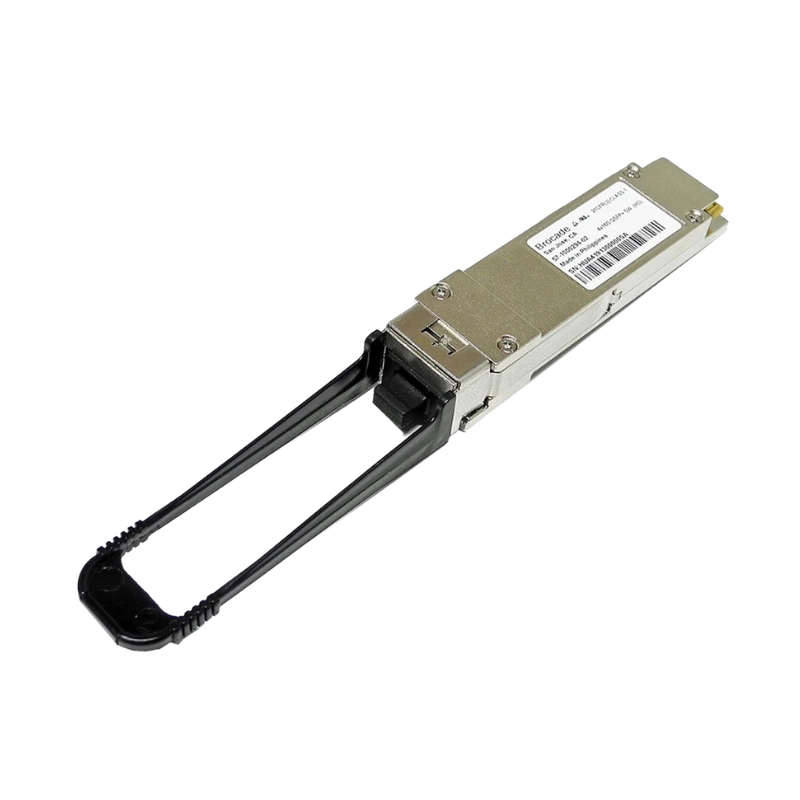
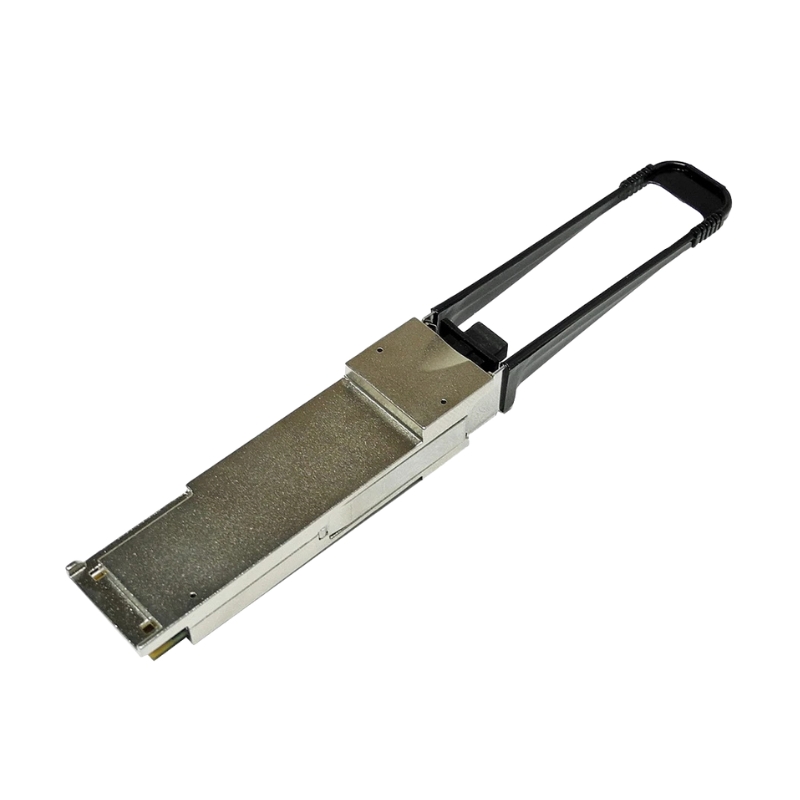
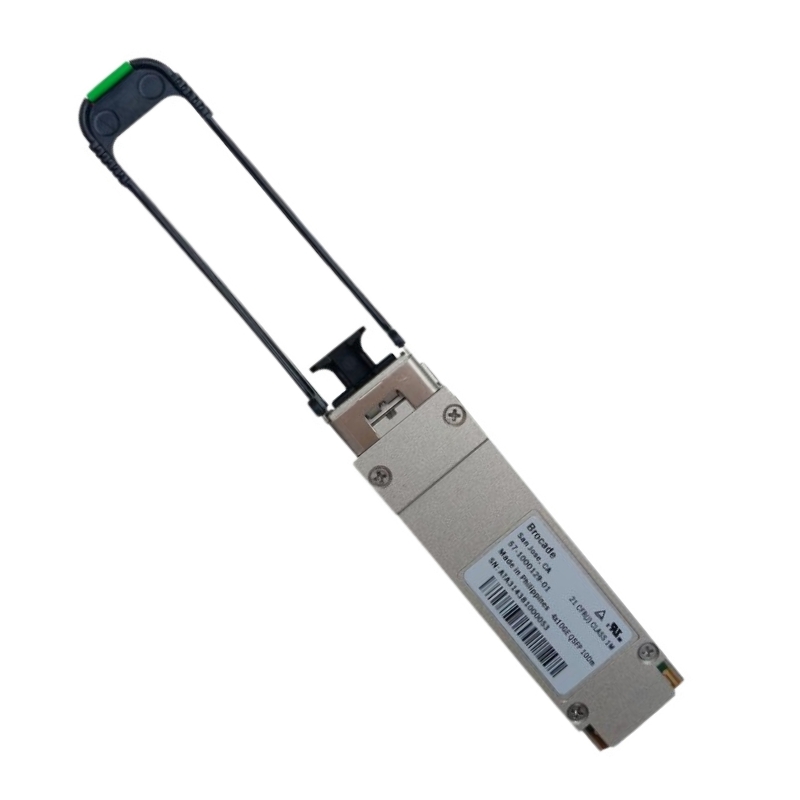
Brocade 57-1000129-01 40GbE SR4 MMF 850nm QSFP+ Transceiver. Excellent Refurbished with 1 year replacement warranty
The Brocade 57-1000129-01 40GbE SR4 MMF 850nm QSFP+ Transceiver Module is a high-performance optical networking component designed to deliver ultra-fast data transmission across modern enterprise and data center environments. Engineered for reliability, scalability, and seamless interoperability, this transceiver supports 40 Gigabit Ethernet (40GbE) connectivity using multimode fiber infrastructure.
The Brocade 57-1000129-01 40GbE SR4 MMF 850nm QSFP+ Transceiver Module represents a high-performance optical networking component designed for next-generation enterprise and hyperscale data center environments. Engineered to deliver reliable 40 Gigabit Ethernet (40GbE) throughput, this QSFP+ transceiver module plays a crucial role in enabling fast, low-latency, and high-bandwidth communication across switching fabrics, storage networks, and server interconnects. Built on Short Reach 4-lane (SR4) parallel optics architecture, the module supports multimode fiber (MMF) connectivity using an 850nm VCSEL-based laser array, ensuring efficient data transmission over short to medium distances within rack-scale and row-scale deployments.
The Brocade 57-1000129-01 is widely deployed in environments where predictable performance, energy efficiency, and high port density are critical. Its QSFP+ form factor allows four independent 10Gbps lanes to operate simultaneously, aggregating into a unified 40Gbps channel. This design makes it highly suitable for aggregation layers, spine-leaf architectures, high-performance computing clusters, and storage area networks where consistent throughput and deterministic latency are essential.
At the core of the Brocade 57-1000129-01 transceiver module is a parallel optics architecture that enables simultaneous transmission across four optical lanes. Each lane operates at 10Gbps, combining to achieve an aggregated bandwidth of 40Gbps. This parallelism is achieved through vertical-cavity surface-emitting lasers (VCSELs), which emit light at a wavelength of 850nm optimized for multimode fiber transmission.
Unlike serial optical solutions that rely on wavelength multiplexing, SR4 technology leverages spatial multiplexing, meaning each data lane has a dedicated fiber pair. This reduces complexity in signal processing while maintaining high reliability and low latency performance. The architecture also reduces the need for heavy digital signal processing, thereby minimizing power consumption and improving thermal efficiency in dense switching environments.
The QSFP+ (Quad Small Form-factor Pluggable Plus) interface used in the Brocade 57-1000129-01 is designed to support high-density networking equipment. It integrates four transmit and four receive channels in a compact hot-pluggable module. The electrical interface connects directly to the host system via a standardized edge connector, ensuring compatibility with a wide range of Brocade switches and networking hardware supporting 40GbE uplinks.
The module’s electrical subsystem is optimized for low power consumption, typically operating within a tightly controlled power envelope that allows for efficient thermal management. This is especially important in large-scale deployments where hundreds or thousands of transceivers may be operating simultaneously within a single data center fabric.
The SR4 designation in the Brocade 57-1000129-01 refers to Short Reach 4-lane optical transmission technology. This standard is specifically optimized for multimode fiber infrastructure, typically OM3 or OM4 fiber types, which are widely deployed in modern data centers. The 850nm wavelength used in SR4 modules ensures optimal signal integrity over short distances while minimizing attenuation and dispersion effects.
In practical deployments, SR4 transceivers are used to connect top-of-rack (ToR) switches to aggregation or spine switches within the same data hall. This makes them ideal for environments where ultra-high bandwidth is required without the cost and complexity of long-range single-mode fiber solutions.
The Brocade 57-1000129-01 is designed with a strong emphasis on minimizing latency across optical links. By utilizing direct modulation VCSELs and parallel optical channels, the module reduces signal processing overhead. This ensures that data packets traverse the network fabric with minimal delay, which is particularly important for latency-sensitive applications such as financial trading systems, virtualization clusters, and real-time analytics platforms.
High throughput performance is further enhanced by the module’s ability to maintain stable signal integrity even under heavy traffic loads. This stability is essential in environments where sustained 40GbE traffic is required without packet loss or jitter degradation.
The use of 850nm wavelength vertical-cavity surface-emitting lasers is a defining characteristic of the Brocade 57-1000129-01 transceiver module. VCSEL technology is widely adopted in short-reach optical communication due to its low power consumption, high modulation speed, and cost efficiency. These lasers emit light perpendicular to the surface of the semiconductor wafer, allowing for precise beam control and efficient coupling into multimode fiber cores.
This optical design significantly reduces manufacturing complexity while maintaining high signal fidelity. It also contributes to improved reliability and longer operational lifespan, which are critical factors in enterprise-grade networking equipment.
The Brocade 57-1000129-01 is designed specifically for multimode fiber environments, including OM3 and OM4 cabling infrastructures. These fiber types are optimized for high-bandwidth short-distance transmission, supporting effective data movement within data centers and enterprise campuses.
Signal propagation at 850nm wavelength benefits from reduced attenuation over short distances, enabling stable transmission performance. However, as distance increases, modal dispersion becomes a limiting factor, making this module best suited for intra-data center connectivity rather than long-haul transmission.
The Brocade 57-1000129-01 40GbE SR4 QSFP+ module is optimized for short-reach deployments typically ranging from a few meters up to approximately 100 meters depending on fiber quality and installation conditions. This makes it highly effective for rack-to-rack, row-to-row, and top-of-rack switch interconnect scenarios.
In modern data center architectures, especially leaf-spine topologies, this module provides the backbone for high-speed uplinks between switching layers. Its predictable performance characteristics ensure stable network behavior even under heavy east-west traffic loads.
Scalability is a key advantage of the Brocade SR4 QSFP+ module. By leveraging parallel optics and compact form factor design, network architects can deploy high-density switching fabrics without sacrificing performance or increasing physical footprint. This scalability is particularly important in cloud computing environments where demand for bandwidth continues to grow exponentially.
The Brocade 57-1000129-01 is engineered for seamless compatibility with Brocade Ethernet switch platforms that support QSFP+ interfaces. This includes high-performance chassis and fixed-form-factor switches designed for enterprise and service provider environments.
Integration is facilitated through standardized optical and electrical specifications that ensure plug-and-play functionality. This reduces deployment complexity and allows network administrators to quickly scale infrastructure without extensive reconfiguration.
While optimized for Brocade ecosystems, the module also adheres to industry-standard QSFP+ and IEEE 802.3ba 40GbE specifications, enabling interoperability with compatible third-party networking equipment. However, optimal performance and support are typically achieved within validated Brocade configurations, where firmware and hardware compatibility are fully aligned.
The Brocade 57-1000129-01 is frequently deployed in spine-leaf architectures where high-bandwidth interconnects are required between switching layers. Its 40GbE capability ensures that leaf switches can communicate efficiently with spine switches, enabling non-blocking network designs that support large-scale virtualization and cloud workloads.
In high-performance computing environments, the need for low-latency, high-throughput communication is paramount. The SR4 QSFP+ module supports rapid data exchange between compute nodes and storage arrays, enabling efficient parallel processing and distributed computing workflows.
Similarly, in storage area networks, the module facilitates fast data replication, backup operations, and real-time data access, ensuring that storage systems can keep pace with demanding application workloads.
Ensuring optimal performance of the Brocade 57-1000129-01 involves maintaining high-quality optical link conditions. This includes proper cable management, avoiding excessive bending of fiber cables, and ensuring that connectors remain free from dust and contamination.
Signal integrity is also influenced by fiber type and installation quality. OM4 multimode fiber typically provides better performance margins compared to OM3, especially in slightly longer short-reach deployments.
Network administrators can optimize bandwidth utilization by implementing efficient traffic engineering strategies at the switch level. By balancing workloads across available 40GbE links, overall network performance can be maximized while avoiding congestion and bottlenecks.
The Brocade 57-1000129-01 adheres to IEEE 802.3ba standards governing 40 Gigabit Ethernet transmission over optical fiber. This ensures interoperability and performance consistency across compliant networking equipment.
Manufacturing processes for enterprise-grade transceivers follow strict quality assurance protocols to ensure reliability and longevity. Each module undergoes rigorous testing to validate optical performance, thermal stability, and electrical compliance before deployment in production environments.
As data centers evolve toward higher-speed architectures such as 100GbE and beyond, the Brocade 57-1000129-01 continues to play an important role in transitional and hybrid environments. Many organizations rely on 40GbE infrastructure as a stable intermediate layer while gradually upgrading backbone connectivity.
This transitional role ensures cost-effective scaling while maintaining operational continuity in enterprise networks undergoing modernization.


 Contact Us
 Information
 Catalog
 Solid State Drives (SSD)
 Network Switches
 Hard Disk Drives
 HBA & Controllers
 PC & Servers
 PC & Server Memory
 CPU & Processors
 Network Routers
 Power Supplies
 Tape Drives & Libraries
 Network Devices
 Computer & Network Cables