(7% discount is applied at checkout)
Cart is empty
Your go-to destination for cutting-edge server products
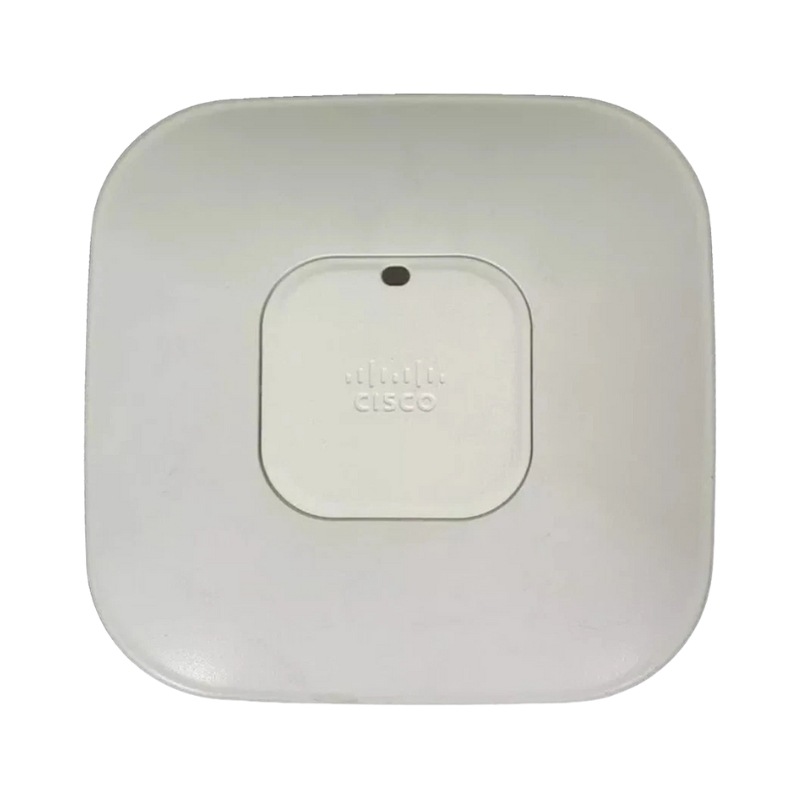


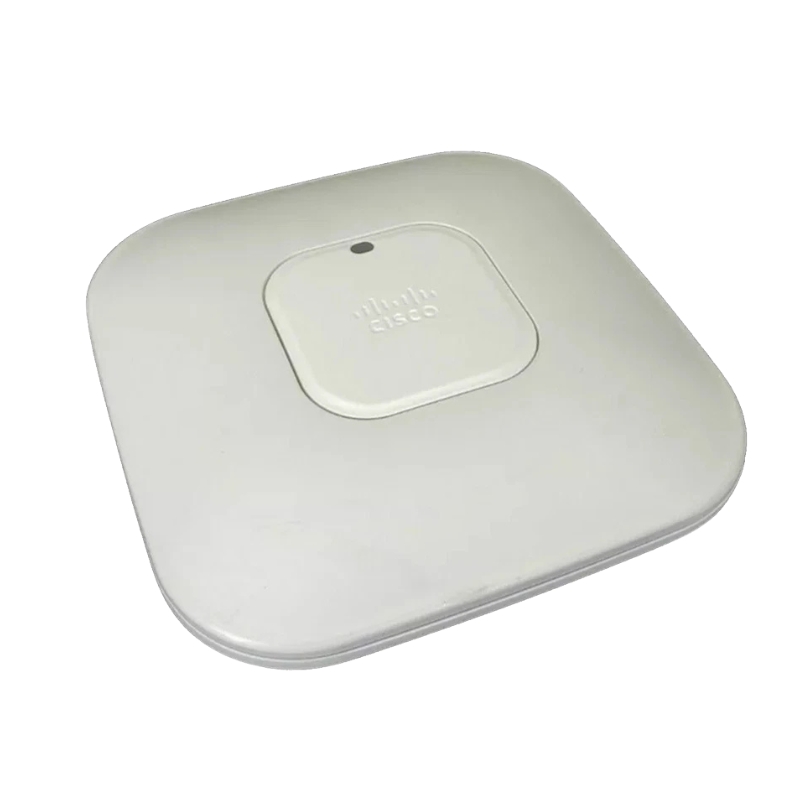
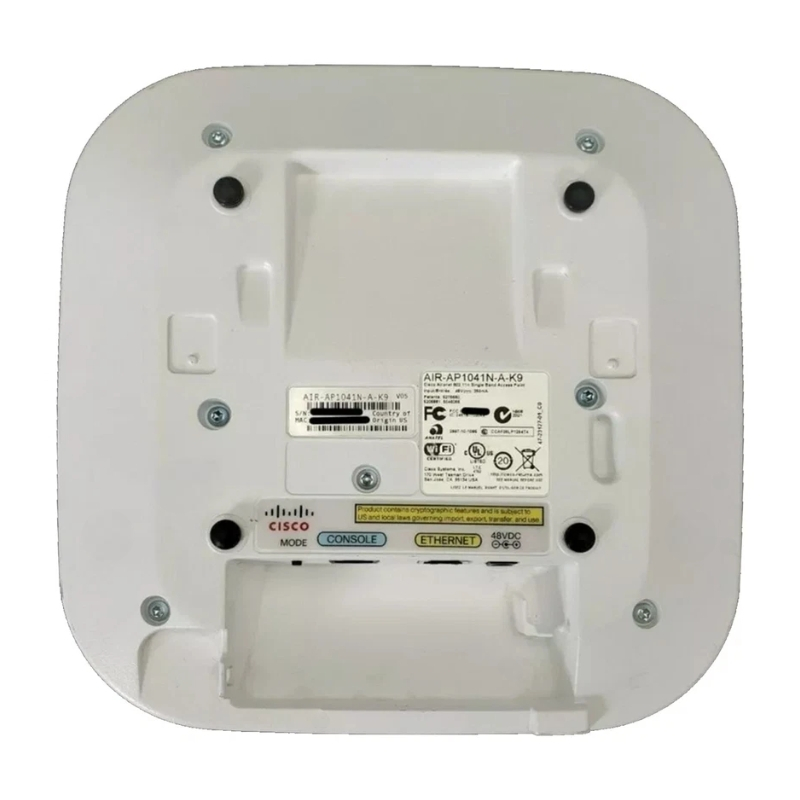
Cisco AIR-AP1041N-A-K9 1041N Wireless Access Point, 300MBPS. Excellent Refurbished with 1 year replacement warranty
| SKU/MPN | Warranty | Price | Condition | You save |
|---|---|---|---|---|
| AIR-AP1041N-A-K9 | 1 Year Warranty | $60.00 | Excellent Refurbished | You save: $21.00 (26%) |
| AIR-AP1041N-A-K9 | 1 Year Warranty | $115.00 | Factory-Sealed New Retail in Original Box (FSB) | You save: $40.25 (26%) |
The Cisco AIR-AP1041N-A-K9 is a reliable 802.11n wireless access point engineered to deliver stable 300 Mbps connectivity across enterprise and commercial environments. Designed for consistent indoor performance, it supports secure wireless communication, flexible network integration, and dependable throughput for everyday business applications.
The Cisco AIR-AP1041N-A-K9 Wireless Access Point is designed as a compact enterprise-grade connectivity device positioned within the 802.11n wireless networking category. It is engineered to support efficient wireless coverage for small to medium-scale environments, offering stable connectivity and consistent throughput performance up to 300 Mbps under optimal radio conditions. This device belongs to a class of wireless access systems that emphasize simplicity of deployment, reliable radio performance, and seamless integration into structured network environments.
Within modern wireless communication frameworks, this access point plays a role in bridging wired Ethernet infrastructure with wireless client devices such as laptops, mobile devices, and embedded network endpoints. Its design prioritizes consistent RF performance, manageable configuration options, and compatibility with established network management systems used in enterprise and branch environments.
The Cisco AIR-AP1041N-A-K9 operates based on the IEEE 802.11n wireless standard, which introduced significant improvements over earlier wireless protocols by incorporating multiple-input multiple-output techniques, channel bonding, and improved modulation efficiency. These enhancements allow the device to achieve higher throughput levels while maintaining stable connectivity across varying environmental conditions.
The implementation of 802.11n technology enables the access point to support both single-stream and enhanced data transmission scenarios, ensuring compatibility with legacy wireless devices while still offering improved performance for modern clients. This dual compatibility makes it suitable for mixed-device environments where wireless hardware diversity is common.
The maximum theoretical wireless data rate of 300 Mbps is achieved through optimized channel usage and radio efficiency techniques. This performance level is particularly suitable for environments requiring consistent data transfer such as file sharing, web applications, cloud-based services, and VoIP communication systems. While real-world throughput depends on environmental conditions, signal strength, and client capabilities, the architecture is designed to maintain stable performance across typical operational scenarios.
This throughput capability is distributed dynamically among connected devices, allowing multiple clients to maintain simultaneous connections without significant degradation in performance. The radio system is tuned to handle congestion efficiently, minimizing packet loss and maintaining communication stability.
The physical design of the Cisco AIR-AP1041N-A-K9 emphasizes compactness and deployment flexibility. Its form factor is optimized for ceiling mounting, wall installation, or discreet placement in office environments. This allows the device to integrate seamlessly into professional interiors without requiring extensive structural modifications.
The enclosure is engineered for heat dissipation efficiency and long-term operational stability. Internal components are arranged to minimize thermal accumulation, ensuring consistent performance during extended usage periods. The external casing supports durability requirements commonly associated with enterprise networking equipment.
The antenna system within the device is built to provide balanced wireless coverage across a defined operational radius. The internal antenna configuration is optimized for omnidirectional signal distribution, enabling consistent connectivity in open office layouts and moderately partitioned environments.
Signal propagation is managed through carefully tuned RF pathways, ensuring minimal interference and improved spatial coverage. The antenna system is calibrated to maintain stable communication with multiple clients simultaneously, even in environments with moderate wireless congestion.
The access point includes Ethernet connectivity to serve as the backbone interface between wireless clients and wired network infrastructure. This connection supports data aggregation and uplink transmission to routers, switches, or core network systems.
The wired interface ensures that wireless traffic is efficiently routed into broader network architectures, enabling seamless integration with existing enterprise infrastructure. This dual connectivity model allows the device to function as a bridge between wireless and wired communication domains.
In small office environments, the Cisco AIR-AP1041N-A-K9 serves as a central connectivity node, enabling wireless access for employees, guest users, and connected office equipment. It supports common business applications such as email communication, document management systems, and cloud-based productivity platforms.
The device is particularly effective in environments where a single access point can cover a complete office floor or segmented workspace. Its balanced performance characteristics make it suitable for organizations with moderate wireless density requirements.
For branch office deployments, the access point provides reliable wireless access while maintaining compatibility with centralized network management systems. This allows administrators to maintain consistent configuration policies across distributed locations.
The device supports stable connectivity for remote employees and ensures that branch offices remain connected to central data resources. This is essential for organizations with geographically distributed operations requiring synchronized communication systems.
The Cisco AIR-AP1041N-A-K9 incorporates adaptive radio resource management techniques that allow it to adjust transmission behavior based on network conditions. This includes dynamic channel selection and power adjustment to minimize interference and optimize throughput.
These mechanisms help maintain consistent wireless performance in environments where multiple wireless networks coexist. By intelligently managing spectrum usage, the device reduces the likelihood of congestion and signal degradation.
Wireless interference from external sources can significantly impact performance in dense environments. The access point is designed to mitigate such interference through advanced signal processing and frequency management strategies.
These capabilities allow the device to maintain stable connections even in environments with overlapping wireless networks, ensuring that client devices experience minimal disruption during data transmission.
Security is a fundamental aspect of the Cisco AIR-AP1041N-A-K9 design. The device supports modern wireless encryption protocols that protect data transmissions between client devices and the access point. This ensures that sensitive information remains secure during wireless communication.
Encryption mechanisms are implemented at the hardware and software levels to provide layered protection against unauthorized access and data interception.
The access point supports authentication frameworks that allow network administrators to control which devices are permitted to connect. This helps maintain network integrity and prevents unauthorized usage.
Access control mechanisms can be configured to define user permissions and network segmentation rules, ensuring that different categories of users have appropriate levels of access.
The Cisco AIR-AP1041N-A-K9 is designed to integrate into centralized network management systems, enabling administrators to configure multiple access points from a single control interface. This simplifies deployment in larger environments where multiple units are required.
Centralized management allows for consistent configuration policies, firmware updates, and performance monitoring across the entire wireless infrastructure.
The device supports diagnostic functions that allow administrators to monitor wireless performance, client connectivity, and network health. These insights are essential for maintaining optimal operational conditions and identifying potential issues before they impact users.
Performance metrics such as signal strength, client distribution, and bandwidth usage can be analyzed to optimize network configuration and improve efficiency.
The internal architecture of the access point is optimized for thermal efficiency. Heat generated during operation is managed through passive cooling mechanisms that ensure stable performance without requiring active cooling components.
This contributes to long-term operational reliability, particularly in environments where continuous uptime is required.
The device is designed for continuous operation in professional environments. Its hardware components are selected for durability and long-term stability, ensuring consistent performance under sustained network load conditions.
This reliability makes it suitable for deployment in environments where downtime must be minimized and network availability is critical.
The Cisco AIR-AP1041N-A-K9 is capable of supporting multiple simultaneous wireless clients, including laptops, smartphones, tablets, and network-enabled devices. This makes it suitable for environments with diverse device ecosystems.
The access point manages bandwidth distribution dynamically to ensure fair allocation of network resources among connected clients.
The device supports backward compatibility with older wireless standards while still providing enhanced performance for modern 802.11n-capable devices. This ensures smooth integration into environments with mixed technology generations.
This compatibility reduces the need for immediate infrastructure replacement when upgrading network environments, allowing gradual transition strategies.
The antenna system is engineered to provide broad omnidirectional coverage, ensuring that wireless signals are evenly distributed across the intended deployment area. This reduces dead zones and improves overall connectivity consistency.
Coverage patterns are optimized for indoor environments such as offices, classrooms, and small commercial spaces where uniform signal distribution is required.
The device maintains stable signal performance even in environments with structural obstacles such as walls and partitions. This is achieved through adaptive signal modulation and robust RF design principles.
Such stability ensures that users experience consistent connectivity while moving within the coverage area.
The access point is designed to efficiently distribute available bandwidth among connected clients. This ensures that no single device monopolizes network resources, maintaining fairness and stability across the network.
Bandwidth allocation is dynamically adjusted based on usage patterns, ensuring optimal utilization of available wireless capacity.
The device incorporates techniques aimed at reducing latency during data transmission. This is particularly important for applications such as voice communication, video conferencing, and real-time collaboration tools.
Low latency performance contributes to improved user experience and smoother application responsiveness in network-dependent environments.


 Contact Us
 Information
 Catalog
 Solid State Drives (SSD)
 Network Switches
 Hard Disk Drives
 HBA & Controllers
 PC & Servers
 PC & Server Memory
 CPU & Processors
 Network Routers
 Power Supplies
 Tape Drives & Libraries
 Network Devices
 Computer & Network Cables