(7% discount is applied at checkout)
Cart is empty
Your go-to destination for cutting-edge server products
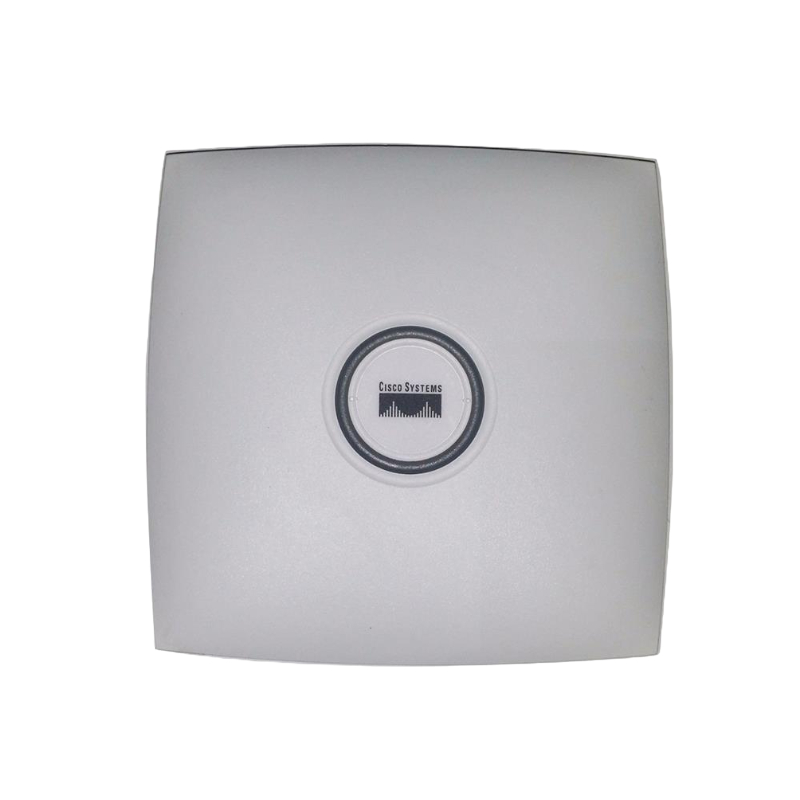


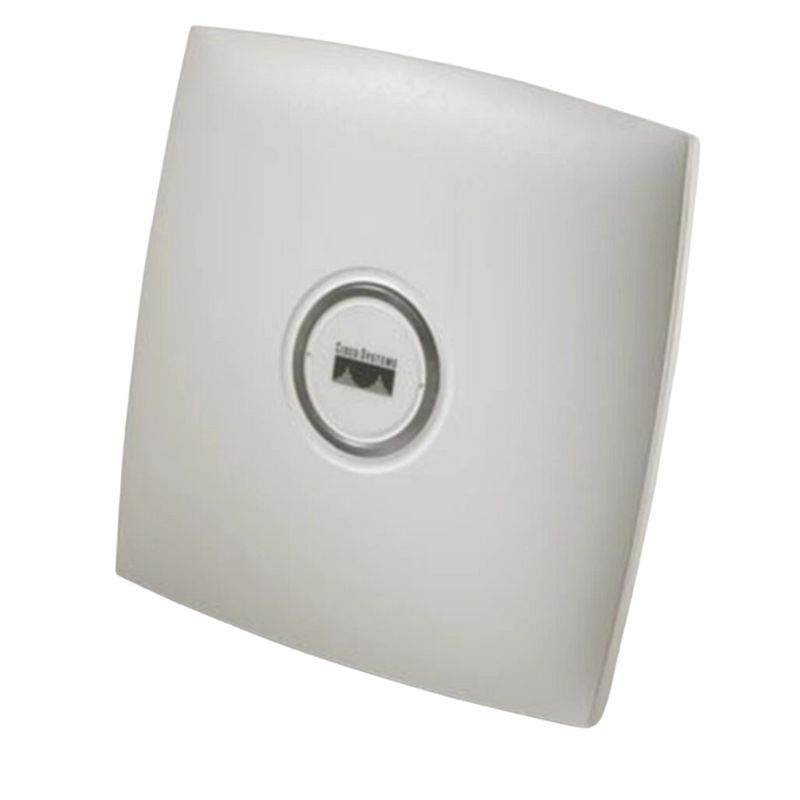
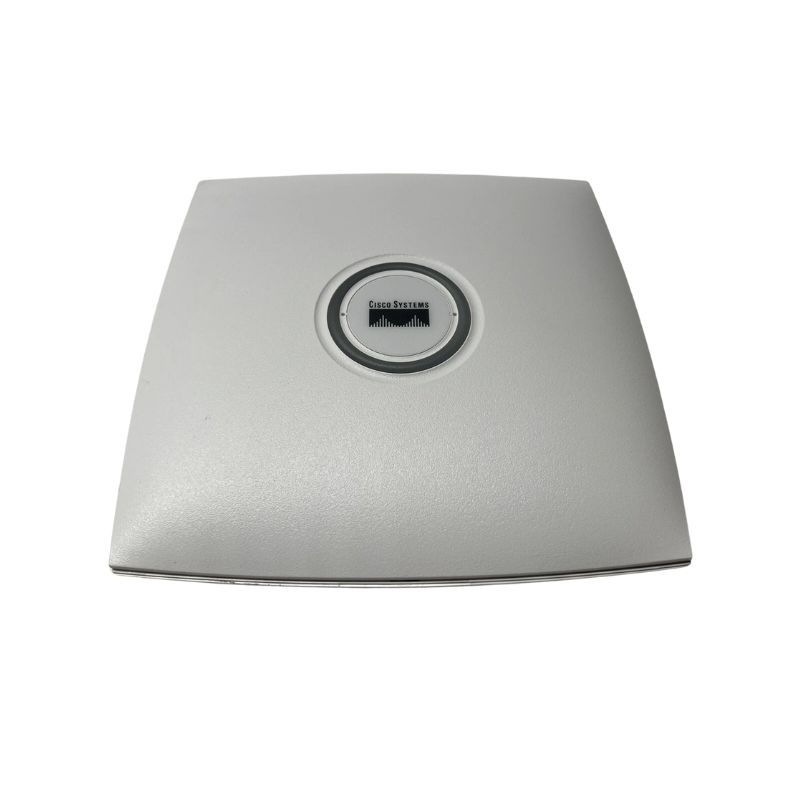
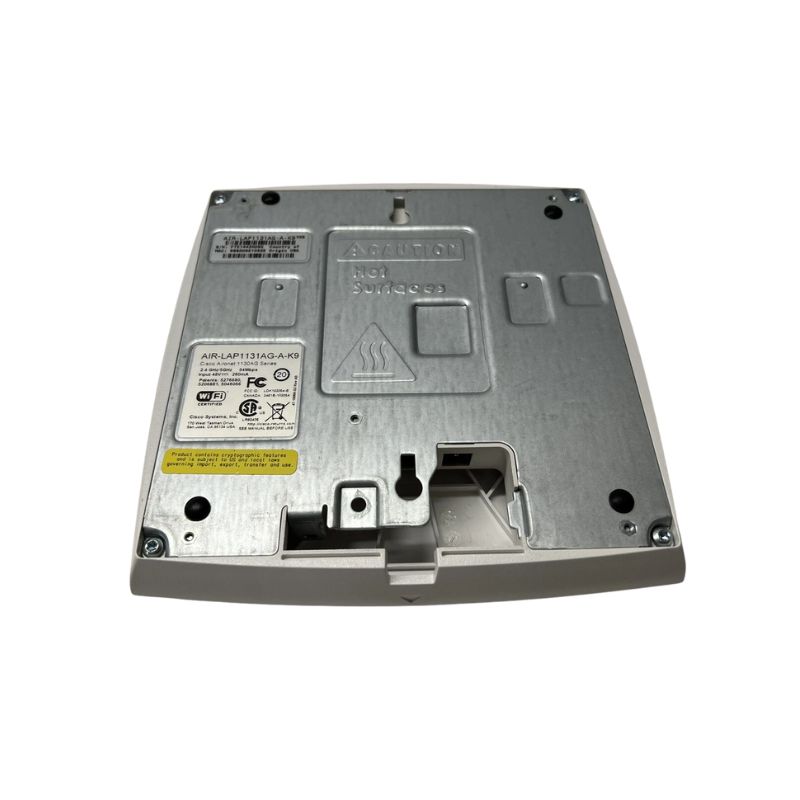
Cisco AIR-LAP1131AG-A-K9 108MBPS Wireless Access Point. Excellent Refurbished with 1 year replacement warranty
| SKU/MPN | Warranty | Price | Condition | You save |
|---|---|---|---|---|
| AIR-LAP1131AG-A-K9 | 1 Year Warranty | $48.00 | Excellent Refurbished | You save: $16.80 (26%) |
| AIR-LAP1131AG-A-K9 | 1 Year Warranty | $142.00 | Factory-Sealed New Retail in Original Box (FSB) | You save: $49.70 (26%) |
The Cisco AIR-LAP1131AG-A-K9 is a reliable enterprise-grade wireless access point designed to deliver stable and secure wireless connectivity for business environments. Supporting dual-band wireless technology, this access point operates on both 2.4 GHz and 5 GHz frequencies, providing improved network flexibility, enhanced coverage, and dependable performance for offices, educational institutions, retail stores, and commercial deployments.
The category surrounding the Cisco AIR-LAP1131AG-A-K9 108Mbps Wireless Access Point represents a foundational segment of enterprise-grade wireless networking infrastructure designed for scalable, secure, and dual-band connectivity in business environments. This class of wireless access points is widely recognized for its reliability in supporting legacy and modern wireless devices across mixed network ecosystems. Within structured IT deployments, this category plays a crucial role in bridging wired network backbones with wireless endpoints while maintaining stability, controlled access, and centralized management capabilities through controller-based architectures supported by enterprise networking solutions from
Enterprise wireless access points such as the Cisco AIR-LAP1131AG-A-K9 are designed to operate within a lightweight access point architecture, often referred to as LAP (Lightweight Access Point) mode. This architecture allows the device to offload most of its intelligence and configuration responsibilities to a Wireless LAN Controller (WLC), enabling streamlined management of multiple access points across distributed environments. This category of devices is engineered for environments requiring centralized policy enforcement, seamless roaming, and uniform configuration deployment across multiple physical locations.
The architecture of this category also emphasizes scalability, allowing network administrators to expand wireless coverage by deploying additional units without the need for individual device-level configuration. Instead, policies, SSIDs, authentication mechanisms, and security rules are pushed centrally, ensuring consistency and reducing operational overhead.
In lightweight mode, the Cisco AIR-LAP1131AG-A-K9 functions as a remote radio head that communicates with a wireless controller over CAPWAP or LWAPP protocols. This separation of control and data plane functions allows the access point to focus primarily on packet transmission and radio frequency optimization, while the controller manages authentication, roaming decisions, and configuration control. This model enhances network resilience and simplifies troubleshooting in complex enterprise environments.
The lightweight operation model also supports dynamic firmware updates, ensuring that all access points remain synchronized with the latest security patches and feature enhancements without manual intervention at each endpoint.
The Cisco AIR-LAP1131AG-A-K9 category is built around dual-band wireless support, enabling simultaneous or selectable operation in both 2.4 GHz and 5 GHz frequency bands. This dual-band capability is essential in enterprise environments where congestion, interference, and device diversity must be carefully managed. The 2.4 GHz band provides broader coverage and compatibility with legacy devices, while the 5 GHz band offers higher throughput and reduced interference for performance-sensitive applications.
This device supports IEEE 802.11a, 802.11b, and 802.11g standards, making it suitable for mixed-device environments where both legacy and modern wireless clients coexist. The combination of these standards within a single device category allows organizations to maintain backward compatibility while gradually transitioning to newer wireless technologies.
The 802.11a standard operates in the 5 GHz frequency band and is designed to provide higher data rates and reduced interference compared to 2.4 GHz systems. Within this category, the Cisco AIR-LAP1131AG-A-K9 leverages this band to deliver stable high-speed connectivity for applications such as voice over IP, video conferencing, and enterprise resource planning systems that require consistent throughput.
Because the 5 GHz band offers more available channels, network administrators can design more granular channel plans to reduce co-channel interference, which is particularly beneficial in dense office environments or multi-floor deployments.
The inclusion of 802.11b and 802.11g support ensures that older devices such as legacy laptops, handheld scanners, and industrial equipment remain operational within modern network infrastructures. This backward compatibility is a key feature of the Cisco AIR-LAP1131AG-A-K9 category, as many enterprise environments still rely on equipment that does not support newer wireless standards.
The 802.11g standard improves upon 802.11b by offering higher throughput while maintaining operation in the 2.4 GHz band. This dual compatibility allows for gradual network modernization without forcing immediate hardware replacement across all endpoints.
The antenna system in this category is engineered to provide omnidirectional coverage, ensuring that wireless signals propagate evenly throughout the deployment area. The integration of multiple antennas enables techniques such as diversity gain, which reduces packet loss caused by multipath interference and signal fading.
Signal optimization is further enhanced through adaptive radio management features that allow the access point to adjust transmission power and channel selection dynamically based on environmental conditions. This ensures consistent performance even in environments where RF interference fluctuates due to external factors.
Effective RF planning is essential in deployments involving the Cisco AIR-LAP1131AG-A-K9 category. Network administrators typically design channel allocation strategies that minimize overlap between adjacent access points. This reduces interference and ensures stable throughput across all connected devices.
The system’s ability to support both 2.4 GHz and 5 GHz bands allows for flexible channel distribution, with high-density areas often prioritized for 5 GHz deployment to maximize performance and reduce congestion.
Security is a core component of the Cisco AIR-LAP1131AG-A-K9 category, as wireless networks are inherently exposed to external threats due to their broadcast nature. This category supports multiple encryption protocols, authentication mechanisms, and network segmentation strategies to ensure data integrity and access control.
Enterprise deployments typically integrate this access point category with centralized authentication servers, enabling secure user verification through protocols such as RADIUS and 802.1X. This ensures that only authorized devices and users can access network resources, significantly reducing the risk of unauthorized intrusion.
The device supports advanced encryption standards designed to protect wireless communications from interception and tampering. WPA and WPA2 security frameworks are commonly implemented within this category to ensure robust encryption of transmitted data.
Authentication processes are managed centrally, allowing administrators to enforce consistent security policies across all deployed access points. This centralized model simplifies compliance with organizational security standards and regulatory requirements.
VLAN segmentation is frequently used in conjunction with the Cisco AIR-LAP1131AG-A-K9 category to isolate different types of network traffic. For example, guest users, internal employees, and IoT devices can each be assigned to separate VLANs, ensuring that sensitive internal resources remain protected from unauthorized access.
This segmentation strategy also improves network performance by reducing broadcast traffic within each logical segment, thereby enhancing overall efficiency.
The Cisco AIR-LAP1131AG-A-K9 category is designed to integrate seamlessly with centralized wireless LAN controllers, which serve as the operational brain of the wireless network. These controllers manage configuration, monitoring, and optimization tasks across all connected access points, enabling large-scale deployments with minimal manual configuration.
Network administrators can monitor performance metrics, adjust configuration parameters, and deploy firmware updates from a single interface, significantly reducing administrative complexity and improving operational efficiency.
Centralized configuration allows organizations to enforce uniform policies across all wireless access points. This includes SSID definitions, security protocols, bandwidth allocation rules, and quality of service parameters. The Cisco AIR-LAP1131AG-A-K9 category benefits significantly from this approach, as it ensures consistency and reduces configuration drift across distributed deployments.
Policy enforcement mechanisms also enable dynamic adjustment of network behavior based on user roles, application requirements, and traffic load conditions.
The Cisco AIR-LAP1131AG-A-K9 category is widely deployed across various industries due to its flexibility and reliability. In corporate office environments, it provides seamless connectivity for employees accessing cloud-based applications, internal databases, and communication platforms. In educational institutions, it supports high-density user environments where students and faculty require consistent wireless access.
Healthcare facilities also benefit from this category, as it enables secure transmission of patient data, medical imaging, and communication between medical devices. In each of these scenarios, the device’s dual-band capability and centralized management features ensure stable and secure network performance.
In high-density environments such as auditoriums, conference centers, and large classrooms, the Cisco AIR-LAP1131AG-A-K9 category plays a crucial role in managing simultaneous connections. Through intelligent load balancing and dynamic channel allocation, the access point ensures that performance remains stable even when hundreds of devices are connected simultaneously.
Seamless roaming is a key feature in enterprise wireless deployments. This category supports fast roaming capabilities that allow devices to transition between access points without noticeable interruption. This is particularly important in environments where users are constantly moving, such as hospitals, warehouses, and corporate campuses.
Maintaining optimal performance within a Cisco AIR-LAP1131AG-A-K9 deployment requires continuous monitoring of RF conditions, client distribution, and traffic patterns. Administrators often rely on centralized dashboards to identify congestion points and adjust configurations accordingly.
Regular firmware updates and configuration audits ensure that the network remains secure and performs efficiently over time. The lightweight architecture simplifies maintenance by allowing updates to be applied uniformly across all devices.
Diagnostic tools integrated into the controller environment allow administrators to analyze connectivity issues, signal strength variations, and client authentication failures. These tools are essential for maintaining uptime in mission-critical environments where wireless connectivity is a core operational requirement.
Environmental factors such as physical obstructions, electromagnetic interference, and device density can impact performance in this category. Proper site surveys and RF analysis are essential during deployment planning to ensure optimal placement and configuration of access points.


 Contact Us
 Information
 Catalog
 Solid State Drives (SSD)
 Network Switches
 Hard Disk Drives
 HBA & Controllers
 PC & Servers
 PC & Server Memory
 CPU & Processors
 Network Routers
 Power Supplies
 Tape Drives & Libraries
 Network Devices
 Computer & Network Cables