(7% discount is applied at checkout)
Cart is empty
Your go-to destination for cutting-edge server products
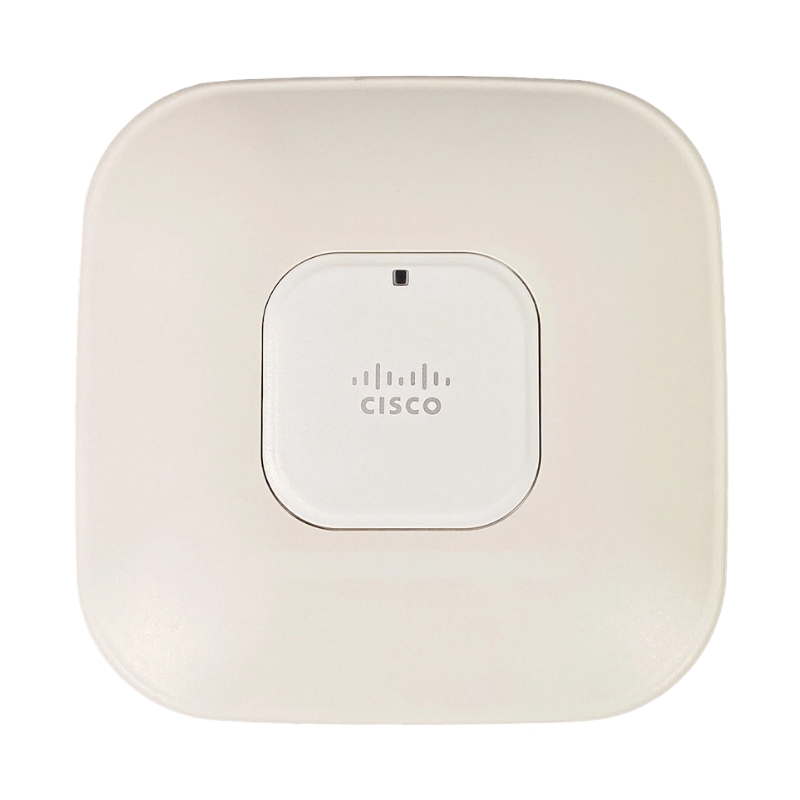


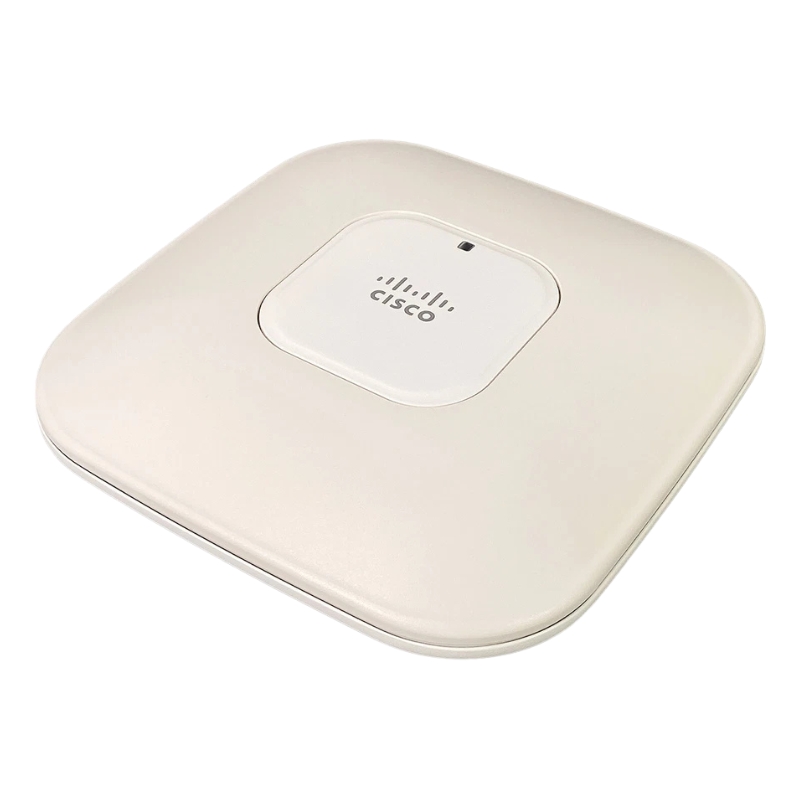
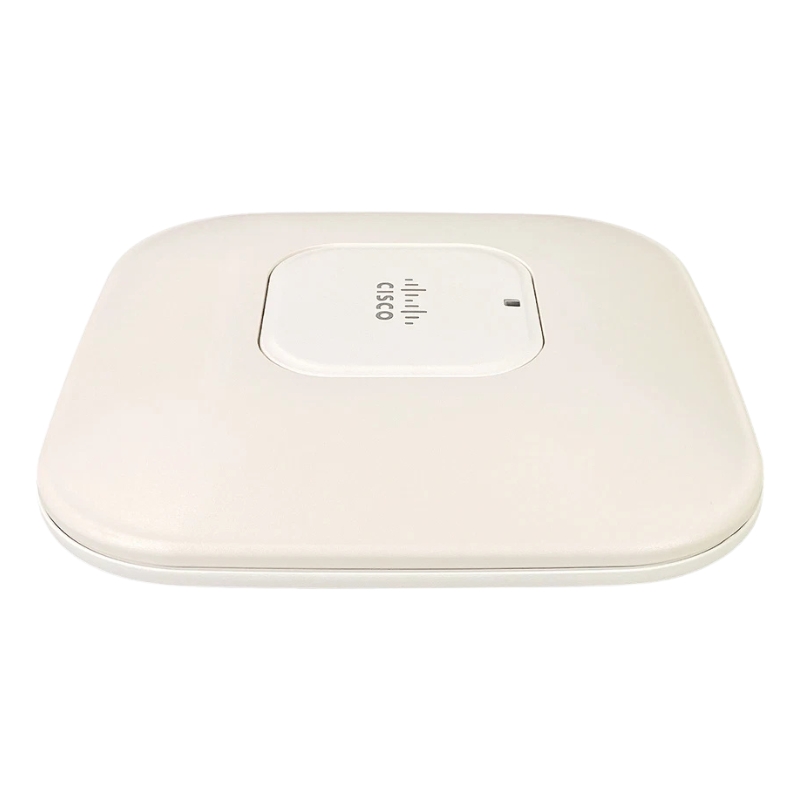
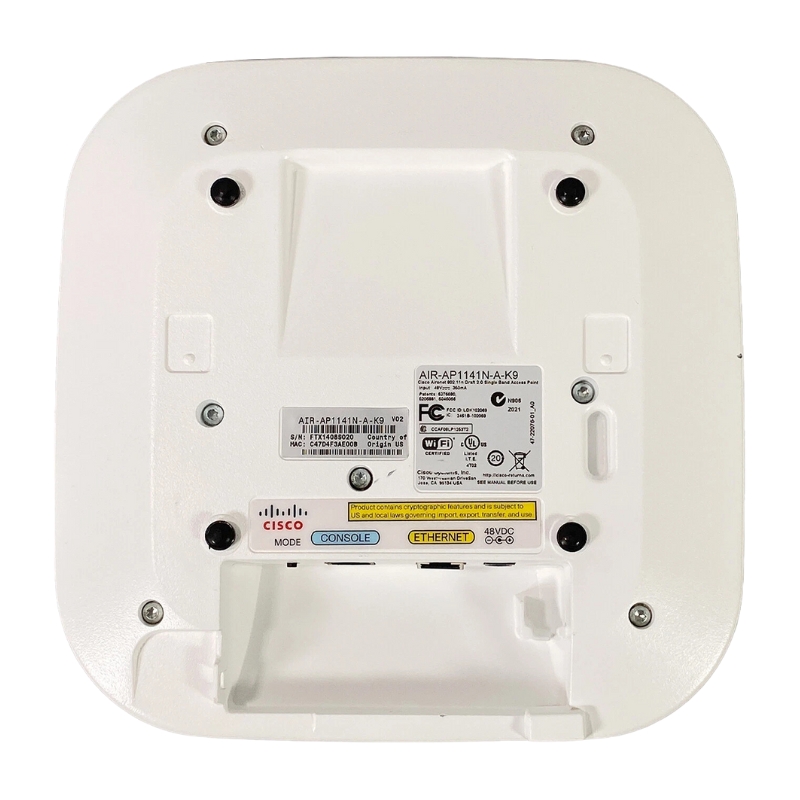
Cisco AIR-AP1141N-A-K9 Aironet 1141N Wireless Access Point 300MBPS. Excellent Refurbished with 1 year replacement warranty
| SKU/MPN | Warranty | Price | Condition | You save |
|---|---|---|---|---|
| AIR-AP1141N-A-K9 | 1 Year Warranty | $85.00 | Factory-Sealed New in Original Box (FSB) | You save: $29.75 (26%) |
| AIR-AP1141N-A-K9 | 1 Year Warranty | $50.00 | Excellent Refurbished | You save: $17.50 (26%) |
The Cisco AIR-AP1141N-A-K9 Aironet 1141N Wireless Access Point delivers dependable 802.11n connectivity with speeds reaching up to 300 Mbps, offering stable indoor wireless performance for enterprise, commercial, and institutional environments. Designed for secure communication, efficient data handling, and seamless integration into modern network infrastructures, it ensures consistent throughput and reliable coverage for everyday business applications. The device is typically powered through Power over Ethernet, reducing the need for additional electrical infrastructure at the installation point.
The Cisco AIR-AP1141N-A-K9 Aironet 1141N Wireless Access Point 300MBPS is designed as part of the Cisco Aironet wireless networking family, built to deliver reliable wireless connectivity for enterprise environments requiring stable coverage, predictable performance, and manageable infrastructure scalability. It is engineered around IEEE 802.11n technology, which significantly improves throughput and efficiency compared to earlier wireless standards, making it suitable for office environments, educational institutions, branch deployments, and distributed network architectures where consistent wireless access is required.
This access point integrates into centralized wireless LAN architectures and can function under controller-based management, allowing administrators to maintain consistent policy enforcement, security configurations, and radio frequency optimization. Its design emphasizes operational stability, enabling organizations to deploy wireless coverage across medium-density environments while maintaining balanced performance across multiple client devices.
The Cisco Aironet 1141N series is built on the IEEE 802.11n wireless standard, which introduces multiple improvements in signal efficiency, data transmission methods, and spectrum utilization. The implementation of multiple-input multiple-output (MIMO) technology allows the access point to transmit and receive multiple data streams simultaneously, improving both speed and reliability in real-world deployment conditions.
The theoretical maximum throughput of up to 300MBPS is achieved through channel bonding and spatial stream optimization. In practical environments, performance is influenced by interference, client capabilities, and network design. Even under mixed-client conditions, the system is engineered to maintain stable connectivity, ensuring that legacy and modern devices can coexist on the same wireless infrastructure without excessive degradation in performance.
The radio system in the Aironet 1141N is optimized to reduce congestion in environments where multiple wireless networks overlap. Dynamic channel selection and transmit power adjustment allow the device to adapt to environmental conditions. This ensures that signal quality remains consistent even in areas with high electromagnetic interference or dense client populations.
The device is capable of operating in both 2.4GHz and 5GHz spectrums depending on configuration, enabling flexible deployment strategies. The 2.4GHz band provides broader coverage and better penetration through walls and obstacles, while the 5GHz band offers reduced interference and higher performance in open environments with high device density.
The physical design of the Cisco Aironet 1141N series is compact and optimized for indoor mounting. It can be deployed on ceilings, walls, or other elevated positions to maximize signal distribution. Its enclosure is designed for professional environments where aesthetics, durability, and airflow management are important considerations.
The hardware architecture includes integrated antennas that are tuned for balanced signal propagation. This reduces the need for external antenna configurations in standard deployments, simplifying installation and reducing maintenance overhead. The internal components are engineered for continuous operation, making the device suitable for environments requiring long-term uptime.
The Aironet 1141N is commonly deployed within centralized wireless network architectures where a wireless LAN controller manages configuration, security policies, and performance optimization. This approach allows administrators to manage multiple access points from a single control interface, ensuring consistent behavior across large-scale deployments.
Centralized management enables automatic firmware updates, configuration synchronization, and real-time monitoring of network health. This reduces operational complexity and ensures that wireless policies are applied uniformly across all connected devices.
In scalable environments such as corporate campuses or educational institutions, the Aironet 1141N integrates into broader wireless ecosystems. The controller-based architecture allows seamless expansion by adding additional access points without significant redesign of the network structure.
Roaming capabilities are enhanced through coordinated access point behavior, allowing clients to move between coverage zones without losing connectivity. This is particularly important in environments where mobility is essential, such as conference centers, classrooms, and collaborative workspaces.
Performance optimization in the Cisco Aironet 1141N involves multiple layers of radio management, traffic prioritization, and interference mitigation. The system is designed to dynamically adapt to changing network conditions, ensuring stable throughput even during peak usage periods.
Quality of service mechanisms allow prioritization of latency-sensitive traffic such as voice and video communications. This ensures that real-time applications maintain performance consistency even when the network is under heavy load from data transfers or multiple simultaneous connections.
The access point is capable of managing multiple client connections simultaneously while balancing resource allocation to avoid congestion. Load distribution strategies help prevent any single access point from becoming overloaded in high-density deployments.
Client steering techniques may be used in controller-based deployments to guide devices toward less congested access points, improving overall network efficiency and user experience.
Security is a foundational element in the design of the Aironet 1141N series. It supports multiple encryption protocols and authentication methods to protect data transmission across wireless networks. These include enterprise-grade security standards designed to prevent unauthorized access and ensure data confidentiality.
Integration with centralized authentication systems enables role-based access control, allowing organizations to define user permissions based on identity and network policies. This ensures that only authorized users and devices can access sensitive network resources.
Wireless communication is protected through advanced encryption mechanisms that secure data as it travels between client devices and the access point. Authentication protocols ensure that only verified devices can join the network, reducing exposure to external threats.
In enterprise deployments, integration with directory services allows centralized identity management, streamlining access control across multiple locations and departments.
The Cisco Aironet 1141N is suitable for a wide range of deployment scenarios, particularly where stable wireless coverage and predictable performance are required. Office environments benefit from its balanced coverage and ability to support multiple users simultaneously.
Educational institutions often deploy this access point to support classroom connectivity, online learning systems, and administrative network access. Its ability to handle mixed device environments makes it suitable for both student and faculty usage.
In branch office environments, the device provides reliable wireless connectivity for remote teams and distributed operations. Its compatibility with centralized management systems allows IT departments to maintain consistent configurations across multiple locations without requiring on-site adjustments.
This makes it particularly effective for organizations with geographically dispersed infrastructure requiring uniform wireless performance and security policies.
The Aironet 1141N is designed to maintain stable operation across varying environmental conditions. Temperature tolerance, signal resilience, and adaptive radio management contribute to its reliability in diverse installation scenarios.
Interference mitigation features help the device operate effectively in environments with overlapping wireless networks, such as office buildings, apartment complexes, and shared commercial spaces.
Reliability is achieved through hardware optimization and firmware stability. The system is designed for continuous operation, reducing downtime and ensuring consistent wireless availability. This is critical in environments where network interruptions can affect productivity and communication systems.
Automated recovery mechanisms allow the device to maintain operational integrity even in cases of temporary network disruption or configuration changes.
The Cisco Aironet 1141N integrates seamlessly with broader network infrastructure, including switches, routers, and wireless controllers. This interoperability ensures that the access point can function as part of a unified network ecosystem.
Ethernet-based backhaul connectivity allows high-speed data transfer between the access point and core network systems. This ensures that wireless traffic is efficiently routed through the network backbone without bottlenecks.
Power over Ethernet simplifies installation by combining power and data transmission over a single cable. This reduces infrastructure complexity and allows more flexible placement of access points within a building layout.
This approach also improves scalability, as additional access points can be deployed without requiring extensive electrical modifications.


 Contact Us
 Information
 Catalog
 Solid State Drives (SSD)
 Network Switches
 Hard Disk Drives
 HBA & Controllers
 PC & Servers
 PC & Server Memory
 CPU & Processors
 Network Routers
 Power Supplies
 Tape Drives & Libraries
 Network Devices
 Computer & Network Cables