(7% discount is applied at checkout)
Cart is empty
Your go-to destination for cutting-edge server products
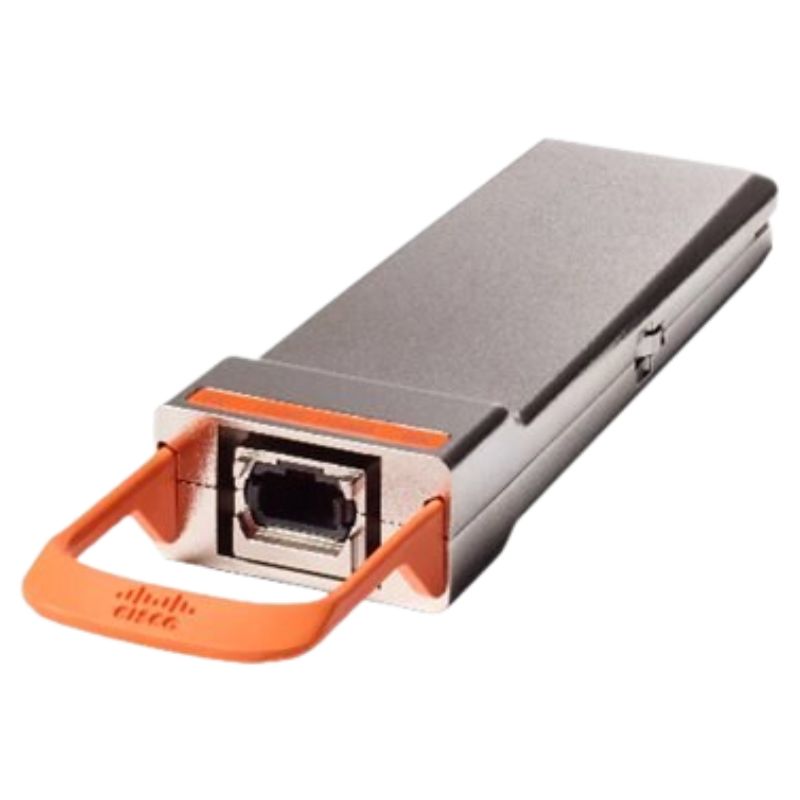


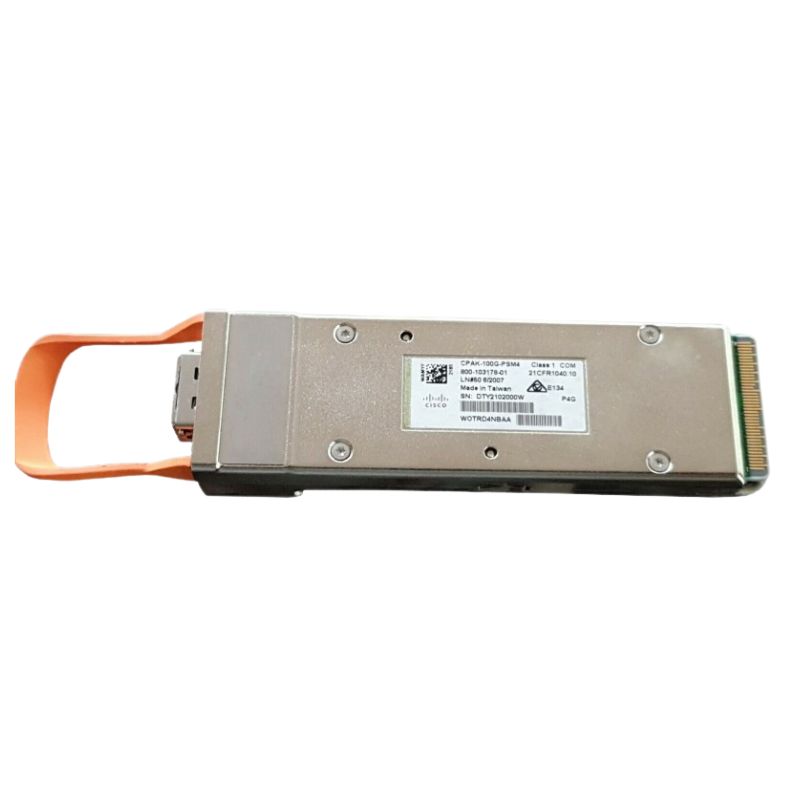
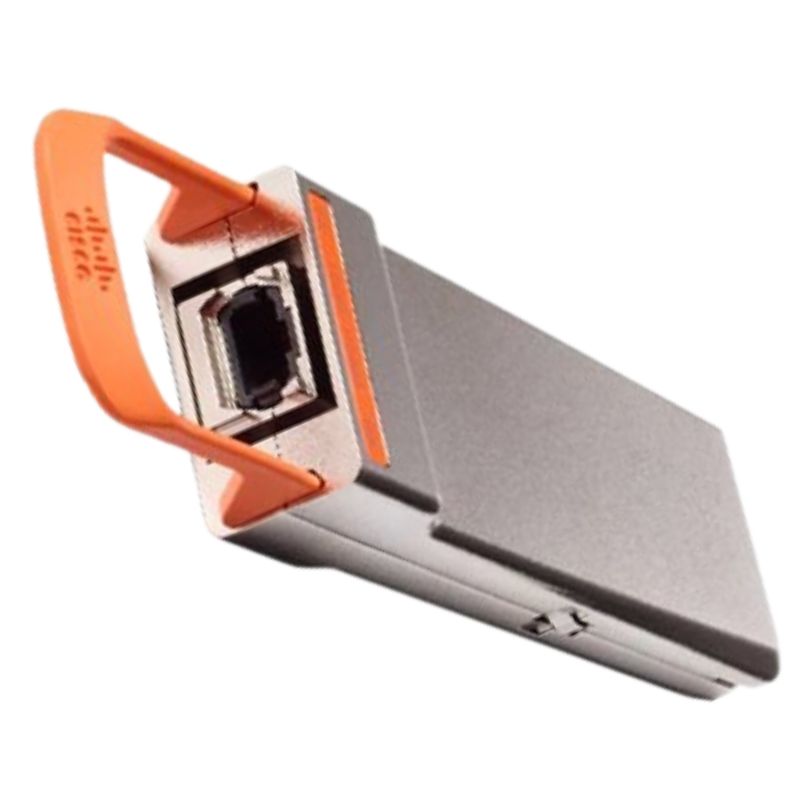
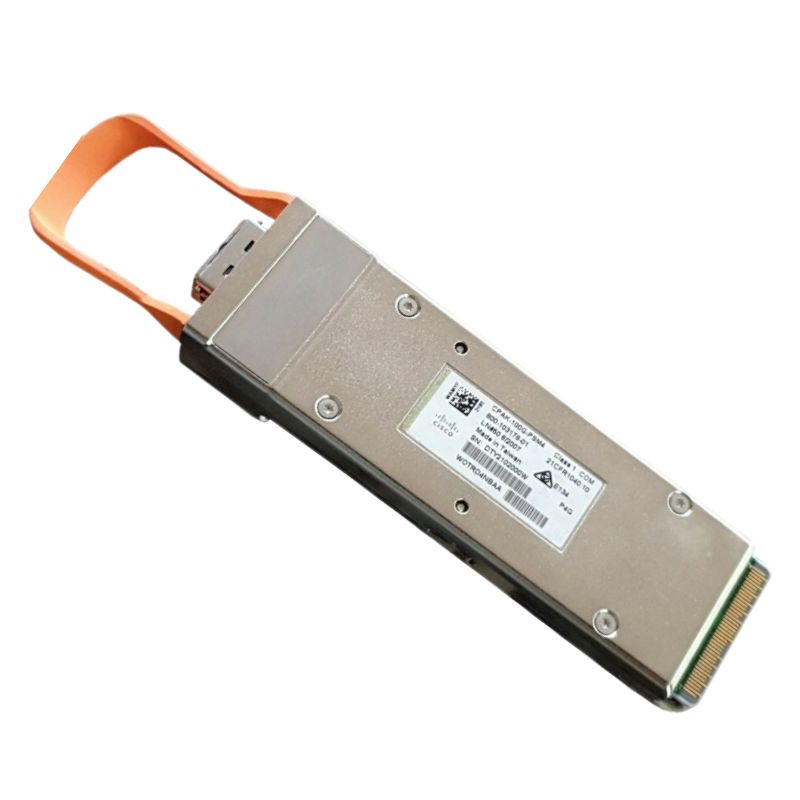
Cisco CPAK-100G-PSM4 100GBPS Ethernet Transceiver Module SMF 500m MPO Connector CPAK . Excellent Refurbished with 1 year replacement warranty
The Cisco CPAK-100G-PSM4 is a high-performance optical transceiver designed for next-generation data center and enterprise networking environments. Manufactured by :content Reference[oaicite:0]{index=0}, this 100 Gigabit Ethernet module delivers superior bandwidth efficiency, low power consumption, and reliable single-mode fiber connectivity for demanding high-speed applications.
The Cisco CPAK-100G-PSM4 100GBPS Ethernet Transceiver Module SMF 500m MPO Connector CPAK represents a high-performance optical networking component designed for next-generation data center and enterprise backbone connectivity. Engineered to support ultra-high-speed data transmission over single-mode fiber (SMF), this transceiver module plays a critical role in enabling scalable, low-latency, and energy-efficient network infrastructures. It is widely deployed in environments where 100 Gigabit Ethernet (100GbE) throughput is essential for handling large-scale cloud computing, virtualization workloads, and high-bandwidth applications.
In modern data centers, bandwidth demand continues to grow due to the rapid expansion of cloud services, artificial intelligence processing, and big data analytics. The CPAK-100G-PSM4 module is designed to meet these requirements by offering a reliable 100G optical interconnect solution that supports long-distance transmission up to 500 meters using single-mode fiber. This capability allows organizations to connect switching layers across large facilities without signal degradation, ensuring consistent and stable performance across the network architecture.
As part of Cisco’s CPAK optical transceiver family, this module integrates advanced photonic technology and optimized power efficiency, reducing operational costs while maximizing network throughput. Its compact form factor also helps reduce physical space requirements in high-density networking environments.
The parallel structure of PSM4 ensures simplified optical signal processing, making it a cost-effective solution for high-speed networking. It is particularly suitable for intra-data center links where medium-range connectivity is required without the complexity of dense WDM systems.
Single-mode fiber technology is a key component of the CPAK-100G-PSM4 module. SMF allows light to travel in a single propagation mode, significantly reducing attenuation and dispersion over distance. This results in cleaner signal transmission and higher reliability compared to multimode fiber systems.
The module supports transmission distances up to 500 meters over SMF, making it ideal for connecting different data center halls, buildings, or distributed networking environments within enterprise campuses. The use of SMF also future-proofs infrastructure by supporting higher bandwidth upgrades without requiring full fiber replacement.
The MPO (Multi-fiber Push-On) connector interface is another defining feature of the CPAK-100G-PSM4 module. MPO connectors are designed to accommodate multiple fiber strands within a single compact interface, allowing for efficient high-density cabling. This design significantly reduces cable clutter and simplifies cable management in complex networking environments.
The MPO interface ensures precise alignment of fiber channels, maintaining signal integrity across all four transmit and receive lanes. This is crucial for maintaining consistent 100G performance in demanding enterprise and service provider networks.
The CPAK-100G-PSM4 module is optimized for high bandwidth throughput and minimal latency. By utilizing four independent optical channels, it enables parallel data transmission that significantly reduces bottlenecks in network traffic flow. This is especially beneficial in applications such as cloud computing clusters, high-performance computing (HPC), and real-time analytics systems where microsecond-level latency differences can impact performance.
One of the key advantages of Cisco CPAK modules is their energy-efficient design. The CPAK-100G-PSM4 consumes relatively low power compared to older-generation 100G solutions, helping reduce overall operational expenditure in large-scale deployments. Efficient thermal management ensures stable operation even under continuous high-load conditions, minimizing overheating risks and improving system longevity.
The module is designed with advanced heat dissipation structures that integrate seamlessly into Cisco networking hardware, ensuring optimal airflow and thermal balance within dense rack configurations.
Maintaining signal integrity across 100G transmission channels is critical for network reliability. The CPAK-100G-PSM4 incorporates advanced error correction mechanisms and optical alignment technologies to minimize bit error rates (BER). This ensures accurate data transmission even in environments with electromagnetic interference or high network congestion.
Its ability to maintain stable 100G connectivity over medium distances makes it a preferred choice for spine-leaf architectures commonly used in hyperscale data centers.
In enterprise networks, the CPAK-100G-PSM4 is often deployed at the core or aggregation layer, where traffic from multiple access switches is consolidated. Its high throughput ensures that data bottlenecks are minimized, supporting smooth communication between departments, branch offices, and cloud services.
Organizations with large campuses benefit from the module’s 500m reach, allowing flexible network design without requiring additional signal amplification equipment.
Telecommunication providers utilize 100G transceivers like the CPAK-100G-PSM4 to support backbone connectivity between switching centers. The module’s reliability and scalability make it suitable for handling massive data traffic generated by mobile networks, internet services, and digital communication platforms.
The CPAK-100G-PSM4 is designed for seamless integration with compatible Cisco switching and routing platforms that support CPAK form factor modules. This ensures plug-and-play functionality and simplifies deployment in existing Cisco-based infrastructures. Its compatibility with Cisco’s ecosystem enhances network stability and simplifies lifecycle management.
The module works in conjunction with Cisco’s intelligent network operating systems, enabling monitoring, diagnostics, and performance optimization through centralized management tools.
While primarily optimized for Cisco hardware, the CPAK-100G-PSM4 may also interoperate with other networking systems that support standard 100GBASE-PSM4 specifications. However, performance optimization is best achieved within Cisco-native environments where firmware and hardware integration are fully aligned.
Proper fiber cabling is essential for achieving optimal performance with the CPAK-100G-PSM4 module. Single-mode fiber cables must be correctly terminated using MPO connectors to ensure precise alignment of optical lanes. Any misalignment or contamination can lead to signal loss or degradation.
Network engineers must ensure that fiber routing paths are properly designed to minimize bend radius stress and avoid physical damage to the cabling infrastructure.
The CPAK form factor is engineered for hot-swappable operation, allowing installation or replacement without shutting down the network system. This feature is particularly important in mission-critical environments where uptime is essential.
Proper handling procedures must be followed to avoid electrostatic discharge (ESD) damage. The module should be inserted firmly into compatible Cisco ports until a secure connection is established.
As networking technology progresses toward 200G and 400G standards, 100G modules like the CPAK-100G-PSM4 remain foundational components in hybrid network environments. They ensure backward compatibility and provide transitional support for gradual infrastructure upgrades.


 Contact Us
 Information
 Catalog
 Solid State Drives (SSD)
 Network Switches
 Hard Disk Drives
 HBA & Controllers
 PC & Servers
 PC & Server Memory
 CPU & Processors
 Network Routers
 Power Supplies
 Tape Drives & Libraries
 Network Devices
 Computer & Network Cables