(7% discount is applied at checkout)
Cart is empty
Your go-to destination for cutting-edge server products
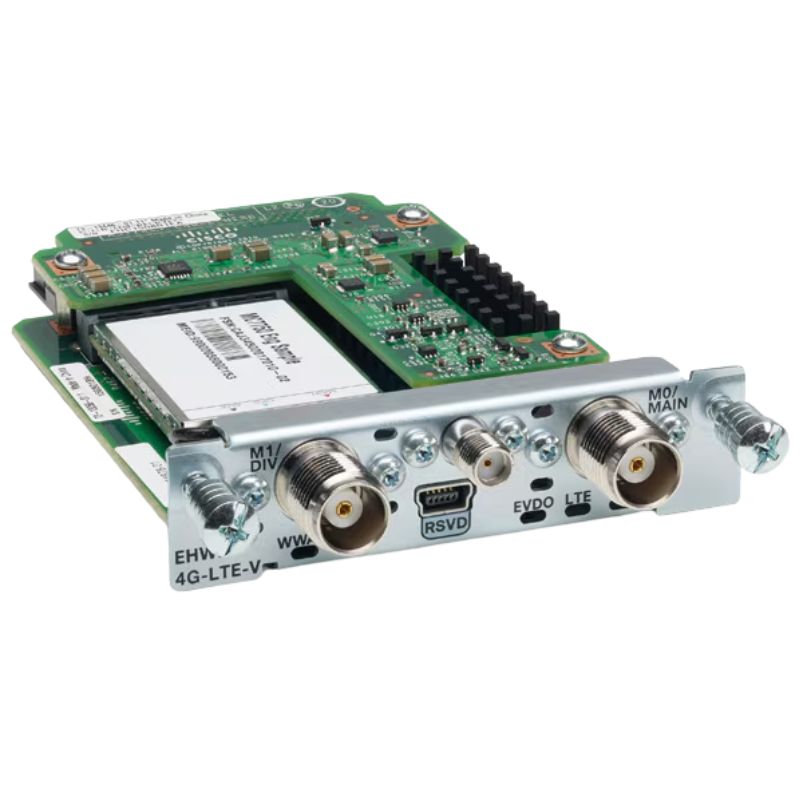


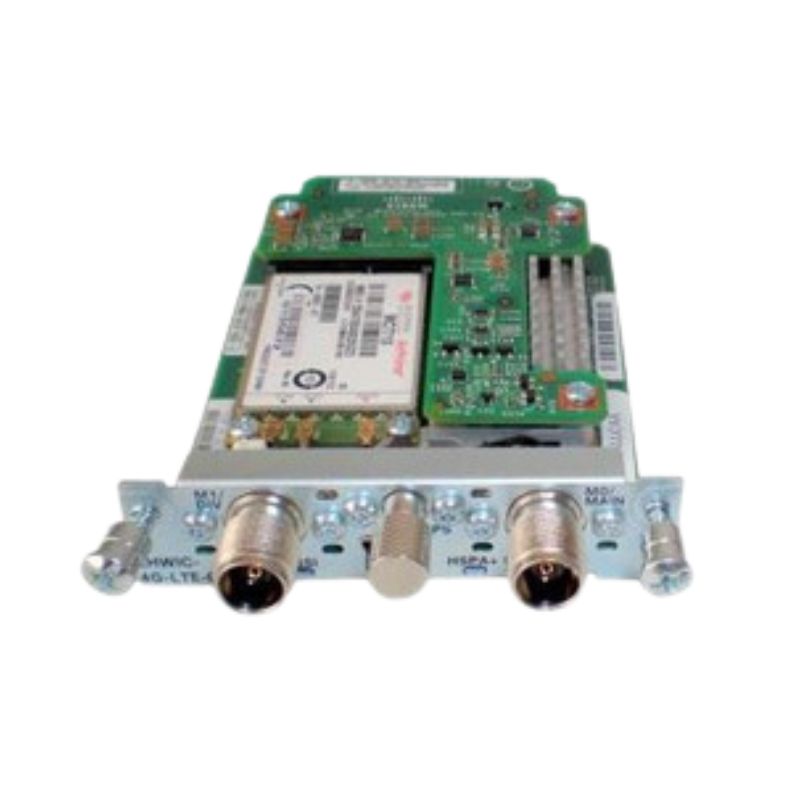
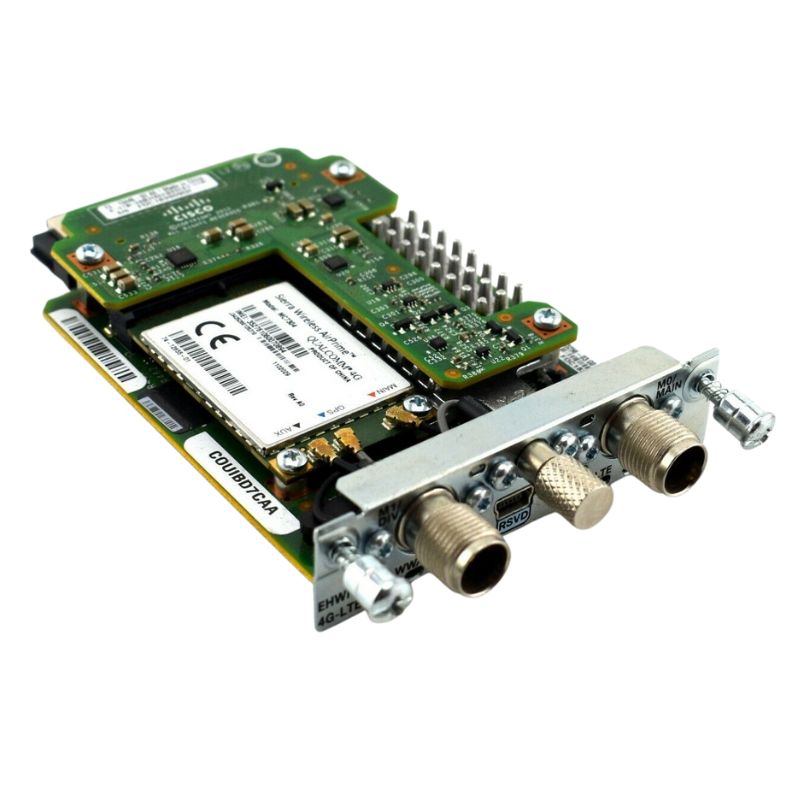
Cisco EHWIC-4G-LTE-A 4G LTE 100MBPS Wireless Module Cellular Modem. Excellent Refurbished with 1 year replacement warranty
| SKU/MPN | Warranty | Price | Condition | You save |
|---|---|---|---|---|
| EHWIC-4G-LTE-A | 1 Year Warranty | $68.00 | Excellent Refurbished | You save: $23.80 (26%) |
| EHWIC-4G-LTE-A | 1 Year Warranty | Contact us for a price | Factory-Sealed New Retail in Original Box (FSB) |
The Cisco EHWIC-4G-LTE-A is a high-performance 4G LTE wireless expansion module designed to deliver stable mobile broadband connectivity with speeds reaching up to 100 Mbps. Built for enterprise-grade networking environments, this cellular modem enhances communication reliability and ensures uninterrupted data flow for mission-critical operations, especially in remote or distributed locations where wired connections are limited or unavailable.
The Cisco EHWIC-4G-LTE-A 4G LTE 100MBPS Wireless Module Cellular Modem is designed as a high-performance embedded WAN interface card that extends enterprise and branch networking capabilities through cellular broadband connectivity. It is part of Cisco’s Enhanced High-Speed WAN Interface Card family, built to integrate directly into compatible Cisco Integrated Services Routers. This module enables wireless WAN failover, primary cellular connectivity, and remote site networking where wired infrastructure is limited or unavailable.
This cellular modem module leverages 4G LTE technology to deliver reliable broadband connectivity with theoretical speeds reaching up to 100 megabits per second depending on carrier conditions, signal strength, and network congestion. It is optimized for branch office deployments, mobile networking environments, and mission-critical backup links in enterprise networks requiring continuous uptime.
The embedded design of the Cisco EHWIC-4G-LTE-A allows it to operate as an internal network interface rather than an external modem device. This integration reduces complexity in deployment and improves system reliability by eliminating additional power adapters, external cabling, and separate device management layers. The module is installed directly into supported router chassis, enabling centralized management through Cisco IOS software.
Its architecture is built around LTE radio access technology, SIM-based authentication, and carrier-grade packet data transmission. The modem handles signal modulation, packet encapsulation, and mobility management internally, while exposing a standard Ethernet-like interface to the router’s operating system.
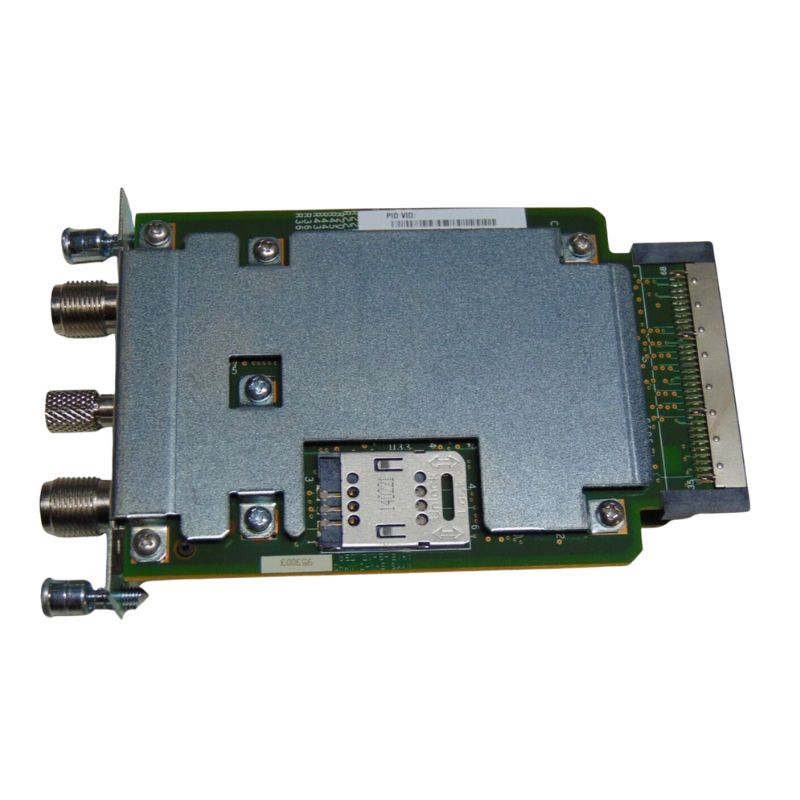
The module incorporates a secure SIM card slot that authenticates the device on cellular networks. The SIM interface is engineered to support hot insertion protection and stable electrical signaling. The SIM-based authentication mechanism ensures that the module can be provisioned dynamically for different carriers without hardware modification.
The module is designed to support up to 100 Mbps theoretical throughput under optimal LTE network conditions. Real-world performance depends on environmental signal quality, tower density, and carrier traffic management policies. The system employs adaptive modulation techniques that dynamically adjust data rates based on signal-to-noise ratio variations.
Traffic shaping and queue management features within the router ensure that bandwidth allocation is optimized for critical applications. The module supports burst transmission behavior, allowing temporary spikes in throughput when network conditions permit.
Latency performance is a critical factor in cellular WAN environments. The Cisco EHWIC-4G-LTE-A module is engineered to maintain stable round-trip times through efficient packet scheduling and retransmission handling. Error correction mechanisms and LTE HARQ processes reduce packet loss and improve session continuity in fluctuating signal environments.
In branch office environments, the module is commonly deployed as a primary internet connection or as a failover mechanism. It ensures continuous connectivity when wired broadband services experience outages or degradation. Organizations often configure dual-WAN setups where the LTE module serves as a backup path.
The module is compatible with selected Cisco router platforms that support EHWIC expansion slots. These routers provide the processing power, routing intelligence, and network services required to fully utilize the LTE interface capabilities.
Integration with Cisco IOS allows administrators to configure cellular interfaces using unified routing commands. The operating system treats the LTE module as a logical WAN interface, enabling routing policies, access control, and redundancy configurations.
The module supports dynamic IP addressing through carrier-provided assignment mechanisms as well as static configurations where supported. NAT traversal, DHCP relay, and routing table updates are handled through router-level configurations rather than the modem itself.
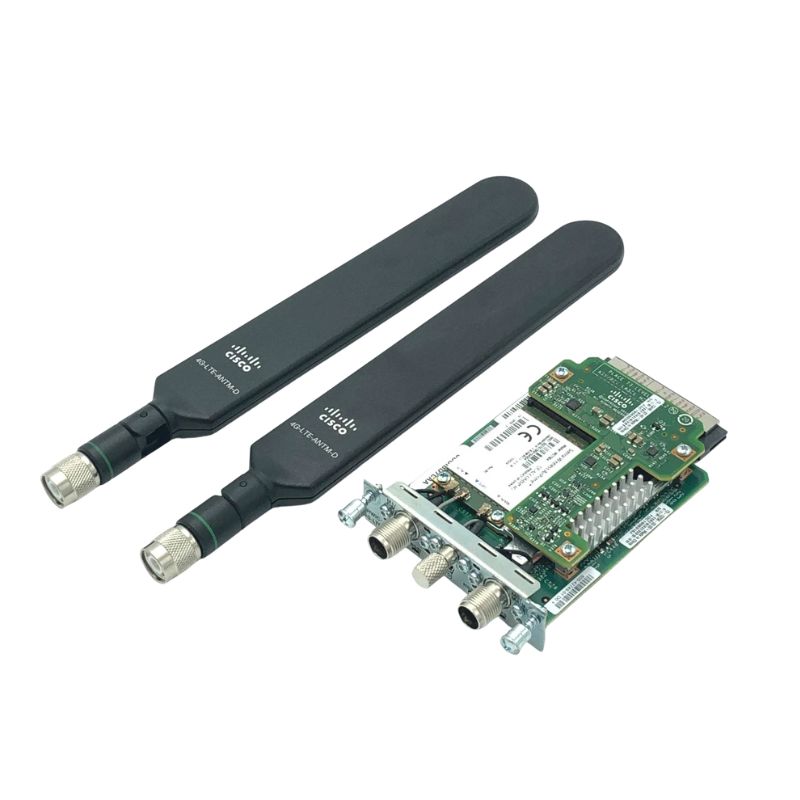
The module relies on external antenna connections to achieve optimal signal strength. Antenna placement plays a significant role in performance, particularly in indoor or dense urban environments. Proper alignment and elevation can significantly improve throughput and connection stability.
The module leverages LTE network-level encryption combined with router-based security policies. Data transmitted over cellular networks is protected through standardized encryption protocols implemented by the carrier network infrastructure.
In enterprise deployments, the module is often used as part of a secure branch architecture where all traffic is routed through encrypted tunnels to central data centers. This ensures that remote users maintain secure access to corporate resources.
After SIM insertion and configuration, the module registers with the mobile network. This process includes authentication, signal scanning, and selection of the optimal LTE tower for connectivity establishment.
The module is frequently used in failover configurations where it activates automatically when primary wired connections fail. Routing protocols detect link failures and redirect traffic to the cellular interface without manual intervention.
The module supports quality-aware routing when combined with router-level traffic policies. Critical applications such as voice and real-time data services can be prioritized over less sensitive traffic types.
In environments with multiple available LTE bands, the module dynamically selects the best available network parameters to optimize throughput and stability.
The module is commonly used as a transport layer for VPN tunnels, enabling secure remote access to centralized infrastructure. Encryption and tunneling are handled at the router level while the module provides transport connectivity.
Organizations with distributed branches deploy multiple modules across different locations to maintain consistent connectivity standards. Centralized management tools allow unified configuration across all sites.
The module enables direct cloud connectivity for applications hosted in distributed cloud environments. This supports hybrid infrastructure models combining local and cloud-based resources.
Although designed for LTE networks, the module fits into evolving network architectures where cellular broadband continues to serve as a resilient connectivity layer in hybrid WAN strategies.


 Contact Us
 Information
 Catalog
 Solid State Drives (SSD)
 Network Switches
 Hard Disk Drives
 HBA & Controllers
 PC & Servers
 PC & Server Memory
 CPU & Processors
 Network Routers
 Power Supplies
 Tape Drives & Libraries
 Network Devices
 Computer & Network Cables