(7% discount is applied at checkout)
Cart is empty
Your go-to destination for cutting-edge server products
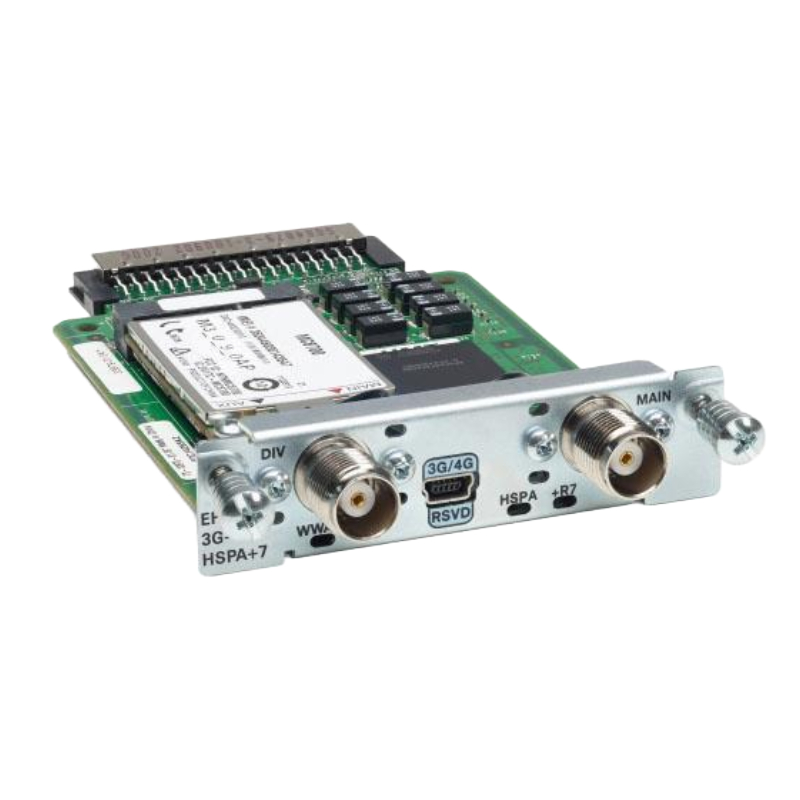


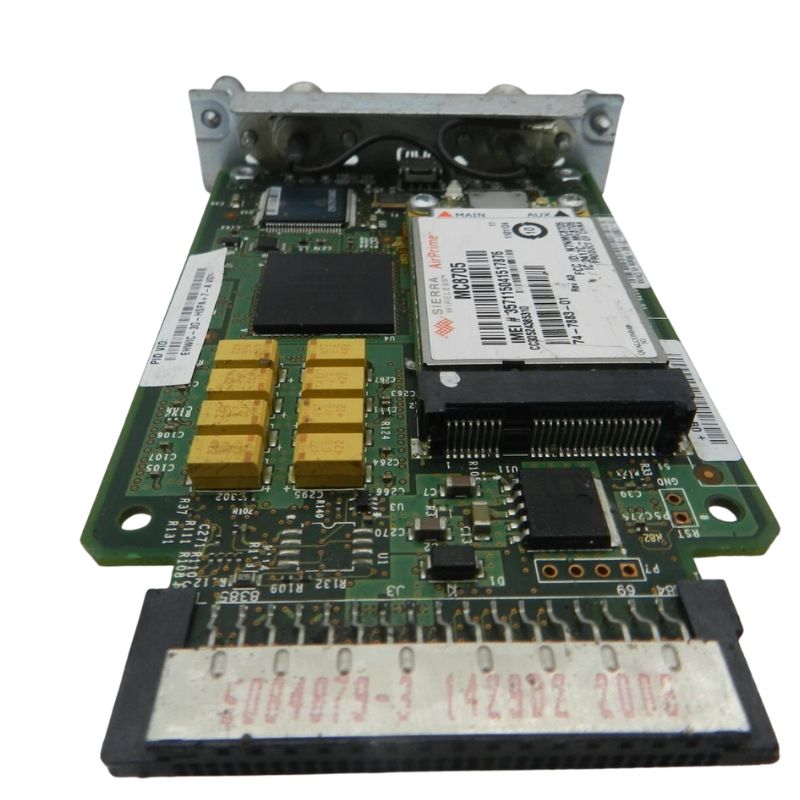
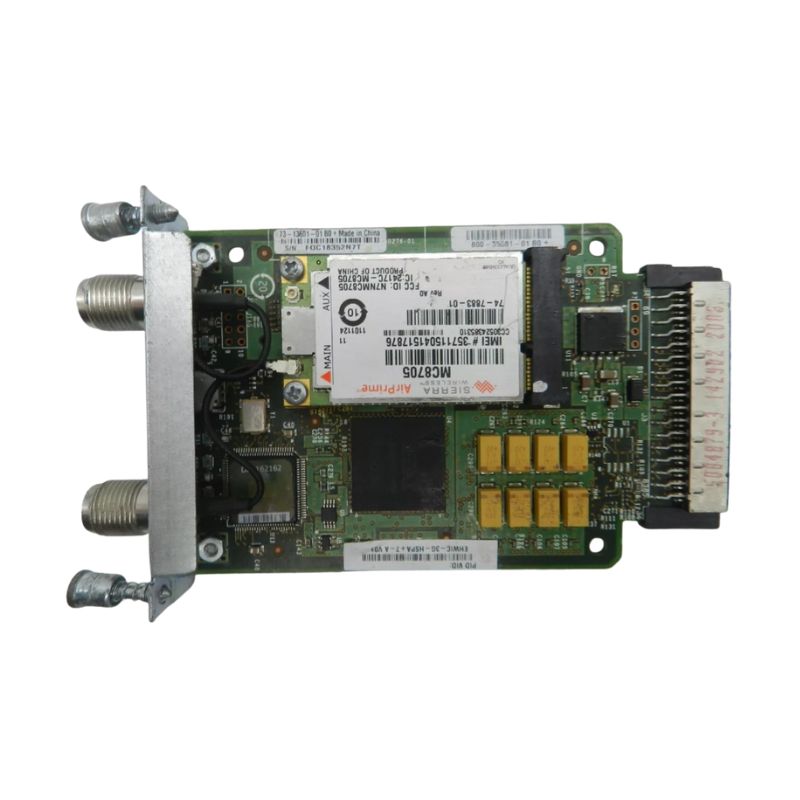
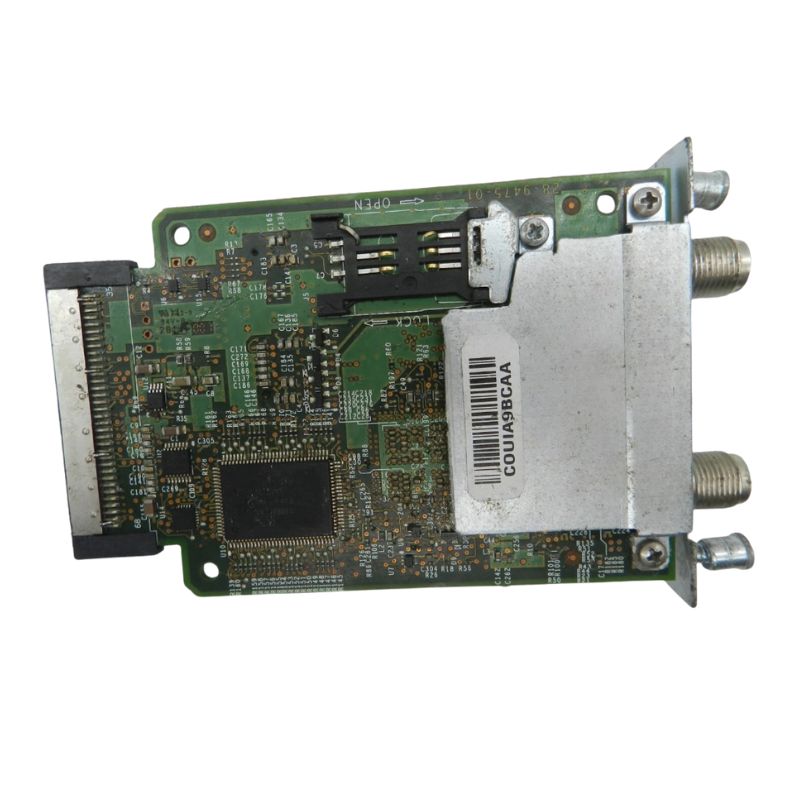
Cisco EHWIC-3G-HSPA+7-A EHWIC Wireless Cellular Modem. Excellent Refurbished with 1 year replacement warranty
| SKU/MPN | Warranty | Price | Condition | You save |
|---|---|---|---|---|
| EHWIC-3G-HSPA+7-A | 1 Year Warranty | $595.00 | Excellent Refurbished | You save: $208.25 (26%) |
| EHWIC-3G-HSPA+7-A | 1 Year Warranty | Contact us for a price | Factory-Sealed New Retail in Original Box (FSB) |
The Cisco EHWIC-3G-HSPA+7-A is a high-performance 3G wireless modem designed to deliver dependable mobile broadband connectivity for enterprise networking environments. Built to integrate seamlessly into compatible Cisco routing systems, this EHWIC module enhances network flexibility by enabling cellular WAN access where traditional wired connections are limited or unavailable.
The Cisco EHWIC-3G-HSPA+7-A EHWIC 3G Wireless Modem represents a specialized class of cellular networking modules designed to extend Wide Area Network connectivity through mobile broadband technologies. It is part of the Enhanced High-Speed WAN Interface Card ecosystem, which integrates directly into Cisco Integrated Services Routers. This category focuses on providing reliable 3G cellular connectivity using HSPA+ technology, enabling enterprises, branch offices, and remote deployments to maintain continuous network access even in environments where wired broadband infrastructure is unavailable or unreliable.
Within this category, the emphasis is placed on modular WAN expansion, allowing network administrators to deploy flexible connectivity solutions that adapt to changing infrastructure requirements. The Cisco EHWIC-3G-HSPA+7-A serves as a bridge between traditional enterprise routing systems and mobile carrier networks, ensuring that organizations can maintain business continuity through cellular backup links or primary wireless WAN connections.
The Cisco EHWIC-3G-HSPA+7-A is designed specifically for Cisco ISR platforms that support EHWIC slots. These routers are widely used in enterprise branch environments due to their modular architecture and support for multiple WAN interfaces. By inserting the wireless modem into an available slot, the router gains immediate access to cellular network capabilities without requiring external modems or additional networking appliances.
This integration allows seamless coordination between routing services, firewall functions, VPN tunnels, and wireless WAN connectivity. The router treats the cellular interface as a native network interface, enabling routing protocols, policy-based routing, and failover mechanisms to operate without additional complexity. This tight integration is a key reason why the EHWIC-3G-HSPA+7-A category is widely adopted in enterprise-grade deployments.
The modular design philosophy behind Cisco EHWIC modules allows organizations to customize network infrastructure based on operational requirements. Instead of deploying standalone cellular routers, administrators can extend the functionality of existing routers, reducing hardware sprawl and simplifying management. This approach ensures that wireless WAN capabilities can be introduced gradually into existing network topologies without redesigning the entire infrastructure.
At the core of the Cisco EHWIC-3G-HSPA+7-A category is its support for HSPA+ (Evolved High-Speed Packet Access), an advanced enhancement of 3G cellular technology. HSPA+ significantly improves data transmission speeds, latency, and overall network efficiency compared to earlier 3G standards. This makes it suitable for enterprise applications such as VPN access, cloud service connectivity, and real-time communication systems.
The HSPA+ technology embedded in this wireless modem category supports higher throughput compared to traditional 3G connections. While performance depends on carrier infrastructure, signal strength, and network congestion, HSPA+ typically enables downstream and upstream improvements that support business-critical applications. This performance enhancement allows the EHWIC-3G-HSPA+7-A to function as both a primary and backup WAN link depending on deployment strategy.
Latency performance in cellular networks is influenced by multiple factors including radio signal quality and network load. The Cisco EHWIC-3G-HSPA+7-A is optimized for stable packet transmission, making it suitable for applications that require consistent connectivity rather than ultra-low latency performance. In enterprise environments, this stability is particularly valuable for maintaining VPN tunnels and secure remote access sessions.
The module incorporates adaptive signal management techniques that help maintain stable connections even under fluctuating network conditions. This includes dynamic adjustment of transmission parameters based on available signal strength and carrier feedback. Such adaptability ensures that the device can sustain connectivity in challenging environments such as rural deployments or mobile installations.
The Cisco EHWIC-3G-HSPA+7-A follows the Enhanced High-Speed WAN Interface Card form factor, which is designed for compact integration into Cisco ISR routers. This form factor allows for hot-swappable or field-replaceable deployment depending on router model and configuration. The compact design ensures that multiple WAN interfaces can coexist within a single routing platform.
The antenna system plays a crucial role in the performance of the wireless modem. External antenna connectors allow for flexible deployment scenarios where signal strength can be improved through directional or high-gain antennas. This is particularly important in enterprise environments where the router may be located in enclosed network cabinets or remote infrastructure sites.
The module supports SIM-based authentication, which enables secure access to cellular networks through carrier-provisioned credentials. The SIM card interface is typically protected within the router chassis to prevent unauthorized access or tampering. This design ensures that only authorized devices can connect to the mobile network infrastructure.
The Cisco EHWIC-3G-HSPA+7-A category is widely used in environments where reliable wired connectivity is not guaranteed. It is especially valuable in branch offices, temporary installations, mobile command centers, and geographically distributed enterprises that require continuous network availability.
One of the primary use cases for this wireless modem category is WAN redundancy. In such configurations, the cellular interface acts as a backup link that activates automatically when the primary wired connection fails. This ensures uninterrupted business operations and minimizes downtime during infrastructure outages.
Routing policies can be configured to monitor primary link availability and dynamically switch traffic to the cellular interface when necessary. This failover mechanism is critical for organizations that rely on cloud-based applications or remote access systems.
In remote locations where wired broadband installation is impractical or cost-prohibitive, the Cisco EHWIC-3G-HSPA+7-A provides a primary connectivity solution. Retail stores, construction sites, and rural offices benefit from rapid deployment without dependency on physical telecommunications infrastructure.
Access Point Name configuration is essential for establishing connectivity with the mobile carrier network. The APN defines how the device connects to the carrier’s packet data network. Proper configuration ensures that the modem can authenticate and establish a data session successfully.
The wireless modem enables secure WAN extension by encapsulating traffic within encrypted tunnels. This ensures that sensitive data remains protected even when transmitted over public cellular infrastructure. Network administrators can enforce encryption standards and access controls through centralized management policies.
Optimizing performance for the Cisco EHWIC-3G-HSPA+7-A involves both hardware and software considerations. Antenna placement, signal strength optimization, and carrier selection all contribute to improved network performance. Proper configuration of routing policies ensures efficient use of available bandwidth.
In modern enterprise environments, hybrid networking architectures combine wired broadband, fiber connections, and cellular WAN links. The Cisco EHWIC-3G-HSPA+7-A plays a critical role in this architecture by providing flexible wireless connectivity that complements traditional infrastructure.
As organizations adopt cloud-first strategies, the need for resilient WAN connectivity becomes increasingly important. Cellular modules like this enable continuous access to cloud services, distributed applications, and remote collaboration platforms. The flexibility of the EHWIC architecture ensures that networks can evolve alongside changing business requirements.
Large organizations with multiple branch locations benefit from standardized deployment of cellular WAN modules. This ensures consistent connectivity across geographically distributed sites while maintaining centralized control and monitoring capabilities.


 Contact Us
 Information
 Catalog
 Solid State Drives (SSD)
 Network Switches
 Hard Disk Drives
 HBA & Controllers
 PC & Servers
 PC & Server Memory
 CPU & Processors
 Network Routers
 Power Supplies
 Tape Drives & Libraries
 Network Devices
 Computer & Network Cables