(7% discount is applied at checkout)
Cart is empty
Your go-to destination for cutting-edge server products
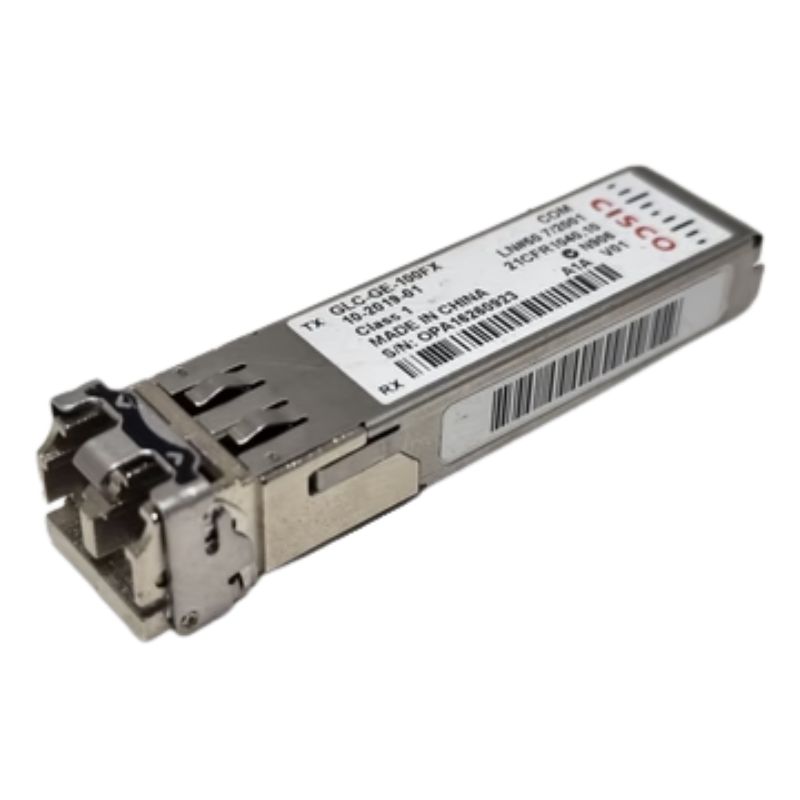


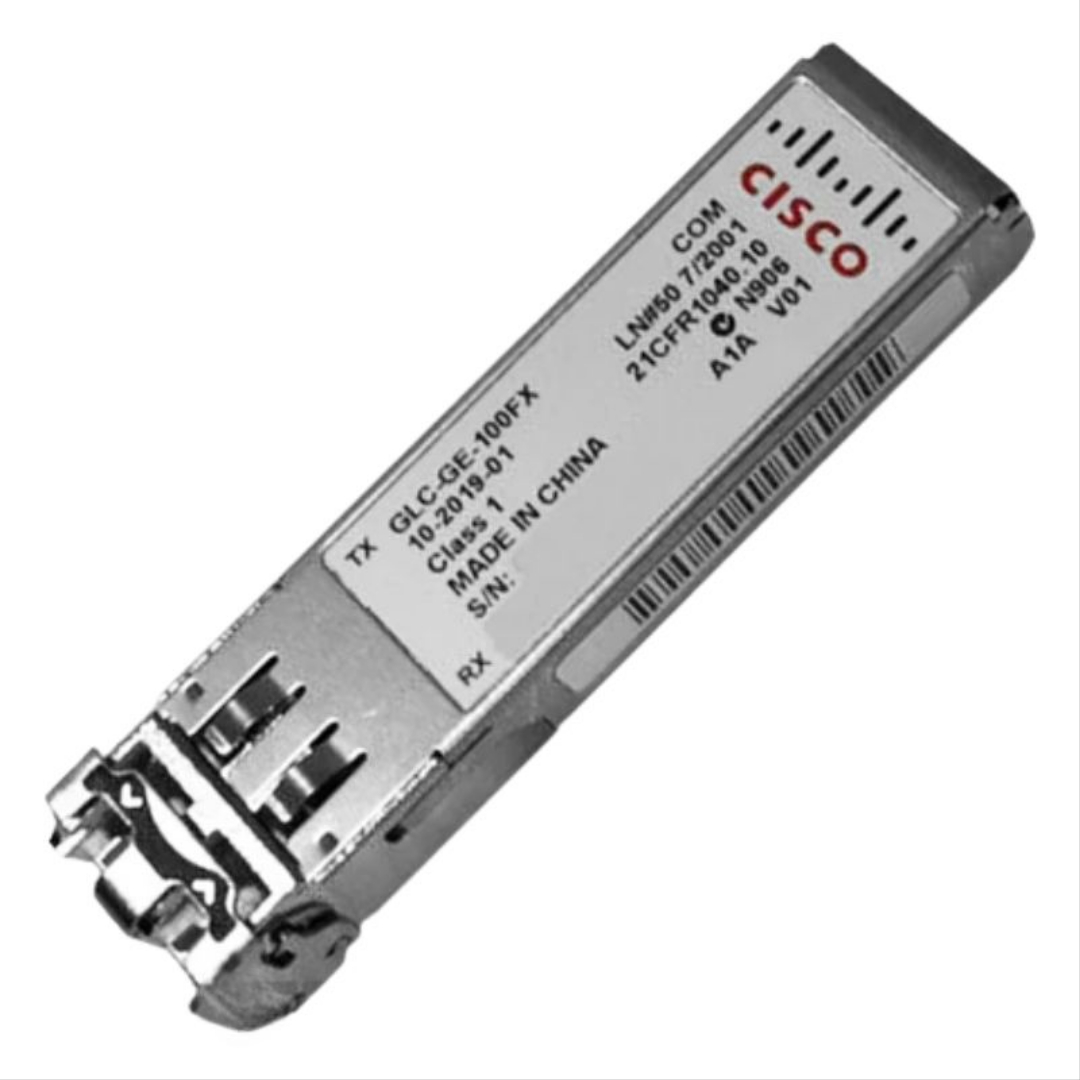
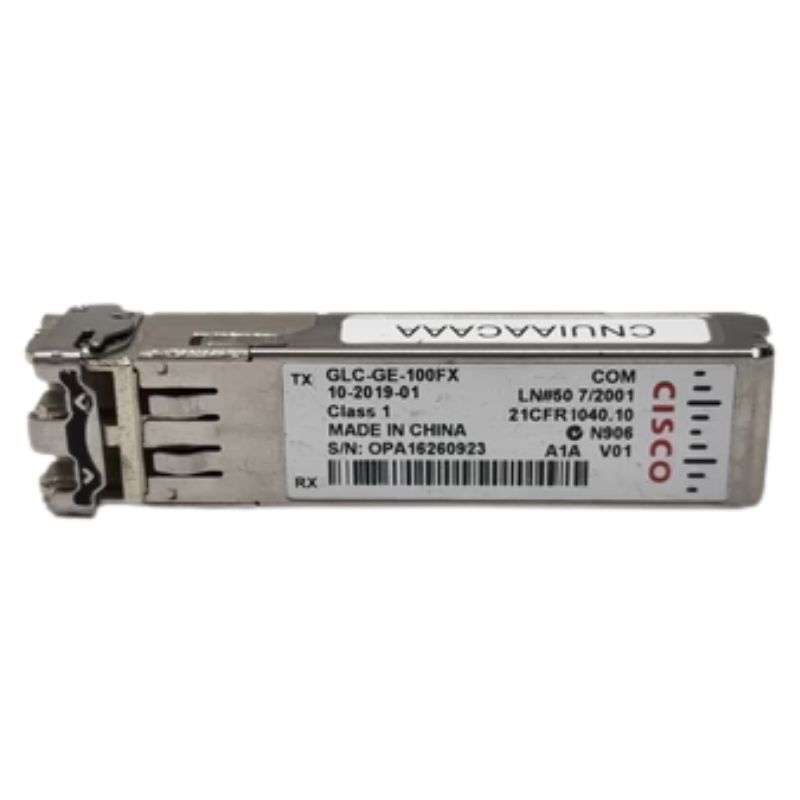
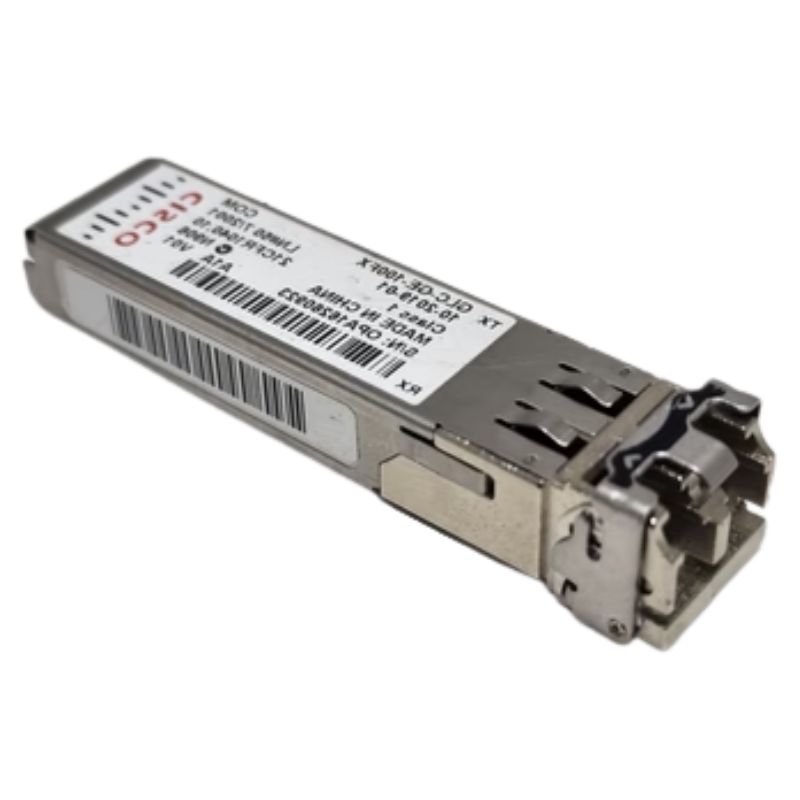
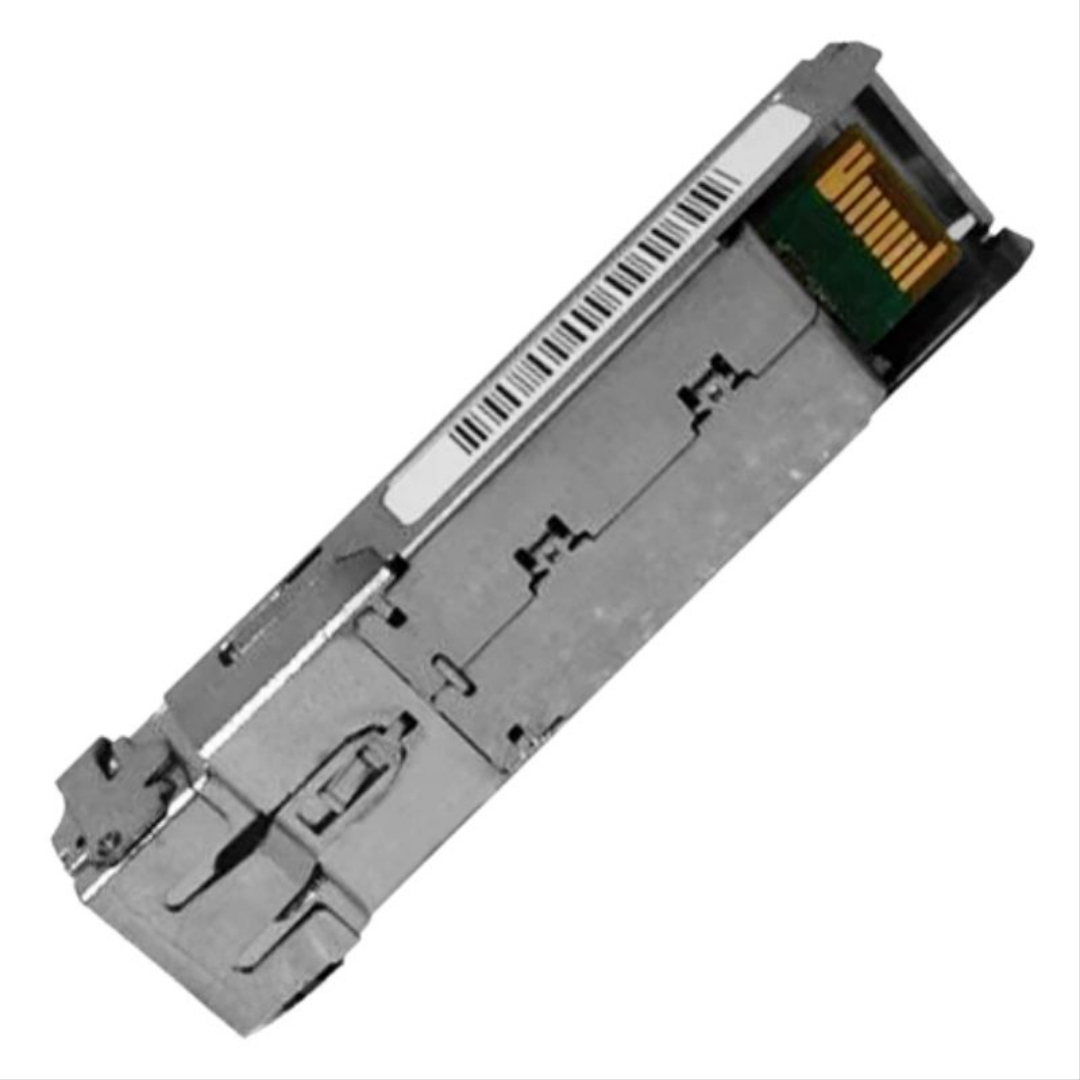
Cisco GLC-GE-100FX= Multi Mode Transceiver Module 100MBPS. Excellent Refurbished with 1 year replacement warranty
| SKU/MPN | Warranty | Price | Condition | You save |
|---|---|---|---|---|
| GLC-GE-100FX= | 1 Year Warranty | $72.00 | Excellent Refurbished | You save: $25.20 (26%) |
| GLC-GE-100FX= | 1 Year Warranty | $128.00 | Factory-Sealed New Retail in Original Box (FSB) | You save: $44.80 (26%) |
The Cisco GLC-GE-100FX= is a compact plug-in transceiver module engineered to deliver dependable 100Mbps fiber connectivity for enterprise and campus network environments. Built for Fast Ethernet applications, this Cisco transceiver uses 100BASE-FX technology and operates at a 1310 nm optical wavelength, making it a practical solution for stable short-to-medium distance fiber links. Designed for consistent data transmission, the Cisco GLC-GE-100FX= helps network administrators extend connectivity across compatible Cisco switches while maintaining reliable performance in demanding business infrastructures.
The Cisco GLC-GE-100FX= Multi Mode Transceiver Module 100MBPS belongs to a specialized class of Cisco optical interface modules created for dependable 100BASE-FX Fast Ethernet transmission across multimode fiber infrastructure. In enterprise networking, industrial communication environments, campus networks, branch deployments, and legacy fiber modernization projects, this category of Cisco transceiver module remains valuable because it bridges copper-free network transport with stable optical performance while preserving compatibility with selected Cisco switches and routers that support this operating mode. The product category is closely associated with compact pluggable optics that allow administrators to introduce fiber-based 100 Mbps uplinks, inter-switch links, equipment-room connections, and structured backbone extensions without replacing the full switching platform.
Although modern networks often emphasize Gigabit and multi-gigabit throughput, 100 Mbps fiber transceiver modules continue to play an important role in many operational environments. Manufacturing plants, healthcare facilities, educational campuses, municipal networks, utility systems, warehouse complexes, transportation sites, and security networks often retain Fast Ethernet infrastructure for specialized devices, access-layer uplinks, control systems, monitoring equipment, and edge deployments where distance, electromagnetic resistance, and optical isolation matter more than raw bandwidth. The Cisco GLC-GE-100FX= category supports these use cases by providing a Cisco-compatible multimode optical module that is built for Fast Ethernet signaling over fiber while fitting into the compact SFP-style ecosystem that simplifies installation, replacement, and lifecycle maintenance.
In practical deployment terms, this type of Cisco transceiver helps network teams extend connections beyond the limitations of standard copper Ethernet. Copper cabling may be sufficient for short office runs, but multimode fiber offers clear advantages in larger buildings and electrically noisy environments. Fiber links can span much greater distances, support cleaner signal transmission, and resist interference generated by industrial machinery, power systems, HVAC equipment, and dense cabling paths. A module such as the Cisco GLC-GE-100FX= is therefore not merely an accessory; it is a core connectivity component for organizations that need predictable Fast Ethernet optical transport using Cisco switching or routing infrastructure.
Cisco transceiver modules cover a broad portfolio of speed grades, optical standards, wavelengths, connector styles, and distance profiles. Within that wider ecosystem, the Cisco GLC-GE-100FX= category sits in the 100 Mbps optical segment and is intended for multimode fiber Fast Ethernet applications. It is distinct from standard Gigabit SX, LX, ZX, BX, CWDM, DWDM, and 10 Gigabit optical products because its role is to deliver stable 100BASE-FX performance rather than higher-speed aggregation or long-haul transport. That distinction matters for buyers, infrastructure planners, and maintenance teams because optical modules are not interchangeable simply because they share a similar pluggable shape. The network port, platform support, optical signaling method, and operating speed must all align with the module category selected.
In Cisco environments, this product class is relevant where Gigabit-capable Cisco interfaces or designated ports are designed to operate with compatible Fast Ethernet optical transceivers. Cisco documentation for Fast Ethernet SFP categories identifies 100BASE-FX multimode optics as suitable for selected Cisco switching and routing scenarios, making the Cisco GLC-GE-100FX= a targeted solution rather than a generic fiber accessory. This is particularly useful in mixed-speed networks where certain edge devices, older uplink modules, industrial controllers, building systems, or branch appliances still rely on 100 Mbps fiber but the core Cisco hardware platform belongs to a newer generation of modular infrastructure.
The essential function of the Cisco GLC-GE-100FX= Multi Mode Transceiver Module 100MBPS is to convert electrical Ethernet data generated by a Cisco networking device into optical signals suitable for transmission over multimode fiber, and then convert incoming optical signals back into electrical data at the receiving end. This optical conversion process enables Fast Ethernet communication over distances that are impractical for copper cabling while preserving the operational simplicity of a pluggable transceiver form factor.
When installed in a compatible Cisco device, the module acts as the physical interface between the switch or router and the fiber plant. The transceiver provides the optical launch characteristics, receive sensitivity, wavelength behavior, and interface mechanics needed for the network link to establish correctly. Rather than integrating fixed optical ports into every device model, Cisco and similar networking vendors often rely on pluggable optics so the same switch family can support a variety of cabling media and link types. In this model, the Cisco GLC-GE-100FX= becomes the enabling element that turns a suitable port into a 100 Mbps multimode fiber uplink or interconnect.
Because it is designed for multimode fiber operation, the module category is especially attractive in buildings, campuses, and facilities where multimode cabling is already installed. Organizations that deployed OM-class or older multimode fiber for backbone runs can continue using that cabling for Fast Ethernet applications without the cost of immediate replacement. This preserves investment in structured cabling while supporting the continued operation of network segments that do not require Gigabit bandwidth.
There is a tendency to assume that every production network should be upgraded immediately to the fastest available standard, yet real-world infrastructure decisions are driven by application requirements, equipment compatibility, budget cycles, and physical site constraints. Many operational systems generate relatively modest traffic volumes. Building automation controllers, badge systems, industrial PLC gateways, surveillance encoders, environmental monitoring appliances, specialized printers, legacy medical devices, and branch access switches may function perfectly within a 100 Mbps envelope. In such cases, the bottleneck is not necessarily bandwidth but reliability, distance, and electrical stability.
The Cisco GLC-GE-100FX= category serves these environments by enabling a fiber path where copper would be vulnerable or impractical. A warehouse with long cable runs between the main communications room and loading-bay network cabinets may not need Gigabit throughput for handheld scanner docks, but it may need an optical link that reaches the location cleanly and remains immune to electrical noise from forklifts, motors, and industrial lighting. A hospital may maintain a legacy imaging archive or nurse station subsystem that communicates at Fast Ethernet rates but requires isolation from electromagnetic interference and secure, stable transport between floors. A school campus may retain older access switches in outbuildings or labs that still perform their role well, making a 100BASE-FX optical uplink a cost-effective way to maintain connectivity until a larger modernization project is approved.
One of the most important characteristics of the Cisco GLC-GE-100FX= module category is its focus on multimode fiber. Multimode fiber has long been used in enterprise and campus environments because it offers an effective balance between cost, ease of installation, and optical performance over moderate distances. For 100BASE-FX applications, multimode fiber is a practical medium that allows organizations to build reliable interconnections between network closets, floors, departments, utility rooms, and adjacent buildings without the limitations of twisted-pair Ethernet cabling.
Multimode fiber supports the propagation of multiple light modes through a larger core than single-mode fiber. This makes connector alignment less demanding and has historically made multimode a common choice for shorter and medium-range enterprise links. In the context of a Cisco 100 Mbps optical transceiver, multimode cabling is especially attractive because the bandwidth requirements are modest relative to modern high-speed optics, yet the physical advantages of fiber remain significant. Organizations can use multimode infrastructure to create electrically isolated links, reduce the impact of ground potential differences between buildings, and avoid problems caused by lightning-prone outdoor copper paths or noisy industrial spaces.
For network designers, the multimode orientation of the Cisco GLC-GE-100FX= category means simpler alignment with existing building cabling. Many structured enterprise environments were originally wired with multimode backbone segments specifically to support flexible inter-switch connections. When those environments still include Fast Ethernet devices or intermediate network elements, a multimode 100BASE-FX Cisco transceiver can be the correct operational choice. Instead of overengineering a link with unnecessary speed or changing the cabling plant, administrators can deploy an optic tailored to the application.
Backbone links between wiring closets and communication rooms demand consistency more than they demand novelty. If a site has a well-established multimode fiber path between the main distribution frame and several intermediate distribution frames, a Cisco GLC-GE-100FX= module can provide the optical termination needed for a stable Fast Ethernet uplink. This is valuable in branch offices, academic campuses, healthcare buildings, hotel properties, retail campuses, and municipal facilities where access-layer traffic loads remain moderate but dependable connectivity is non-negotiable.
Fiber also supports physical separation of equipment areas. A data room on the ground floor may need to connect to a switch stack in a distant wing, a utility substation control room, or an outbuilding. Rather than relying on copper extenders or local media converters, a Cisco multimode transceiver creates a cleaner architecture by allowing the Cisco device itself to speak optical Fast Ethernet directly over the installed fiber. This reduces clutter, minimizes external conversion points, and keeps the network design aligned with Cisco operational practices.
Not every network refresh happens in one sweeping phase. In many organizations, modernization occurs incrementally, with core equipment replaced first, distribution layers updated later, and edge devices retained until their operational life ends. The Cisco GLC-GE-100FX= category is highly relevant in these mixed-generation environments because it supports the transition from older Fast Ethernet architectures to newer Cisco platforms without forcing immediate retirement of every 100 Mbps fiber link.
For example, a business may replace an aging aggregation switch with a newer Cisco platform that still needs to communicate with older Fast Ethernet-connected devices or access switches during the migration period. Rather than inserting third-party converters or redesigning the physical plant, administrators can use an appropriate Cisco optical module to maintain compatibility with the existing multimode fiber link. This keeps the migration orderly and avoids introducing unsupported connectivity components into the production environment.
Legacy infrastructure modernization also involves operational continuity. Many organizations cannot tolerate prolonged downtime while every fiber segment is reterminated, recertified, or upgraded to a different optical standard. By using a Cisco transceiver that matches the installed cabling and the retained remote device, the IT team can move one layer of the network at a time. This preserves service availability while allowing strategic upgrades to proceed according to budget, staffing, and change-control windows.
Pluggable optics are especially valuable during phased refresh projects because they decouple the network interface from the chassis or switch hardware. The Cisco GLC-GE-100FX= category exemplifies this flexibility. A network team can keep the optical module inventory aligned with current operational needs, redeploy modules across supported hardware as required, and maintain spare units for critical Fast Ethernet fiber links. In sites where dozens of legacy fiber-connected devices still operate correctly, this modularity can prevent expensive and unnecessary rewiring work.
Refresh cycles in hospitals, factories, logistics centers, schools, and public-sector buildings often stretch across multiple fiscal periods. The ability to keep a Fast Ethernet multimode link alive on a Cisco platform using a purpose-built module helps maintain momentum without compromising service. It also allows procurement teams to sequence capital spending intelligently, purchasing higher-speed optics only where the application actually benefits from them.
Compatibility is one of the most important topics in any transceiver purchase decision, and it is central to the value of the Cisco GLC-GE-100FX= category. Optical modules may look similar externally, but successful deployment depends on far more than physical fit. The switch or router must support the optical standard, recognize the Cisco-coded transceiver, negotiate the correct speed behavior for the port, and align with the fiber type and remote endpoint on the other side of the link.
In Cisco environments, administrators frequently prefer genuine Cisco-coded optics or trusted equivalents because platform recognition, firmware compatibility, and support expectations are easier to manage when the module aligns with Cisco’s own transceiver ecosystem. The Cisco GLC-GE-100FX= category is associated with Cisco networking environments where a compact multimode Fast Ethernet optic is required for a compatible Cisco port. This reduces guesswork in procurement and helps maintain a more predictable support posture.
Compatibility should always be evaluated across four dimensions. The first is port support: the Cisco device must be designed to accept the transceiver and operate at the required speed or mode. The second is optical compatibility: the far-end device or module must support the same 100BASE-FX signaling characteristics. The third is fiber compatibility: the installed multimode cabling, patch panels, and connectors must match the optical assumptions of the module. The fourth is software compatibility: the device operating system and hardware revision should support the transceiver family according to Cisco documentation and release guidance.
The compact pluggable form factor associated with the Cisco GLC-GE-100FX= category is one of the reasons these modules remain practical in operational environments. Small optical transceivers enable a high degree of deployment flexibility because they occupy minimal space on the front panel of a switch or router while still providing fiber functionality. This matters in dense wiring closets, branch racks, industrial cabinets, and campus distribution frames where port density and cable management influence the overall usability of the network installation.
Because the module is pluggable rather than permanently fixed to the device, replacement is also simpler. If a link needs to be repurposed from copper to fiber, if an optic fails, or if a spare must be inserted during maintenance, the administrator can work at the transceiver level instead of replacing an entire line card or switch. This modular serviceability is a core strength of the category. It reduces waste, shortens repair windows, and supports more granular inventory planning.
In many cases, hot-swappable transceiver behavior also improves operational efficiency. When supported by the platform, optics can be inserted or removed without shutting down the whole device, making it easier to expand connectivity or replace a failed module during a maintenance window. This is especially useful in branch and campus networks where uptime is important and network closets may not be staffed full-time.
Fiber patching requires organization. The compact footprint of a Cisco transceiver module helps preserve orderly front-panel layouts by allowing duplex optical connectors to terminate neatly at the switch or router faceplate. In structured racks, this makes it easier to route patch leads toward cable managers and patch panels without excessive strain. Good cable discipline improves airflow, reduces accidental disconnection risk, and makes tracing individual links much easier during troubleshooting or moves, adds, and changes.
For organizations with mixed media environments, the pluggable model is even more useful. A single Cisco switch may have some ports operating over copper, others over Gigabit fiber, and selected ports using Fast Ethernet multimode optics to reach legacy systems. By choosing the right transceiver per port, administrators tailor the switch to the actual connectivity profile of the site rather than being constrained by a one-size-fits-all interface design.
Performance in a transceiver category such as the Cisco GLC-GE-100FX= should be evaluated differently from performance in a core-switch or high-capacity data-center optic. The goal is not to push extreme throughput but to provide dependable optical transport at the intended Fast Ethernet rate with stable signal behavior, clean interoperability, and predictable reach over supported multimode fiber. In this context, the most meaningful performance characteristics include link integrity, compatibility with 100BASE-FX endpoints, optical consistency across temperature and operational conditions, and dependable behavior during sustained production use.
Fast Ethernet at 100 Mbps remains more than sufficient for many control-plane, monitoring, administrative, and light-access workloads. What matters is that the optical link establishes cleanly, remains stable over the installed fiber span, and does not introduce intermittent errors that are difficult to diagnose. Cisco transceiver categories are typically valued because they are designed to work within the operational parameters expected by Cisco switching and routing hardware. This helps reduce the chance of unstable links caused by mismatched optics, improper coding, or unsupported module behavior.
In practice, the perceived performance of the module is influenced by the quality of the fiber plant as much as by the optic itself. Clean connectors, correct patching, proper bend radius management, and accurate fiber type selection all contribute to stable operation. The Cisco GLC-GE-100FX= category is therefore best seen as part of a complete optical channel that includes the switch port, the transceiver, the patch cord, the horizontal or backbone fiber, and the far-end optic or device.
One reason organizations retain Cisco multimode Fast Ethernet optics is that they perform reliably over existing installed cabling when that cabling has been maintained properly. A mature building may already contain tested multimode riser paths between telecommunications rooms. Reusing those paths with a Cisco-compatible 100BASE-FX transceiver avoids the risk of disturbing the cable plant and supports continued service without extensive remediation. Reliability in this sense is not about headline speed; it is about repeatable day-to-day function across a known physical path.
For sites that depend on always-on monitoring, access control, industrial telemetry, or branch connectivity, that reliability is often the decisive factor. The link simply needs to work, remain up, and support the traffic profile of the connected systems. The Cisco GLC-GE-100FX= category is aligned with that operational philosophy.
The continued relevance of the Cisco GLC-GE-100FX= Multi Mode Transceiver Module 100MBPS category comes from its ability to solve a very specific networking problem efficiently: how to maintain or extend Fast Ethernet optical connectivity in Cisco environments where multimode fiber is already present and where application demands do not justify a more expensive redesign. This is a common scenario in real infrastructure portfolios. Not every link is a data-center spine, and not every building system requires Gigabit throughput. What many organizations need instead is a dependable, standards-aligned, Cisco-compatible optical interface that supports legacy and transitional network segments without creating unnecessary cost.
By fitting into the Cisco transceiver ecosystem, this module category helps organizations preserve operational consistency. By using multimode fiber, it supports medium-distance building and campus links that would be awkward or unreliable over copper. By delivering 100 Mbps Fast Ethernet transport, it matches the requirements of numerous industrial, administrative, and edge applications that remain in production today. By remaining pluggable and field-replaceable, it supports spare strategies, phased upgrades, and low-disruption maintenance workflows.
For infrastructure managers, the category is therefore not just about a single optic; it is about practical lifecycle management. The Cisco GLC-GE-100FX= represents the type of product that keeps legacy fiber networks serviceable, allows new Cisco hardware to coexist with older edge systems, and supports measured modernization without forcing premature replacement of still-useful assets. In environments where stable connectivity, installed multimode cabling, and Cisco platform alignment matter more than headline bandwidth, this transceiver category continues to deliver clear operational value.


 Contact Us
 Information
 Catalog
 Solid State Drives (SSD)
 Network Switches
 Hard Disk Drives
 HBA & Controllers
 PC & Servers
 PC & Server Memory
 CPU & Processors
 Network Routers
 Power Supplies
 Tape Drives & Libraries
 Network Devices
 Computer & Network Cables