(7% discount is applied at checkout)
Cart is empty
Your go-to destination for cutting-edge server products
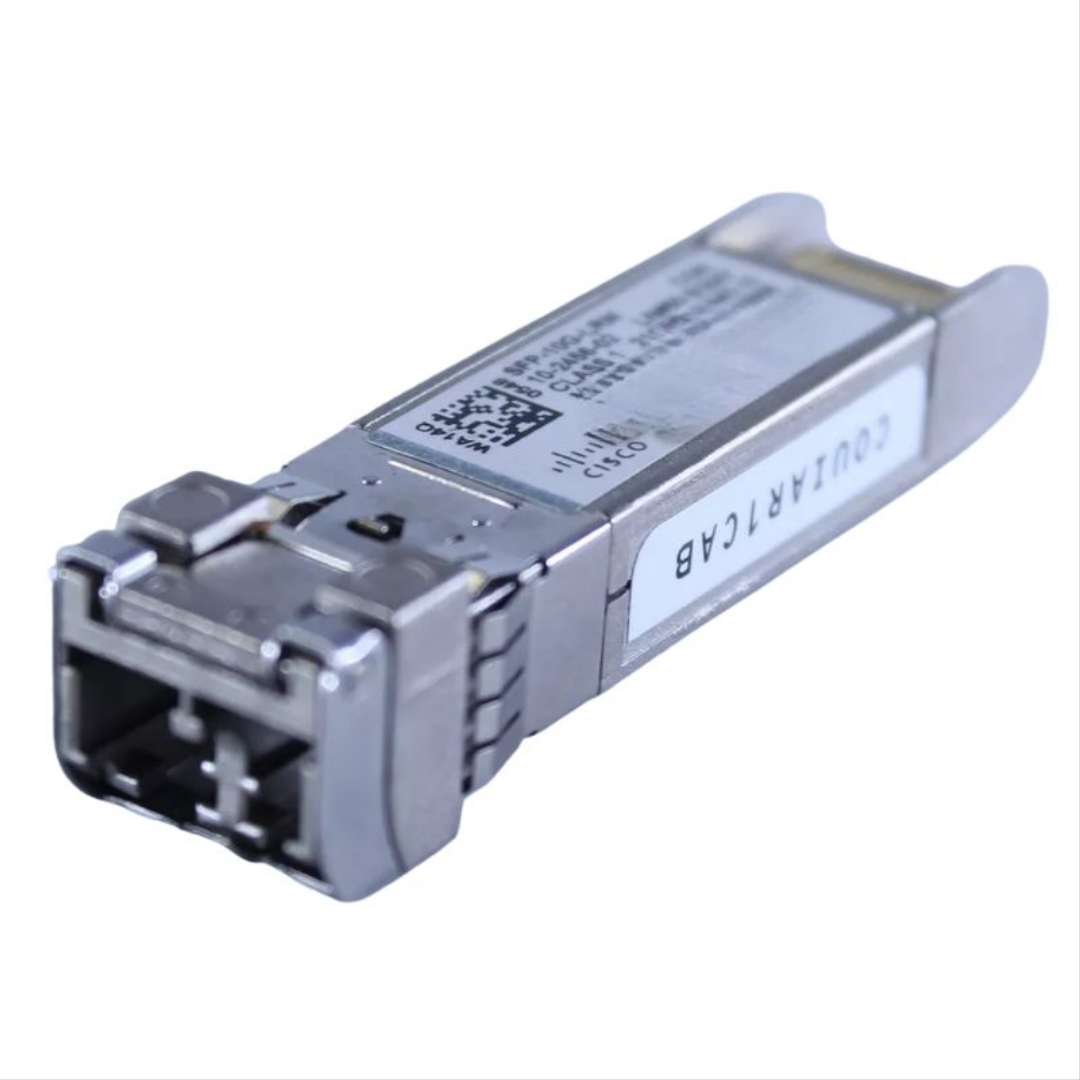


| SKU/MPN | Warranty | Price | Condition | You save |
|---|---|---|---|---|
| SFP-10G-LRM | 1 Year Warranty | $57.00 | Excellent Refurbished | You save: $19.95 (26%) |
| SFP-10G-LRM | 1 Year Warranty | $90.00 | Factory-Sealed New Retail in Original Box (FSB) | You save: $31.50 (26%) |
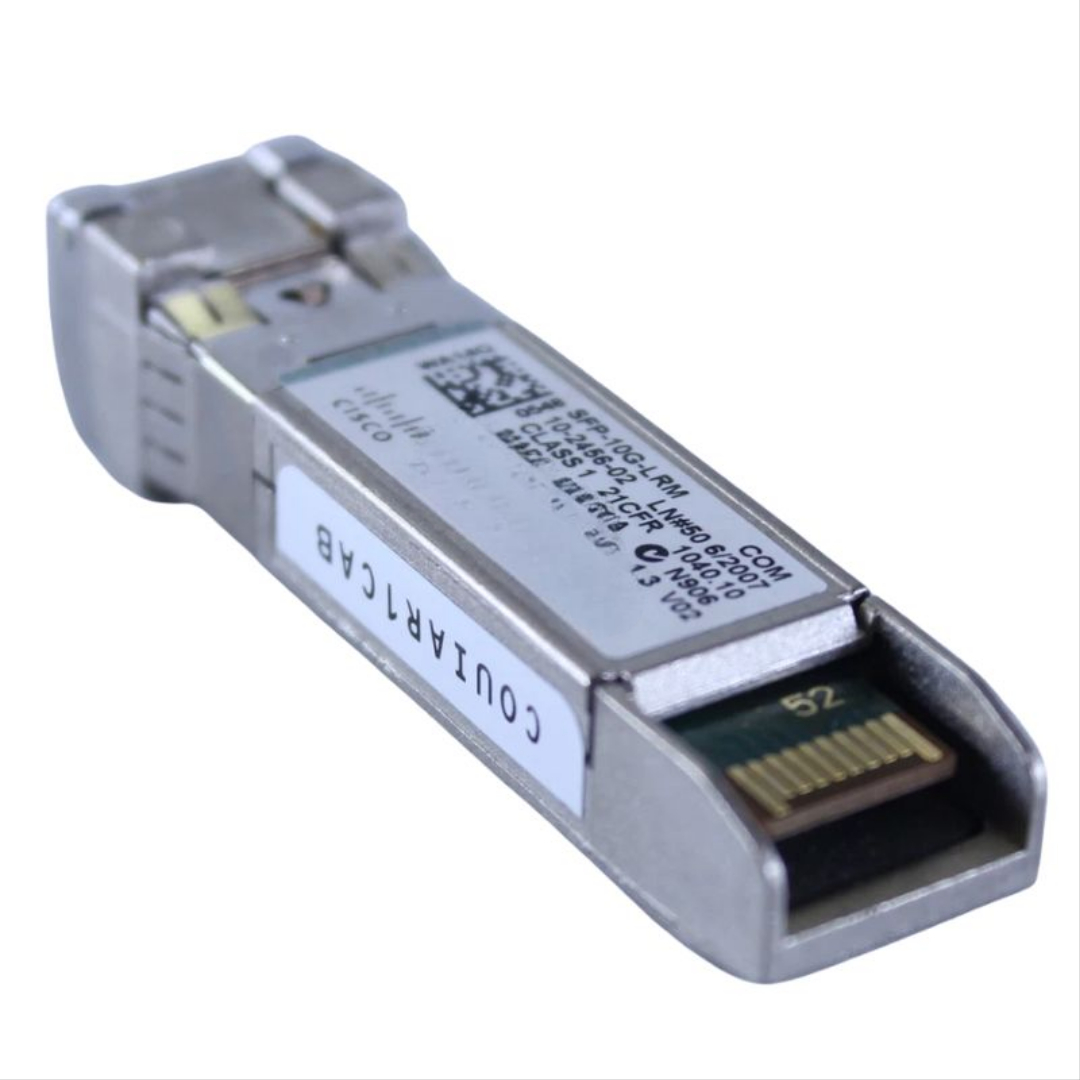
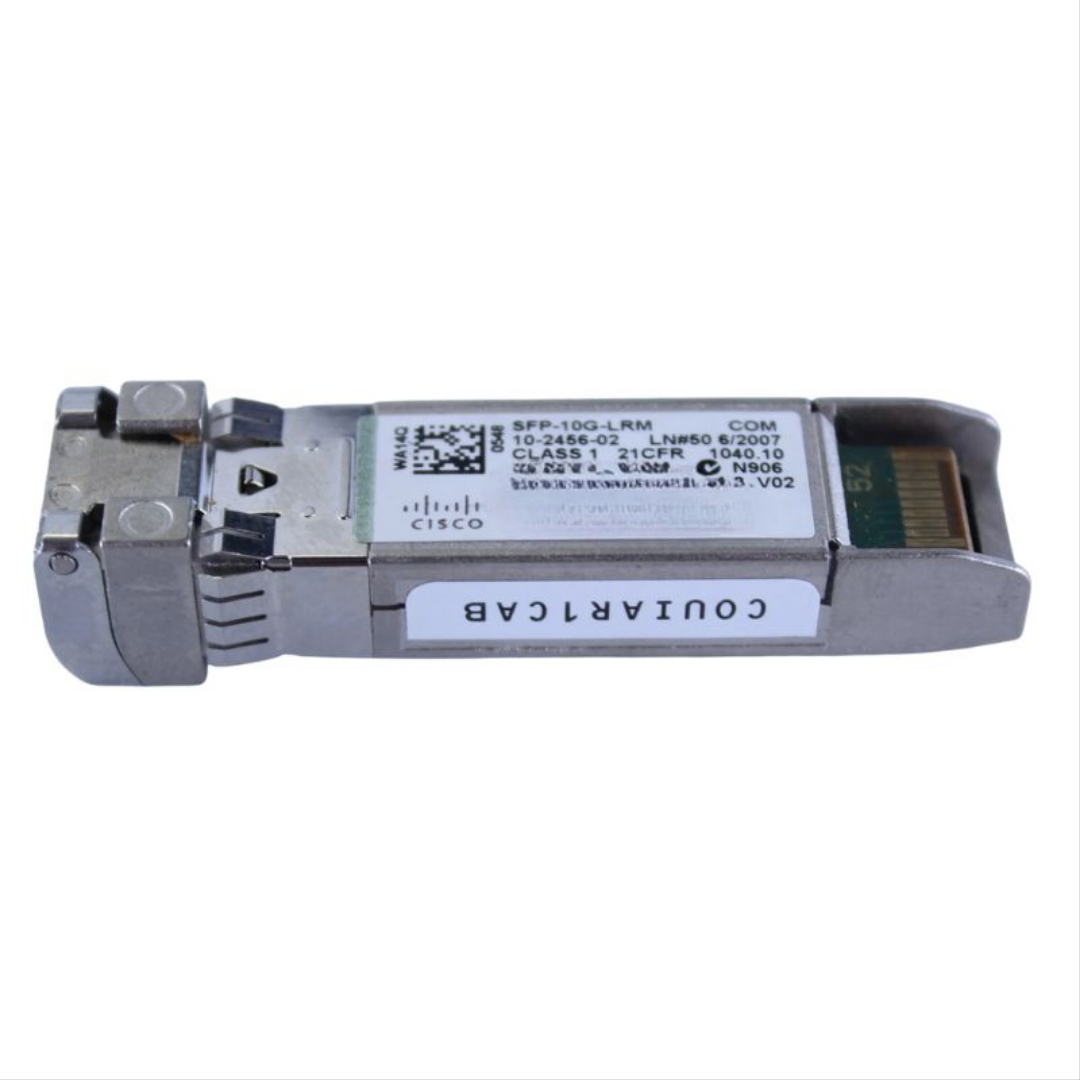
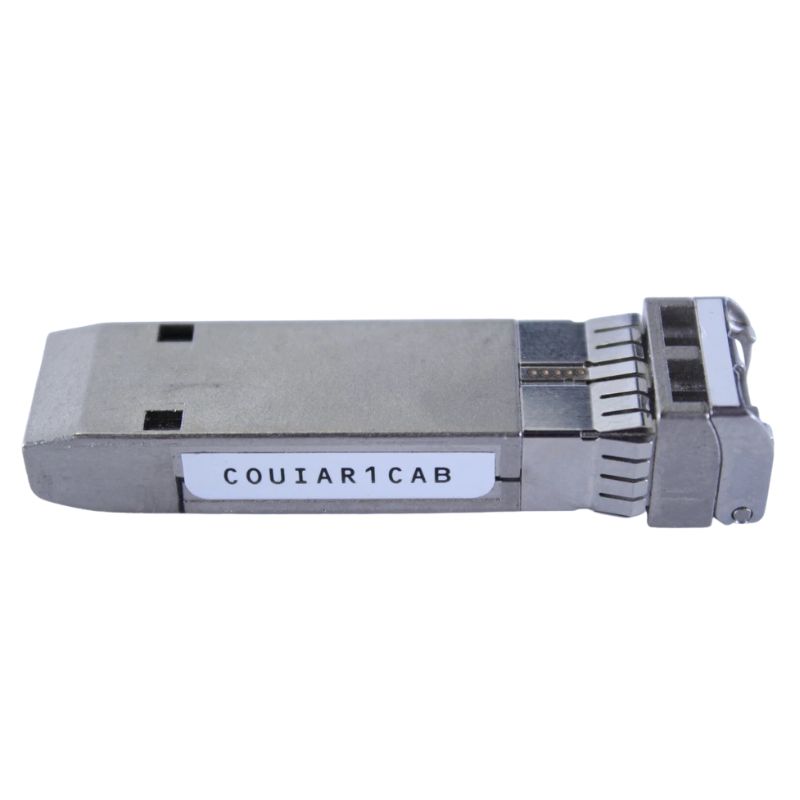
Cisco SFP-10G-LRM 10GBase-LRM 10Gb Transceiver Overview
The Cisco SFP-10G-LRM SFP+ transceiver module is engineered to deliver dependable 10 Gigabit Ethernet connectivity across long-reach multimode fiber environments. Designed as a compact hot-swappable plug-in optical module, this networking component enables high-speed data transmission while maintaining stable signal integrity and compatibility across supported Cisco networking platforms.
The Cisco SFP-10G-LRM SFP+ 10GBase-LRM 10Gb Transceiver Module is engineered to deliver reliable 10 Gigabit Ethernet connectivity across enterprise and data center environments that require efficient migration from legacy cabling infrastructures. Built around the Small Form-Factor Pluggable Plus standard, this transceiver module supports high-speed optical transmission while maintaining compact dimensions and operational flexibility.
Organizations deploying scalable network architectures often require optical interfaces capable of extending network reach without introducing unnecessary infrastructure replacement costs. The Cisco SFP-10G-LRM addresses this requirement by supporting operation over both standard single-mode and legacy multimode fiber environments through advanced signal conditioning technologies.
The module integrates seamlessly into compatible networking hardware and enables efficient deployment for aggregation layers, access networks, virtualization infrastructures, and high-performance enterprise backbones.
10GBase-LRM stands for 10 Gigabit Ethernet over Long Reach Multimode optical transmission. This specification was created to support 10Gb Ethernet operation over installed multimode fiber systems that previously served lower-speed network generations.
The LRM standard enables organizations to transition toward higher throughput without extensive recabling initiatives. By supporting transmission over existing infrastructure, network upgrades become more cost-effective and operationally efficient.
Unlike short-range optical standards that prioritize limited distances or long-range standards requiring single-mode infrastructure, 10GBase-LRM occupies an important middle ground that balances compatibility, reach, and deployment flexibility.
The SFP+ interface design reduces physical space requirements while enabling high-density switching and routing environments. Compared with larger optical form factors, SFP+ modules consume less power and permit greater port density across rack infrastructure.
The compact design contributes to improved airflow management inside networking equipment while reducing thermal challenges in high-capacity environments.
Modern enterprise facilities frequently deploy dozens or hundreds of optical links simultaneously, making compact optical solutions increasingly valuable for maximizing rack utilization.
The module delivers wire-speed 10Gb Ethernet performance designed for bandwidth-intensive applications. Modern workloads including virtualization, cloud infrastructure, data analytics, storage communication, and high-volume traffic aggregation benefit from stable high-speed optical transmission.
Maintaining low latency and consistent signal quality helps ensure predictable application behavior and improved user experiences across distributed computing environments.
Signal consistency plays an important role in enterprise networking. Optical modules must maintain transmission integrity across varying environmental conditions and traffic loads.
The Cisco SFP-10G-LRM incorporates technologies intended to support stable operation through controlled optical performance and dependable receiver sensitivity.
Reliable optical communication reduces retransmissions and minimizes network interruptions. Maintaining low error rates becomes increasingly important in applications such as database synchronization, virtualization migration, storage access, and real-time communications.
The LRM specification allows network administrators to extend 10Gb Ethernet services beyond typical short-range limitations while preserving compatibility with installed fiber systems.
This capability enables organizations to connect equipment rooms, distribution layers, and departmental infrastructure without redesigning entire network topologies.
One of the defining characteristics of the Cisco SFP-10G-LRM module is its ability to support existing multimode fiber deployments. Many organizations maintain large installed bases of legacy optical cabling that remain physically functional but were originally implemented for lower-speed Ethernet generations.
The ability to utilize these infrastructures provides a practical pathway toward modern bandwidth requirements while reducing capital expenditure.
Network modernization often becomes expensive when complete cable replacement is required. Optical technologies capable of operating across existing cabling allow organizations to preserve previous infrastructure investments.
This compatibility supports phased migration strategies that reduce operational disruption.
In environments that require longer distances or newer optical infrastructure, the Cisco SFP-10G-LRM can integrate into broader fiber strategies involving single-mode connectivity where supported deployment conditions are maintained.
This flexibility increases deployment options across campus and enterprise architectures.
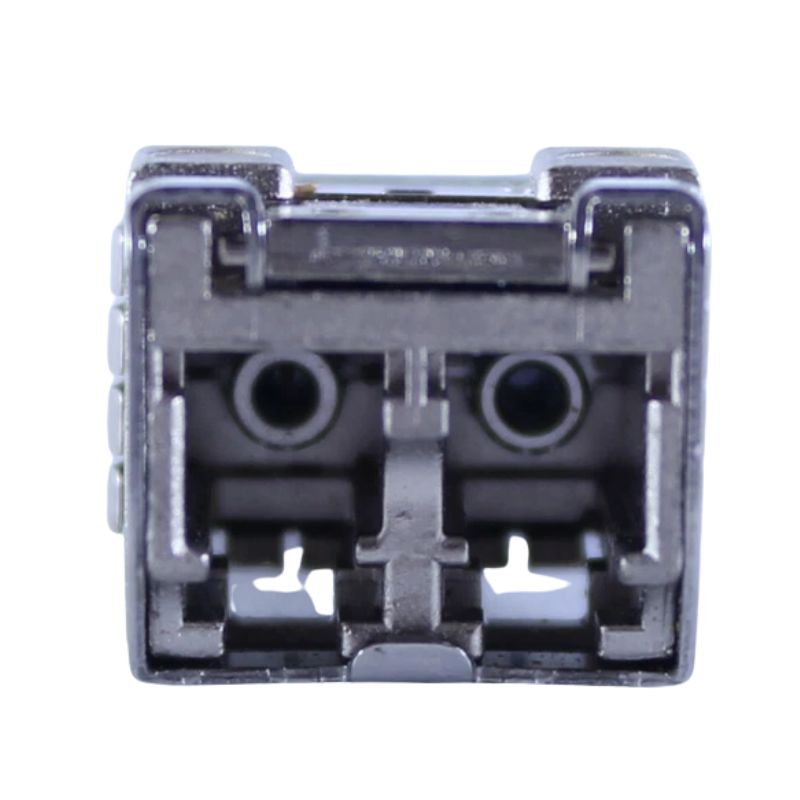
The module uses an LC optical connector interface that supports compact cable management and efficient port density.
LC connectors remain widely adopted because of their small footprint, ease of installation, and compatibility with enterprise optical ecosystems.
Modern data centers demand continuous increases in bandwidth while controlling operational complexity. The Cisco SFP-10G-LRM provides a practical solution for connecting switching layers and supporting east-west traffic growth.
By leveraging installed optical infrastructure, organizations can accelerate deployment schedules and reduce project costs.
High-density server environments require stable high-throughput communication paths between compute and switching resources.
Optical modules supporting 10Gb Ethernet provide the bandwidth needed to accommodate virtualization, container platforms, and application clustering.
Storage traffic frequently requires predictable performance and low transmission interruptions.
The Cisco SFP-10G-LRM contributes to reliable communication for storage access architectures where throughput consistency is critical.
Large organizations often operate distributed office environments requiring centralized connectivity.
The module enables higher-speed backbone connections between network closets, distribution switches, and core infrastructure.
This architecture supports growing digital workloads while maintaining operational efficiency.
Virtualization platforms increase traffic density due to workload mobility and resource sharing.
Optical interfaces capable of sustaining 10Gb performance assist in supporting virtual machine migration, centralized storage access, and cloud orchestration activities.
The Cisco SFP-10G-LRM is optimized for operation within compatible Cisco switching and routing ecosystems.
Integration across supported platforms simplifies deployment and allows centralized management of optical resources.
Consistent interoperability contributes to reduced troubleshooting complexity and predictable operational outcomes.
Hot-swappable functionality enables administrators to install or replace transceiver modules without shutting down active networking equipment.
This capability minimizes service interruptions and improves maintenance efficiency in environments requiring continuous uptime.
Energy efficiency remains an important consideration in modern networking environments.
The SFP+ form factor contributes to reduced power consumption compared with older optical technologies while maintaining high throughput capabilities.
Lower energy demand may support broader sustainability initiatives and reduce operational expenses over time.
Efficient heat handling supports long-term module reliability.
Compact transceiver architectures assist equipment manufacturers in designing networking hardware capable of maintaining stable operating conditions under high port utilization.
Enterprise networks frequently operate around the clock and require components capable of maintaining consistent performance under sustained workloads.
Reliable optical modules reduce maintenance requirements and support long-term infrastructure planning.
Organizations upgrading from Gigabit Ethernet infrastructures often seek solutions that preserve investment while increasing performance.
The Cisco SFP-10G-LRM supports migration initiatives by enabling adoption of 10Gb connectivity with reduced dependence on complete cabling replacement.
Migration strategies can be implemented incrementally, allowing departments or facilities to upgrade according to business priorities.
Incremental deployment reduces risk associated with large-scale network transformations.
Organizations can prioritize critical infrastructure areas while preserving continuity across existing operational environments.
Bandwidth demands continue to increase as organizations adopt digital transformation initiatives, cloud services, analytics platforms, and high-volume collaboration tools.
Deploying optical infrastructure capable of sustained 10Gb operation establishes a stronger foundation for future expansion.
Strategic adoption of enterprise optical technologies enables improved scalability while maintaining manageable operational complexity.
Long-term network planning emphasizes adaptability, compatibility, and controlled operational costs.
The Cisco SFP-10G-LRM SFP+ 10GBase-LRM 10Gb Transceiver Module represents an optical connectivity category designed to support evolving enterprise requirements through dependable performance, infrastructure flexibility, and efficient deployment models that align with modern networking objectives.


 Contact Us
 Information
 Catalog
 Solid State Drives (SSD)
 Network Switches
 Hard Disk Drives
 HBA & Controllers
 PC & Servers
 PC & Server Memory
 CPU & Processors
 Network Routers
 Power Supplies
 Tape Drives & Libraries
 Network Devices
 Computer & Network Cables