(7% discount is applied at checkout)
Cart is empty
Your go-to destination for cutting-edge server products
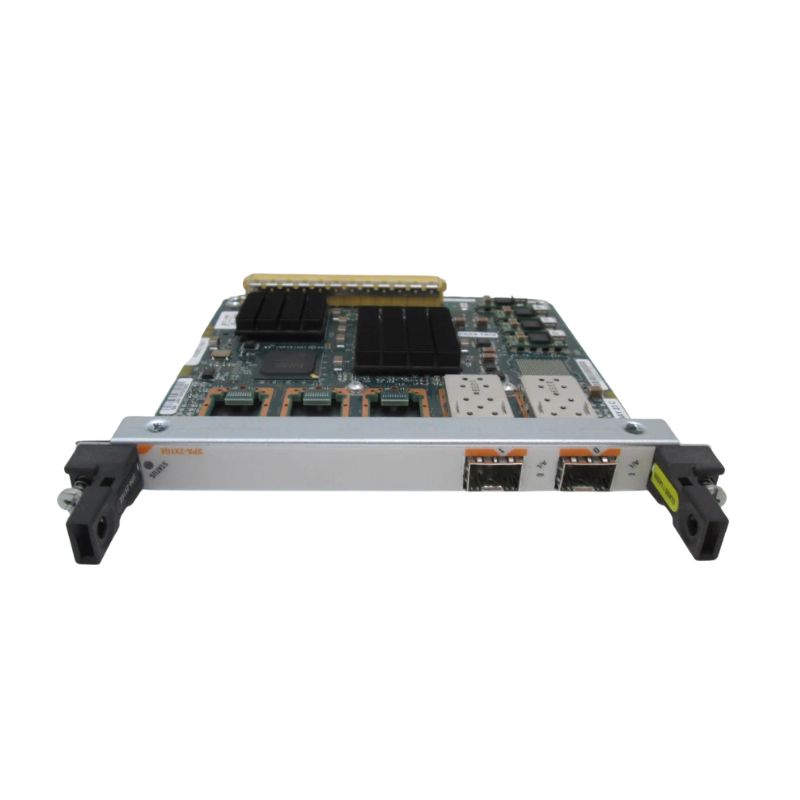


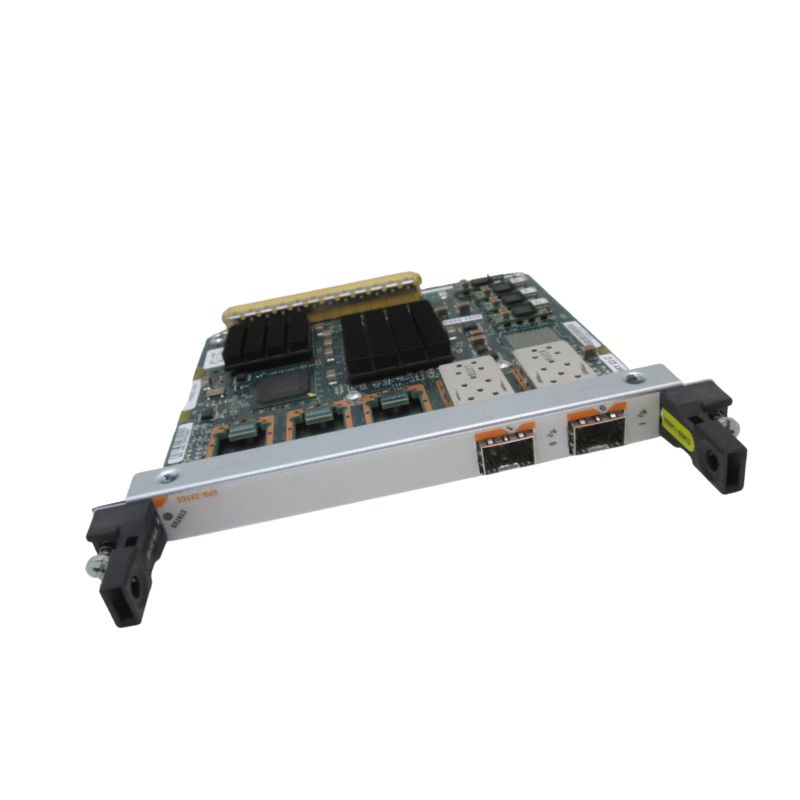
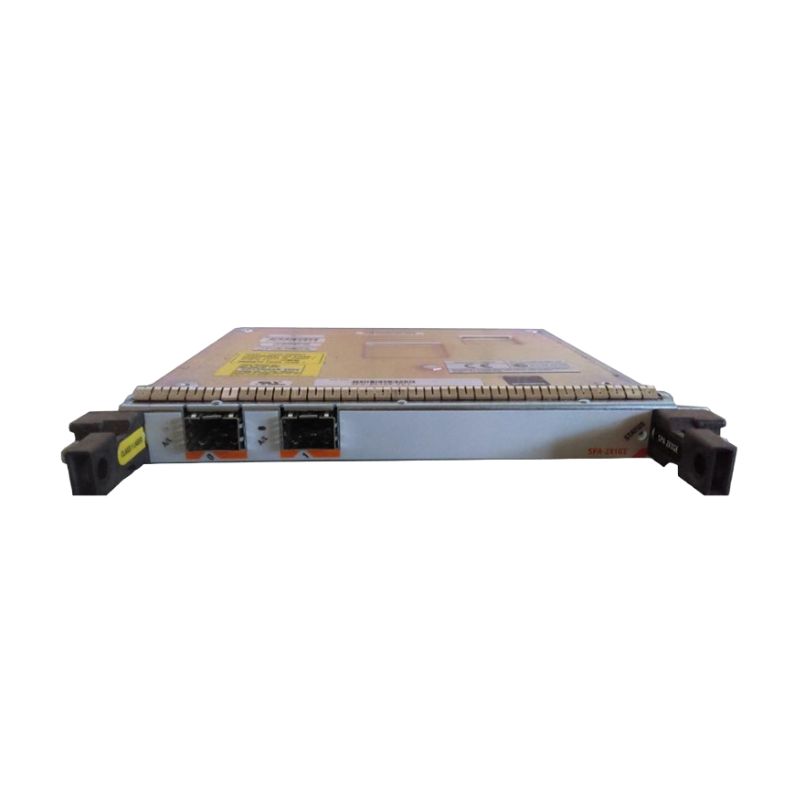
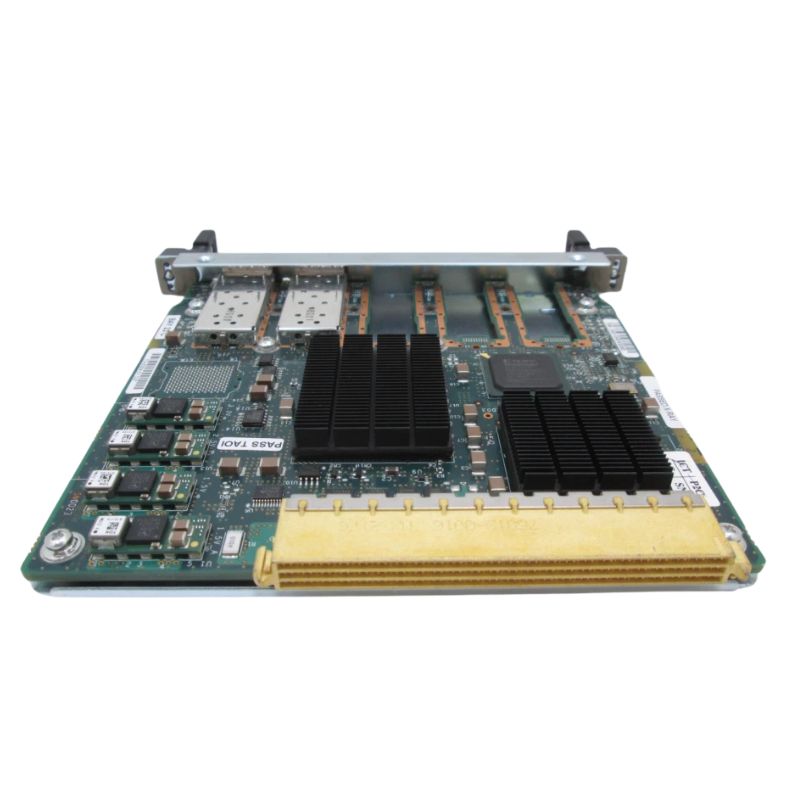
Cisco SPA-2X1GE 2 Port Ethernet Shared Adapter. Excellent Refurbished with 1 year replacement warranty
The Cisco SPA-2X1GE is a high-performance dual-port Gigabit Ethernet adapter designed to meet the needs of diverse networking environments. Featuring advanced capabilities, this adapter supports seamless integration into enterprise, data center, and small to medium-sized business (SMB) networks, ensuring high-speed connectivity and reliability.
The Cisco SPA-2X1GE 2 Port Ethernet Shared Adapter is a specialized networking interface module designed to extend high-performance Ethernet connectivity in carrier-grade, enterprise, and service provider environments. As part of the broader Cisco Shared Port Adapter (SPA) ecosystem developed this adapter plays a critical role in modular router architectures where scalability, redundancy, and flexible interface provisioning are essential. It is commonly deployed in advanced routing platforms that require reliable dual-port Gigabit Ethernet connectivity while maintaining optimized hardware utilization and shared slot architecture efficiency.
The SPA-2X1GE module is designed for integration into Cisco carrier-class routers and modular aggregation systems that support Shared Port Adapters. Its architecture enables network operators to dynamically allocate interface resources without requiring full hardware replacement or system redesign. This flexibility makes it highly valuable in environments where traffic patterns evolve frequently, such as ISP backbones, enterprise WAN aggregation layers, and multi-tenant data centers.
The Shared Port Adapter concept is built around modularity and scalability. Instead of fixed interface cards, SPAs allow multiple interface types to coexist within a single chassis, sharing forwarding and control resources. The SPA-2X1GE contributes to this model by providing two independent Gigabit Ethernet ports that can be assigned for different routing or switching functions depending on configuration needs.
One of the most significant advantages of the SPA-2X1GE is its abstraction of physical interfaces from logical network design. Administrators can assign interfaces to virtual routing instances, service chains, or segmented traffic domains without physically altering the hardware layout. This abstraction supports modern network virtualization practices and hybrid cloud connectivity strategies.
The module is engineered for high durability and long lifecycle operation in enterprise-grade chassis environments. It includes dual RJ-45 Gigabit Ethernet interfaces that support auto-negotiation, full-duplex communication, and standard IEEE 802.3 compliance. The electrical design prioritizes signal integrity, low latency forwarding, and efficient power consumption under continuous load conditions.
Each of the two Gigabit Ethernet ports operates independently, allowing simultaneous data transmission across separate logical channels. This configuration is particularly useful for load balancing, redundancy failover setups, and segmentation of control versus data traffic. The ports are typically integrated into routing policies that govern QoS, VLAN tagging, and traffic shaping mechanisms.
The SPA-2X1GE is typically deployed in modular routing systems that support high-density service aggregation. These platforms are designed for telecom carriers, large enterprises, and cloud service providers that require scalable network edge infrastructure. The adapter enhances system flexibility by enabling incremental expansion of Ethernet ports without requiring chassis replacement.
In WAN aggregation scenarios, the SPA-2X1GE facilitates the consolidation of multiple traffic streams into a unified routing infrastructure. This improves bandwidth efficiency and reduces latency between distributed network nodes. At the edge, it supports customer-facing interfaces and uplink connectivity for distributed branch architectures.
Network administrators use the SPA-2X1GE to implement traffic segmentation strategies that enforce security policies and service-level agreements. By assigning each port to different VLANs or routing instances, organizations can isolate business-critical applications from general traffic flows.
The SPA-2X1GE is engineered to maintain consistent throughput under varying network loads. Its hardware-based forwarding capabilities reduce CPU overhead on the host router, allowing for more efficient packet processing. This ensures that performance remains stable even in high-density traffic environments.
The adapter employs optimized buffering and forwarding logic to minimize packet delay. This is particularly important in real-time applications such as VoIP, financial trading systems, and streaming media delivery. The reduction of processing overhead ensures that packets traverse the network with minimal jitter.
Quality of Service policies can be directly applied to each interface on the SPA-2X1GE module. This allows prioritization of mission-critical traffic, ensuring that latency-sensitive applications receive bandwidth precedence over bulk data transfers or background synchronization processes.
Reliability is a core design principle of the SPA-2X1GE adapter. It is built to support continuous operation in mission-critical environments where downtime is not acceptable. Redundancy is achieved through both hardware design and network configuration strategies.
In supported chassis environments, SPA modules can often be replaced without shutting down the entire system. This hot-swap capability minimizes service disruption and allows for rapid maintenance or upgrades in production networks.
As part of the Cisco modular networking family, the SPA-2X1GE is designed to integrate seamlessly with compatible routing platforms and operating systems. This ensures consistent configuration, monitoring, and management across enterprise infrastructures.
Network administrators configure the SPA-2X1GE using standard Cisco IOS or IOS XE command structures, depending on the host platform. This provides centralized control over interface behavior, routing policies, and diagnostic functions.
The SPA-2X1GE is widely used in environments where flexible Ethernet expansion is required without compromising system stability. It is particularly common in service provider edge networks, enterprise WAN hubs, and data center interconnect systems.
Enterprises deploy the SPA-2X1GE to connect branch offices to centralized data centers. Its dual-port configuration allows redundant uplinks or segmented traffic flows between departments and services.
In data center environments, the adapter supports inter-rack and inter-site communication. It helps maintain consistent throughput between distributed compute clusters and storage systems.
The modular nature of the SPA-2X1GE aligns with long-term infrastructure scalability goals. Organizations can expand network capacity incrementally without redesigning entire systems, reducing capital expenditure and improving operational efficiency.
Instead of deploying large fixed-interface routers, administrators can add SPA modules as demand increases. This ensures that infrastructure growth remains aligned with business requirements and traffic evolution.
Security is an integral aspect of deploying Ethernet shared adapters in enterprise networks. The SPA-2X1GE supports integration with firewall policies, access control lists, and encrypted tunneling protocols at the routing layer.
By isolating traffic across different ports and VLANs, organizations can reduce attack surfaces and limit lateral movement within network environments. This segmentation is critical in multi-tenant architectures.


 Contact Us
 Information
 Catalog
 Solid State Drives (SSD)
 Network Switches
 Hard Disk Drives
 HBA & Controllers
 PC & Servers
 PC & Server Memory
 CPU & Processors
 Network Routers
 Power Supplies
 Tape Drives & Libraries
 Network Devices
 Computer & Network Cables