(7% discount is applied at checkout)
Cart is empty
Your go-to destination for cutting-edge server products
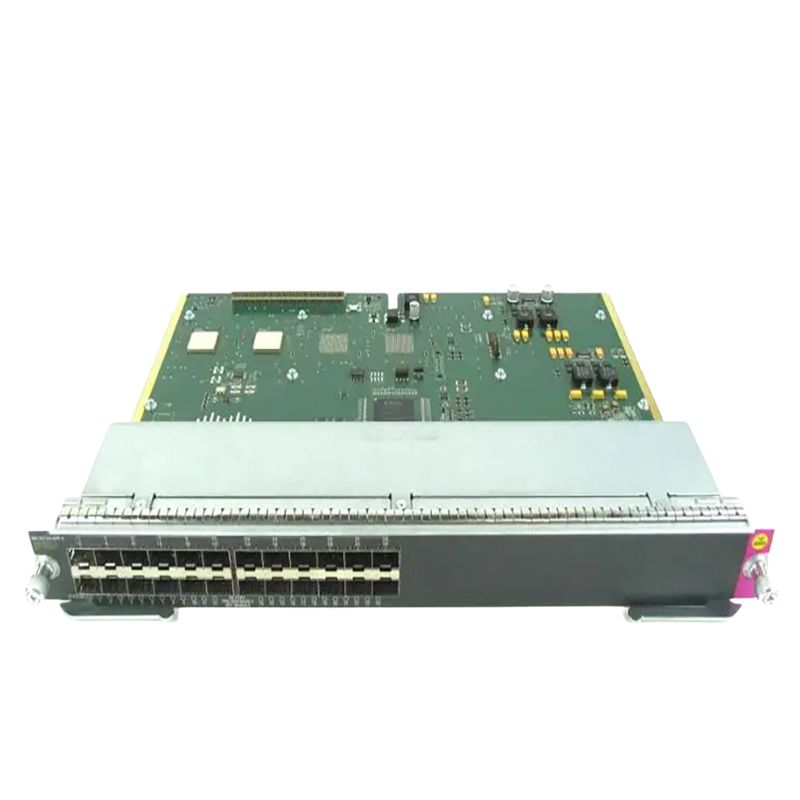


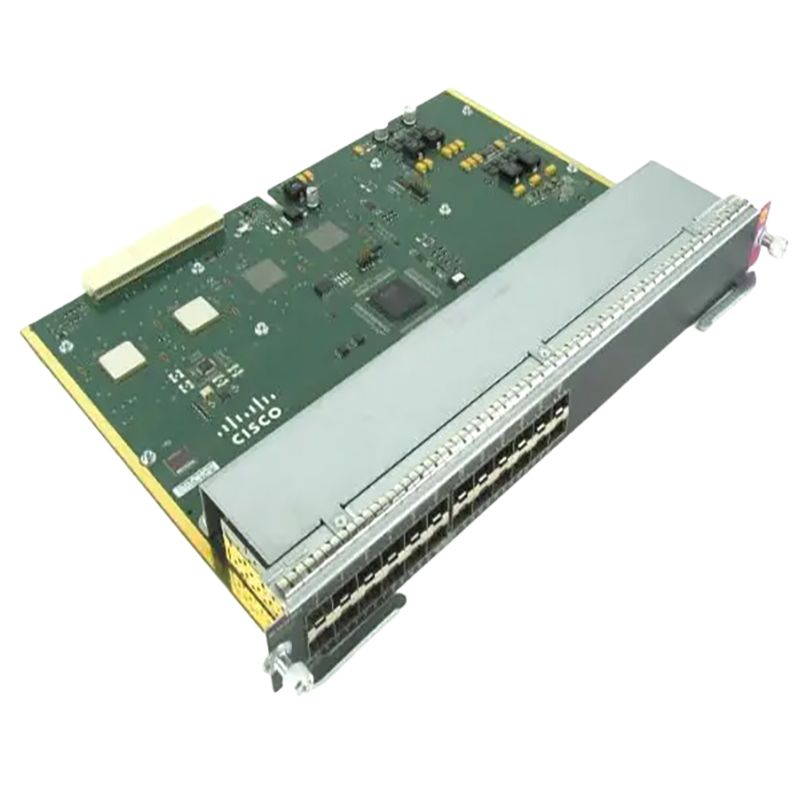
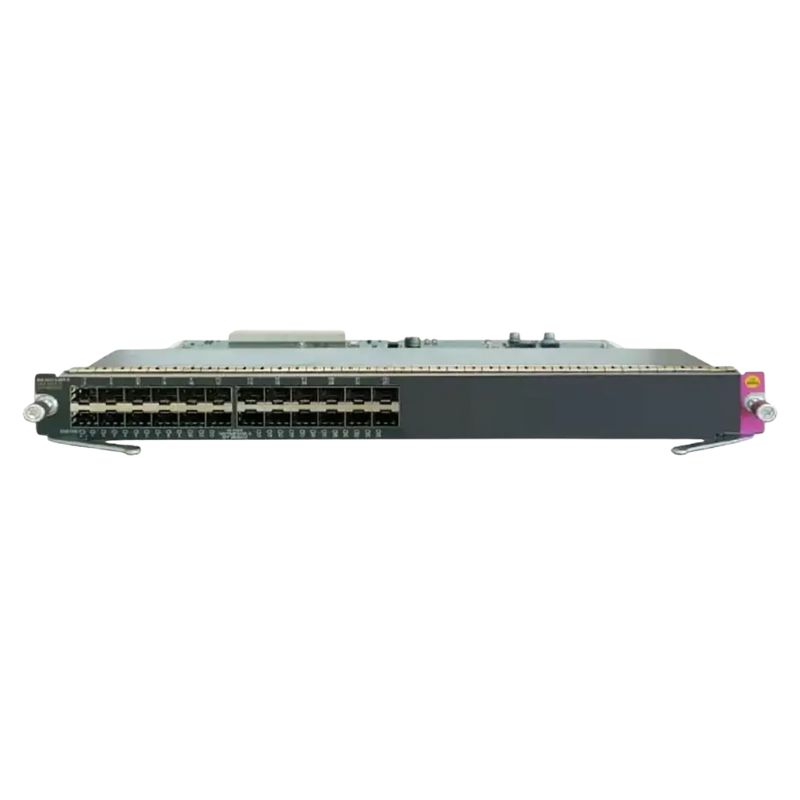
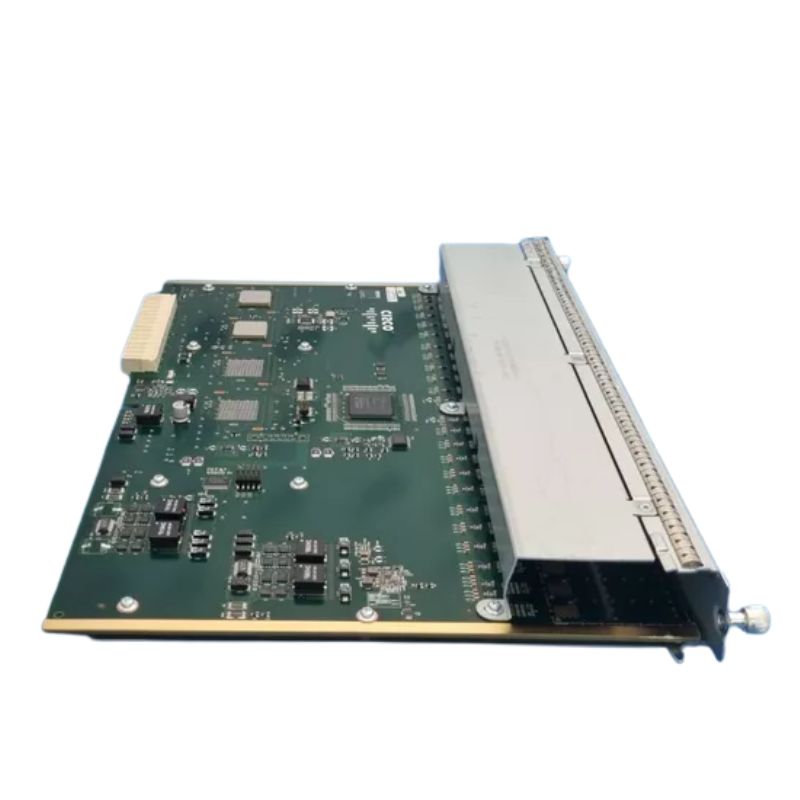
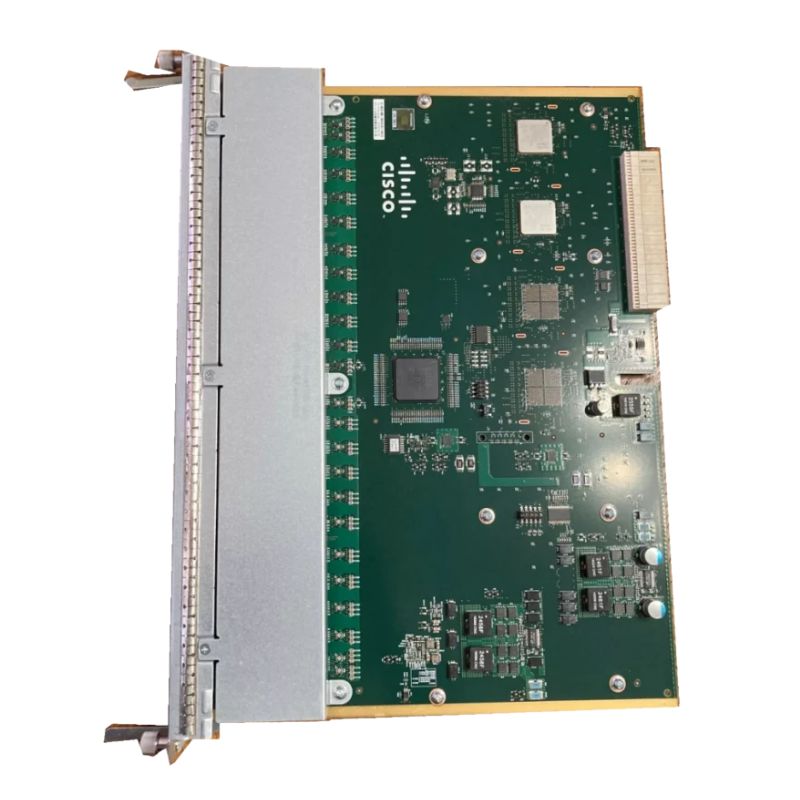
Cisco WS-X4724-SFP-E 24-Ports Expansion Module E-Series Mini-GBIC SFP. Excellent Refurbished with 1 year replacement warranty
The Cisco WS-X4724-SFP-E is a high-density 24-port expansion module designed for advanced enterprise-grade networking environments. Built for scalability, flexibility, and high-performance optical connectivity, this E-Series module enhances switch capacity while supporting modern fiber-based infrastructures.
The Cisco WS-X4724-SFP-E 24-Ports Expansion Module E-Series Mini-GBIC SFP represents a high-density fiber connectivity solution designed for enterprise-class modular switching environments. Built for integration within Cisco Catalyst E-Series chassis architectures, this expansion module enhances network scalability by providing 24 dedicated Small Form-Factor Pluggable (SFP) interfaces. These interfaces are widely recognized for enabling flexible fiber-optic and copper uplink configurations, supporting mission-critical networking deployments where bandwidth, reliability, and redundancy are essential.
As organizations continue to transition toward high-speed converged networks, the demand for modular expansion capabilities such as those provided by the WS-X4724-SFP-E becomes increasingly important. This module supports dynamic network growth, allowing data centers, enterprise campuses, and service provider infrastructures to extend their switching capacity without replacing entire chassis systems. Its design emphasizes hot-swappable modularity, high availability, and compatibility with a wide range of Cisco SFP transceivers.
The WS-X4724-SFP-E is engineered specifically for Cisco Catalyst E-Series modular switches, where it functions as a line card expansion component. Within this ecosystem, the module enables administrators to extend fiber connectivity while maintaining centralized control through the supervisor engine. This ensures seamless integration with existing routing and switching policies, VLAN configurations, and security frameworks.
In large-scale enterprise environments, modular switch architectures provide the flexibility required to adapt to evolving traffic demands. The WS-X4724-SFP-E enhances this flexibility by offering 24 high-speed SFP ports that can be individually configured for uplink, aggregation, or server connectivity roles. This allows network architects to optimize traffic flow and maintain balanced network segmentation across multiple operational domains.
The core feature of the Cisco WS-X4724-SFP-E module is its 24-port SFP interface array. Each port is designed to accept Cisco Mini-GBIC transceivers, which provide compatibility with both fiber optic and copper-based connectivity solutions. This flexibility ensures that network deployments can support a wide range of media types, including multimode fiber, single-mode fiber, and Ethernet copper modules.
The high-density port layout is optimized for enterprise rack environments where space efficiency is critical. By consolidating 24 ports into a single expansion module, Cisco enables organizations to maximize port utilization per chassis slot while reducing physical infrastructure complexity.
The module supports Cisco-certified SFP transceivers, commonly referred to as Mini-GBIC modules. These transceivers are hot-swappable, allowing administrators to replace or upgrade optical interfaces without disrupting network operations. This capability is essential in environments where uptime is a critical performance metric.
The compatibility layer ensures interoperability with a broad range of Cisco optical modules, including short-reach, long-reach, and extended-reach fiber solutions. This allows organizations to tailor their connectivity infrastructure based on distance requirements and bandwidth demands.
The WS-X4724-SFP-E integrates directly into the Catalyst switch backplane, leveraging high-speed internal switching fabric channels. This ensures that data transmitted through the module is efficiently processed and forwarded across the network with minimal latency.
By utilizing Cisco’s distributed switching architecture, the module offloads processing from centralized components, enabling scalable performance even under heavy traffic conditions. This architecture is particularly beneficial in data center aggregation layers and campus backbone deployments.
The WS-X4724-SFP-E is optimized for high-throughput networking environments where latency sensitivity is a key concern. Each SFP port is capable of supporting gigabit-class connectivity, enabling aggregate bandwidth suitable for enterprise backbone and aggregation layer deployments.
The module’s internal architecture is designed to minimize packet processing delays, ensuring efficient forwarding between access and distribution layers. This makes it suitable for latency-sensitive applications such as VoIP, video conferencing, virtualization workloads, and real-time data analytics systems.
In multi-tier network architectures, the WS-X4724-SFP-E plays a crucial role in traffic aggregation. By consolidating multiple downstream connections into a centralized high-capacity module, it simplifies load distribution and enhances network efficiency.
This design supports balanced traffic flows across uplink paths, reducing congestion and improving overall Quality of Service (QoS). Network administrators can leverage this capability to ensure consistent performance across mission-critical applications.
High availability is a fundamental requirement in enterprise networking, and the WS-X4724-SFP-E supports redundancy through its integration with Cisco Catalyst chassis systems. When deployed alongside redundant supervisor engines and power supplies, the module contributes to a fault-tolerant network architecture.
In the event of hardware or link failure, traffic can be automatically rerouted through alternative paths, ensuring uninterrupted service continuity. This resilience is particularly important in financial institutions, healthcare systems, and large-scale cloud infrastructure environments.
Within modern data center environments, the WS-X4724-SFP-E is commonly deployed at the aggregation layer, where it connects access switches to core switching infrastructure. Its high port density allows for efficient consolidation of multiple server racks into centralized switching systems.
This improves network manageability while reducing cabling complexity and operational overhead. The module’s support for fiber connectivity also enhances data center scalability, enabling high-speed interconnects between distributed computing resources.
In enterprise campus environments, the WS-X4724-SFP-E serves as a backbone expansion solution, connecting multiple buildings, departments, and network segments. Its SFP-based architecture supports long-distance fiber links, making it suitable for inter-building connectivity.
This capability ensures seamless communication across geographically distributed campus infrastructures while maintaining high bandwidth availability and low latency performance.
The module also plays a role in Wide Area Network (WAN) and Metropolitan Area Network (MAN) deployments, where fiber uplinks are required to connect remote offices and branch locations. Its compatibility with long-reach optical transceivers enables reliable long-distance communication between distributed enterprise sites.
Service providers often deploy the WS-X4724-SFP-E in edge aggregation scenarios where high-density fiber termination is required. The module’s scalability allows providers to support large volumes of customer connections while maintaining structured traffic segmentation.
This makes it suitable for broadband aggregation, metro Ethernet services, and enterprise connectivity offerings where performance and reliability are critical.
The WS-X4724-SFP-E operates under Cisco IOS or Cisco IOS XE environments depending on the chassis configuration. This integration provides administrators with a unified management interface for configuration, monitoring, and troubleshooting.
Through this centralized control plane, network policies such as VLAN assignment, QoS prioritization, and security filtering can be consistently applied across all 24 SFP ports.
Cisco’s management ecosystem provides extensive tools for monitoring port status, optical signal strength, and traffic statistics. These capabilities enable proactive network maintenance and rapid fault detection.
Administrators can identify performance degradation, link instability, or hardware anomalies before they impact network operations, ensuring consistent service quality.
Security is a core consideration in enterprise networking, and the WS-X4724-SFP-E supports multiple layers of security enforcement through Cisco Catalyst features. These include access control mechanisms, port security configurations, and integration with network access control systems.
By enforcing strict traffic policies at the module level, organizations can reduce the risk of unauthorized access and ensure compliance with internal security standards.
The Cisco WS-X4724-SFP-E is built using enterprise-grade hardware components designed for continuous operation in demanding environments. Its robust construction ensures durability under high workloads and extended operational cycles.
This reliability is essential for mission-critical deployments where downtime can result in significant operational and financial impact.
The module is designed to operate within Cisco Catalyst chassis cooling systems, leveraging controlled airflow to maintain optimal operating temperatures. Efficient thermal management ensures stable performance even under full port utilization.
This contributes to long-term hardware longevity and reduces the likelihood of heat-induced performance degradation.
Power efficiency is an important consideration in large-scale deployments, and the WS-X4724-SFP-E is optimized to minimize energy consumption while maintaining high performance. Its integration with Cisco power management systems ensures efficient distribution of electrical load across the chassis.
This supports environmentally conscious data center operations and helps reduce overall operational costs.
One of the primary advantages of the WS-X4724-SFP-E is its ability to support incremental network expansion. Organizations can add or replace modules as required without redesigning the entire switching infrastructure.
This modular approach enables cost-effective scalability, allowing enterprises to adapt to evolving bandwidth requirements and application demands over time.
The module’s support for SFP transceivers ensures compatibility with evolving optical networking standards. As higher-speed transceivers become available, organizations can upgrade connectivity without replacing the underlying switching hardware.
This forward-compatible design extends the lifecycle of Cisco Catalyst infrastructure and enhances return on investment.


 Contact Us
 Information
 Catalog
 Solid State Drives (SSD)
 Network Switches
 Hard Disk Drives
 HBA & Controllers
 PC & Servers
 PC & Server Memory
 CPU & Processors
 Network Routers
 Power Supplies
 Tape Drives & Libraries
 Network Devices
 Computer & Network Cables