(7% discount is applied at checkout)
Cart is empty
Your go-to destination for cutting-edge server products
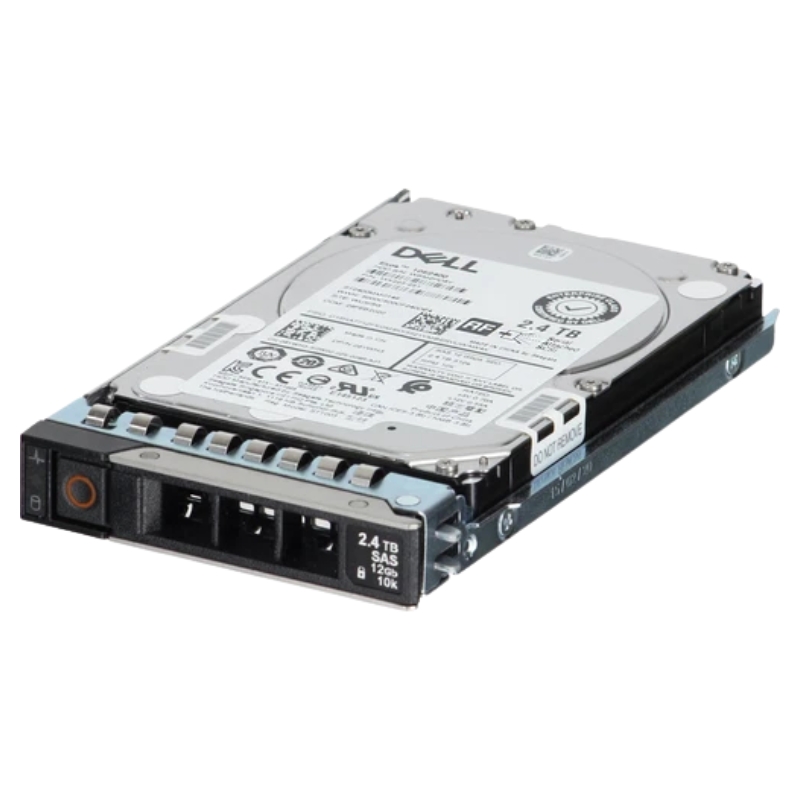


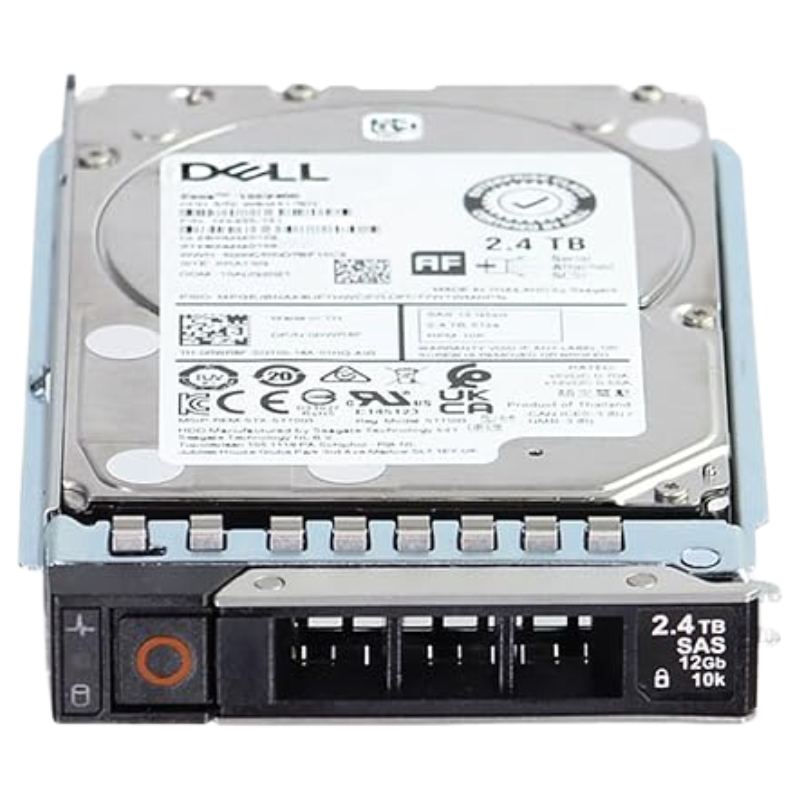
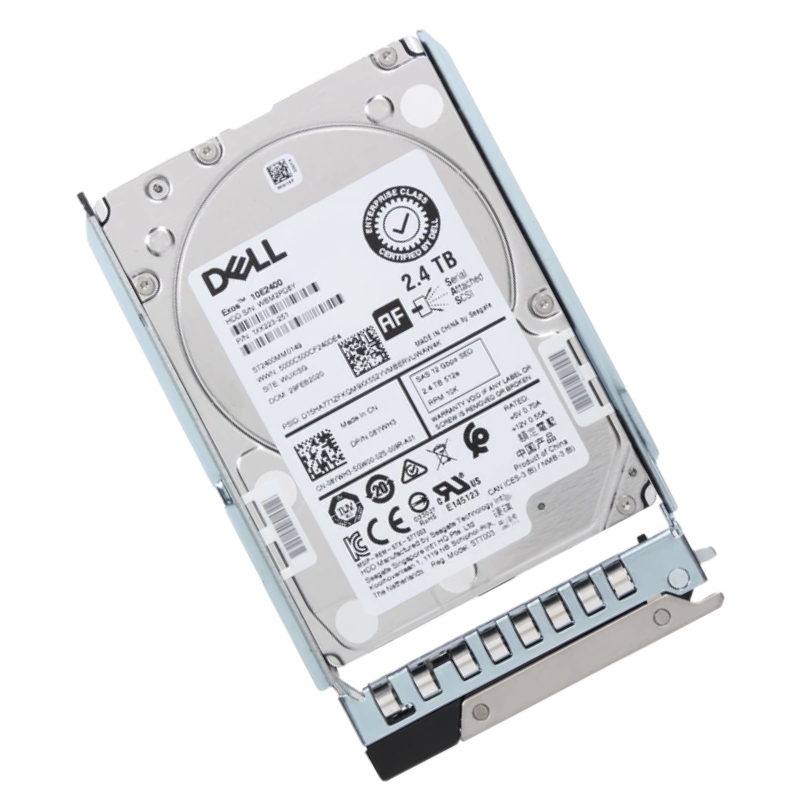
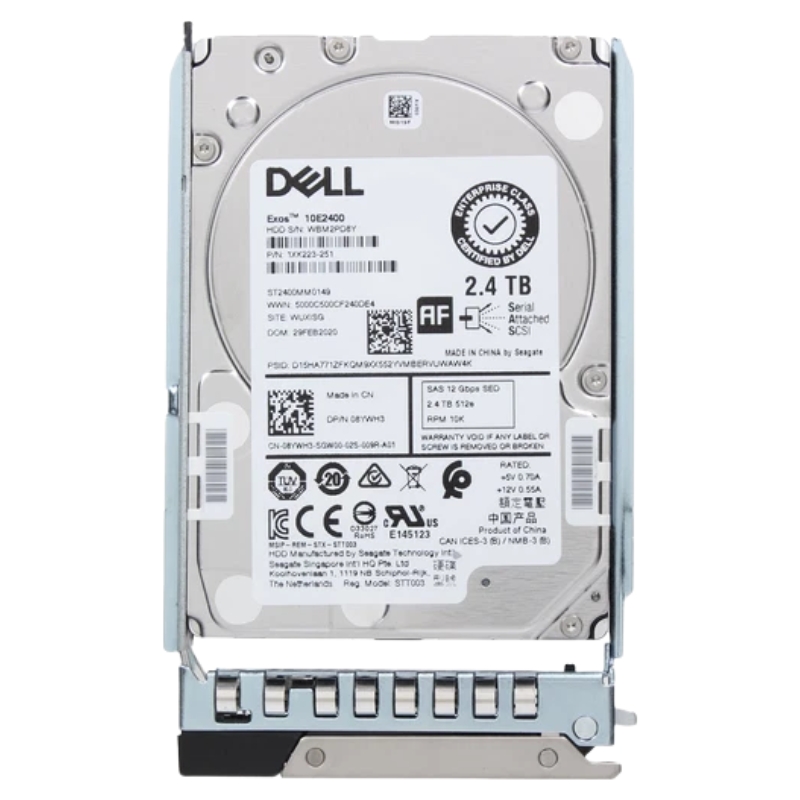
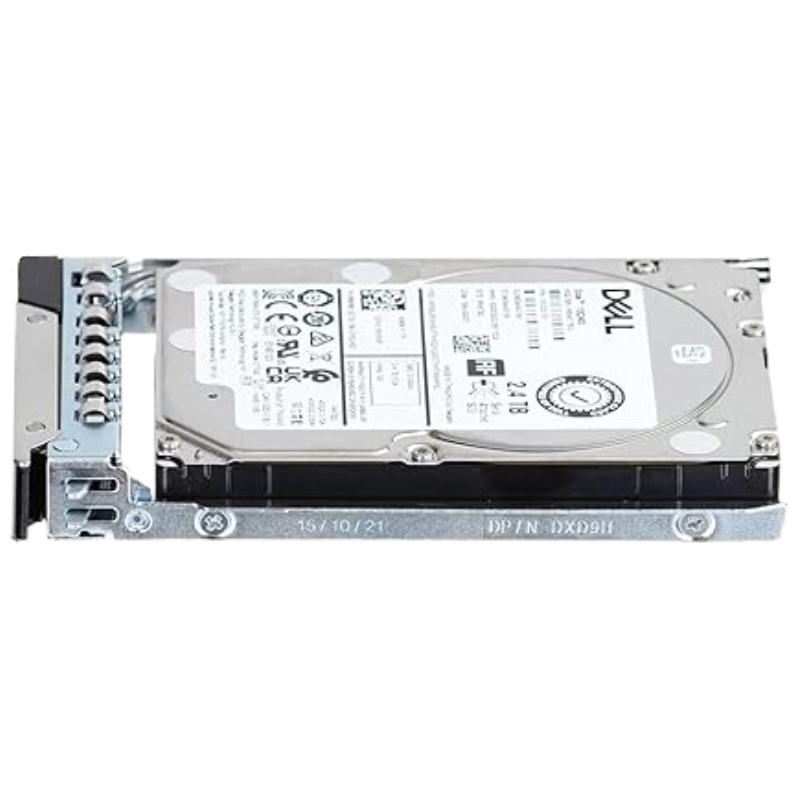
Dell 0F9NWJ 2.4TB 10K RPM SAS-12GBPS SFF Internal Hard Drive. Excellent Refurbished with 1 year replacement warranty
| SKU/MPN | Warranty | Price | Condition | You save |
|---|---|---|---|---|
| 0F9NWJ | 1 Year Warranty | $656.00 | New Sealed in Box (NIB) | You save: $229.60 (26%) |
| 0F9NWJ | 1 Year Warranty | $427.00 | Excellent Refurbished | You save: $149.45 (26%) |
The Dell 0F9NWJ enterprise-grade internal hard disk drive is engineered for high-performance server environments, delivering a balanced combination of speed, reliability, and storage efficiency. Designed with a compact 2.5-inch small form factor (SFF), this 2.4TB SAS 12Gbps hard drive is optimized for mission-critical workloads, virtualization platforms, and data-intensive applications requiring consistent throughput and low latency.
The Dell 0F9NWJ Internal Hard Drive 2.4TB 10K RPM SAS-12GBPS 512E SFF belongs to a high-performance enterprise storage category designed for mission-critical server environments, data-intensive workloads, and scalable storage infrastructures. This category of enterprise hard drives is engineered to deliver a balanced combination of speed, reliability, and capacity, making it a preferred choice for modern data centers, virtualization platforms, and high-availability computing systems. The Dell 0F9NWJ series is optimized for compatibility with Dell PowerEdge servers and other enterprise-grade storage arrays, ensuring seamless integration into existing IT ecosystems while maintaining operational efficiency under continuous workloads.
The SAS-12Gbps interface forms the backbone of the Dell 0F9NWJ internal hard drive category, offering significantly higher data throughput compared to older SATA-based storage solutions. This interface enables dual-port connectivity, allowing redundancy and improved fault tolerance in enterprise deployments. The 12 gigabits per second bandwidth ensures rapid data movement between storage arrays and server processors, minimizing latency and improving transactional performance in database-driven applications and virtualization environments.
Scalability is a defining feature of SAS-based storage infrastructure. The Dell 0F9NWJ category is designed to support large-scale expansion without degrading performance. As enterprise workloads grow, additional drives can be seamlessly integrated into storage arrays, maintaining consistent throughput across multi-drive configurations. This scalability is essential for cloud service providers and data centers that require predictable performance under increasing demand.
Dual-port SAS architecture enhances system reliability by enabling multiple data paths between the drive and the controller. In the event of a path failure, the system can automatically reroute data traffic through an alternate channel, ensuring uninterrupted access to stored information. This redundancy is critical in environments where downtime can result in significant operational disruption or financial loss.
The 10,000 RPM rotational speed of the Dell 0F9NWJ internal hard drive places it in the performance tier of enterprise mechanical storage devices. This high rotational speed reduces latency in data retrieval and improves input/output operations per second (IOPS), making it suitable for workloads that require consistent and predictable performance. Applications such as transactional databases, ERP systems, and virtualization hosts benefit significantly from this performance profile.
Reduced seek times are a direct benefit of high rotational speed combined with advanced actuator mechanisms. The drive is engineered to minimize mechanical delays when accessing scattered data blocks, improving overall system responsiveness. This characteristic is particularly important in environments with random read/write operations.
The Dell 0F9NWJ category is designed for mixed workload environments, supporting both sequential and random access patterns. This adaptability ensures that the drive performs efficiently across a wide range of enterprise applications, from large-scale data analytics to high-frequency transaction processing systems.
The 2.4TB capacity of the Dell 0F9NWJ internal hard drive represents a balance between storage density and performance stability. Unlike ultra-high-capacity drives that may compromise performance in certain workloads, this capacity tier is optimized for environments where consistent speed and reliability are prioritized alongside substantial storage availability.
In RAID configurations and distributed storage systems, the 2.4TB capacity allows for efficient data striping and redundancy management. This improves fault tolerance and ensures that large datasets are distributed evenly across multiple drives, reducing bottlenecks and enhancing system resilience.
Organizations dealing with continuous data growth benefit from the predictable scaling offered by 2.4TB SAS drives. This capacity level allows IT administrators to plan storage expansion in a structured manner, aligning hardware upgrades with business growth requirements.
The 512E (512-byte emulation) sector format enables compatibility with legacy systems while leveraging modern physical sector structures internally. This hybrid approach ensures smooth integration into both older and newer infrastructures without sacrificing performance or data integrity.
Enhanced error correction algorithms embedded within the drive firmware ensure data accuracy during read and write operations. This is critical in enterprise environments where data corruption can have severe consequences. The drive continuously monitors and corrects minor inconsistencies, preserving long-term data reliability.
The Small Form Factor design of the Dell 0F9NWJ internal hard drive allows for high-density storage configurations within limited physical space. This is particularly beneficial in rack-mounted servers and blade systems where space optimization directly impacts infrastructure scalability.
SFF drives generate less heat per unit of storage compared to larger form factor drives when deployed in optimized server environments. This contributes to improved thermal management and reduces cooling requirements in data centers, enhancing overall energy efficiency.
The compact design supports modular storage architectures, allowing IT administrators to configure storage arrays with greater flexibility. This modularity is essential for hybrid cloud deployments and dynamic infrastructure scaling.
The Dell 0F9NWJ internal hard drive is specifically engineered for compatibility with Dell PowerEdge server platforms. This ensures optimal firmware alignment, controller recognition, and performance tuning within Dell-managed environments.
Drive firmware is optimized for Dell server architectures, allowing for enhanced communication between storage controllers and hardware management systems. This improves system monitoring accuracy and predictive failure analysis capabilities.
The drive supports multiple RAID configurations, including RAID 0, RAID 1, RAID 5, RAID 10, and more complex enterprise-level arrays. This flexibility enables organizations to tailor storage performance and redundancy based on workload requirements.
The Dell 0F9NWJ category is widely used in virtualization environments where multiple virtual machines rely on shared storage resources. Its consistent performance ensures stable VM operations, reduced latency, and improved workload distribution across hypervisors.
High-speed data access and reliable transactional processing make this drive suitable for relational database systems, NoSQL databases, and analytics platforms. The 10K RPM performance ensures efficient query execution and reduced response times.
Business-critical applications such as ERP, CRM, and financial systems benefit from the predictable performance characteristics of SAS-based 10K RPM drives, ensuring stable operations even under peak demand conditions.
The Dell 0F9NWJ internal hard drive category is built to meet stringent enterprise endurance requirements. With high mean time between failures (MTBF) ratings, these drives are designed for continuous operation in 24/7 environments.
Engineered for data center conditions, the drive maintains stability under vibration and mechanical stress. This ensures consistent performance even in densely packed server racks where multiple systems operate simultaneously.
Integrated monitoring systems allow early detection of potential drive issues. This predictive capability enables proactive maintenance, reducing unexpected downtime and improving infrastructure reliability.
Despite high-performance capabilities, the Dell 0F9NWJ internal hard drive category is designed to optimize power consumption. Intelligent power management reduces energy usage during idle periods without compromising responsiveness.
Advanced thermal monitoring ensures that drive temperatures remain within optimal operating ranges. This contributes to longer hardware lifespan and improved system stability.
The drive incorporates firmware-level data protection mechanisms designed to safeguard against corruption and unauthorized access. These features are essential in environments handling sensitive or regulated data.
Continuous data validation processes ensure that stored information remains accurate over time. This reduces the risk of silent data corruption, which can compromise system reliability.


 Contact Us
 Information
 Catalog
 Solid State Drives (SSD)
 Network Switches
 Hard Disk Drives
 HBA & Controllers
 PC & Servers
 PC & Server Memory
 CPU & Processors
 Network Routers
 Power Supplies
 Tape Drives & Libraries
 Network Devices
 Computer & Network Cables