(7% discount is applied at checkout)
Cart is empty
Your go-to destination for cutting-edge server products
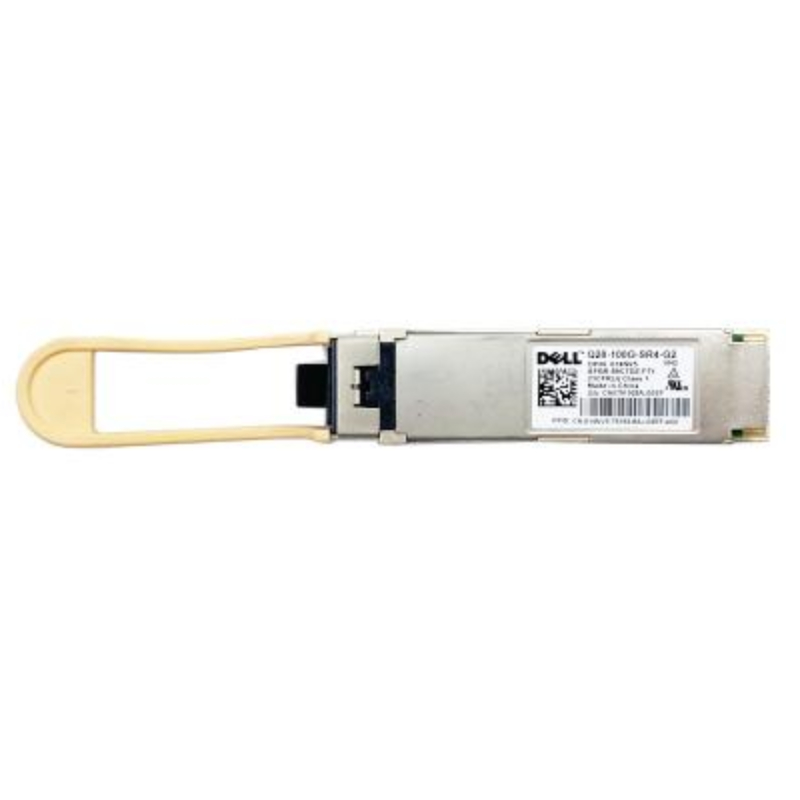


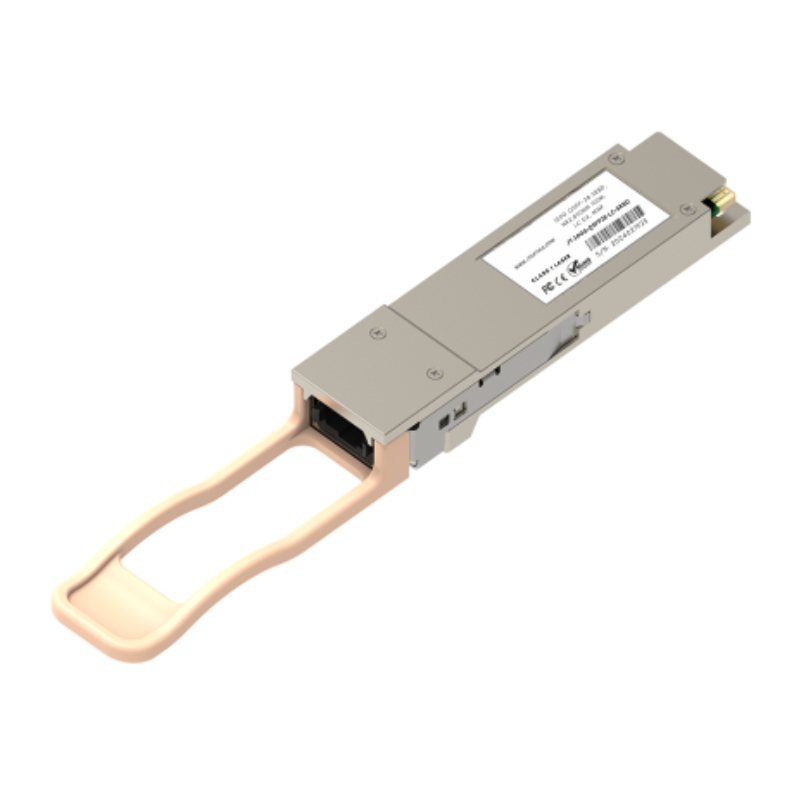
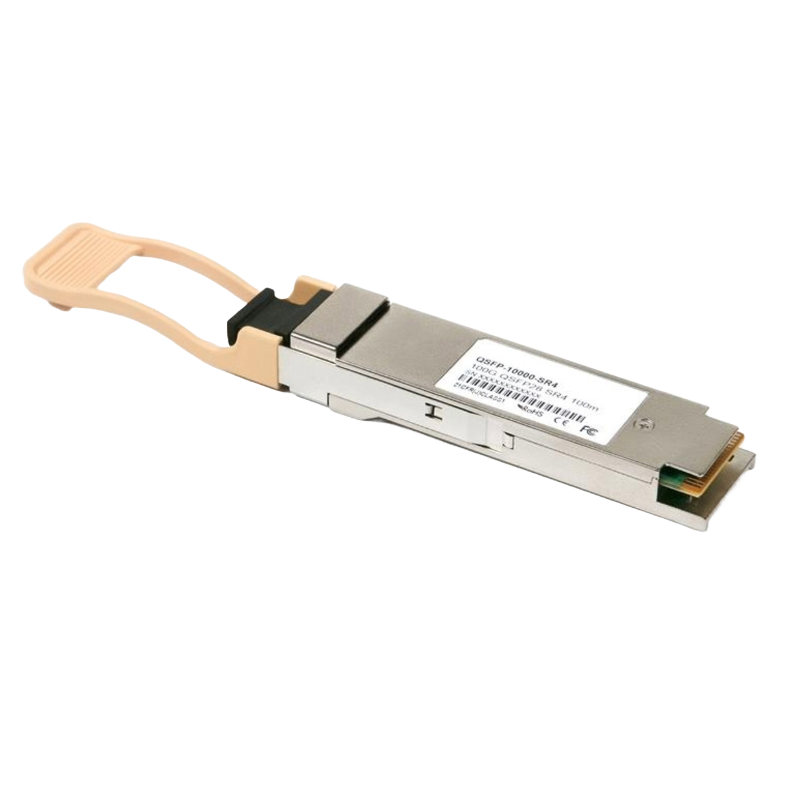
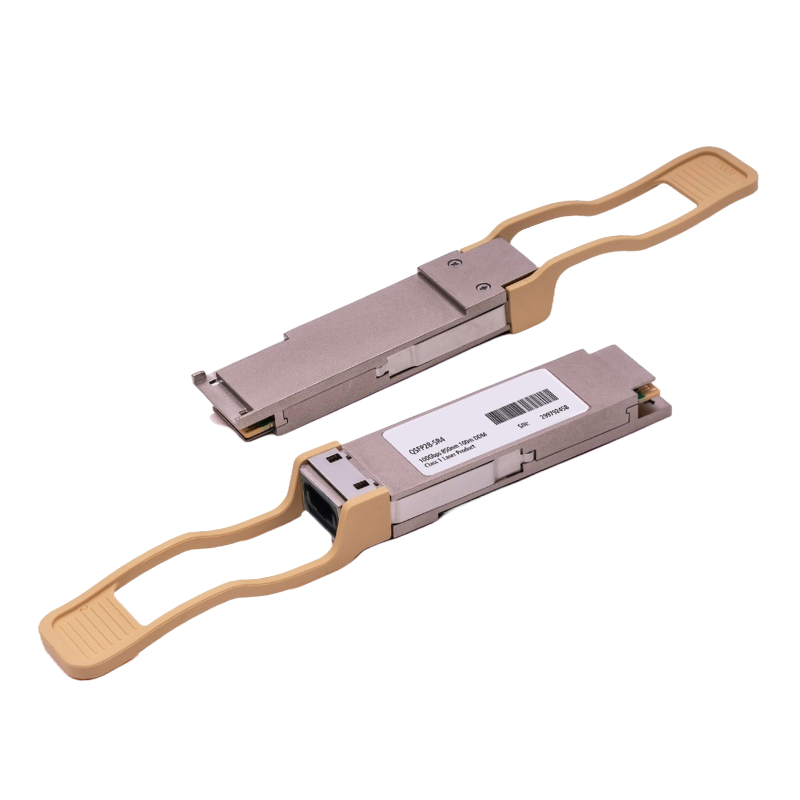
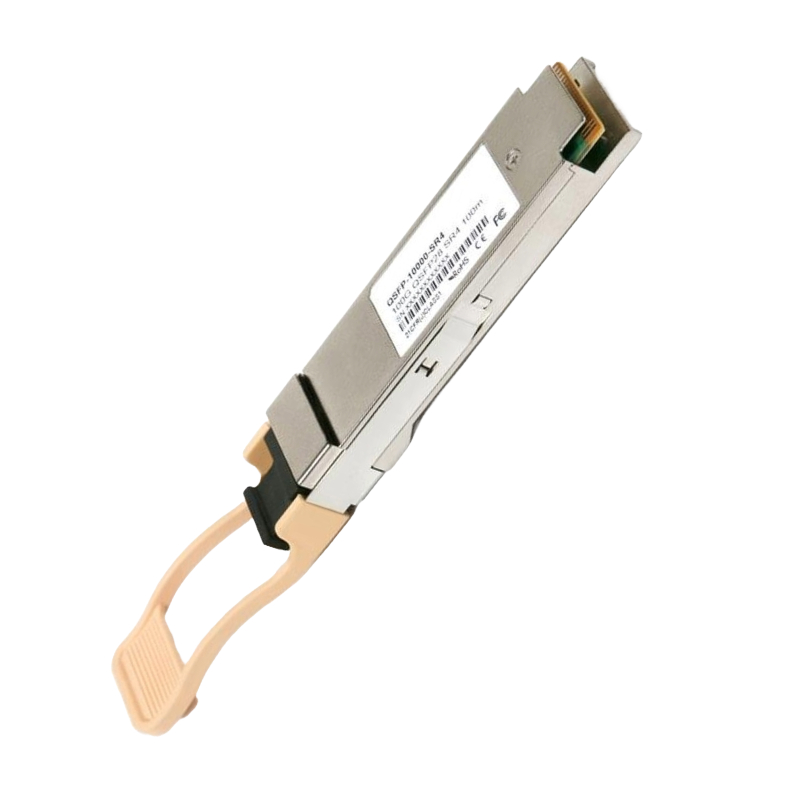
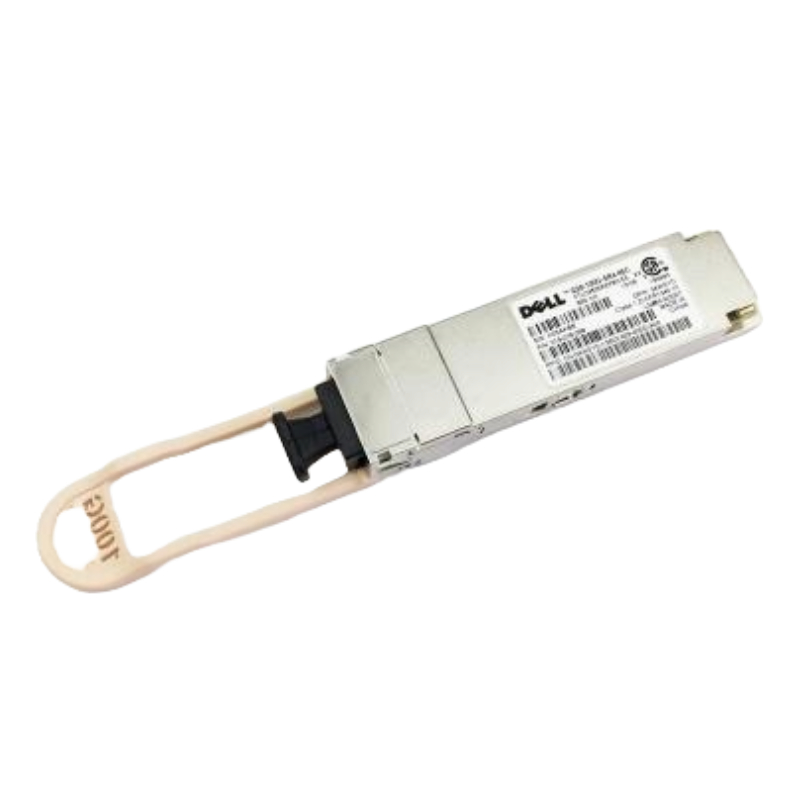
Dell 407-BCEQ QSFP-100G-SR4 QSFP28 Transceiver 100GBPS SR4 MMF MPO-12. Excellent Refurbished with 1 year replacement warranty
The Dell 407-BCEQ QSFP-100G-SR4 transceiver is a high‑performance, plug‑in networking component engineered to deliver rapid data transmission across modern data centers. Designed for reliability and efficiency, this QSFP28 module supports 100‑Gigabit Ethernet connectivity over multimode fiber (MMF) using MPO‑12 cabling.
The evolution of high-speed networking has led to the widespread adoption of 100 Gigabit Ethernet (100GbE) solutions in modern data centers, enterprise backbones, and cloud-scale infrastructures. The QSFP28 form factor has become a critical standard for achieving high-density, low-power, and high-performance optical interconnects. Within this ecosystem, the 100G SR4 (Short Range 4-lane) optical transceiver design plays a pivotal role in delivering reliable short-distance transmission over multimode fiber (MMF).
The QSFP28 100G SR4 architecture is engineered to support four parallel lanes, each transmitting 25Gbps data streams simultaneously. These lanes are combined to deliver an aggregate bandwidth of 100Gbps. This parallel transmission method significantly improves efficiency and reduces latency compared to serial optical systems. The use of MPO-12 fiber connectors further enhances density and simplifies cable management in high-performance environments.
Short-reach optical modules like the QSFP-100G-SR4 are optimized for intra-data center connectivity, typically spanning distances up to 100 meters over OM4 multimode fiber and slightly less over OM3 fiber. This makes them highly suitable for top-of-rack (ToR), leaf-spine architectures, and high-density switching environments where fast, low-latency communication is essential.
In large-scale deployments, minimizing signal degradation while maintaining high throughput is essential. The SR4 design achieves this through parallel optics, reducing the complexity of long-distance signal conversion and improving energy efficiency. This balance of performance and cost-effectiveness is a defining characteristic of SR4-based QSFP28 modules.
The Dell 407-BCEQ QSFP-100G-SR4 QSFP28 transceiver is designed to meet the rigorous demands of enterprise and hyperscale networking environments. It utilizes an MPO-12 optical interface, which supports eight optical fibers for data transmission and reception, while the remaining fibers are used for alignment and redundancy within the connector structure.
As part of the QSFP28 ecosystem, this module integrates seamlessly into compatible networking equipment, providing plug-and-play functionality that simplifies deployment and maintenance. The module is engineered to deliver stable performance under varying temperature and workload conditions, ensuring consistent throughput in mission-critical applications.
The 100G SR4 architecture divides data transmission into four independent lanes, each operating at 25Gbps. These lanes are transmitted over multimode fiber using vertical-cavity surface-emitting lasers (VCSELs), which are optimized for short-distance, high-speed optical communication.
At the receiving end, photodetectors convert optical signals back into electrical signals, where they are recombined into a unified 100GbE stream. This parallel transmission model reduces signal loss and improves reliability in dense cabling environments.
Signal integrity is a critical factor in high-speed optical transmission. The Dell 407-BCEQ module incorporates advanced signal conditioning and error correction techniques to minimize bit error rates. By maintaining precise alignment across MPO-12 fiber strands, the module ensures stable data transfer even in environments with high electromagnetic interference.
Power consumption is a major concern in large-scale data centers. QSFP28 SR4 modules are designed with energy efficiency in mind, typically consuming significantly less power per gigabit compared to older optical standards. This efficiency contributes to lower operational costs and reduced thermal output, simplifying cooling requirements.
Multimode fiber (MMF) plays a crucial role in enabling short-reach optical communication. The Dell 407-BCEQ QSFP-100G-SR4 module is commonly deployed with OM3 and OM4 fiber types, which support high-bandwidth transmission over short distances. OM3 fiber typically supports up to 70 meters for 100G applications, while OM4 fiber extends this range to approximately 100 meters under optimal conditions.
The choice between OM3 and OM4 depends on infrastructure design, cost considerations, and required transmission distance. OM4 fiber provides improved modal bandwidth, making it more suitable for dense, high-performance environments.
The MPO-12 connector is a standardized multi-fiber push-on interface that enables compact, high-density optical connections. It supports 12 fiber strands within a single connector, allowing efficient parallel transmission required for 100G SR4 operation.
This connector type simplifies cable management by reducing the number of individual fiber strands required in high-density networking environments. It also improves installation speed and reduces the risk of misalignment during deployment.
Proper polarity management is essential in MPO-based systems to ensure correct signal alignment between transmitting and receiving lanes. Structured cabling practices are used to maintain consistent fiber mapping, preventing data transmission errors and ensuring system stability.
Modern data centers rely heavily on leaf-spine architectures to ensure scalable and predictable network performance. In this environment, the Dell 407-BCEQ QSFP-100G-SR4 module is commonly used for high-speed interconnects between leaf and spine switches, enabling non-blocking communication pathways.
The low-latency and high-bandwidth characteristics of SR4 transceivers make them ideal for supporting east-west traffic patterns that dominate cloud computing environments and distributed applications.
High-performance computing (HPC) environments require extremely fast and reliable interconnects to handle massive parallel workloads. 100G SR4 optical modules provide the necessary bandwidth to support distributed computing tasks, scientific simulations, and AI-driven workloads.
The parallel optical lanes of SR4 modules reduce bottlenecks in data exchange between compute nodes, ensuring optimal performance in compute-intensive applications.
Within enterprise networks, 100G SR4 modules are frequently deployed in core and aggregation layers to support high-capacity data routing. These modules enable seamless scaling as network traffic grows, ensuring that infrastructure can accommodate increasing demands without performance degradation.
Latency is a critical metric in high-speed networking environments. The QSFP28 SR4 architecture minimizes latency by reducing the number of signal conversions and leveraging parallel data lanes. This results in faster transmission times and improved application responsiveness.
Scalability is essential in cloud-based infrastructure. The modular nature of QSFP28 transceivers allows network operators to scale bandwidth incrementally without replacing entire systems. The 100G SR4 module provides a balance between cost and performance, making it a widely adopted solution.
Efficient load distribution across multiple network paths ensures optimal utilization of available bandwidth. SR4 transceivers support intelligent traffic management systems that dynamically route data to prevent congestion and maintain consistent performance levels.
High-density networking environments generate significant heat due to the concentration of optical and electrical components. The Dell 407-BCEQ QSFP-100G-SR4 module is designed with thermal efficiency in mind, reducing heat output and improving system stability.
Effective airflow management and rack design complement the module’s thermal characteristics, ensuring long-term operational reliability in enterprise environments.
Reliability is a core requirement for any networking component deployed in mission-critical systems. The QSFP28 SR4 module undergoes rigorous testing to ensure durability under continuous operation. This includes stress testing under varying environmental conditions to simulate real-world workloads.
As part of the broader networking ecosystem from
The plug-and-play nature of the module allows IT administrators to deploy high-speed connectivity solutions rapidly, reducing downtime and operational overhead.
Modern network infrastructures require advanced monitoring capabilities to maintain performance and detect potential issues. QSFP28 modules support diagnostic functions that enable administrators to monitor optical power levels, temperature, and signal integrity in real time.
Investing in QSFP28-based 100G SR4 technology ensures long-term scalability and compatibility with evolving network standards. As data demands continue to grow, infrastructure built around this technology provides a solid foundation for future upgrades.
Emerging technologies such as artificial intelligence, machine learning, and real-time analytics require high-bandwidth, low-latency communication. The 100G SR4 architecture is well-suited to support these workloads, ensuring sustained performance in evolving digital environments.
At the system level, integrating SR4 modules requires careful planning of network topology, fiber routing, and switch configuration. Optimizing these factors ensures maximum throughput and minimal packet loss in high-demand environments.
High availability architectures often incorporate redundant SR4 links to ensure continuous operation in the event of a failure. This redundancy enhances network resilience and supports uninterrupted service delivery.
Proper handling, installation, and maintenance of QSFP28 modules are essential for ensuring long-term performance. Clean fiber connections, correct polarity alignment, and adherence to environmental specifications all contribute to optimal operation.


 Contact Us
 Information
 Catalog
 Solid State Drives (SSD)
 Network Switches
 Hard Disk Drives
 HBA & Controllers
 PC & Servers
 PC & Server Memory
 CPU & Processors
 Network Routers
 Power Supplies
 Tape Drives & Libraries
 Network Devices
 Computer & Network Cables