(7% discount is applied at checkout)
Cart is empty
Your go-to destination for cutting-edge server products


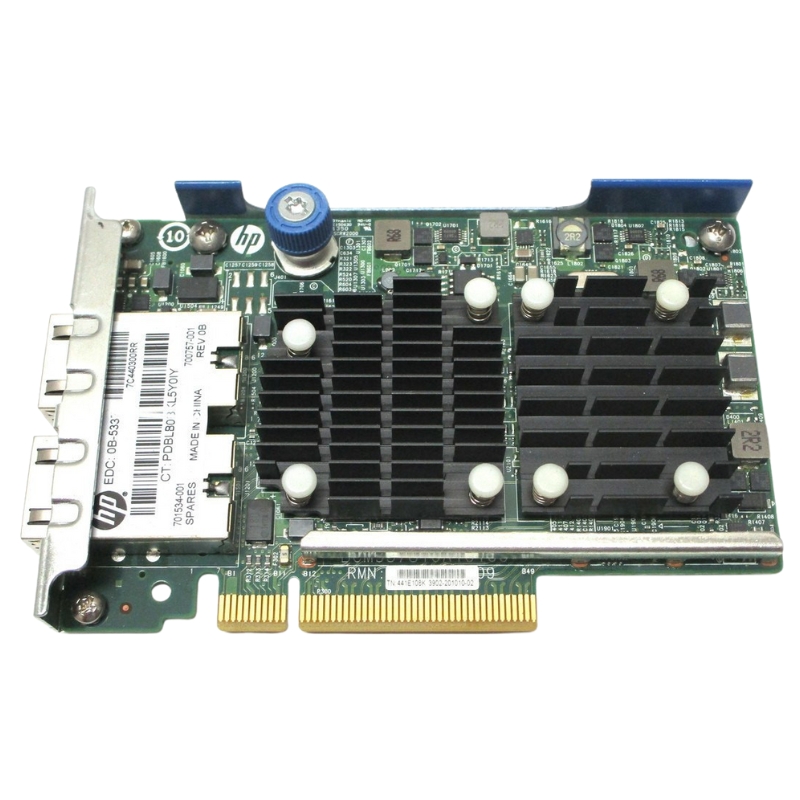
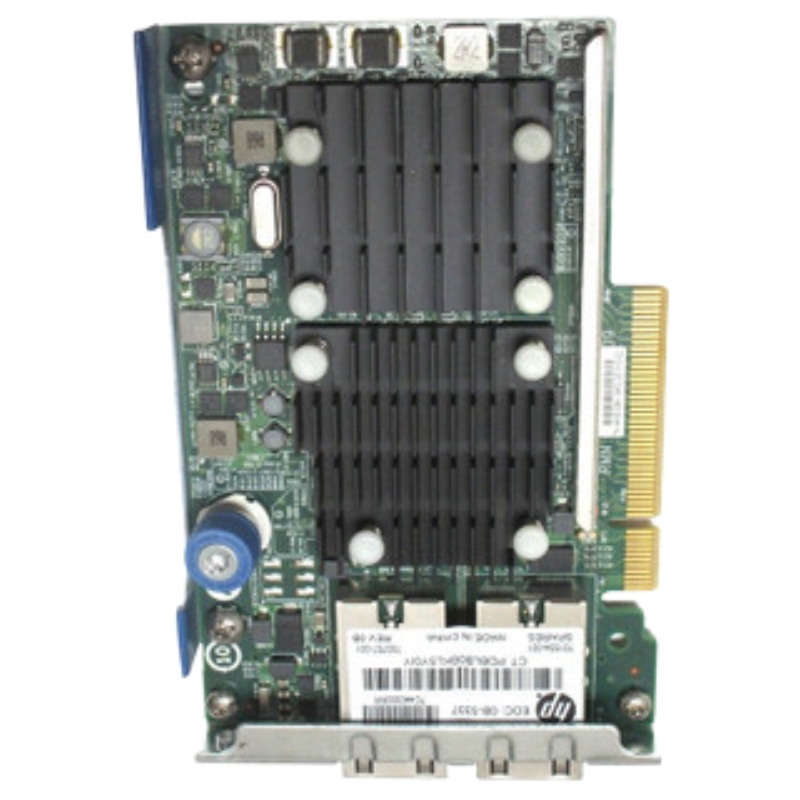
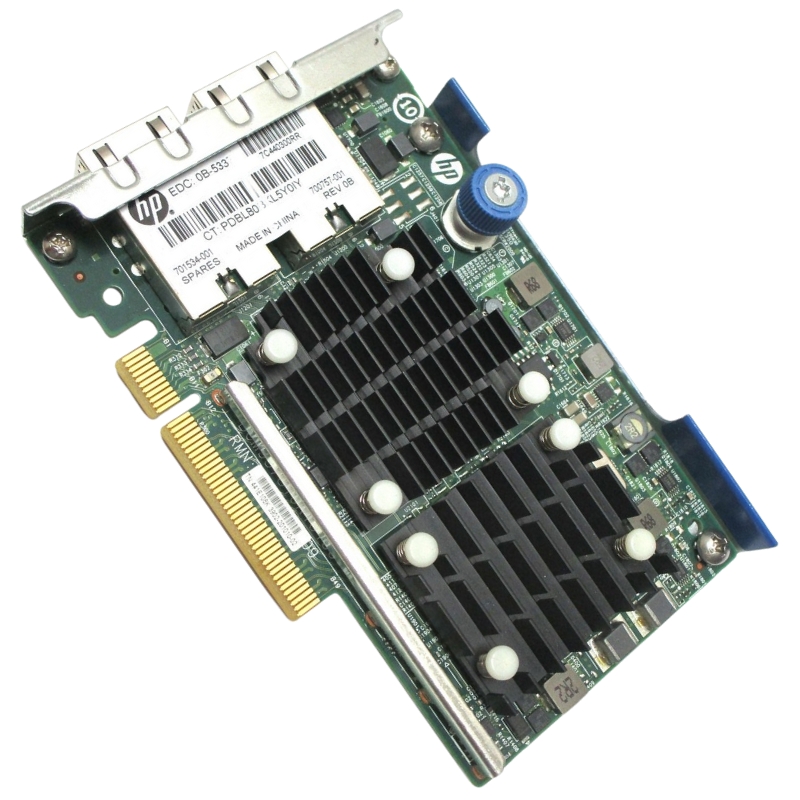
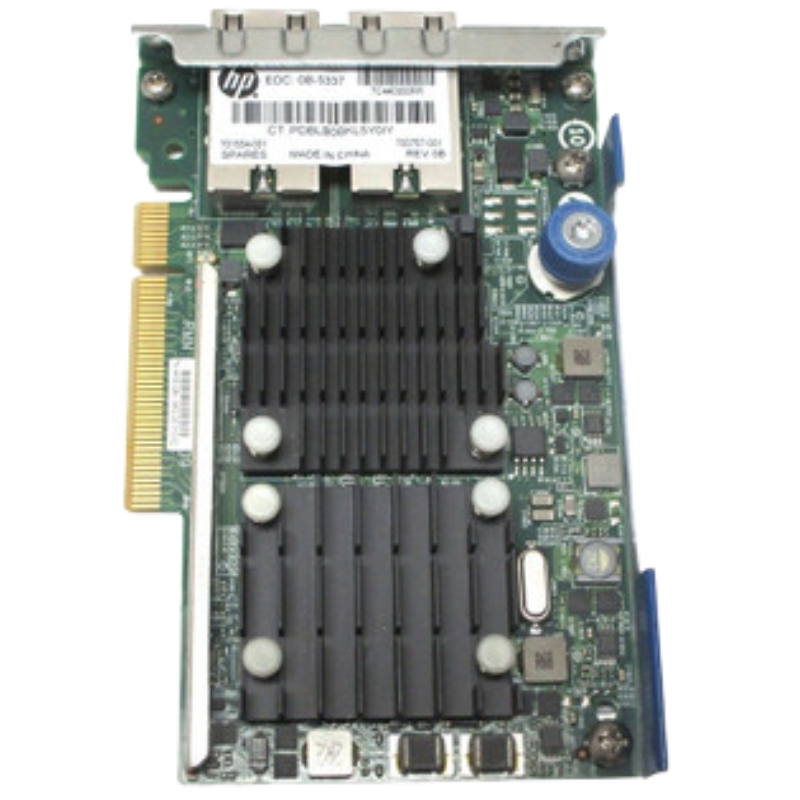
HPE 700759-B21 FlexFabric 2-Port 10GB PCIe 2.0 533FLR-T Adapter G9-G10. Excellent Refurbished with 1 year replacement warranty
| SKU/MPN | Warranty | Price | Condition | You save |
|---|---|---|---|---|
| 700759-B21 | 1 Year Warranty | $86.00 | Factory-Sealed New in Original Box (FSB) | You save: $30.10 (26%) |
| 700759-B21 | 1 Year Warranty | $54.00 | Excellent Refurbished | You save: $18.90 (26%) |
In the world of technology and computer hardware, part numbers play a crucial role in identifying and differentiating various components. The HPE FlexFabric 2-Port 10GB PCIe 2.0 533FLR-T Adapter is no exception to this rule. Its unique part number, 700759-B21, holds significant importance for users and system administrators alike.
The HPE 700759-B21 FlexFabric 2-Port 10GB PCIe 2.0 533FLR-T Adapter G9-G10 category is built for enterprise environments that require dependable, high-throughput network connectivity across HPE ProLiant Gen9 and Gen10 server platforms. This category focuses on advanced 10Gb Ethernet server adapters designed for virtualization, software-defined networking, cloud workloads, storage traffic, and business-critical applications that need stable low-latency communication. As data centers continue to scale, organizations need server networking components that can support heavier east-west traffic, rapid VM mobility, converged infrastructure, and predictable performance under continuous load. This adapter category directly addresses those needs with a dual-port 10Gb architecture and FlexibleLOM design compatibility.
The defining strength of this category lies in its 2-port 10Gb Ethernet configuration. Dual-port adapters provide significant flexibility for administrators managing traffic segregation, failover, and load balancing strategies. Each 10Gb port can be assigned to separate workloads, isolated VLANs, dedicated storage networks, or redundant uplinks. In virtualized server environments, this means one port can handle production application traffic while the second port supports replication, backup, cluster heartbeat, or storage communication.
Compared with legacy 1Gb adapters, this 10Gb FlexFabric class offers dramatically improved throughput for modern workloads such as hypervisor clusters, database synchronization, VDI environments, ERP systems, and high-density web hosting. Businesses migrating toward hybrid cloud architectures also benefit from the increased bandwidth headroom that minimizes bottlenecks between compute nodes and top-of-rack switching infrastructure.
The category is especially relevant for data centers seeking to standardize on high-performance networking hardware while maintaining HPE server ecosystem compatibility. The dual-port structure improves uptime planning because administrators can implement NIC teaming, active-active redundancy, or traffic separation without additional adapter overhead.
A major reason this category remains highly searched and widely deployed is its alignment with HPE ProLiant Gen9 and Gen10 systems. These server generations remain heavily used in enterprise racks, colocation facilities, private cloud deployments, and branch office virtualization clusters. The 533FLR-T form factor is designed to integrate efficiently into supported HPE server platforms, allowing clean installation and preserving standard PCIe expansion resources for GPUs, RAID controllers, NVMe expansion cards, or specialized accelerators.
For IT procurement teams, this category is attractive because it supports infrastructure lifecycle extension. Instead of replacing entire servers to gain higher networking throughput, organizations can upgrade connectivity through this proven 10Gb adapter segment. This lowers capital expenditure while significantly improving bandwidth availability for compute-intensive workloads.
Compatibility across both Gen9 and Gen10 platforms also simplifies inventory management for system integrators, IT resellers, managed service providers, and enterprise maintenance teams. Standardizing on a common adapter family reduces spare part complexity and speeds replacement operations during maintenance windows.
The FlexibleLOM-oriented design in this category is particularly important for dense server deployments. Unlike standard full-height PCIe cards that consume valuable expansion slots, the FLR architecture enables integrated high-speed networking expansion through dedicated server motherboard interfaces. This preserves scalability for storage, compute acceleration, and additional expansion devices.
PCIe 2.0 integration continues to offer more than enough bandwidth for dual 10Gb networking in supported enterprise environments. The interface ensures stable communication between the server bus and adapter while delivering reliable packet movement under sustained load conditions. For organizations running clustered hypervisors, container hosts, and mixed workload nodes, this architecture helps maintain consistent throughput even during traffic bursts.
The category is often selected for blade-adjacent density goals, rack consolidation strategies, and virtualization farms where efficient use of every server slot matters.
This HPE FlexFabric adapter category supports a wide range of real-world deployment scenarios. In virtualization clusters, the adapter is commonly used to accelerate VM migration, distributed storage communication, and host-to-host synchronization. Workloads like VMware, Hyper-V, and Proxmox clusters benefit from the increased bandwidth and redundancy offered by two dedicated 10Gb ports.
For software-defined storage platforms, this category provides the network performance needed for fast block replication, iSCSI traffic, Ceph node communication, and backup stream movement. High-throughput applications such as video transcoding farms, analytics pipelines, AI preprocessing, and log aggregation nodes also benefit from stable 10Gb connectivity.
Enterprise databases are another major use case. SQL clusters, data warehousing appliances, and in-memory analytics platforms rely on fast node-to-node data exchange. This adapter category helps reduce query delays caused by network saturation and supports faster backup windows for large datasets.
In branch offices and distributed enterprise environments, the category is also used to modernize aging infrastructure without forcing full server replacement cycles. The result is better WAN edge performance, improved replication efficiency, and stronger application responsiveness.
One of the most valuable aspects of this category page is its relevance to virtualization optimization. In heavily virtualized environments, network adapters are no longer simple connectivity devices. They become foundational performance layers that affect VM responsiveness, migration speed, storage access, and cluster stability.
The HPE 700759-B21 FlexFabric 2-Port 10GB adapter class is ideal for hypervisor hosts running dozens or even hundreds of virtual machines. Features commonly associated with this enterprise adapter family include hardware acceleration support, optimized packet processing, reduced CPU overhead, and better traffic distribution. These advantages free CPU resources for guest workloads instead of network management tasks.
When used in clustered failover environments, the dual-port design strengthens high availability architecture. Administrators can map separate vSwitches, assign dedicated storage VLANs, or implement NIC bonding to create resilient traffic paths.
Live migration operations place intense short-duration demand on network interfaces. Moving memory-heavy virtual machines between hosts requires rapid transfer speeds and stable latency. This category supports smoother live migration workflows by delivering significantly more bandwidth than legacy 1Gb networking hardware.
Faster migrations reduce service disruption, simplify patch management windows, and improve dynamic workload balancing. This is especially important in enterprise environments that automate host maintenance or use DRS-style workload optimization.
The FlexFabric naming convention is strongly associated with converged networking approaches, making this category highly relevant for storage-heavy infrastructure. Many organizations use 10Gb Ethernet as the transport layer for iSCSI SANs, NAS replication, backup targets, and software-defined storage pools.
In these scenarios, the 2-port design supports dedicated storage traffic channels or multipath redundancy. This improves data availability while also increasing aggregate throughput potential. Backup software, disaster recovery replication, and snapshot transport jobs all benefit from the consistent bandwidth this category is designed to provide.
For converged infrastructure stacks, this adapter family helps reduce cabling complexity, streamline switch port planning, and simplify rack-level deployment standards. It is a strong fit for organizations pursuing leaner data center architectures with fewer infrastructure layers.
Backup windows remain a critical operational challenge. Large virtual machine images, database dumps, and compliance archives can overwhelm slower network adapters. This category significantly improves backup transport efficiency by enabling rapid movement of large data volumes to backup appliances, remote replication targets, or secondary storage nodes.
Disaster recovery replication also becomes more reliable when bandwidth ceilings are less restrictive. This helps enterprises meet RPO and RTO targets more effectively.
Security-conscious enterprises frequently use multi-port 10Gb adapters to enforce traffic segmentation. This category supports architectures where management, production, storage, and backup traffic must remain logically or physically separated. Dual-port deployment allows cleaner policy enforcement and simpler auditing.
For regulated industries such as finance, healthcare, telecom, and government infrastructure, the ability to separate sensitive data flows from general application traffic is operationally valuable. VLAN tagging, access control policies, micro-segmentation overlays, and firewall zoning all benefit from reliable high-speed port availability.
This category is also useful for zero-trust internal networking models where east-west traffic inspection and path isolation are increasingly important.


 Contact Us
 Information
 Catalog
 Solid State Drives (SSD)
 Network Switches
 Hard Disk Drives
 HBA & Controllers
 PC & Servers
 PC & Server Memory
 CPU & Processors
 Network Routers
 Power Supplies
 Tape Drives & Libraries
 Network Devices
 Computer & Network Cables