(7% discount is applied at checkout)
Cart is empty
Your go-to destination for cutting-edge server products


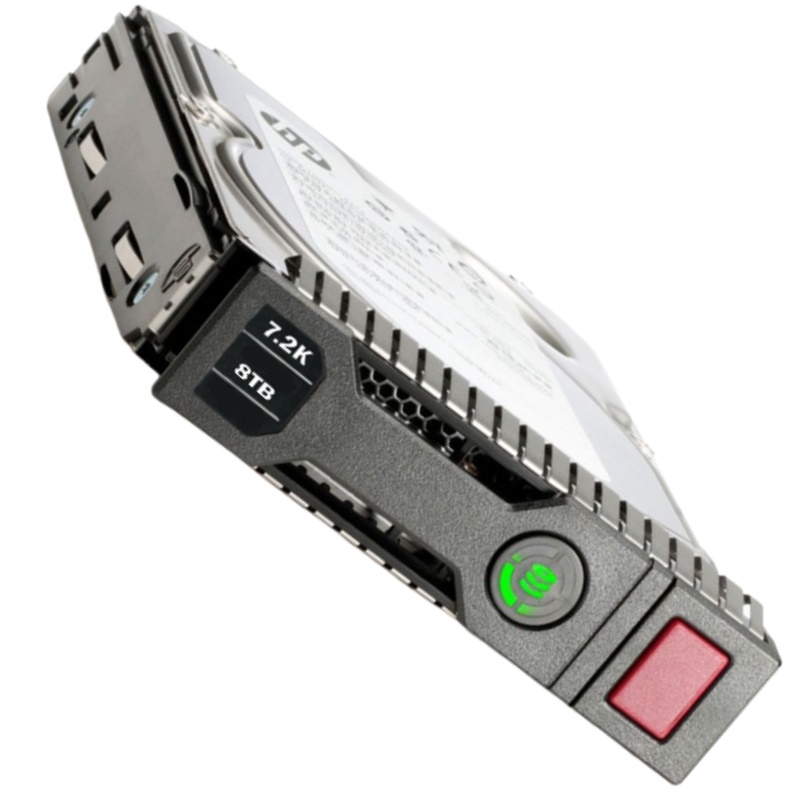
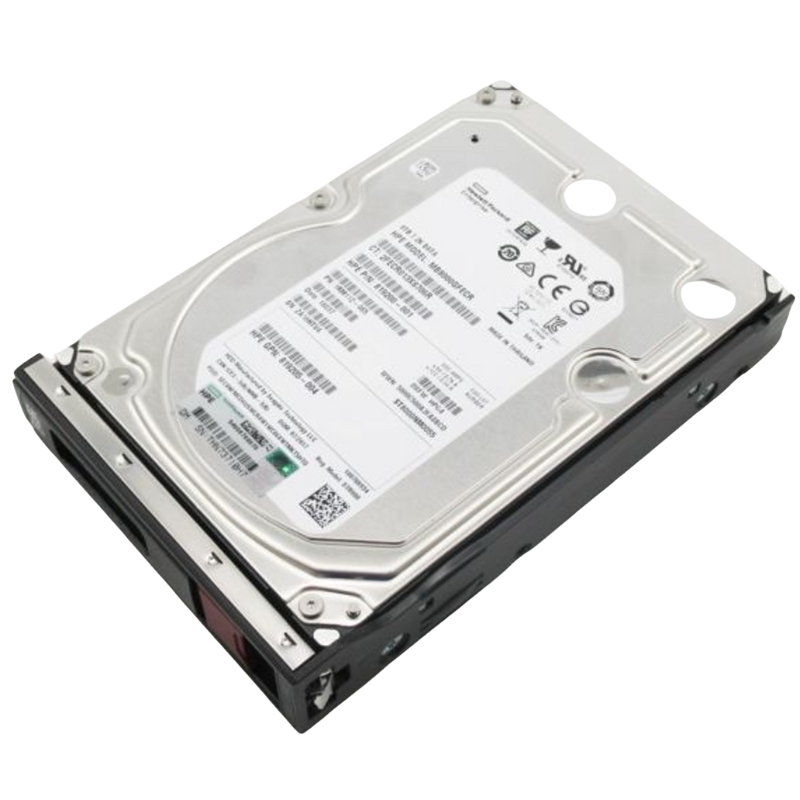
8TB HPE 820032-001 7.2K RPM SAS 12GBPS LFF SC Midline Hard Drive With Tray. Excellent Refurbished with 1 year replacement warranty
| SKU/MPN | Warranty | Price | Condition | You save |
|---|---|---|---|---|
| 820032-001 | 1 Year Warranty | $299.00 | Factory-Sealed New in Original Box (FSB) | You save: $104.65 (26%) |
| 820032-001 | 1 Year Warranty | $270.00 | Excellent Refurbished | You save: $94.50 (26%) |
The HPE 820032-001 represents a critical intersection of high-capacity storage, rotational speed, and enterprise-grade reliability within the HPE Midline hard drive family. Designed specifically for HPE ProLiant servers and HPE Storage arrays, this 8TB model operates at 7200 RPM over a 12Gbps SAS interface, housed in a 3.5-inch Large Form Factor (LFF) chassis. The inclusion of a dedicated drive tray simplifies hot-swap deployment in HPE’s modular caddies, making it a factory-assembled solution for data-intensive workloads.
The HPE 820032-001 8TB 7200RPM SAS 12Gbps LFF (3.5-inch) 512e Midline Hard Drive with tray is engineered for enterprise-class storage infrastructures requiring high-capacity, reliable, and scalable data retention solutions. Designed for compatibility within HPE ProLiant servers and HPE storage systems, this midline hard drive delivers a balanced combination of performance, cost efficiency, and durability for large-scale data centers, cloud storage architectures, and business-critical archival workloads. Its SAS 12Gbps interface ensures fast and stable data throughput, while its 7200RPM rotational speed provides consistent performance for sequential and mixed workloads.
Built around a 3.5-inch large form factor (LFF) design, this drive offers increased storage density per bay compared to smaller form factors, making it ideal for environments where maximizing storage capacity per rack unit is essential. The inclusion of 512e sector formatting ensures compatibility with modern operating systems and legacy applications, bridging the gap between older 512-byte logical sector environments and advanced storage architectures.
Midline hard drives such as the HPE 820032-001 are specifically engineered for workloads that demand sustained data retention rather than ultra-high transactional input/output operations. Unlike mission-critical SSDs or performance SAS drives, midline drives prioritize capacity, endurance, and cost-effectiveness per terabyte. This makes them ideal for backup repositories, cold and warm storage tiers, archival systems, and large-scale content repositories.
In modern enterprise environments, scalability is a core requirement. The HPE 820032-001 supports high-density deployment within multi-bay storage chassis, allowing IT administrators to scale storage capacity horizontally without excessive infrastructure overhead. Its compatibility with HPE Smart Carrier (SC) trays ensures seamless hot-plug integration into supported server backplanes, reducing downtime during maintenance or upgrades.
The drive is optimized for integration into HPE ProLiant Gen9, Gen10, and select Gen11 server platforms, ensuring firmware-level compatibility and system-level optimization. This tight integration allows the drive to be recognized and managed efficiently through HPE Intelligent Provisioning and HPE Smart Storage Administrator tools.
The midline classification positions this hard drive between entry-level nearline storage and high-performance enterprise SAS drives. It is engineered for workloads that include large-scale data backups, video surveillance storage systems, big data analytics repositories, and file-sharing environments where sustained throughput and reliability are more important than ultra-low latency.
With a massive 8TB storage capacity, the HPE 820032-001 enables enterprises to consolidate large datasets into fewer physical drives, reducing rack space consumption and simplifying storage management. High-capacity drives are essential for modern data-driven organizations dealing with exponential growth in structured and unstructured data.
The 8TB capacity allows IT administrators to reduce the number of physical drives required for petabyte-scale storage systems. This not only reduces hardware costs but also lowers power consumption, cooling requirements, and administrative complexity. Fewer drives also translate into fewer potential points of failure, improving overall system reliability.
Large-capacity drives such as this model are particularly efficient in sequential read and write operations. Applications such as media streaming archives, backup rotation systems, and large-scale log storage benefit significantly from this design. The sustained throughput of SAS 12Gbps ensures consistent performance even under heavy data transfer conditions.
The Serial Attached SCSI (SAS) 12Gbps interface is one of the defining features of the HPE 820032-001 hard drive. SAS technology provides enterprise-grade reliability, full-duplex communication, and superior error correction mechanisms compared to traditional SATA interfaces.
With a 12Gbps data transfer rate, the drive ensures rapid communication between the storage device and the host system. This high bandwidth is particularly beneficial in multi-drive RAID arrays where simultaneous data streams are common. The SAS protocol also supports dual-port connectivity, enhancing redundancy and failover capabilities in mission-critical systems.
SAS drives are designed with advanced error detection and correction algorithms that minimize data corruption risks. The HPE 820032-001 incorporates enterprise-grade firmware that continuously monitors drive health, reallocates bad sectors, and ensures data integrity even under heavy workloads.
The 7200RPM spindle speed of the HPE 820032-001 strikes an optimal balance between performance, energy efficiency, and cost-effectiveness. While not as fast as 10K or 15K RPM enterprise drives, 7200RPM drives provide significantly higher capacity and lower operational costs, making them ideal for bulk storage applications.
The rotational speed ensures predictable performance for sequential workloads, which is critical in backup and archival systems. The mechanical stability of 7200RPM drives also contributes to lower heat generation and reduced acoustic noise, improving overall data center efficiency.
Lower spindle speeds generally result in reduced power consumption. In large-scale deployments involving hundreds or thousands of drives, this efficiency translates into significant operational cost savings. The HPE 820032-001 is engineered to maintain a balance between performance and energy efficiency, aligning with modern green data center initiatives.
The 512e (512-byte emulation) format used in this drive provides backward compatibility with legacy systems while supporting modern storage optimization techniques. This hybrid sector format allows the drive to present 512-byte logical sectors while physically using 4096-byte (4K) sectors internally.
By adopting advanced format technology, the drive improves error correction efficiency and increases overall storage density. This allows more usable space per physical disk while maintaining compatibility with older operating systems and applications that rely on 512-byte sector addressing.
512e drives ensure smooth integration into heterogeneous environments where both legacy and modern systems coexist. This is particularly valuable in enterprise environments undergoing gradual infrastructure upgrades, where full system replacement is not feasible.
The 3.5-inch LFF design of the HPE 820032-001 provides significant advantages in terms of storage capacity, thermal performance, and cost per terabyte. Larger platters enable higher data density, making LFF drives the preferred choice for bulk storage systems.
In HPE storage enclosures, LFF drives allow for fewer physical disks to achieve the same storage capacity compared to SFF (2.5-inch) drives. This reduces enclosure complexity and improves airflow management within server chassis.
The larger physical size of the drive enables improved heat dissipation characteristics. Combined with optimized server airflow designs, this helps maintain stable operating temperatures even under continuous workload conditions.
The inclusion of the Smart Carrier (SC) tray is a critical feature that enables hot-swap functionality and simplifies drive management within HPE server environments. The tray design ensures secure installation and removal without requiring system shutdown.
Hot-swap capability allows IT administrators to replace or upgrade drives without interrupting system operations. This is essential for maintaining uptime in mission-critical environments such as cloud data centers, enterprise databases, and virtualization clusters.
Smart Carrier trays often include status LEDs that provide real-time visual indicators of drive activity, health, and failure status. This simplifies maintenance and reduces the time required for storage issues.
The HPE 820032-001 is designed to meet rigorous enterprise reliability standards, ensuring consistent performance under continuous operation. It is built for environments where 24/7 uptime is mandatory and data integrity is critical.
Midline drives are optimized for moderate to heavy workloads, typically supporting near-constant operation with periodic bursts of activity. This makes them suitable for archival storage systems, backup repositories, and data warehousing applications.
The drive includes sophisticated firmware-level error recovery systems that detect and correct potential data inconsistencies. These mechanisms reduce the risk of data loss and improve overall system reliability in RAID configurations.
The HPE 820032-001 is fully compatible with a wide range of RAID configurations, including RAID 0, RAID 1, RAID 5, RAID 6, and RAID 10. Its consistent performance characteristics make it an ideal candidate for distributed storage arrays.
In RAID environments, multiple drives work together to provide redundancy and performance optimization. The consistent 7200RPM speed and SAS interface ensure uniform behavior across drive arrays, reducing bottlenecks and synchronization issues.
Large-scale deployments often rely on hundreds of drives working in parallel. The HPE 820032-001 supports scalable architectures that can expand incrementally as storage demands grow, making it ideal for cloud infrastructure and enterprise data lakes.
This drive is widely used in a variety of enterprise applications where high-capacity storage and reliability are critical. These include backup and disaster recovery systems, surveillance storage platforms, virtual machine storage repositories, and large-scale content delivery systems.
Enterprises rely on high-capacity midline drives for long-term data retention. The 8TB capacity allows efficient storage of backup images, system snapshots, and archival records without excessive hardware expansion.
In big data environments, large datasets must be stored efficiently for processing and analysis. The HPE 820032-001 provides a stable and cost-effective storage layer for data lakes and analytics clusters.


 Contact Us
 Information
 Catalog
 Solid State Drives (SSD)
 Network Switches
 Hard Disk Drives
 HBA & Controllers
 PC & Servers
 PC & Server Memory
 CPU & Processors
 Network Routers
 Power Supplies
 Tape Drives & Libraries
 Network Devices
 Computer & Network Cables