(7% discount is applied at checkout)
Cart is empty
Your go-to destination for cutting-edge server products
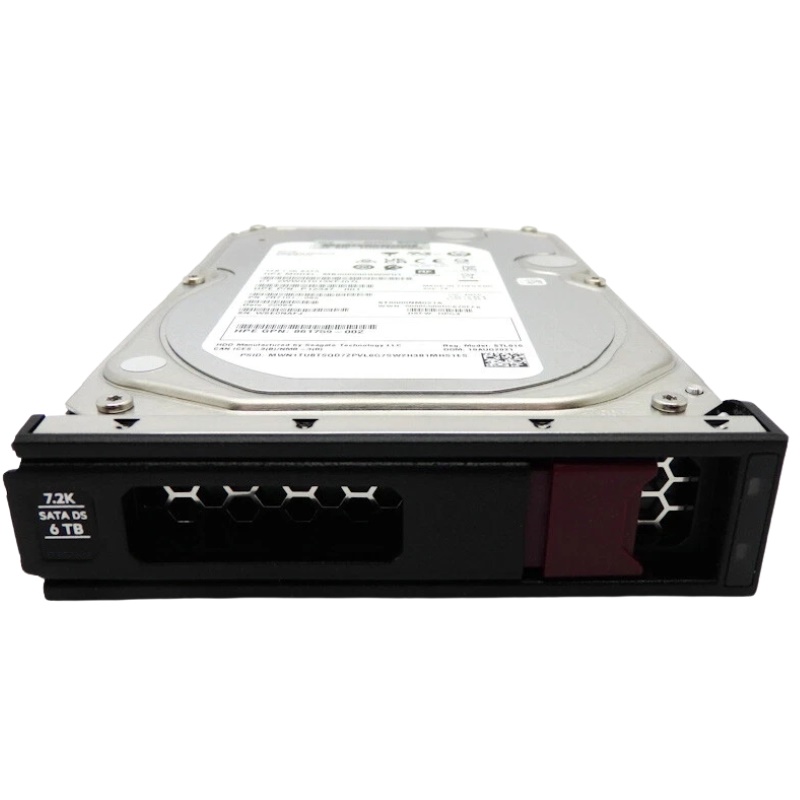


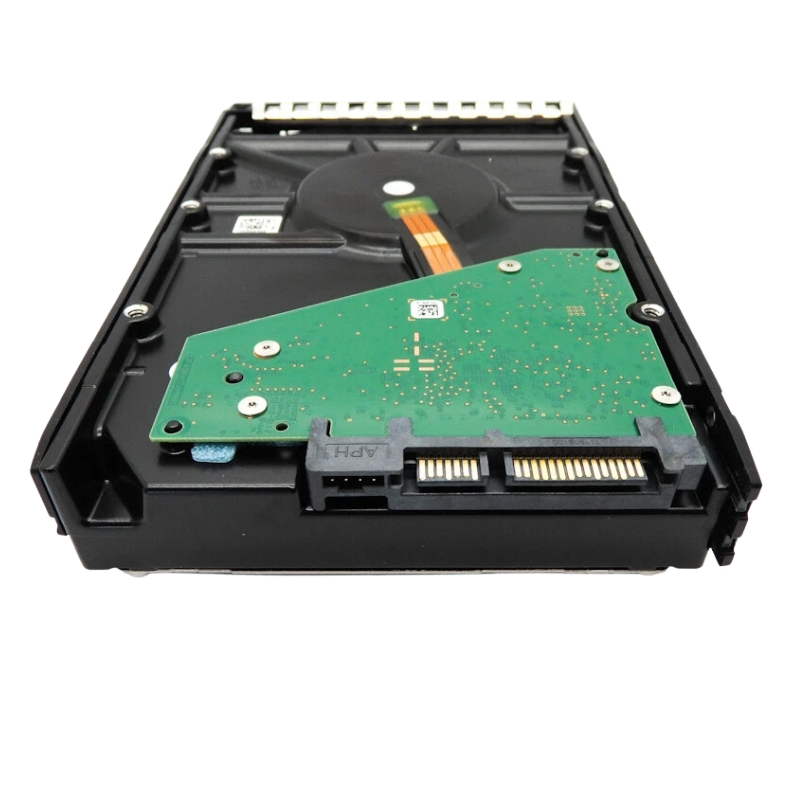
HPE 6TB 7.2K RPM 3.5 Inch LFF SATA-6GBPS Midline SC Hot Swap Hard Drive With Tray 846510-B21. Excellent Refurbished with 1 year replacement warranty
The HPE 846510-B21 is a dependable enterprise-class midline hot-swap hard disk drive engineered for business-critical workloads. With 6TB of storage, SATA 6Gbps connectivity, and 7,200 RPM spindle speed, this 3.5-inch LFF Smart Carrier drive ensures reliable performance, efficient data handling, and seamless integration with HPE ProLiant servers.
The HPE 846510-B21 6TB 7.2K RPM 3.5 Inch LFF SATA-6Gbps Midline SC Hot Swap Hard Drive is designed for enterprise-class storage environments that demand scalable capacity, stable performance, and long-term reliability. Developed under the engineering standards of this storage solution is optimized for data centers, SMB server infrastructures, and workload environments that prioritize high-capacity storage over extreme performance workloads.
This category of Midline SATA hard drives is widely used in storage arrays, backup systems, archival repositories, and cloud-based infrastructure layers where consistent throughput and cost-effective scalability are essential. The 6TB capacity combined with a 7200 RPM spindle speed ensures a balance between storage density and moderate access performance, making it suitable for a wide range of enterprise applications.
Midline hard drives such as the HPE 846510-B21 are engineered for environments that require large storage pools without the premium cost of high-performance SAS or NVMe drives. The architecture focuses on optimized platter density, reliable read/write cycles, and extended operational endurance under continuous workloads.
The workload rating of Midline SATA drives is typically designed for light to moderate enterprise workloads. These include backup operations, file storage, data archiving, and content repositories. The firmware-level optimizations help ensure consistent latency behavior across sequential and random read operations, reducing performance degradation under sustained use.
One of the key design aspects of this storage category is reduced power consumption compared to higher RPM enterprise drives. The 7200 RPM spindle speed allows for controlled thermal output, which is critical in dense rack-mounted server environments where airflow and cooling efficiency directly impact system stability and operational cost.
The 3.5 inch LFF design provides increased surface area for magnetic platters, enabling higher data density per drive. This physical advantage translates into larger individual drive capacities such as the 6TB configuration found in the HPE 846510-B21 model.
LFF drives are commonly chosen in enterprise storage configurations where rack space efficiency and storage consolidation are priorities. By using fewer drives to achieve higher total storage capacity, organizations can reduce power draw, cabling complexity, and drive bay utilization.
Enterprise-grade LFF drives incorporate vibration resistance mechanisms to maintain consistent read/write accuracy. In multi-drive server chassis environments, rotational vibration can significantly impact performance; therefore, stabilization technology ensures minimal data integrity disruption.
Hot swap functionality is a core feature of this drive category, enabling replacement or upgrade without shutting down the server system. This capability is essential in high-availability infrastructures where downtime is not acceptable.
System administrators can replace failing or aging drives while the server remains operational. This reduces service interruptions and ensures continuous uptime for mission-critical applications such as database hosting, virtualization platforms, and enterprise file systems.
Hot swap drives are commonly deployed in RAID configurations where redundancy is a key requirement. The ability to replace a drive without system downtime enhances data protection strategies and simplifies long-term storage maintenance cycles.
The SATA 6Gbps interface provides a stable and widely compatible connection standard for enterprise storage devices. While not as fast as SAS or NVMe interfaces, it delivers sufficient bandwidth for midline workloads and archival storage operations.
SATA drives are highly compatible with a broad range of server systems, including legacy and modern storage controllers. This makes the HPE 846510-B21 an adaptable solution for mixed-generation infrastructure environments.
The SATA 6Gbps interface is particularly efficient for sequential read and write operations, which are common in backup systems, media storage, and large dataset transfers. This aligns well with the intended use cases of midline enterprise storage solutions.
The 7200 RPM spindle speed represents a balance between performance and durability. It offers sufficient rotational speed for steady data access while maintaining lower wear rates compared to higher RPM enterprise drives.
While not designed for ultra-low latency workloads, 7200 RPM drives provide consistent and predictable access times suitable for file-based storage systems, backups, and archival retrieval operations.
Lower rotational speeds contribute to reduced mechanical stress on drive components. This improves long-term reliability and reduces the likelihood of premature hardware failure in continuous operation environments.
The 6TB capacity point is ideal for enterprises that manage large volumes of historical data, compliance records, and archival content. These drives provide sufficient space for consolidating datasets while maintaining cost efficiency.
Backup systems often rely on high-capacity midline drives to store incremental and full system backups. The 6TB storage capacity allows organizations to maintain multiple backup generations without rapidly expanding physical storage infrastructure.
Organizations managing media files, documentation libraries, and digital assets benefit from the large storage capacity, which reduces the need for frequent hardware expansion and simplifies data organization structures.
Advanced error correction techniques are used to detect and repair data inconsistencies during read/write operations. This reduces the risk of data corruption and improves overall system reliability.
Many enterprise drives include monitoring systems that track drive health indicators such as temperature, vibration, and read error rates. This allows administrators to proactively replace drives before failure occurs.
The drive is designed for seamless integration into RAID configurations, including RAID 0, RAID 1, RAID 5, RAID 6, and RAID 10 setups depending on system architecture and redundancy requirements.
In RAID environments, multiple drives work together to ensure data redundancy and system resilience. Midline drives contribute to stable long-term storage pools where redundancy is prioritized over peak performance.
When a drive fails in a RAID array, replacement drives must rebuild data from parity or mirrored configurations. The consistent performance of SATA midline drives ensures predictable rebuild times and reduced risk of additional failures during recovery.
The HPE 846510-B21 is commonly deployed in rack-mounted server environments where scalability and structured storage architecture are essential. Its LFF design allows for high-capacity storage expansion within standard server chassis configurations.
Virtualized environments require large storage pools to support multiple virtual machines. Midline SATA drives provide cost-effective storage backends for virtualization platforms that prioritize capacity over ultra-high-speed access.
Private cloud systems frequently utilize midline drives for object storage, archival tiers, and cold data storage layers, ensuring efficient data lifecycle management.


 Contact Us
 Information
 Catalog
 Solid State Drives (SSD)
 Network Switches
 Hard Disk Drives
 HBA & Controllers
 PC & Servers
 PC & Server Memory
 CPU & Processors
 Network Routers
 Power Supplies
 Tape Drives & Libraries
 Network Devices
 Computer & Network Cables