(7% discount is applied at checkout)
Cart is empty
Your go-to destination for cutting-edge server products
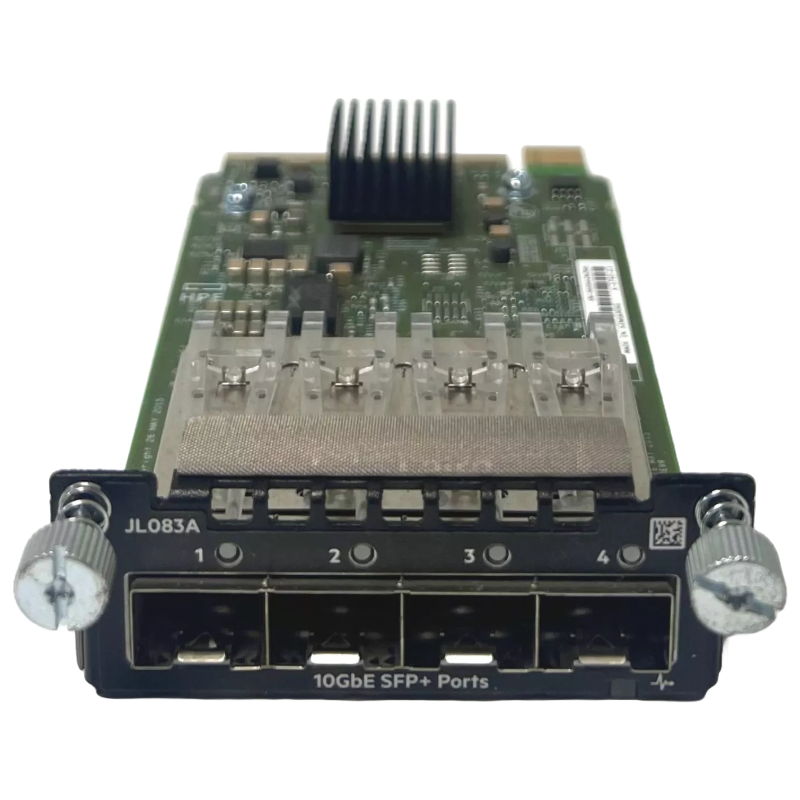


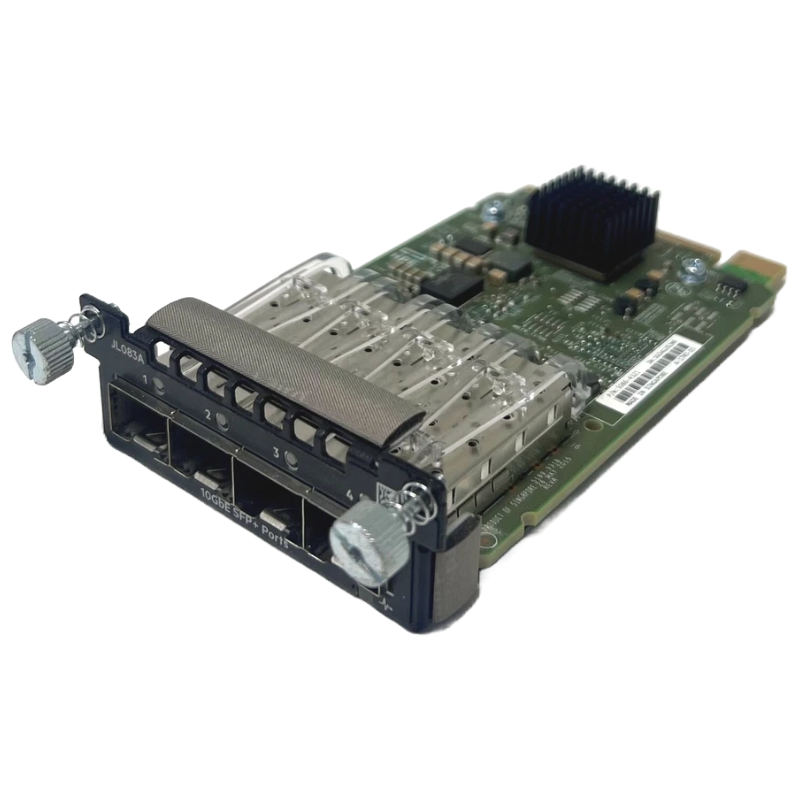
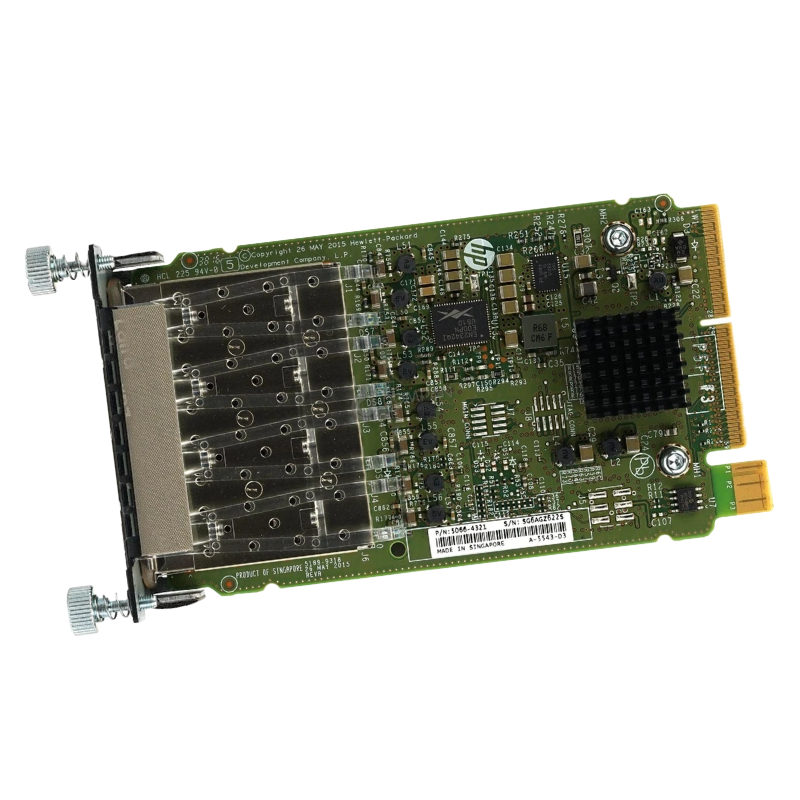
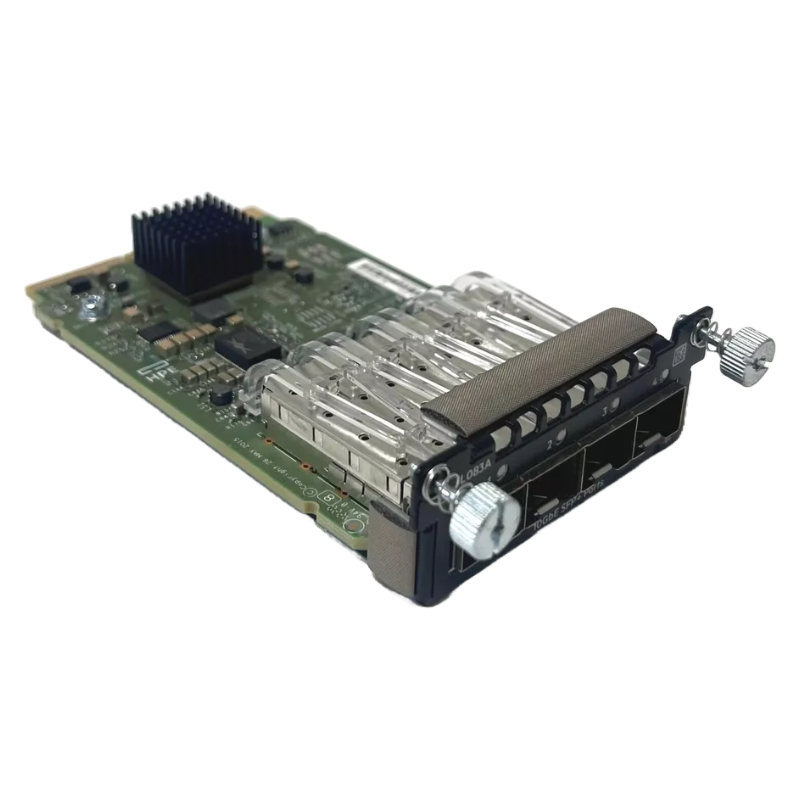
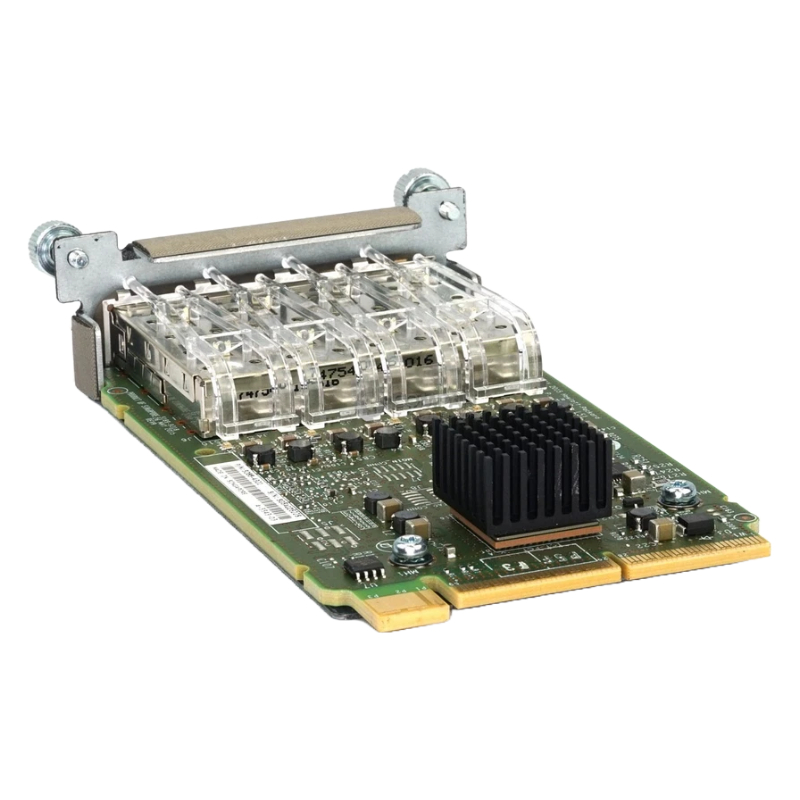
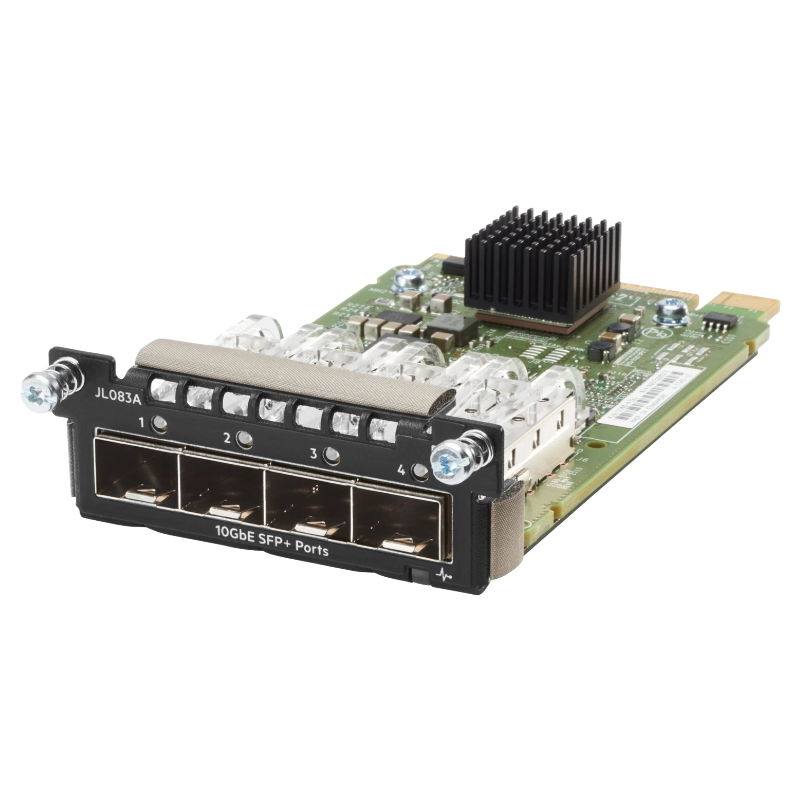
HPE JL083A Aruba 3810m/2930m 4-ports 100m/1g/10g SFP+ Macsec Module. Excellent Refurbished with 1 year replacement warranty
The HPE JL083A Aruba 3810M/2930M Expansion Module delivers four high‑performance SFP+ ports supporting 100M, 1G, and 10G speeds with integrated MACsec security. Engineered for enterprise‑grade switching environments, this plug‑in module enhances uplink flexibility, strengthens encrypted data transport, and provides scalable connectivity options for modern campus networks and high‑demand distribution layers.
The HPE JL083A Aruba 3810m/2930m 4-port 100M/1G/10G SFP+ MACsec Module is an advanced high-performance expansion component designed for enterprise-class switching environments. It enhances the flexibility, scalability, and security capabilities of Aruba 3810m and Aruba 2930m series switches by adding high-speed fiber uplink connectivity and hardware-based encryption support through MACsec. This module is engineered to support evolving campus network architectures, where bandwidth demand, secure data transmission, and modular scalability are critical requirements for modern IT infrastructures.
Built for demanding enterprise networks, this module provides four SFP+ ports capable of operating at multiple speeds including 100 Mbps, 1 Gbps, and 10 Gbps. Its adaptive connectivity ensures compatibility with a wide range of optical transceivers and cabling standards, allowing network administrators to design flexible topologies that meet both legacy and next-generation connectivity requirements. The integration of MACsec functionality further strengthens data security at the link layer, making it suitable for organizations prioritizing confidentiality and integrity in data transmission across distributed environments.
Modern enterprise networks require modular expansion capabilities to keep up with increasing traffic demands, cloud integration, and virtualization workloads. The HPE Aruba JL083A module is designed as part of a modular switching architecture that allows organizations to extend the capabilities of their existing Aruba 3810m and 2930m switches without replacing the entire hardware platform. This approach reduces operational costs while enabling incremental upgrades aligned with business growth.
The modular design ensures that IT teams can introduce high-speed uplinks into access and aggregation layers without disrupting existing configurations. By inserting the module into compatible switch slots, administrators gain immediate access to additional high-bandwidth ports that can be used for stacking, uplinking to distribution switches, or connecting high-demand servers and storage systems. This adaptability is essential in environments where network downtime must be minimized and scalability must remain continuous.
At the core of this module is its four-port SFP+ interface architecture, which supports multiple transmission speeds. The ability to operate at 100 Mbps, 1 Gbps, and 10 Gbps makes it highly versatile in heterogeneous network environments where different generations of infrastructure coexist. This flexibility ensures smooth interoperability between legacy devices and modern high-speed systems.
Each SFP+ port is designed to support a wide variety of optical transceivers, including short-range and long-range fiber modules, depending on deployment requirements. This allows organizations to extend connectivity across different distances, from localized data center racks to multi-building campus environments. The high throughput capability of 10 Gbps per port ensures that the module can handle bandwidth-intensive applications such as virtualization clusters, video distribution systems, cloud synchronization, and large-scale data transfers.
The support for multiple speeds also enhances investment protection. Instead of replacing infrastructure when bandwidth requirements increase, organizations can simply upgrade transceivers or reconfigure port usage to achieve higher throughput. This design philosophy aligns with long-term network lifecycle planning and sustainable IT strategies.
One of the most significant features of the JL083A module is its support for MACsec, a Layer 2 security standard that provides encryption and authentication directly at the data link layer. MACsec ensures that data transmitted between network devices is protected against eavesdropping, tampering, and unauthorized access. Unlike software-based encryption methods, MACsec operates at hardware level, ensuring minimal latency impact and consistent performance even under heavy traffic loads.
In enterprise environments where sensitive data traverses shared infrastructure, MACsec plays a critical role in maintaining compliance with security policies and regulatory requirements. It is particularly valuable in sectors such as finance, healthcare, government, and large-scale corporate networks where data protection is essential. By encrypting traffic between switches, the module reduces the risk of internal network breaches and man-in-the-middle attacks.
MACsec integration also enhances trust in distributed campus networks. As organizations expand across multiple locations, secure inter-switch communication becomes essential. This module ensures that even uplink traffic between access and aggregation layers remains encrypted and protected from unauthorized interception.
The HPE JL083A module is specifically designed for seamless integration with Aruba 3810m and Aruba 2930m switch families. These switch platforms are widely deployed in enterprise campus environments due to their reliability, performance, and scalability. The module extends their functionality by adding high-speed uplink and security features without requiring replacement of the base switch hardware.
In Aruba 3810m deployments, the module enhances aggregation capabilities by providing additional high-speed uplinks for backbone connectivity. This is particularly useful in large campus networks where multiple access switches must be consolidated into higher-tier distribution layers. In Aruba 2930m environments, the module significantly improves access layer performance by enabling high-speed connectivity to core switching infrastructure or server farms.
The compatibility between the module and these switch series ensures that firmware integration, management interfaces, and configuration processes remain consistent with Aruba’s network operating system. This reduces complexity for network administrators and allows for streamlined deployment and maintenance.
In modern campus network design, scalability, redundancy, and performance are key architectural considerations. The JL083A module plays an important role in supporting hierarchical network structures where access, distribution, and core layers must be interconnected with high-speed links. By introducing additional SFP+ uplinks, the module helps eliminate bottlenecks that may occur in traditional copper-based networks.
Within enterprise environments, this module is often deployed in wiring closets, network aggregation points, and data distribution hubs. Its ability to support fiber connectivity ensures that long-distance transmission between buildings or floors can be achieved without signal degradation. This makes it suitable for universities, corporate campuses, hospitals, and industrial facilities.
The modular uplink capability also supports redundancy configurations. Network administrators can configure multiple uplinks for failover scenarios, ensuring continuous connectivity even in the event of link failure. This enhances network resilience and uptime, which are critical for mission-critical applications.
The HPE Aruba JL083A module contributes to improved traffic management by providing high-capacity uplinks that reduce congestion at aggregation points. In high-density network environments where multiple endpoints generate significant traffic, the availability of 10 Gbps links ensures that data flows smoothly without bottlenecks.
The module supports advanced switching capabilities when used in conjunction with Aruba’s intelligent network operating system. These capabilities include traffic prioritization, quality of service enforcement, and efficient bandwidth allocation. Such features ensure that latency-sensitive applications such as VoIP, video conferencing, and real-time analytics receive appropriate network priority.
By offloading traffic to high-speed uplinks, the module also improves the overall efficiency of the switching fabric. This allows core switches to handle routing and policy enforcement tasks more effectively, improving overall network performance and stability.
The use of SFP+ ports enables seamless integration with fiber optic infrastructure, which is essential for high-speed and long-distance communication. Fiber optic cabling provides significantly higher bandwidth capacity and lower latency compared to traditional copper connections. This makes it ideal for backbone networks and inter-building communication links.
The module supports a wide range of fiber transceivers, allowing network designers to choose appropriate optical solutions based on distance and performance requirements. Short-range transceivers are commonly used for intra-rack or intra-room connections, while long-range options support connectivity across campuses or metropolitan areas.
This flexibility in cabling design ensures that organizations can build customized network topologies that align with physical infrastructure constraints while maintaining high performance standards.
Enterprise networks require high levels of reliability to support critical business operations. The JL083A module contributes to network resilience by enabling redundant uplink configurations. Multiple SFP+ ports can be configured to provide failover paths, ensuring uninterrupted connectivity in case of link failure or maintenance activities.
The hardware-based design of the module ensures stable performance under continuous operation. It is engineered to handle high traffic loads while maintaining consistent throughput and low latency. This reliability is essential in environments where downtime can lead to operational disruptions or financial losses.
Additionally, the module supports network monitoring and diagnostics through Aruba’s management systems. This allows administrators to detect potential issues early and perform proactive maintenance, further improving network stability.
The HPE Aruba JL083A module is commonly deployed in a variety of enterprise scenarios. In data center edge environments, it provides high-speed uplinks to server clusters and storage systems. In campus networks, it connects access layer switches to distribution and core layers, ensuring smooth data flow across organizational units.
In cloud-connected environments, the module facilitates fast and secure communication between on-premises infrastructure and external cloud services. Its support for MACsec ensures that data remains protected even when traversing shared or hybrid network environments.
Industrial environments also benefit from its durability and high-speed capabilities, particularly in manufacturing plants where large volumes of sensor data and machine communication require reliable transmission.
As enterprises expand into distributed architectures, securing communication between network nodes becomes increasingly important. The MACsec functionality integrated into this module provides a robust security layer that protects data across physical network links. This is especially important in environments where multiple departments, tenants, or services share the same physical infrastructure.
By encrypting traffic at the hardware level, the module reduces exposure to network-based attacks and unauthorized interception. This ensures that sensitive data remains protected throughout its transmission path, supporting compliance with internal and external security policies.
One of the key advantages of the JL083A module is its ability to support future network expansion. As organizations grow and data demands increase, the module provides a scalable foundation for upgrading network capacity without replacing core infrastructure. This ensures long-term value and reduces total cost of ownership.
The ability to support multiple speeds and transceiver types ensures that the module remains relevant even as networking standards evolve. This forward-compatible design makes it a strategic investment for organizations planning long-term network development.


 Contact Us
 Information
 Catalog
 Solid State Drives (SSD)
 Network Switches
 Hard Disk Drives
 HBA & Controllers
 PC & Servers
 PC & Server Memory
 CPU & Processors
 Network Routers
 Power Supplies
 Tape Drives & Libraries
 Network Devices
 Computer & Network Cables