(7% discount is applied at checkout)
Cart is empty
Your go-to destination for cutting-edge server products
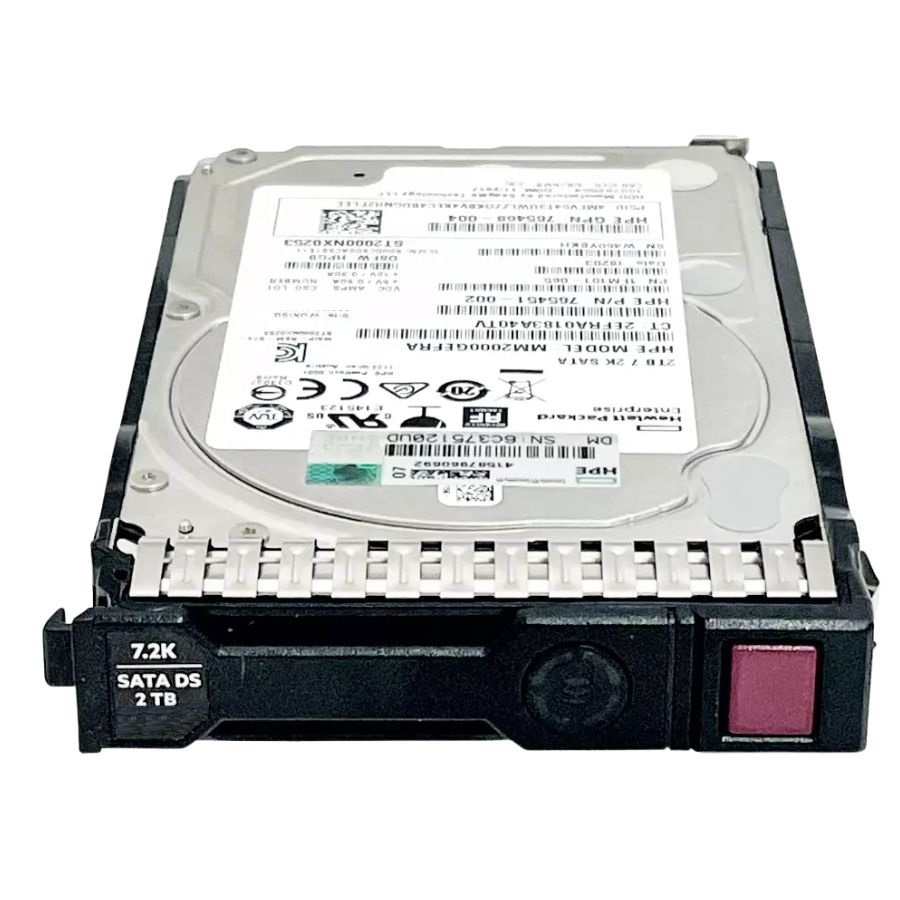


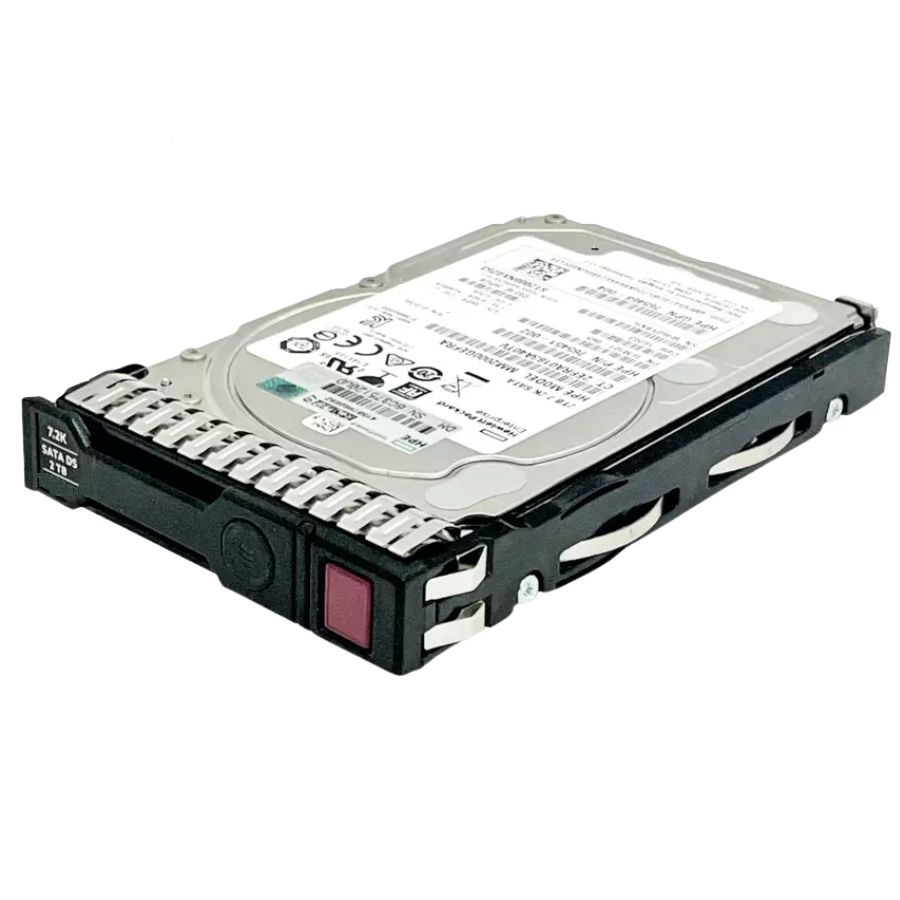
HPE MB2000EAMZF 2TB 7.2K RPM SATA Hard Disk Drive In Tray for Server. Excellent Refurbished with 1 year replacement warranty
The HPE MB2000EAMZF 2TB 7.2K RPM SATA Hard Disk Drive is a dependable enterprise storage solution designed for server environments requiring stable performance, consistent data access, and cost-effective scalability. Built by Hewlett Packard Enterprise (HPE), this drive is engineered to deliver optimized workload handling for business-critical applications, backup systems, and modular storage infrastructures.
The HPE MB2000EAMZF 2TB 7.2K RPM SATA Hard Disk Drive In Tray for Server is designed to operate within enterprise-level computing infrastructures where reliability, consistent throughput, and cost-efficient scalability are essential. As data workloads continue to expand across virtualization, cloud services, database hosting, and hybrid storage architectures, this category of SATA-based hard drives maintains a critical role in balancing performance and affordability.
This drive belongs to a widely adopted class of midline enterprise storage devices that are optimized for sequential workloads, archival data storage, backup repositories, and general-purpose server applications. Its 7,200 RPM rotational speed provides a stable performance baseline for read and write operations while maintaining energy efficiency suitable for large-scale deployments.
The integration of the HPE MB2000EAMZF drive into rack-mounted servers, storage arrays, and blade systems ensures compatibility with standardized HPE storage backplanes. The inclusion of a pre-mounted tray enhances hot-swap functionality, allowing IT administrators to replace or upgrade drives without interrupting system uptime. This capability is particularly important in enterprise environments where service continuity is a priority.
The SATA interface used in the HPE MB2000EAMZF 2TB drive provides a balance between performance, compatibility, and cost efficiency. SATA-based drives are commonly deployed in environments that prioritize capacity expansion over ultra-low latency performance. In server systems, SATA drives complement higher-speed SAS or SSD tiers by handling bulk storage tasks.
With improved controller technology and firmware optimization, modern SATA drives are capable of sustaining consistent transfer rates suitable for backup operations, file sharing systems, and data archiving solutions. The interface ensures wide compatibility across HPE ProLiant servers and storage enclosures.
Signal integrity in SATA drives is maintained through standardized connectors and error correction mechanisms. This ensures that data transmission between the drive and server controller remains stable even under heavy workloads. Enterprise-grade firmware enhances reliability by managing error recovery and predictive failure analysis.
The 7,200 RPM spindle speed is a defining characteristic of this category of hard drives. It represents a balance between performance and power consumption, making it ideal for data center environments where thermal efficiency and energy usage must be controlled. While not as fast as 10K or 15K RPM drives, the 7.2K RPM class offers sufficient throughput for sequential data operations and large file handling.
Continuous read and write operations benefit from the steady mechanical rotation of the disk platters. This makes the drive suitable for workloads such as file storage systems, backup scheduling, and streaming data repositories where sustained performance is more important than random access speed.
Enterprise SATA drives typically include onboard cache memory that temporarily stores frequently accessed data. This improves response times and reduces latency in repetitive read operations. The firmware dynamically manages cache allocation based on workload patterns, enhancing overall system efficiency.
The 2TB capacity of the HPE MB2000EAMZF drive is positioned for mid-range storage requirements in enterprise systems. It is commonly used in environments where multiple drives are deployed in arrays to achieve redundancy, scalability, and performance optimization. This modular approach allows IT administrators to scale storage infrastructure incrementally.
In RAID-based architectures, multiple 2TB drives can be combined to achieve higher capacity and redundancy levels. RAID configurations such as mirroring, striping, and parity-based systems enhance data protection and performance. The SATA interface ensures compatibility with widely used RAID controllers in HPE server platforms.
Heat management is critical in data center environments. The drive is designed to operate within controlled temperature ranges, ensuring stable performance even under continuous load. Server chassis airflow systems complement the drive’s internal thermal design to maintain optimal operating conditions.
Advanced firmware algorithms continuously monitor disk health and performance metrics. These systems enable predictive failure detection, allowing administrators to replace drives before critical failures occur. Error correction protocols ensure that data integrity is preserved during read and write cycles.
The HPE MB2000EAMZF drive is designed to integrate seamlessly with HPE ProLiant server systems. Compatibility with standardized drive bays and backplanes ensures easy deployment and maintenance. This reduces configuration complexity and simplifies IT infrastructure management.
Server-grade storage systems rely on synchronized communication between drives and storage controllers. Firmware compatibility ensures that the drive can communicate effectively with HPE Smart Array controllers, optimizing performance and reliability in enterprise environments.
Energy efficiency is a significant consideration in large-scale storage deployments. The 7.2K RPM speed contributes to reduced power consumption compared to higher RPM drives. This results in lower operational costs and reduced cooling requirements across server installations.
Lower heat generation reduces the burden on cooling infrastructure, which is essential in high-density data centers. Efficient thermal output management contributes to improved system stability and reduced maintenance overhead.
The HPE MB2000EAMZF drive is commonly deployed in archival storage systems where large volumes of data must be retained for long periods. Its capacity and reliability make it suitable for backup repositories and disaster recovery solutions.
Sequential read and write operations benefit from the mechanical structure of HDD technology. This makes the drive particularly effective for backup scheduling systems and log storage environments where data is written in continuous streams.
In virtualized environments, storage drives must support multiple simultaneous workloads. While SSDs are often used for high-performance tiers, SATA HDDs like the MB2000EAMZF serve as capacity layers, storing virtual machine images and non-critical workloads.
Firmware embedded in enterprise drives dynamically adjusts performance parameters based on workload conditions. This allows the drive to maintain stable performance even under varying operational demands.
Advanced recovery algorithms ensure that data corruption risks are minimized during unexpected interruptions. These systems contribute to overall system resilience and data protection in enterprise environments.


 Contact Us
 Information
 Catalog
 Solid State Drives (SSD)
 Network Switches
 Hard Disk Drives
 HBA & Controllers
 PC & Servers
 PC & Server Memory
 CPU & Processors
 Network Routers
 Power Supplies
 Tape Drives & Libraries
 Network Devices
 Computer & Network Cables