(7% discount is applied at checkout)
Cart is empty
Your go-to destination for cutting-edge server products
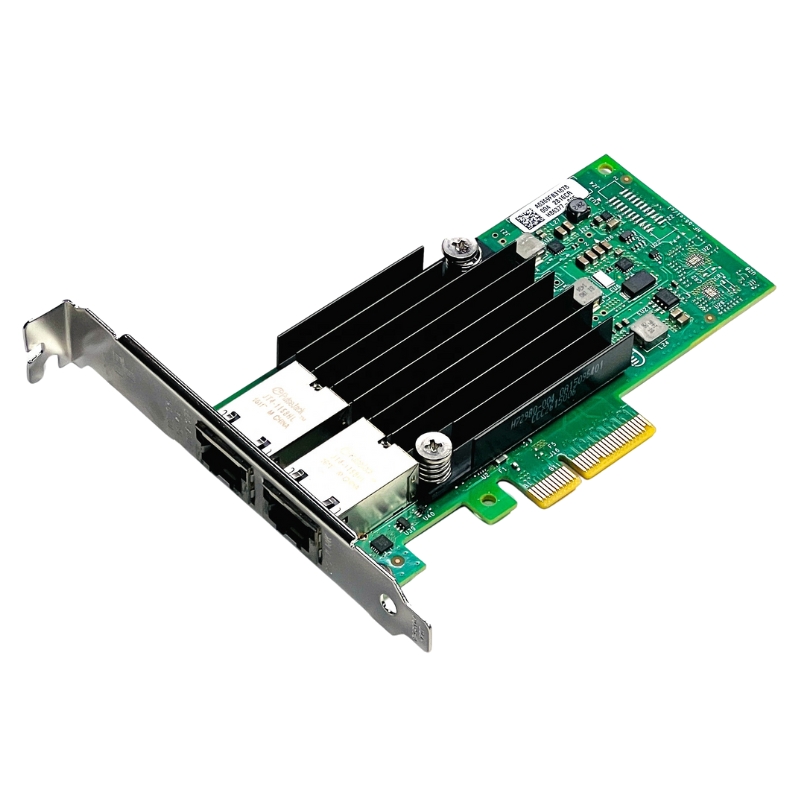


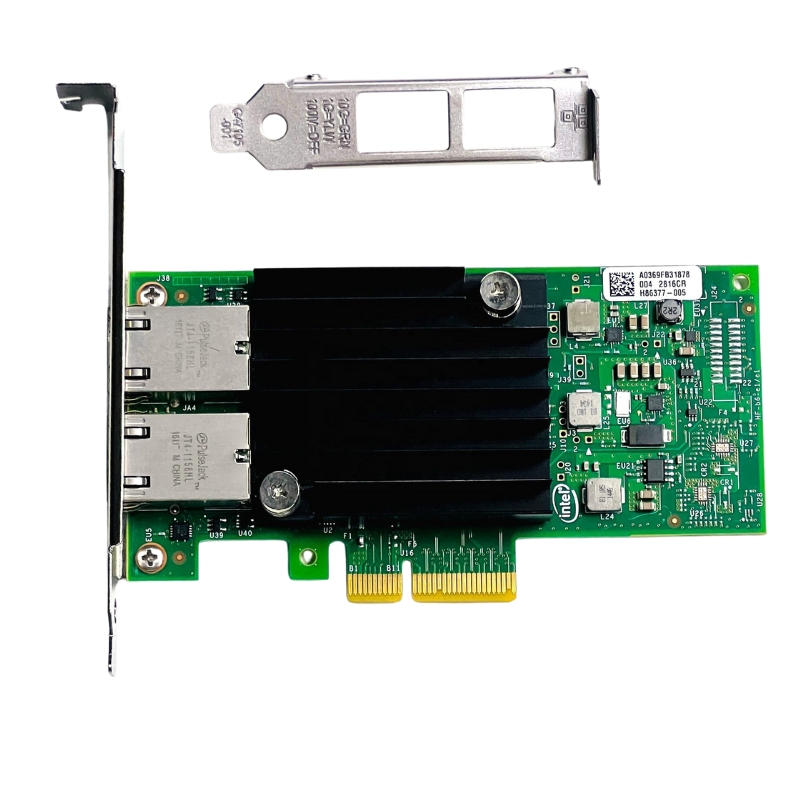
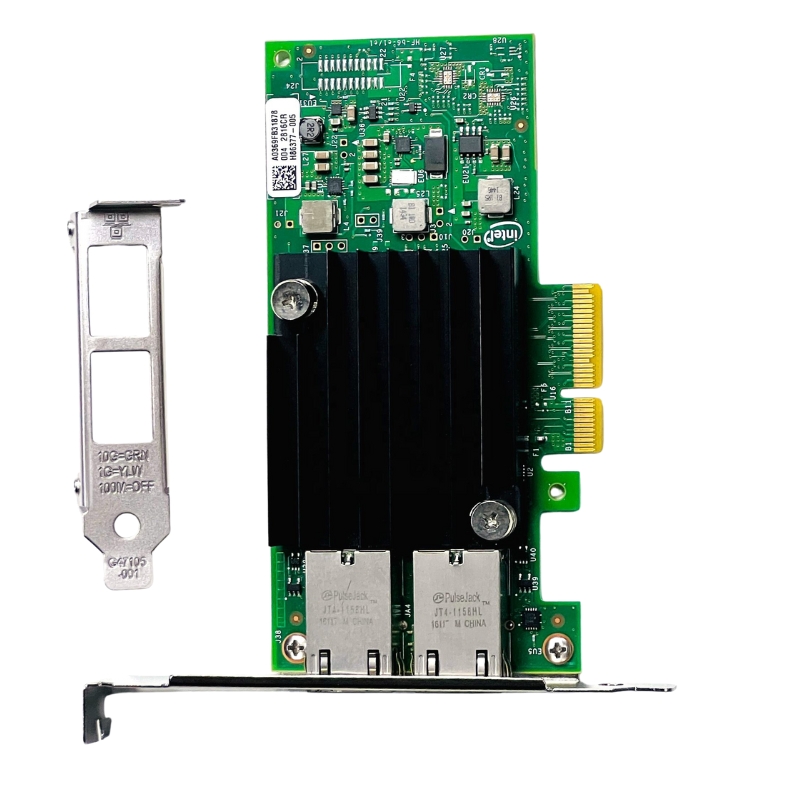
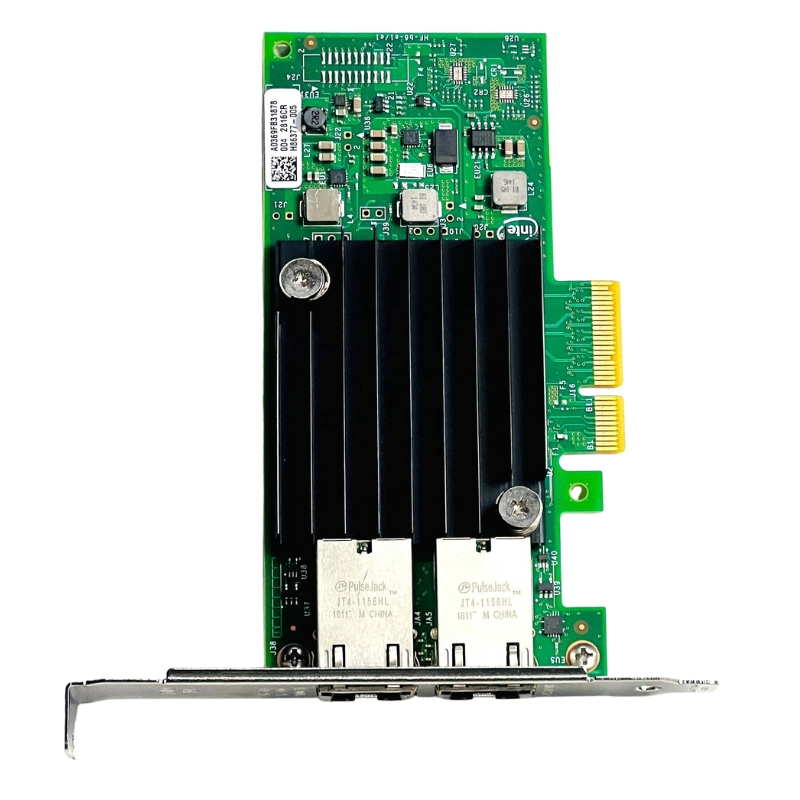
Intel X550-T2 Dual Port Network Adapter 10 GIGABIT. Excellent Refurbished with 1 year replacement warranty - Dell Version
| SKU/MPN | Warranty | Price | Condition | You save |
|---|---|---|---|---|
| X550-T2 | 1 Year Warranty | $138.00 | New Sealed in Box (NIB) | You save: $48.30 (26%) |
| X550-T2 | 1 Year Warranty | $91.00 | Excellent Refurbished | You save: $31.85 (26%) |
Overview of Intel X550-T2 2 Ports 10GbE Network Adapter
The Intel X550-T2 dual-port 10 Gigabit Ethernet network adapter is engineered to deliver advanced connectivity performance for enterprise servers, workstations, and high-demand networking environments. Designed with a PCI Express 3.0 interface, this converged network interface card (NIC) ensures efficient data handling, reduced latency, and stable throughput for bandwidth-intensive applications.
The Intel X550-T2 10Gb Ethernet Converged Network Adapter represents a high-performance dual-port networking solution designed for modern enterprise infrastructures, virtualization environments, and data-intensive workloads. Built on Intel’s advanced Ethernet controller architecture, this adapter category is widely recognized for delivering reliable 10 Gigabit connectivity over standard copper cabling, making it an efficient upgrade path for organizations transitioning from 1GbE to higher-speed network environments without requiring fiber-based infrastructure changes.
As part of the broader category of converged network adapters, the IntelX550-T2 series integrates multiple networking capabilities into a single PCI Express device, allowing both data networking and storage traffic to operate efficiently over a unified infrastructure. This convergence reduces hardware complexity while improving scalability across servers, data centers, and high-performance computing clusters.
At the core of the Intel X550-T2 adapter category lies a highly optimized Ethernet controller engineered to support dual 10GBASE-T ports. This architecture is designed to maximize throughput while minimizing latency, ensuring stable performance under heavy workloads such as virtualization, cloud computing, and large-scale data processing environments. The controller integrates advanced packet processing capabilities that reduce CPU overhead and improve system efficiency.
The adapter utilizes a PCI Express interface that enables high-bandwidth communication between the network controller and the host system. This ensures that data flows smoothly between server memory and network infrastructure without bottlenecks. The PCIe-based architecture also enhances compatibility with modern server platforms, allowing seamless integration into existing enterprise hardware ecosystems.
The PCIe design supports efficient lane utilization, ensuring that each network port can operate at full 10GbE capacity without compromising system performance. This level of optimization is particularly valuable in environments where multiple virtual machines or storage-intensive applications are running simultaneously.
The Intel X550-T2 adapter category is distinguished by its support for 10GBASE-T connectivity, which enables high-speed Ethernet communication over standard twisted-pair copper cabling. This capability allows organizations to leverage existing CAT6A or CAT7 infrastructure, significantly reducing deployment costs compared to fiber-based alternatives.
With dual-port architecture, the adapter supports redundancy configurations that enhance network reliability. In enterprise deployments, one port can serve as a backup path while the other handles primary traffic, ensuring continuous network availability. Additionally, load balancing techniques distribute traffic evenly across both ports, improving overall network efficiency.
Virtualization platforms benefit significantly from dual-port 10GbE adapters, as multiple virtual machines can share the same physical network interface while maintaining high throughput. The Intel X550-T2 category supports these environments by providing consistent bandwidth allocation and reducing packet congestion.
In multi-tenant cloud environments, the adapter enables secure and efficient data separation while maintaining high-speed connectivity. This makes it suitable for private cloud deployments, hosted services, and enterprise virtualization clusters.
The converged nature of the Intel X550-T2 adapter allows it to handle both traditional Ethernet traffic and storage-related protocols over a single interface. This convergence simplifies infrastructure design by reducing the need for separate network and storage adapters, lowering both hardware costs and power consumption.
Modern data centers increasingly rely on converged infrastructure to improve scalability and efficiency. The Intel X550-T2 category aligns with this trend by offering a flexible networking solution that integrates seamlessly into software-defined networking environments and hyper-converged systems.
By consolidating multiple networking functions into a single adapter, system resources such as PCIe lanes, power budgets, and server slots are used more efficiently. This allows data center operators to maximize server density without sacrificing network performance.
Latency-sensitive applications benefit from the Intel X550-T2 adapter’s optimized packet processing engine. By reducing delays in data transmission, the adapter supports real-time applications such as financial trading systems, online gaming infrastructure, and high-frequency data analytics platforms.
The adapter category includes hardware-based offloading capabilities that reduce CPU workload by handling tasks such as checksum calculation, segmentation, and interrupt moderation directly on the network controller. This results in improved system responsiveness and higher overall throughput.
In multi-core server environments, offloading network processing tasks allows CPUs to focus on application-level workloads rather than network overhead. This leads to more efficient utilization of computing resources across enterprise systems.
The Intel X550-T2 adapter category is engineered for 24/7 operation in demanding enterprise environments. Its robust hardware design ensures stable performance under sustained network loads, making it suitable for mission-critical applications.
Advanced error detection and correction mechanisms are built into the adapter’s architecture to maintain data integrity during transmission. These mechanisms help prevent packet loss and ensure reliable communication across network endpoints.
Thermal management is a key consideration in high-speed networking hardware. The Intel X550-T2 design incorporates efficient heat dissipation strategies that maintain optimal operating temperatures, contributing to long-term hardware reliability and reduced maintenance requirements.
The adapter category is widely deployed in enterprise data centers where high-bandwidth, low-latency connectivity is essential. It supports server-to-server communication, storage access, and external network connectivity within large-scale infrastructures.
Cloud service providers rely on high-performance network adapters to ensure consistent service delivery. The Intel X550-T2 fits into this environment by providing scalable bandwidth and supporting virtualization technologies that underpin cloud architectures.
In edge computing deployments, where processing occurs closer to data sources, the adapter enables fast and reliable connectivity between edge nodes and central data centers. This improves response times and reduces network congestion.
Compact server environments benefit from the adapter’s dual-port design, which maximizes connectivity while minimizing physical space requirements. This is especially important in blade server systems and rack-mounted configurations.
The Intel X550-T2 adapter category serves as a critical upgrade path for organizations transitioning from legacy 1GbE networks to high-speed 10GbE environments. This transition enables improved application performance, faster data transfer rates, and enhanced user experiences across networked systems.
Designed with forward compatibility in mind, the adapter supports evolving networking standards and integrates smoothly into modern software-defined networking frameworks. This ensures long-term usability within dynamic IT environments.
By supporting existing copper cabling and providing scalable performance, the adapter helps organizations protect their infrastructure investments while gradually upgrading network capabilities.
The Intel X550-T2 adapter category is designed to balance high performance with energy efficiency. Advanced power management features allow the adapter to adjust energy consumption based on workload demands, reducing operational costs in large-scale deployments.
The adapter intelligently manages power distribution across its dual ports, ensuring optimal performance during peak traffic while conserving energy during lower utilization periods. This dynamic approach contributes to greener data center operations.
By combining high performance, low power consumption, and reduced infrastructure complexity, the adapter contributes to a lower total cost of ownership for enterprise networking environments.
Security is an essential component of modern networking hardware. The Intel X550-T2 adapter supports secure data transmission by integrating hardware-level features that protect against data corruption and unauthorized access during network communication.
In virtualized systems, network isolation is critical for maintaining tenant security. The adapter supports virtualization-aware features that help separate traffic streams and ensure secure data handling across multiple virtual machines.
The adapter’s architecture supports stable and consistent network identity management, which is essential for authentication, monitoring, and access control in enterprise environments.


 Contact Us
 Information
 Catalog
 Solid State Drives (SSD)
 Network Switches
 Hard Disk Drives
 HBA & Controllers
 PC & Servers
 PC & Server Memory
 CPU & Processors
 Network Routers
 Power Supplies
 Tape Drives & Libraries
 Network Devices
 Computer & Network Cables