(7% discount is applied at checkout)
Cart is empty
Your go-to destination for cutting-edge server products
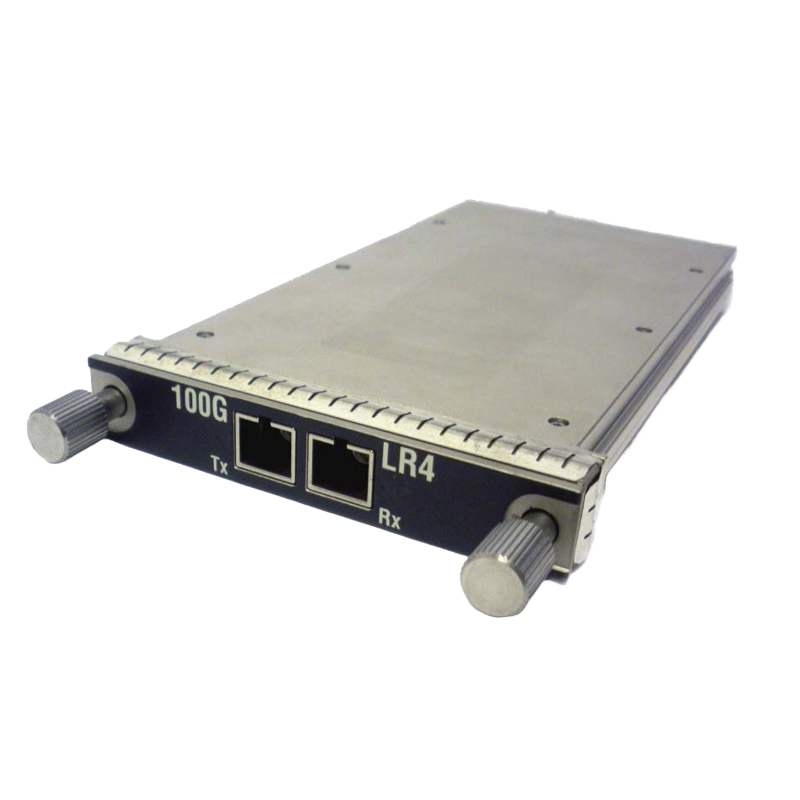


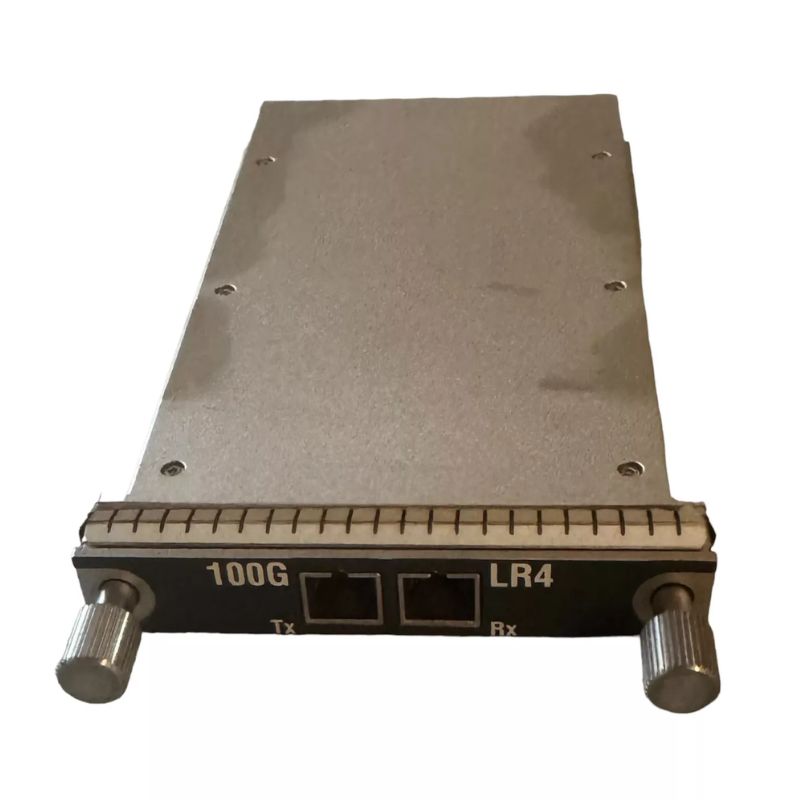
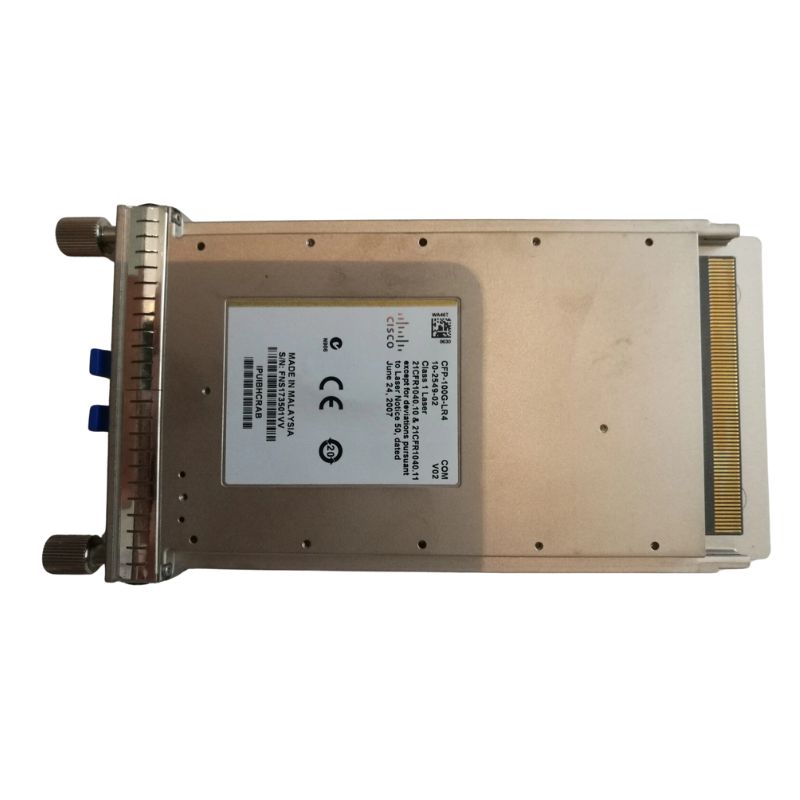
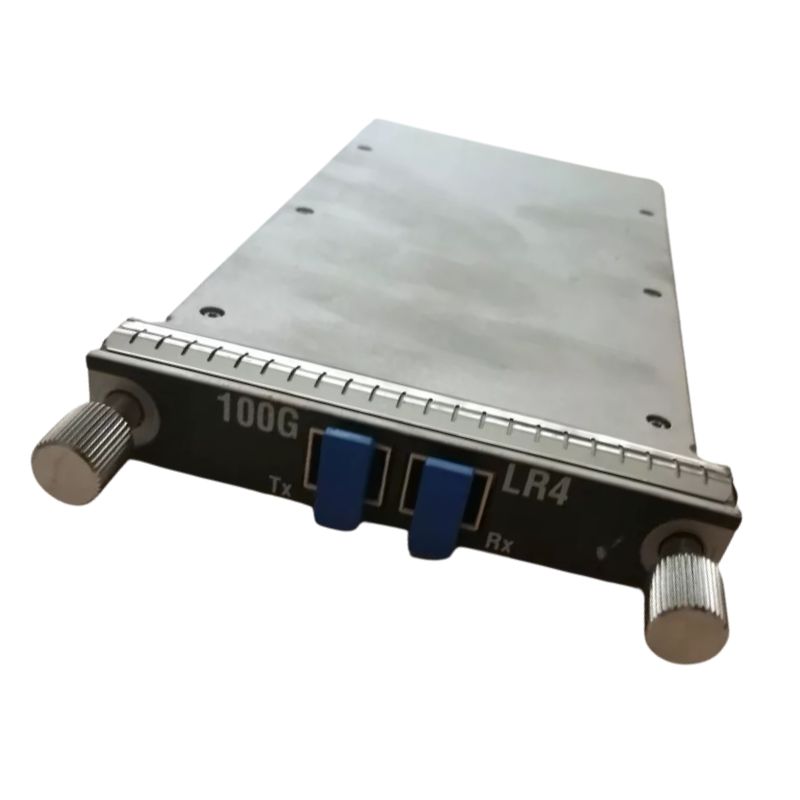
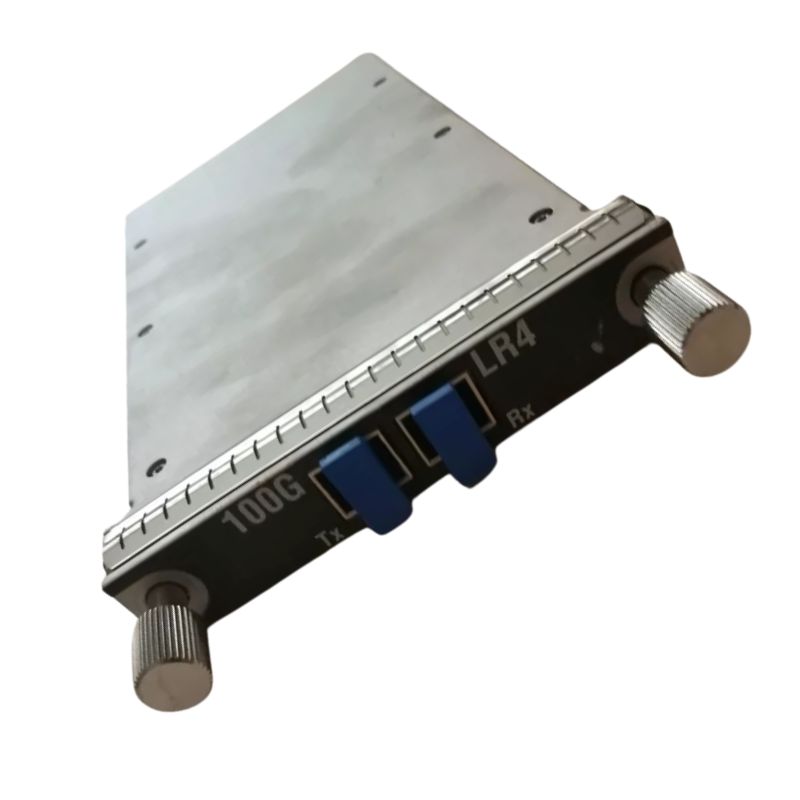
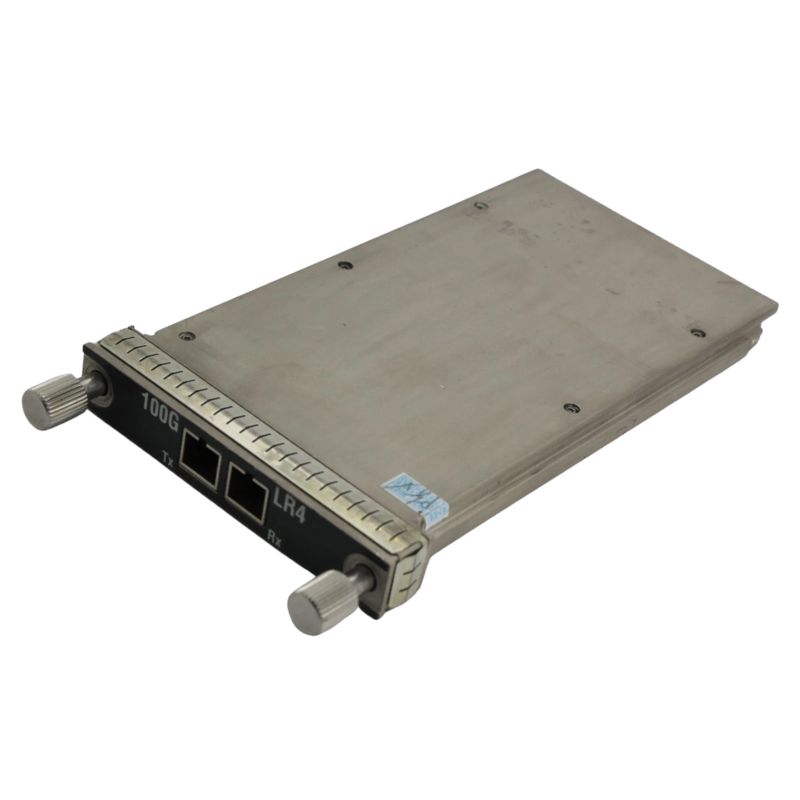
Cisco CFP-100G-LR4 CFP Transceiver Module with 100GBPS Single Mode Fiber Duplex LC Connector. Excellent Refurbished with 1 year replacement warranty
The Cisco CFP-100G-LR4 is a high-speed optical transceiver module designed for advanced data center and service provider networks. It delivers reliable 100Gbps connectivity over single-mode fiber (SMF), ensuring long-distance, high-bandwidth transmission performance.
The Cisco CFP-100G-LR4 CFP transceiver module category represents a high-performance class of optical networking components designed for ultra-fast data transmission across long-distance single-mode fiber infrastructure. Developed under the advanced networking portfolio of this category of 100 Gigabit Ethernet optical transceivers is engineered to support carrier-grade, enterprise-grade, and hyperscale data center environments where bandwidth density, signal integrity, and long-reach connectivity are critical requirements. The CFP-100G-LR4 module is widely recognized for its ability to deliver 100Gbps throughput using a duplex LC connector interface over single-mode fiber (SMF), making it a foundational technology in modern backbone networks.
As global data consumption continues to expand across cloud computing, streaming services, virtualization, and AI workloads, the need for robust optical interconnect solutions has intensified. The CFP form factor, particularly the LR4 variant, addresses this demand by enabling scalable 100G connectivity while maintaining compatibility with existing fiber plant deployments. This category is not simply a hardware component class but a key enabling layer of high-speed optical communication ecosystems.
The CFP (C Form-Factor Pluggable) architecture was introduced to support early generations of 100 Gigabit Ethernet interfaces before the emergence of more compact standards such as CFP2, CFP4, and QSFP28. The CFP-100G-LR4 module remains significant in environments where long-reach transmission and robust optical performance outweigh size constraints. Its design reflects a transitional stage in optical networking evolution, bridging legacy infrastructure with modern high-capacity systems.
The CFP form factor was designed with a larger physical footprint to accommodate multiple optical lanes, complex signal conditioning circuitry, and advanced thermal management systems. This allows the CFP-100G-LR4 module to maintain stable performance under demanding operational conditions. Unlike smaller pluggable optics, CFP modules prioritize optical stability, reach, and compatibility with long-distance SMF deployments.
The CFP-100G-LR4 module is primarily used in long-reach optical links, typically extending up to 10 kilometers over single-mode fiber. It is widely deployed in metro networks, inter-data center interconnects, and core routing infrastructures. The module enables seamless high-capacity transport of aggregated traffic across geographically distributed network nodes, ensuring minimal latency and high signal fidelity.
The CFP-100G-LR4 module operates based on the 100GBASE-LR4 Ethernet standard, which uses wavelength division multiplexing (WDM) technology to transmit data over four optical lanes. Each lane carries 25Gbps of data, combining to deliver a total throughput of 100Gbps. This architecture enables efficient utilization of single-mode fiber while reducing physical cabling complexity.
The LR4 standard defines long-reach optical transmission over single-mode fiber using four distinct wavelengths within the 1310nm spectrum window. These wavelengths are typically spaced to minimize interference and ensure signal integrity over long distances. The CFP-100G-LR4 module converts electrical signals from the host system into optical signals, distributes them across the four wavelengths, and recombines them at the receiving end.
Each CFP-100G-LR4 module uses four independent laser transmitters and photodetectors, each operating at slightly different wavelengths. This allows simultaneous transmission of multiple data streams over a single fiber pair. Wavelength division multiplexing enhances bandwidth efficiency without requiring additional physical fiber strands, which is essential in large-scale telecom and enterprise deployments.
Forward Error Correction (FEC) is integrated into the LR4 transmission scheme to maintain data accuracy over long distances. As optical signals degrade due to attenuation and dispersion, FEC ensures that the receiving system can reconstruct corrupted data packets without retransmission. This improves overall network efficiency and reduces latency in high-performance environments.
Inside the CFP-100G-LR4 module, sophisticated optoelectronic components perform high-speed conversion between electrical and optical domains. Digital signal processors (DSPs) manage signal conditioning, clock recovery, and lane alignment. These processes ensure that data transmitted at 100Gbps remains synchronized and error-free across the optical link.
The CFP-100G-LR4 module is specifically designed for single-mode fiber (SMF) environments, which are optimized for long-distance transmission due to their low attenuation characteristics and narrow core diameter. SMF allows light signals to travel with minimal dispersion, making it ideal for inter-building and metro-area networking.
Single-mode fiber provides superior bandwidth-distance performance compared to multimode fiber, enabling 100Gbps transmission over distances up to 10 kilometers and beyond depending on network conditions. The CFP-100G-LR4 module leverages this capability to support large-scale distributed architectures, particularly in cloud data centers and carrier networks.
The duplex LC connector interface used in CFP-100G-LR4 modules ensures standardized connectivity across networking environments. LC connectors are widely adopted due to their compact size, high precision alignment, and ease of deployment. The duplex configuration allows simultaneous bidirectional communication, which is essential for full-duplex Ethernet transmission at 100Gbps.
High-quality LC connectors minimize insertion loss and return loss, ensuring that optical signals remain strong and stable across network segments. In CFP-100G-LR4 deployments, connector quality directly impacts link performance, making precision manufacturing and proper installation critical factors in system reliability.
The CFP-100G-LR4 category supports a wide range of high-capacity networking applications. These modules are particularly important in environments where long-distance, high-bandwidth connectivity is required without compromising performance or scalability.
In data center interconnect architectures, CFP-100G-LR4 modules enable seamless communication between geographically separated facilities. This supports disaster recovery systems, load balancing, and distributed computing frameworks. The ability to transmit 100Gbps over single-mode fiber makes LR4 modules essential for modern cloud infrastructure providers.
Large enterprises rely on CFP-100G-LR4 modules to build resilient backbone networks that connect campus environments, regional offices, and centralized data centers. These modules ensure that internal traffic flows efficiently, supporting mission-critical applications such as ERP systems, video conferencing, and large-scale database synchronization.
Internet service providers and telecom operators use CFP-100G-LR4 modules to build high-capacity backbone links between switching centers. These modules support massive traffic aggregation from residential and commercial users, ensuring stable internet service delivery across metropolitan and national networks.
The CFP-100G-LR4 module is optimized for interoperability within Cisco switching and routing platforms. As part of the broader optical portfolio of this modules are engineered to maintain compatibility with Cisco hardware while delivering consistent performance metrics across supported platforms.
Cisco’s optical modules are typically validated through rigorous interoperability testing, ensuring seamless integration with high-end routers, optical transport systems, and modular switches. This ensures predictable behavior in enterprise and carrier-grade deployments where downtime and signal degradation are unacceptable.
Deploying CFP-100G-LR4 modules requires careful attention to fiber quality, connector cleanliness, and optical power budgeting. Proper installation ensures that signal attenuation remains within acceptable thresholds, preserving link integrity across long distances.
Single-mode fiber infrastructure must be properly certified to support 100Gbps transmission. This includes verifying splice quality, connector cleanliness, and attenuation levels across the fiber path. Any degradation in fiber quality can significantly impact LR4 performance.
CFP modules contain sensitive optical and electronic components that require careful handling. Electrostatic discharge protection measures are essential during installation and maintenance procedures. Improper handling can result in reduced module lifespan or degraded performance.
Maintaining optimal performance in CFP-100G-LR4 deployments involves continuous monitoring of optical power levels, temperature conditions, and signal integrity metrics. Network administrators often use diagnostic tools integrated into network operating systems to monitor module health.
Common issues in LR4 deployments include fiber attenuation, dirty connectors, and misaligned optical paths. Diagnosing these issues involves checking received optical power levels and comparing them against expected thresholds. Proper cleaning and recalibration often restore full performance.
CFP modules generate heat during operation due to high-speed optical and electrical processing. Adequate airflow and thermal management systems are necessary in dense rack environments to prevent overheating and ensure stable long-term operation.
CFP-100G-LR4 modules are designed to operate in a wide range of environmental conditions, making them suitable for both controlled data center environments and more variable telecom installations. Temperature stability, humidity resistance, and vibration tolerance are key design considerations.
Due to their complex optical and electronic architecture, CFP modules typically consume more power than smaller form factor transceivers. However, this trade-off is justified by their extended reach and high reliability in long-distance applications.
The CFP-100G-LR4 category continues to play a role in legacy and hybrid network environments, even as newer form factors emerge. Its scalability allows organizations to maintain existing infrastructure while gradually transitioning to more compact optical solutions.
In long-term network planning, CFP modules often serve as backbone components that support core connectivity while edge networks evolve toward higher-density interfaces. This ensures continuity of service and investment protection for large-scale network operators.
While newer technologies such as QSFP28 and coherent optics are increasingly adopted, CFP-100G-LR4 modules remain relevant in specific use cases requiring long reach and robust optical performance. Their role in hybrid network architectures ensures continued relevance in enterprise and carrier environments.


 Contact Us
 Information
 Catalog
 Solid State Drives (SSD)
 Network Switches
 Hard Disk Drives
 HBA & Controllers
 PC & Servers
 PC & Server Memory
 CPU & Processors
 Network Routers
 Power Supplies
 Tape Drives & Libraries
 Network Devices
 Computer & Network Cables