(7% discount is applied at checkout)
Cart is empty
Your go-to destination for cutting-edge server products
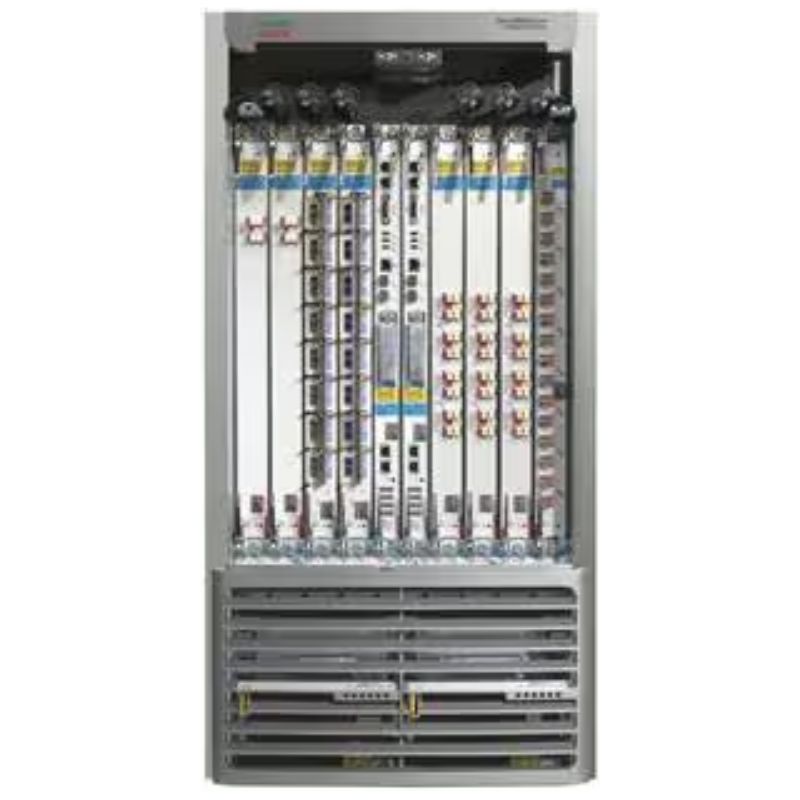


Cisco CRS-8-INSTALL-KT CRS-1 Series 8 Slot Install Kit. Excellent Refurbished with 1 year replacement warranty
The Cisco CRS-8-INSTALL-KT is a specialized installation kit designed for the CRS-1 Series 8 Slot chassis. Engineered for scalability and reliability, this kit ensures seamless integration of modular components for high-performance networking environments.
The Cisco CRS-8-INSTALL-KT CRS-1 Series 8 Slot Install Kit is an essential hardware solution designed to simplify and support the professional deployment of Cisco CRS-1 Series 8-slot carrier routing systems. Service providers, enterprise organizations, telecommunications operators, internet exchange providers, and large-scale data center environments rely on installation kits that ensure every component of a high-performance routing platform is installed securely and according to manufacturer specifications. The installation kit plays an important role in reducing deployment complexity while helping maintain the structural integrity, stability, and long-term reliability of mission-critical networking infrastructure.
Modern carrier-class routing platforms require precise installation procedures because they are expected to deliver uninterrupted network services around the clock. Every mounting component, fastening mechanism, support bracket, and installation accessory included within a professional installation kit contributes to the overall safety and efficiency of the deployment process. The Cisco CRS-8-INSTALL-KT has been engineered specifically for compatibility with the Cisco CRS-1 Series 8-slot chassis, making it an ideal solution for organizations expanding backbone infrastructure, upgrading routing environments, or deploying new telecommunications facilities.
The primary purpose of the Cisco CRS-8-INSTALL-KT is to provide the required installation hardware and supporting components needed for mounting and securing a Cisco CRS-1 Series 8-slot router chassis. Large routing systems require considerably more planning than standard enterprise switches because of their size, weight, airflow requirements, and cable management considerations. An installation kit ensures that every physical component fits properly within the designated rack environment while supporting long-term operational reliability.
Carrier-grade routers frequently become the foundation of national internet backbones, cloud service provider networks, government infrastructures, and large enterprise WAN environments. Because these systems often remain operational for many years, proper installation from the beginning significantly improves equipment longevity and simplifies future maintenance activities.
The installation kit is engineered specifically for Cisco CRS-1 Series equipment rather than serving as a generic mounting solution. This hardware compatibility ensures correct alignment, balanced weight distribution, and compliance with Cisco installation recommendations. Organizations deploying CRS-1 infrastructure benefit from hardware specifically designed for the platform rather than adapting universal mounting accessories that may not provide optimal support.
The Cisco CRS-8-INSTALL-KT is intended for environments utilizing Cisco CRS-1 Series 8-slot routing systems. The CRS-1 platform has earned recognition throughout the networking industry for delivering carrier-grade scalability, exceptional routing intelligence, and support for massive traffic volumes. Installation hardware designed specifically for this chassis simplifies deployment while maintaining proper structural support.
Organizations operating large service provider networks often require routing platforms capable of supporting millions of routing entries, extensive MPLS deployments, IPv4 and IPv6 coexistence, advanced traffic engineering, and highly available network architectures. Proper installation hardware helps these advanced routing systems perform as intended by providing a stable physical foundation that minimizes installation errors and mechanical stress.
Professional installation requires attention to rack spacing, equipment alignment, airflow clearance, cable routing, and weight distribution. The Cisco CRS-8-INSTALL-KT assists technicians by providing installation components developed for these specialized deployment requirements, helping maintain consistent rack organization across telecommunications facilities and enterprise data centers.
Carrier routing platforms are expected to maintain continuous operation with minimal downtime. Every physical component involved in deployment contributes to long-term operational stability. Proper installation reduces unnecessary movement, vibration, and mechanical strain that could affect sensitive networking hardware over extended operating periods.
The Cisco CRS-8-INSTALL-KT supports environments where network availability directly impacts business operations, customer connectivity, cloud services, streaming platforms, financial systems, healthcare communications, and government infrastructure. Professional installation hardware helps maintain the reliability expected from enterprise and carrier-class networking equipment.
As organizations increase bandwidth capacity and network reach, infrastructure expansion frequently requires additional routing equipment. Installation kits simplify deployment by providing standardized hardware that allows network engineers to deploy multiple chassis consistently across geographically distributed facilities. Standardization also improves documentation, maintenance procedures, and hardware inventory management.
Large routing systems require secure mounting to maintain proper operation throughout years of continuous service. Stable installation minimizes unnecessary movement caused by maintenance activities, cable adjustments, equipment upgrades, or environmental vibration. Secure mounting contributes to improved hardware protection while maintaining the alignment of installed components.
Carrier-grade routers generate significant amounts of heat during operation. Proper installation spacing allows cooling systems to function efficiently while maintaining recommended airflow patterns throughout the chassis. Installation hardware assists technicians in positioning equipment correctly within cabinets and racks, supporting efficient thermal management without obstructing ventilation paths.
Large routing platforms often include hundreds of network connections, power cables, management interfaces, and optical fiber links. Proper installation provides adequate space for structured cable management, reducing cable congestion while simplifying future troubleshooting and hardware upgrades.
Organizations operating enterprise data centers depend upon highly reliable routing platforms to connect cloud applications, virtualization environments, disaster recovery facilities, and distributed branch offices. The Cisco CRS-8-INSTALL-KT supports these environments by enabling secure physical deployment of CRS-1 infrastructure within professionally managed equipment racks.
Large enterprises handling financial transactions, manufacturing operations, healthcare systems, research computing, and multinational communications require infrastructure capable of supporting constant network availability. Proper installation hardware contributes to achieving these operational goals.
Cloud computing environments continue to demand increasing routing performance due to virtualization, software-defined networking, hybrid cloud deployments, and distributed applications. Carrier-class routers serve as critical interconnection points between private infrastructure and public cloud providers. Installation kits help ensure these routing systems remain securely deployed throughout years of expanding network demand.
Internet service providers utilize carrier routing systems to aggregate customer traffic, exchange routing information with upstream providers, and maintain reliable internet connectivity across extensive geographic regions. Professional installation hardware supports these deployments by helping establish stable routing infrastructure capable of operating continuously within telecommunications facilities.
Mobile operators increasingly rely upon high-capacity routing platforms for transporting voice, video, messaging, and mobile broadband traffic. The Cisco CRS-8-INSTALL-KT contributes to efficient deployment of routing infrastructure supporting mobile core networks, transport networks, and edge connectivity environments.
Regional carriers, national backbone providers, educational research networks, and government communication systems frequently utilize modular routing platforms that require specialized installation procedures. Dedicated installation kits improve consistency while supporting long-term infrastructure management across multiple facilities.
Well-installed routing equipment simplifies future maintenance procedures by ensuring technicians have appropriate access to modules, power supplies, cooling systems, interface cards, and management components. Proper installation minimizes unnecessary obstructions that could otherwise increase maintenance complexity or prolong scheduled service windows.
During equipment upgrades or hardware replacement activities, standardized installation methods allow engineers to work more efficiently. Using manufacturer-designed installation hardware supports repeatable maintenance procedures while reducing installation inconsistencies between different deployment locations.
Carrier-class routing systems represent significant infrastructure investments. Organizations seek to maximize operational lifespan through careful installation, environmental management, preventive maintenance, and standardized deployment practices. The Cisco CRS-8-INSTALL-KT contributes to these objectives by providing installation components specifically intended for Cisco CRS-1 Series platforms.
Proper installation also helps organizations maintain organized equipment layouts, improving documentation accuracy and simplifying future infrastructure audits. Consistent rack installations contribute to cleaner data center environments while supporting better operational efficiency.
Installation kits developed for specific hardware platforms reduce the possibility of incorrect mounting techniques or incompatible hardware usage. By utilizing components engineered for the CRS-1 Series, organizations improve installation quality while minimizing deployment delays associated with missing or incompatible mounting accessories.
Professional network installations emphasize organized rack layouts that support accessibility, airflow, scalability, and cable management. Dedicated installation hardware contributes to consistent equipment positioning throughout large telecommunications facilities where multiple routing systems may be deployed across several equipment rows.
Large modular routing platforms require balanced support within equipment racks. Installation components designed specifically for the CRS-1 Series help distribute chassis weight appropriately while maintaining rack stability and reducing mechanical stress on supporting infrastructure.
Successful deployments consider equipment spacing, cooling capacity, electrical distribution, maintenance accessibility, and future expansion requirements. Installation hardware complements these planning activities by enabling accurate chassis placement according to recommended engineering practices.
Large organizations often maintain standardized deployment procedures across multiple facilities. Using the Cisco CRS-8-INSTALL-KT allows engineering teams to implement consistent installation practices, improving operational documentation and simplifying training for installation personnel responsible for deploying carrier-class infrastructure.
Installation projects involving backbone routing equipment frequently operate under strict deployment schedules. Having dedicated installation hardware available helps technicians complete equipment installation more efficiently while maintaining manufacturer-recommended deployment procedures. Standardized installation also reduces uncertainty during large infrastructure rollout projects involving numerous networking systems.
The Cisco CRS product family has been developed to address the demanding requirements of service provider networks requiring exceptional scalability, availability, and routing intelligence. Installation accessories such as the Cisco CRS-8-INSTALL-KT represent an important part of the complete deployment ecosystem by supporting the physical infrastructure that enables advanced routing technologies to operate reliably.
Carrier routing infrastructure continues evolving to support cloud computing, edge services, artificial intelligence workloads, high-capacity optical transport, streaming platforms, and rapidly growing internet traffic volumes. Proper installation remains a foundational element regardless of advances in routing software, forwarding engines, or network automation technologies. Secure physical deployment helps preserve infrastructure reliability while supporting future technology upgrades and ongoing operational excellence.


 Contact Us
 Information
 Catalog
 Solid State Drives (SSD)
 Network Switches
 Hard Disk Drives
 HBA & Controllers
 PC & Servers
 PC & Server Memory
 CPU & Processors
 Network Routers
 Power Supplies
 Tape Drives & Libraries
 Network Devices
 Computer & Network Cables