(7% discount is applied at checkout)
Cart is empty
Your go-to destination for cutting-edge server products
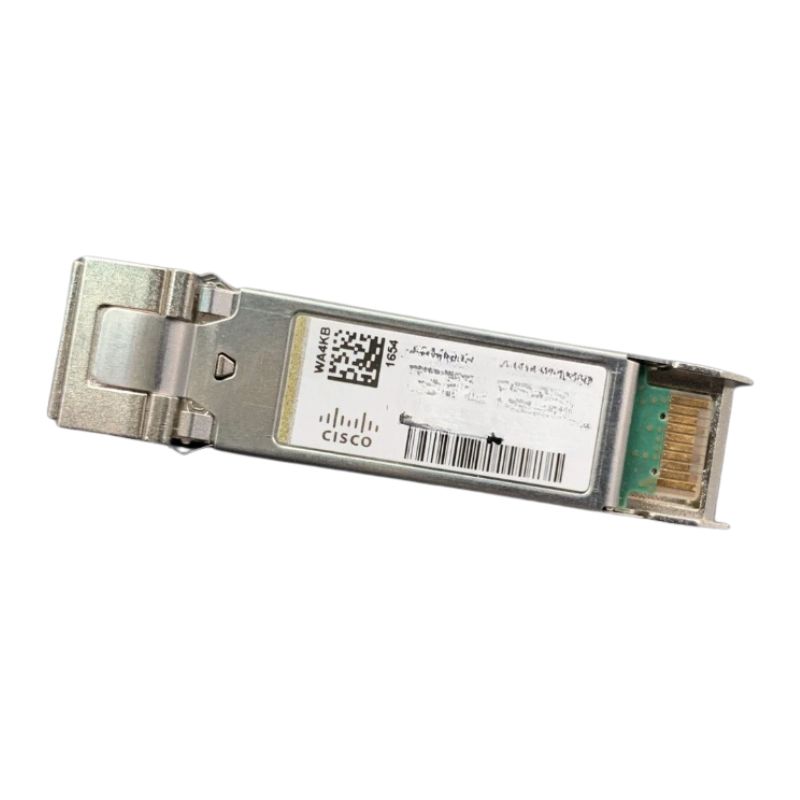


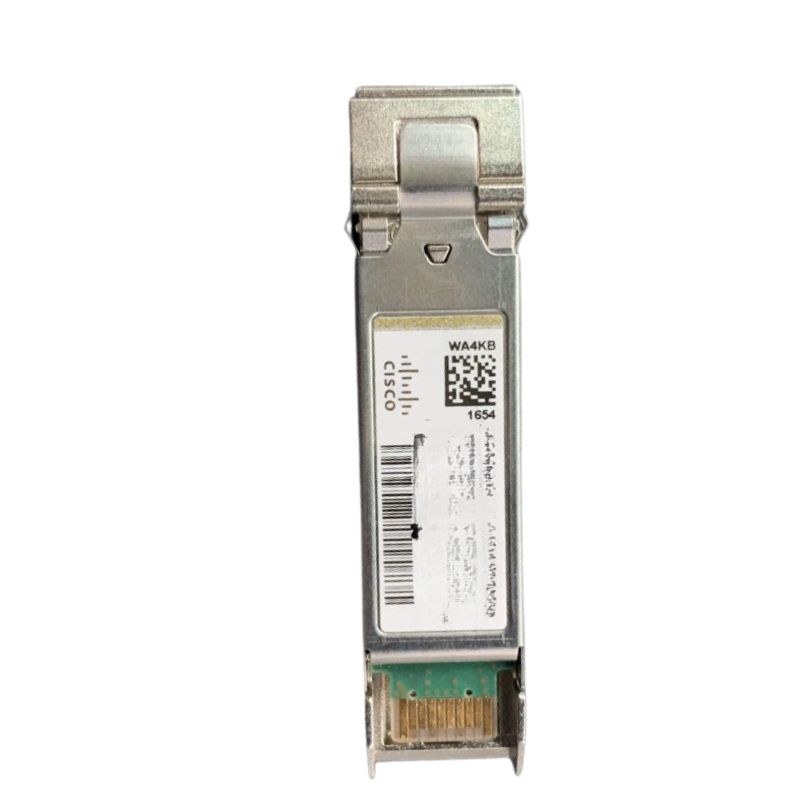
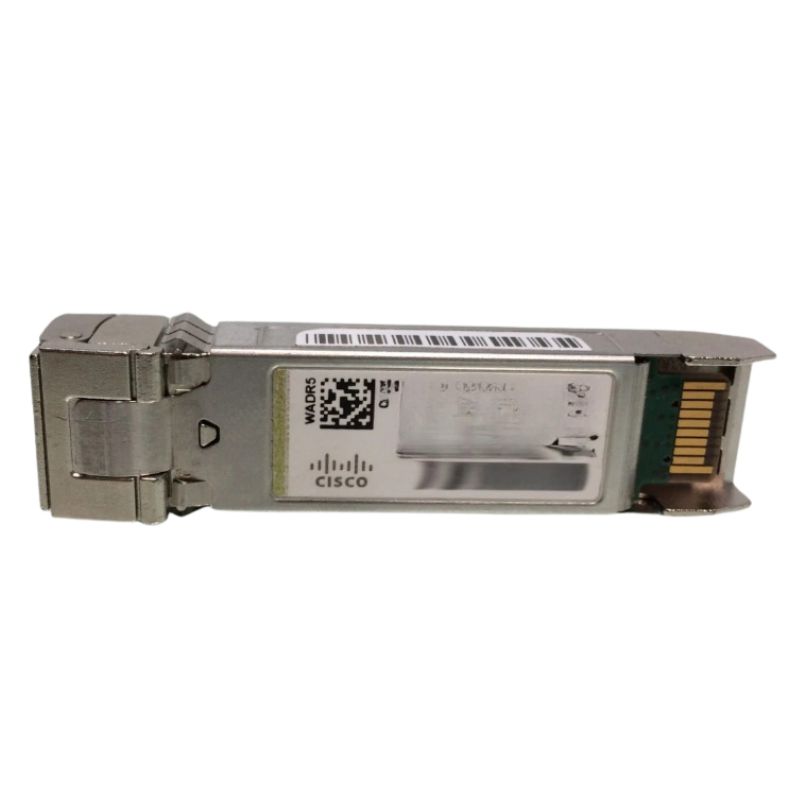
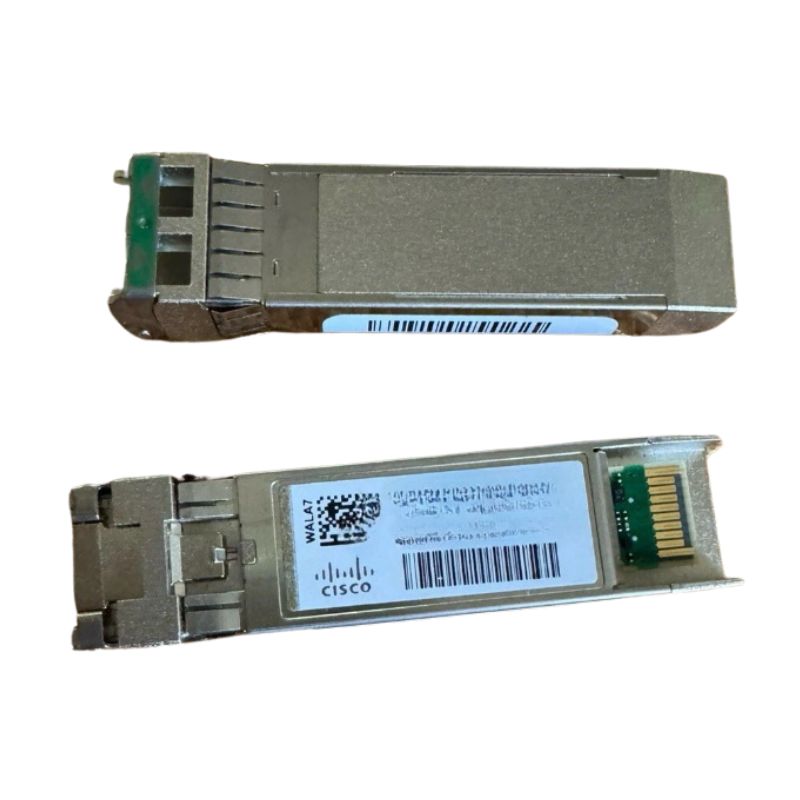
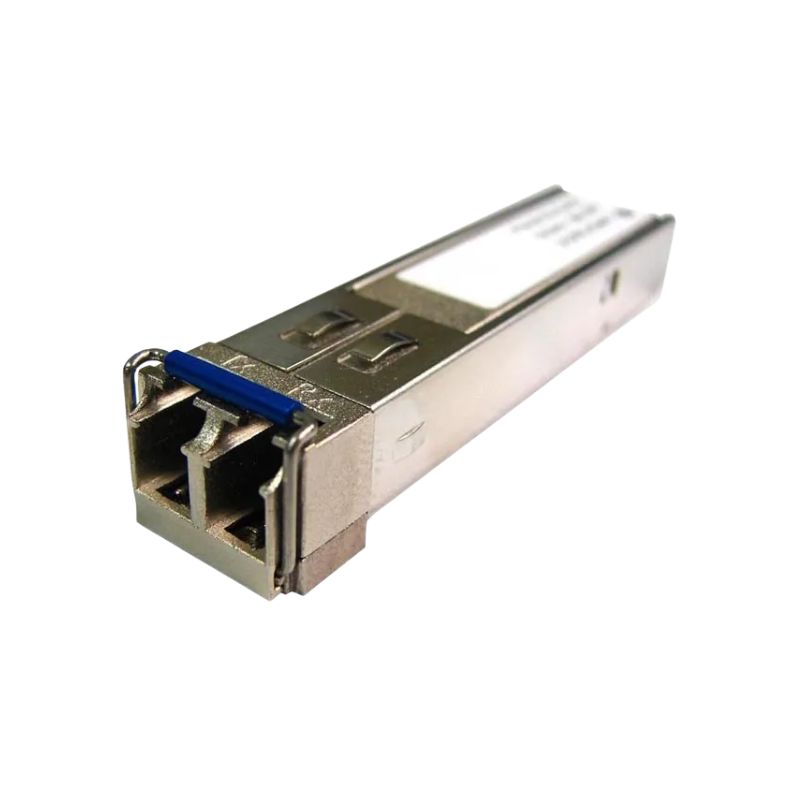
Cisco DWDM-SFP-4214 1GBPS 1000Base-DWDM Single-mode Fiber 80km 1542.14nm Duplex LC Connector SFP Transceiver Module. Excellent Refurbished with 1 year replacement warranty
The Cisco DWDM-SFP-4214 is a dedicated, high-performance small form-factor pluggable (SFP) transceiver module designed for dense wavelength division multiplexing (DWDM) applications. Operating at a nominal bit rate of 1 gigabit per second (1Gbps) and strictly adhering to the 1000Base-DWDM standard, this module is engineered to extend optical network reach over significant distances.
This transceiver is specifically tuned to the 1542.14 nanometer (nm) wavelength, which falls within the C-band (conventional band) of the optical spectrum, a region widely used for DWDM systems due to its low attenuation in standard single-mode optical fibers. The integrated duplex LC connector ensures a secure and standardized physical interface, facilitating easy integration into existing fiber optic infrastructures. This module is not merely a generic optical transceiver; it is a Cisco-certified and tested component, guaranteeing interoperability, reliability, and performance within Cisco switching and routing platforms. Its design addresses the growing need for bandwidth scalability without the expense of deploying new fiber cables, effectively maximizing the utilization of existing dark fiber assets through wavelength multiplexing.
At the heart of the Cisco DWDM-SFP-4214 lies a sophisticated optical engine that combines a distributed feedback (DFB) laser with advanced electronic dispersion compensation (EDC) and clock and data recovery (CDR) circuitry. The DFB laser is the key to its wavelength stability, ensuring that the emitted light remains precisely centered at 1542.14 nm with a narrow spectral linewidth, which is essential for preventing crosstalk between adjacent DWDM channels. This precision is governed by the International Telecommunication Union (ITU) grid, where 1542.14 nm corresponds to a specific channel frequency of 194.4 THz, ensuring seamless integration into standardized DWDM networks.
The DWDM-SFP-4214 adheres to the SFP Multi-Source Agreement (MSA) form factor, making it hot-swappable and mechanically interoperable with a wide range of networking equipment. Its compact dimensions, typically measuring 13.4 mm x 56.5 mm x 8.5 mm, allow for high port density on line cards, a crucial feature for core routing and switching platforms where space is at a premium. The metal housing of the transceiver provides effective electromagnetic interference (EMI) shielding and acts as a heat sink to dissipate thermal energy generated during operation, ensuring stable performance within an operating temperature range of 0°C to 70°C. The duplex LC receptacle is designed to be keyed, preventing incorrect fiber polarity insertion, and is rated for more than 500 mating cycles, underscoring its durability for field deployment.
On the electrical side, the transceiver interfaces with the host system via a 20-pin edge connector as defined by the SFP MSA. The data lines operate at 1.25 Gbps in full-duplex mode, compliant with the IEEE 802.3z Gigabit Ethernet standard. The module includes internal AC coupling for the high-speed differential transmit (TD) and receive (RD) pins, making it compatible with various host ASIC interface voltages. The built-in CDR circuitry retimes the incoming data and reshapes the signal, reducing jitter and improving overall signal integrity over the long fiber span. This feature is particularly important in DWDM systems where multiple wavelengths are multiplexed, as it mitigates the effects of chromatic dispersion and non-linear penalties that can accumulate over extended distances.
The Cisco DWDM-SFP-4214 is optimized for use with ITU-T G.652 standard single-mode fiber (SMF), also known as standard SMF or non-dispersion-shifted fiber. Its ability to achieve an 80 km transmission distance is contingent upon the use of high-quality fiber with low loss and minimal dispersion. The 1542.14 nm wavelength resides in the low-attenuation window of SMF, where attenuation is typically around 0.22 to 0.25 dB/km. This allows for a significant optical power budget, which is the difference between the transmitter output power and the receiver sensitivity, plus a system margin for aging and environmental factors. The module's power budget is calculated to accommodate up to 20 dB of link loss, including fiber attenuation, connector losses (typically 0.5 dB per connector pair), and splice losses, making it suitable for a majority of long-haul and metro-regional network topologies.
While fiber attenuation is a primary factor in reach, chromatic dispersion also plays a critical role, especially at 1 Gbps over 80 km. At 1542.14 nm, standard SMF exhibits a chromatic dispersion coefficient of approximately 17 ps/(nm·km). Over an 80 km span, this accumulates to roughly 1,360 ps/nm, which can cause pulse broadening and inter-symbol interference (ISI). However, the DWDM-SFP-4214's transmitter DFB laser inherently has a narrow spectral width, and the receiver's sensitivity is designed to tolerate this level of dispersion without requiring external dispersion compensation modules (DCMs) in most standard network configurations.
This transceiver is manufactured in accordance with stringent environmental and reliability standards. It is RoHS (Restriction of Hazardous Substances) compliant, ensuring that it is free from lead, mercury, cadmium, and other harmful materials. The module undergoes rigorous qualification testing, including thermal cycling, vibration, and humidity testing, to meet Telcordia GR-468-CORE reliability requirements. These tests guarantee a mean time between failures (MTBF) exceeding 1 million hours, providing network operators with confidence in the long-term operational stability of their DWDM infrastructure. Additionally, the module is Class 1 laser safety compliant per IEC 60825-1, ensuring safe operation within standard optical network environments.
The primary application of the Cisco DWDM-SFP-4214 lies in point-to-point and ring-based DWDM optical networks. In a point-to-point scenario, two modules are installed at opposite ends of an 80 km single-mode fiber span, providing a high-capacity, low-latency link between two geographically separated sites. In a DWDM system, multiple such modules, each operating on a different ITU-grid wavelength (e.g., 1542.14 nm, 1542.94 nm, etc.), are combined onto a single pair of fibers using optical multiplexers and demultiplexers. This allows for the aggregation of multiple 1 Gbps services, effectively multiplying the total bandwidth of the fiber pair without the need for additional physical cables. This is a common strategy for internet service providers (ISPs) and mobile backhaul operators looking to economically expand capacity in congested metropolitan areas.
The DWDM-SFP-4214 is fully compatible with a wide array of Cisco networking equipment, including the Catalyst series switches, ASR (Aggregation Services Routers), and NCS (Network Convergence System) platforms. The module's EEPROM (electrically erasable programmable read-only memory) contains a unique Cisco ID that allows the host device to authenticate the transceiver and enable advanced diagnostic features through the Cisco IOS (Internetwork Operating System) command-line interface (CLI). Commands such as "show interface transceiver" provide detailed operational data, including DOM readings, which can be used for proactive maintenance and capacity planning. This seamless integration simplifies network management and ensures that the transceiver operates at its full potential in Cisco environments.
Beyond traditional enterprise and service provider core networks, the DWDM-SFP-4214 finds application in the delivery of high-speed residential broadband and business Ethernet services. Many cable operators and telecommunications companies use DWDM to aggregate traffic from remote DSLAMs (Digital Subscriber Line Access Multiplexers) or optical line terminals (OLTs) in fiber-to-the-home (FTTH) deployments. By placing a DWDM transceiver at a remote node and another at the central office, operators can transport multiple Gigabit Ethernet streams over a single long-span fiber, reducing the cost of dark fiber leases and simplifying the backhaul architecture.
Compared to coarse wavelength division multiplexing (CWDM) transceivers, the DWDM-SFP-4214 offers a much tighter wavelength tolerance and allows for a larger number of channels (up to 80+ in dense systems) within the same optical window. CWDM typically supports up to 18 wavelengths with 20 nm spacing, whereas DWDM uses 0.8 nm (100 GHz) or 0.4 nm (50 GHz) spacing, dramatically increasing fiber capacity. Furthermore, the DWDM module's extended 80 km reach surpasses the 40-60 km reach of many CWDM SFP modules, making it the preferred choice for regional network backbones and data center interconnect (DCI) applications where distance and capacity are paramount.
Deploying the DWDM-SFP-4214 at extreme distances introduces challenges such as nonlinear effects (e.g., stimulated Brillouin scattering, SBS) and four-wave mixing (FWM) when multiple channels are present. However, the module's relatively low launch power (-2 to +3 dBm) minimizes these nonlinearities. Additionally, the use of externally modulated lasers or integrated electro-absorption modulators in some variants further suppresses chirp, reducing spectral broadening. In high-channel-count systems, optical add-drop multiplexers (OADMs) may be employed to insert or extract the 1542.14 nm channel without impacting adjacent wavelengths, offering flexible network grooming capabilities.
After physically installing the transceiver, configuring the host switch or router involves enabling the interface and, if necessary, setting the speed and duplex mode to 1000BASE-FX. While the module auto-negotiates speed in most Gigabit Ethernet platforms, certain older devices may require manual configuration. Additionally, the digital optical monitoring (DOM) feature must be enabled via the CLI to access real-time telemetry. Network administrators are advised to monitor transmit and receive power levels; any significant deviation from the expected values could indicate a deteriorating fiber link or a failing transceiver, prompting immediate corrective action.
When handling the DWDM-SFP-4214, it is imperative to follow standard laser safety procedures. The module emits invisible infrared radiation, and direct exposure to the laser output can cause serious eye damage. Never look directly into the optical ports while the module is powered. Always use a fiber optic power meter to verify the signal before connecting or disconnecting fibers. Furthermore, use approved cleaning tools such as a cassette-style fiber cleaner or lint-free wipes with isopropyl alcohol to clean the connector end faces, ensuring a pristine optical interface for maximum transmission performance.
While the DWDM-SFP-4214 is a field-replaceable unit and its own firmware is not typically user-upgradeable, it is prudent to ensure the host device's operating system software is current. This ensures that all management and monitoring features function correctly and that any known interoperability issues are resolved. Documentation and software updates are available through the Cisco support portal, which should be consulted during initial deployment and during periodic network maintenance windows.
In summary, the Cisco DWDM-SFP-4214 is a rigorously engineered optical transceiver that delivers 1Gbps Ethernet connectivity over a single-mode fiber link of up to 80 km at the 1542.14 nm wavelength. Its compliance with SFP MSA, IEEE 802.3z, and GR-468-CORE standards assures compatibility and reliability. The built-in DOM feature provides network administrators with indispensable diagnostic data, while the DFB laser and APD receiver ensure high sensitivity and dispersion tolerance. The module's performance has been validated in extensive lab tests and field deployments, consistently demonstrating bit error rates below 10-12 under diverse environmental and network conditions.
The transmitter emits an average optical power between -2 and +3 dBm at 1542.14 nm with a spectral width of less than 1 nm. The receiver sensitivity is -24 dBm with a maximum input power of 0 dBm. The link budget is 22 dB, with an additional 2 dB margin for system aging. The operating case temperature range is 0 to 70°C, and the storage temperature is -40 to 85°C. The transceiver consumes a maximum power of 1.5 watts, making it energy-efficient for high-density chassis environments. All values are guaranteed per Cisco's stringent quality assurance and testing protocols.
While the DWDM-SFP-4214 serves current 1Gbps requirements, it also plays a role in future-proofing network designs. The DWDM infrastructure built around this module, including multiplexers, filters, and fiber plant, is inherently upgradeable. When 10G or higher-speed services become necessary, the existing passives can often be reused, with only the transceivers themselves being replaced. This provides a clear evolutionary path without wholesale infrastructure replacement. Furthermore, the use of the ITU-standard 1542.14 nm wavelength ensures that the module remains compatible with future dense and ultra-dense WDM systems, protecting the initial investment and providing long-term network scalability.


 Contact Us
 Information
 Catalog
 Solid State Drives (SSD)
 Network Switches
 Hard Disk Drives
 HBA & Controllers
 PC & Servers
 PC & Server Memory
 CPU & Processors
 Network Routers
 Power Supplies
 Tape Drives & Libraries
 Network Devices
 Computer & Network Cables