(7% discount is applied at checkout)
Cart is empty
Your go-to destination for cutting-edge server products
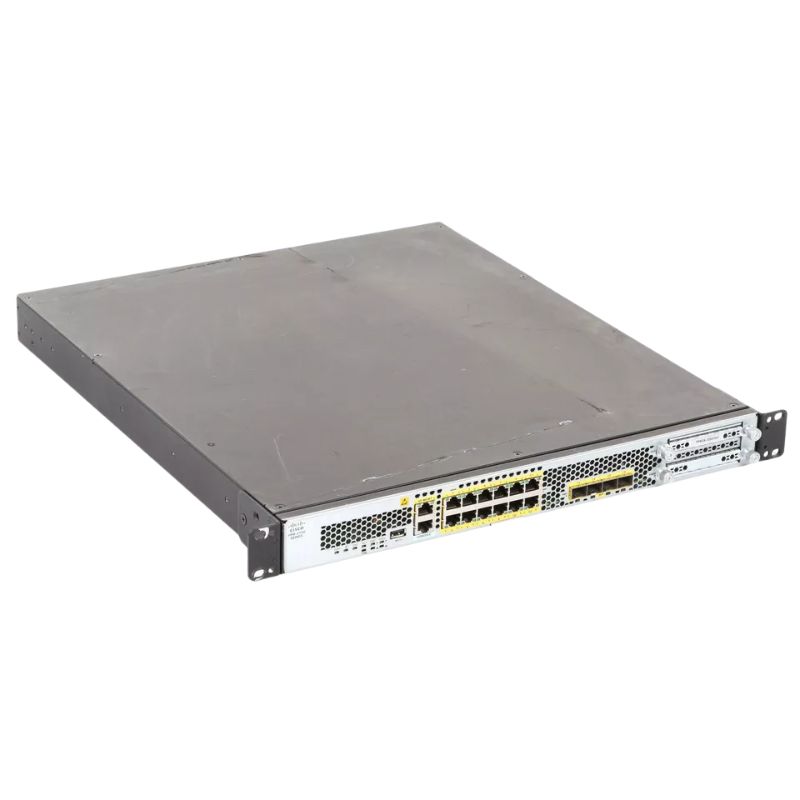


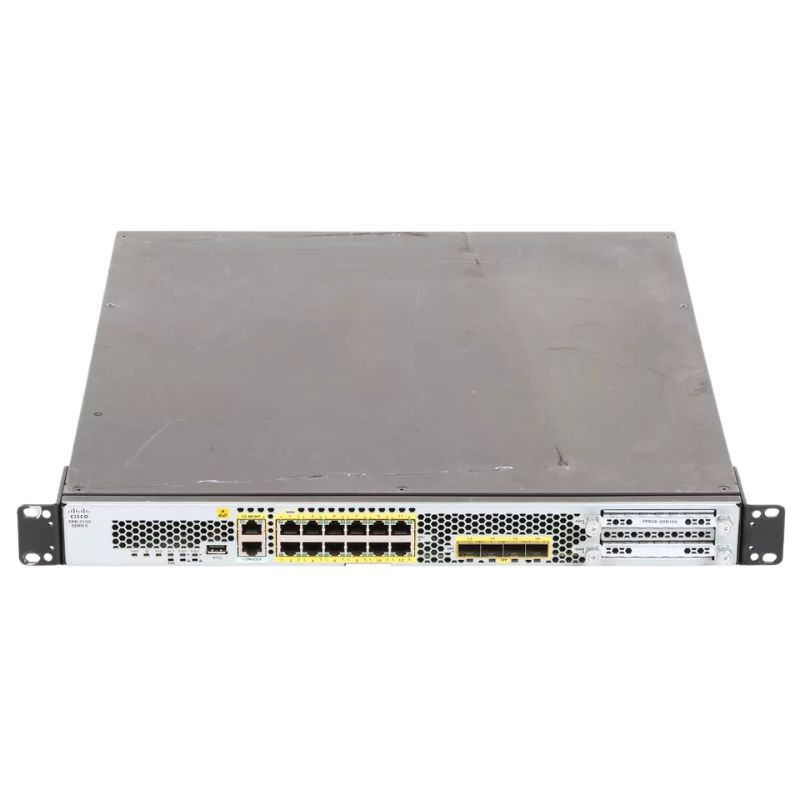
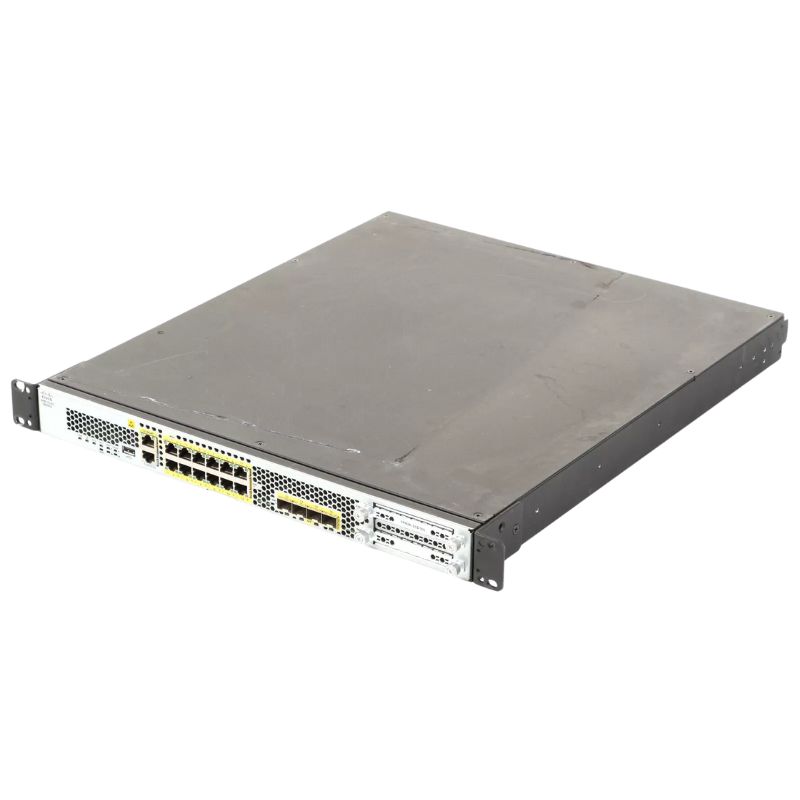
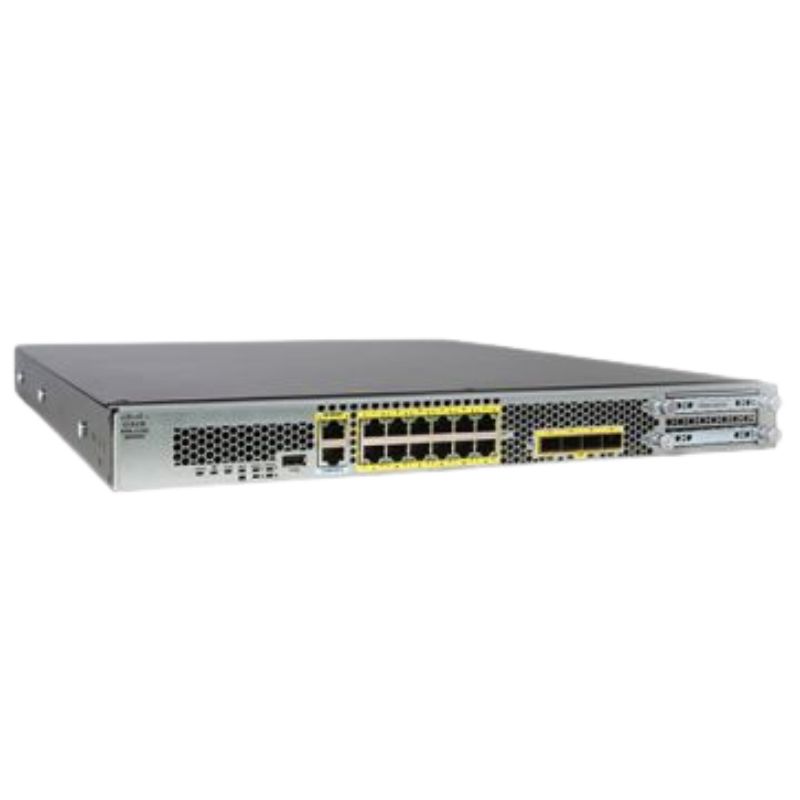
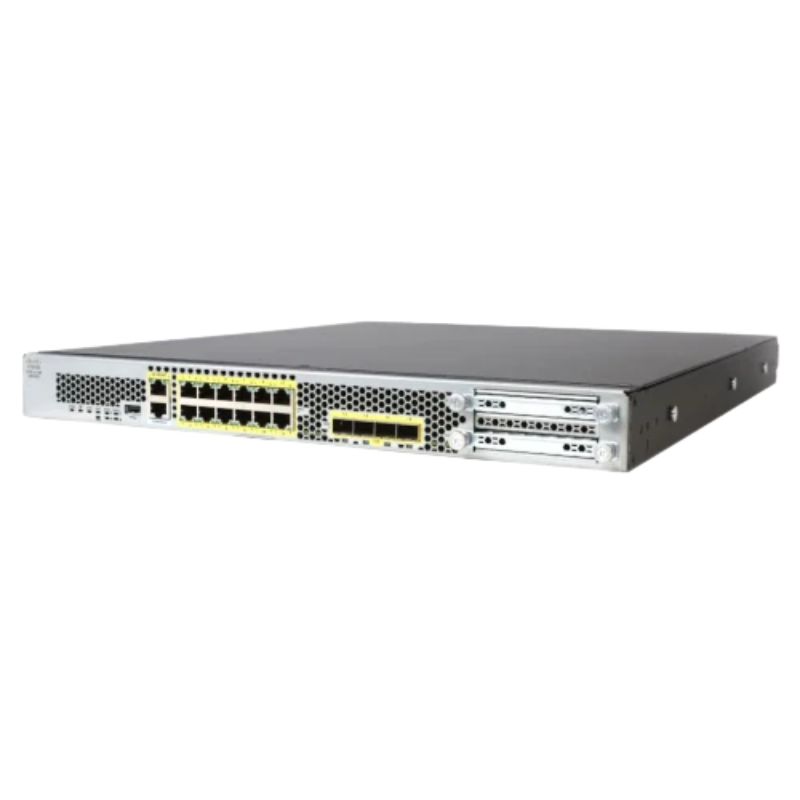
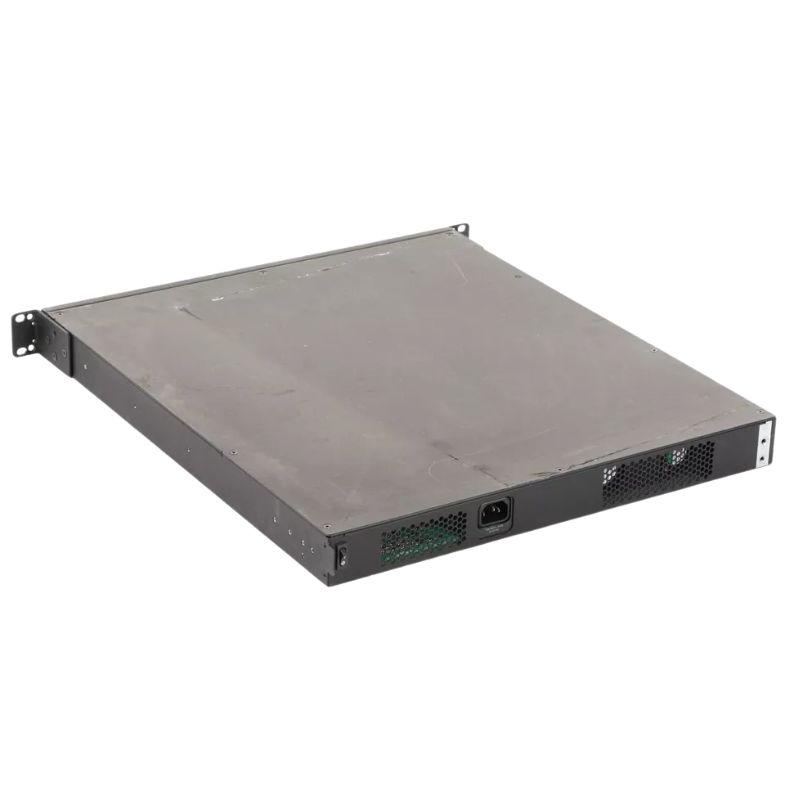
Cisco FPR2120-NGFW-K9 Firepower 2120 NGFW Appliance 1U. Factory-Sealed New in Original Box (FSB) with 1 year replacement warranty
| SKU/MPN | Warranty | Price | Condition | You save |
|---|---|---|---|---|
| FPR2120-NGFW-K9 | 1 Year Warranty | $5,225.00 | Factory-Sealed New Retail in Original Box (FSB) | You save: $1,828.75 (26%) |
| FPR2120-NGFW-K9 | 1 Year Warranty | $1,280.00 | Excellent Refurbished | You save: $448.00 (26%) |
The Cisco FPR2120-NGFW-K9 Firepower 2120 NGFW Appliance 1U is a high-performance next-generation firewall designed for organizations that need strong threat protection, dependable connectivity, and streamlined network control in a rack-mountable security platform. Built for demanding business environments, this Cisco firewall appliance combines advanced security inspection, policy enforcement, and traffic visibility in a compact 1U form factor. It is well suited for branch deployments, distributed enterprise networks, and growing IT infrastructures that require reliable perimeter defense without sacrificing performance. With enterprise-class hardware, integrated management capabilities, and support for multiple interface types, the Cisco Firepower 2120 provides a practical solution for protecting users, applications, and data across modern networks.
The Cisco FPR2120-NGFW-K9 Firepower 2120 NGFW Appliance 1U belongs to the Cisco Firepower 2100 Series, a family of next-generation firewall platforms designed for organizations that need deep security inspection, reliable network segmentation, encrypted connectivity, and application-aware threat control within a compact rack-mounted form factor. Positioned for enterprise branches, campus edges, regional data centers, mid-sized corporate headquarters, and distributed security deployments, the Firepower 2120 appliance combines firewall enforcement, intrusion prevention, advanced malware protection readiness, application visibility, access control, and VPN services in a single security platform.
Within the Cisco Firepower 2100 Series portfolio, the FPR2120-NGFW-K9 is recognized as a balanced option for businesses that need stronger throughput and larger session capacity than entry-level firewall appliances, but that do not require the higher-scale interface expansion of larger data center-focused firewall systems. Its 1U chassis design makes it practical for rack environments where space efficiency, front-access cabling, and consistent airflow matter. At the same time, its security architecture is built to support modern inspection requirements, including visibility into users, applications, files, web traffic, and encrypted communications.
Organizations evaluating this category are often looking for a security appliance that can act as a perimeter firewall, internal segmentation firewall, internet edge security gateway, secure WAN control point, or hybrid role platform. The Cisco Firepower 2120 NGFW category is especially relevant for environments where policy enforcement must be combined with threat inspection rather than handled by separate point products. This makes the appliance suitable for IT teams that want to simplify security operations while still retaining granular control over traffic, applications, and network trust boundaries.
The category surrounding the Cisco FPR2120-NGFW-K9 is not limited to simple packet filtering or basic stateful inspection. It belongs to the broader next-generation firewall segment, where the firewall is expected to understand applications, identities, content types, connection context, and threat intelligence indicators. In practical terms, this means the appliance category is relevant when a business wants to control traffic based on business intent rather than only on IP addresses and port numbers.
For example, a company may want to permit a collaboration application for employees while restricting high-risk file sharing functions, or it may want to allow business access to cloud services while blocking unsanctioned applications that create compliance exposure. The Firepower 2120 category addresses those requirements by supporting application awareness and security inspection capabilities that are far more granular than those found in older firewall generations.
Another reason this category remains important is the growth of encrypted traffic. Security teams increasingly need to inspect traffic that is protected by TLS or VPN tunnels while still maintaining performance, policy consistency, and manageable latency. A platform such as the FPR2120-NGFW-K9 is positioned to support this challenge by pairing firewall services with inspection capabilities and hardware resources appropriate for midrange enterprise deployments.
The 1U form factor is a significant part of the value of this category. Many organizations still rely on network closets, edge racks, branch data rooms, and compact server rooms where rack space is limited. A 1U next-generation firewall appliance offers a practical balance between physical footprint and operational capability. The Cisco Firepower 2120 appliance is designed for these real-world environments where the security gateway must sit alongside switches, WAN routers, SD-WAN devices, storage systems, and virtualization hosts.
In category terms, the 1U format is attractive because it supports standard rack integration without requiring oversized chassis depth or multi-unit expansion enclosures. This helps enterprises maintain consistent deployment standards across multiple sites. For a company rolling out secure edge infrastructure across branches, warehouses, retail locations, or healthcare clinics, standardized 1U security appliances simplify rack planning, shipping, installation, and replacement logistics.
The appliance style also aligns with managed service provider and co-location use cases. Service providers and IT integrators often prefer hardware that can be staged quickly, mounted easily, and serviced with minimal disruption. A 1U Firepower platform fits that model well, particularly when the deployment includes multiple customer environments or geographically distributed enterprise sites.
The Cisco FPR2120-NGFW-K9 category is centered on integrated security services rather than a single isolated function. Buyers exploring this appliance class are typically seeking a platform that can consolidate several layers of network defense into one operational framework. The Firepower 2120 category therefore spans firewall enforcement, intrusion prevention, application control, network visibility, VPN connectivity, policy segmentation, and threat-focused inspection.
At the firewall layer, the appliance category is intended to regulate traffic flows between trust zones such as internet edge, branch LAN, server segments, cloud on-ramps, partner links, and management networks. Policy can be aligned with corporate requirements for acceptable use, access restrictions, segmentation boundaries, and regulatory protection. In a next-generation firewall context, these controls are not limited to static network rules; they are extended with contextual awareness so that administrators can build policies based on users, applications, security zones, and content behavior.
At the threat inspection layer, the category becomes even more valuable. Security appliances in this class are expected to identify suspicious traffic patterns, detect exploit attempts, recognize known malicious indicators, and reduce the likelihood that attackers can move through the network unnoticed. The Firepower 2120 category supports the operational model in which perimeter enforcement and intrusion inspection work together instead of being split into separate disconnected products.
Application visibility is one of the defining characteristics of the Firepower 2120 category. In modern enterprise networks, traffic cannot be understood accurately by ports alone because many applications share common ports, use encryption, or dynamically shift behavior. A next-generation firewall appliance must identify the application itself and enforce policy accordingly. The Cisco Firepower category is designed for exactly that purpose.
Application-aware control helps businesses distinguish between sanctioned cloud software, productivity services, collaboration tools, administrative protocols, development workflows, and potentially risky consumer or unsanctioned services. This improves governance because IT teams can permit, deny, rate-limit, or monitor traffic based on business value. A finance department may require access to cloud accounting platforms, while guest networks should not. Development teams may need access to code repositories, while public kiosks should not. The appliance category supports those differentiated policy models.
Application visibility also helps with performance management and troubleshooting. Security administrators can see which applications consume bandwidth, which services generate the most sessions, and which traffic categories trigger policy events. That operational intelligence is valuable not only for security enforcement but also for capacity planning and network optimization.
The Cisco FPR2120-NGFW-K9 category is especially relevant for organizations that want intrusion prevention integrated into the firewall security path. Rather than simply allowing or denying sessions, the appliance can inspect traffic for exploit signatures, malicious behaviors, and protocol anomalies. This is important in environments where threats may arrive through web browsing, email-related flows, application sessions, remote access channels, or lateral movement inside the network.
Intrusion prevention as part of the next-generation firewall category reduces architectural complexity. Instead of deploying one device for access control and another for threat inspection, organizations can centralize policy and event handling more effectively. This can lead to clearer security workflows, faster incident response, and more consistent enforcement across sites.
For enterprises with branch offices or distributed locations, this matters because local sites often lack full-time security staff. A unified appliance category helps extend advanced protection to remote environments without demanding that each location operate a complex stack of independent security tools.
Access control is another major pillar of the Firepower 2120 NGFW category. Enterprises increasingly need to segment users, devices, applications, and workloads according to trust level and operational necessity. The appliance category supports this by enabling policy models that separate guest traffic from employee traffic, development networks from production networks, administrative access from general business access, and sensitive workloads from less critical systems.
Granular access control is particularly valuable for regulated organizations. Businesses handling financial records, healthcare data, customer account information, legal documentation, or intellectual property often need clear boundaries around who can access what, from where, and under what conditions. A next-generation firewall appliance becomes a strategic control point for those policies, especially when it can tie network rules to applications and inspection outcomes rather than only to IP ranges.
When buyers assess the Cisco FPR2120-NGFW-K9 category, one of the most important considerations is its performance class. The Firepower 2120 sits in a midrange segment that is attractive to organizations with meaningful traffic volumes but without the need for very large chassis-based security platforms. It is often chosen by enterprises that have outgrown small branch firewalls yet want a cost-conscious alternative to larger high-end data center appliances.
Within the Firepower 2100 family, the 2120 is commonly viewed as a model that offers stronger performance than entry-tier units while maintaining manageable deployment complexity. It is well suited for headquarters, large branches, campus aggregation points, internet edge roles for midsize organizations, and secure WAN breakout locations. The category is also useful in segmentation roles where east-west traffic inspection must occur between server VLANs, user networks, voice environments, wireless zones, and operational technology segments.
Performance in this category is not only about raw firewall throughput. A realistic evaluation includes concurrent session scale, new connection rates, application inspection load, intrusion prevention overhead, VPN throughput, and encrypted traffic handling. That broader perspective is important because modern firewall platforms are rarely used for plain stateful filtering alone. Organizations typically enable multiple services at once, and the appliance category must support that mixed workload reliably.
A core reason businesses choose a platform like the Cisco Firepower 2120 is the need to preserve security depth without turning the firewall into a bottleneck. Deep inspection adds value only if the appliance can sustain it under realistic business traffic patterns. Midrange next-generation firewall categories are therefore designed to balance policy granularity, threat analysis, and operational throughput.
For a regional office or a multi-floor corporate site, traffic may include cloud productivity platforms, ERP access, voice and video collaboration, software updates, encrypted web sessions, partner connectivity, and VPN tunnels. The firewall must process this mix while still applying security controls and logging decisions for audit and investigation. The FPR2120 category is aimed at exactly that type of environment, where the appliance needs to be capable enough for real production traffic but still compact and practical for standard enterprise deployment.
Session scale is often overlooked during appliance selection, yet it is one of the most important dimensions of the category. As businesses adopt SaaS applications, browser-based tools, automated synchronization services, and API-driven integrations, the number of simultaneous sessions on the network can grow quickly. A firewall appliance selected only on simple throughput numbers may become stressed if it lacks adequate session capacity for the organization’s actual usage patterns.
The Firepower 2120 category addresses this need by fitting the midrange enterprise segment where user populations, branch workloads, and server communications generate sustained session volume. This makes it a strong fit for organizations that are modernizing application delivery but still want a dedicated on-premises or hybrid security control point.
Connectivity options play a major role in the appeal of the Cisco Firepower 2120 category. Security appliances must fit into diverse network topologies that may include copper access switches, fiber uplinks, ISP handoffs, WAN circuits, server aggregation links, and management networks. The Firepower 2120 appliance is part of a product family known for combining fixed interfaces with enterprise deployment flexibility, making it practical for a wide variety of security designs.
For category buyers, interface planning affects everything from rack design and patching standards to WAN redundancy and segmentation architecture. A firewall appliance with a useful mix of ports can reduce the need for media converters, external breakout devices, or awkward topology compromises. This is especially important in refresh projects where the new firewall must fit into an existing environment without forcing immediate redesign of adjacent switching or transport infrastructure.
Many enterprise networks still depend heavily on copper Ethernet for internal switch connectivity, branch uplinks, or appliance interconnections. At the same time, data center and campus environments often rely on fiber uplinks for longer runs, higher throughput, and cleaner aggregation. The Cisco Firepower 2120 category is relevant because it supports a deployment style that can bridge both of these realities, allowing the appliance to function effectively in mixed media environments.
This is useful in branch consolidation projects where older copper-based LAN infrastructure coexists with fiber WAN or backbone links. It is equally helpful in enterprise campuses where the security appliance must connect to multiple distribution switches, internet routers, and out-of-band management networks while preserving cabling simplicity and operational clarity.
The Firepower 2120 NGFW category can be considered in a range of deployment models depending on business goals. Some organizations place the appliance at the internet edge in a routed mode, using it as the primary enforcement point between internal networks and external connectivity. Others deploy it internally for segmentation, where the appliance inspects traffic between user VLANs, data center segments, wireless environments, and application tiers.
Transparent or inline-style inspection models may also be relevant for organizations that want to add security inspection without radically changing the existing IP design. In those scenarios, the category becomes attractive because it can strengthen visibility and policy control while minimizing disruption to the broader network addressing scheme.
From a category perspective, this flexibility is important because businesses rarely have a single universal security topology. One site may need internet edge protection, another may need internal segmentation, and a third may use the appliance primarily for VPN concentration. The Firepower 2120 class can support these varied roles across a distributed enterprise estate.
The Cisco FPR2120-NGFW-K9 category is also relevant for organizations that need strong encrypted connectivity across branches, remote workers, partners, and hybrid infrastructure. Firewall appliances in this class often serve as VPN gateways in addition to their policy enforcement role. This dual function makes them highly efficient for businesses that want a single platform to secure both local traffic inspection and site-to-site communications.
Secure connectivity requirements have grown substantially as organizations adopt hybrid work, cloud applications, distributed branches, outsourced services, and cross-border operations. A firewall category that supports VPN services becomes a key building block for maintaining trust across these environments. The Firepower 2120 can therefore be viewed not only as a perimeter firewall but also as a secure communications hub.
One of the most common use cases in this category is branch connectivity. Enterprises with multiple offices need reliable encrypted tunnels between headquarters, regional hubs, distribution centers, retail outlets, factories, and customer-facing sites. Site-to-site VPN services allow these locations to exchange business traffic securely over shared or carrier-provided transport.
The Cisco Firepower 2120 category fits this use case because it can combine VPN termination with security inspection at the same control point. This simplifies branch design and allows organizations to apply centralized policy to both internet-bound and inter-office traffic. It also improves operational consistency, since the same platform can enforce segmentation, detect suspicious activity, and maintain encrypted connectivity for business applications.
Many businesses also need secure access for employees, administrators, contractors, and support teams who connect from outside the office. A next-generation firewall appliance category that supports remote access security is valuable because it allows organizations to protect internal resources while still enabling productivity for distributed users. In practice, this can include secure access to line-of-business applications, management portals, development systems, and internal collaboration platforms.
The Firepower 2120 category becomes especially useful when remote access must be paired with application restrictions, threat inspection, and visibility into user behavior. Instead of treating remote sessions as blind encrypted tunnels, the appliance can be part of a broader security strategy that validates traffic and enforces policy with more context.
Encrypted traffic creates both a security advantage and a security challenge. It protects confidentiality in transit, but it can also obscure malicious activity if the security platform lacks the ability to inspect it appropriately. This is why encrypted traffic visibility is an important theme in the Cisco Firepower 2120 category. Organizations increasingly need appliances that can operate effectively in a world where web traffic, cloud sessions, and application communications are predominantly encrypted.
In category terms, the value lies in preserving security awareness even when traffic is no longer visible through traditional plain-text inspection. This helps reduce blind spots and supports stronger enforcement of acceptable use, malware detection, and application governance policies.
The Cisco FPR2120-NGFW-K9 category is designed for environments where the firewall is not just a gatekeeper but a source of actionable security intelligence. Modern security operations teams need platforms that produce meaningful events, support consistent policy administration, and integrate into centralized workflows. A next-generation firewall appliance therefore has to be manageable at scale, especially when an organization operates multiple branches or security zones.
Centralized management matters because security appliances are rarely deployed in isolation. A business may operate a fleet of firewalls across offices, data centers, cloud edges, and partner links. Managing each device manually would create configuration drift, slow down policy updates, and increase the risk of inconsistent enforcement. The Firepower category addresses this challenge by aligning with Cisco’s broader security management ecosystem.
For distributed organizations, one of the strongest reasons to choose a Firepower appliance category is the ability to build and apply security policy with consistency. A central management model allows administrators to define access rules, inspection policies, network objects, identity mappings, and alerting behavior once and deploy them across many locations. This improves governance and reduces the administrative burden on local IT teams.
Consistent policy is especially important for businesses with compliance requirements. If a company must demonstrate that every branch enforces the same internet restrictions, segmentation rules, and threat protections, centralized management becomes a strategic advantage rather than just a convenience. The Firepower 2120 category is therefore attractive not only for its appliance capabilities but also for its role within a broader multi-site security architecture.
Another category strength lies in event generation and traffic visibility. Security teams need to understand what the firewall is seeing, which applications are being used, which connections are being blocked, which intrusion events are occurring, and where unusual behavior may be emerging. A next-generation firewall platform that provides actionable telemetry helps teams move from passive filtering to active security operations.
This matters for incident response, compliance reporting, and capacity planning alike. If a suspicious application suddenly appears across several offices, the firewall data may reveal it. If outbound connections to risky destinations begin to increase, the firewall logs may expose the trend. If a segmentation policy causes an application issue, the appliance telemetry may help pinpoint the rule involved. The Cisco Firepower 2120 category supports that broader operational role.


 Contact Us
 Information
 Catalog
 Solid State Drives (SSD)
 Network Switches
 Hard Disk Drives
 HBA & Controllers
 PC & Servers
 PC & Server Memory
 CPU & Processors
 Network Routers
 Power Supplies
 Tape Drives & Libraries
 Network Devices
 Computer & Network Cables