(7% discount is applied at checkout)
Cart is empty
Your go-to destination for cutting-edge server products
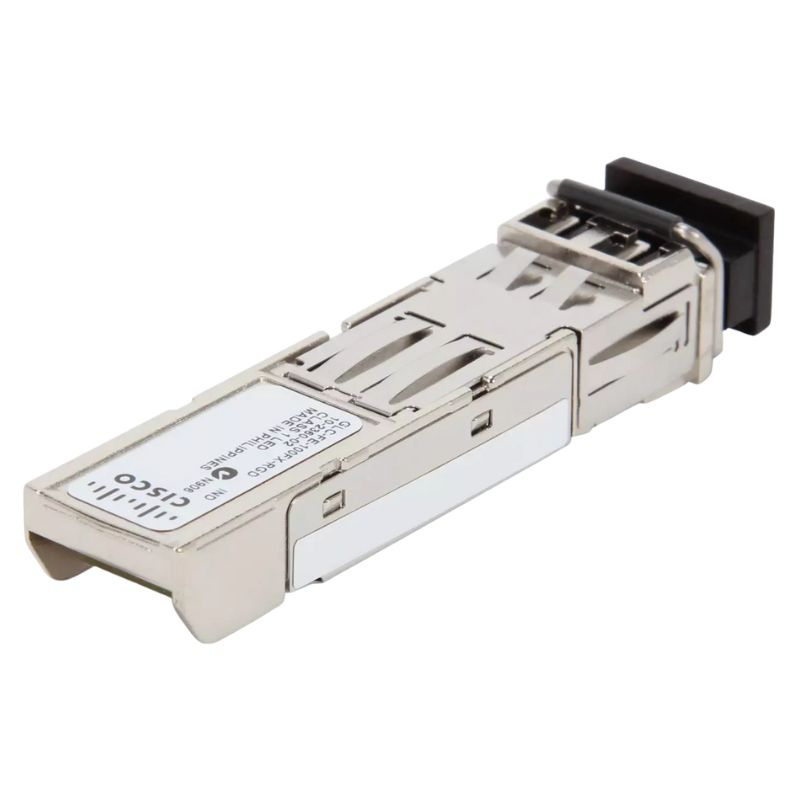


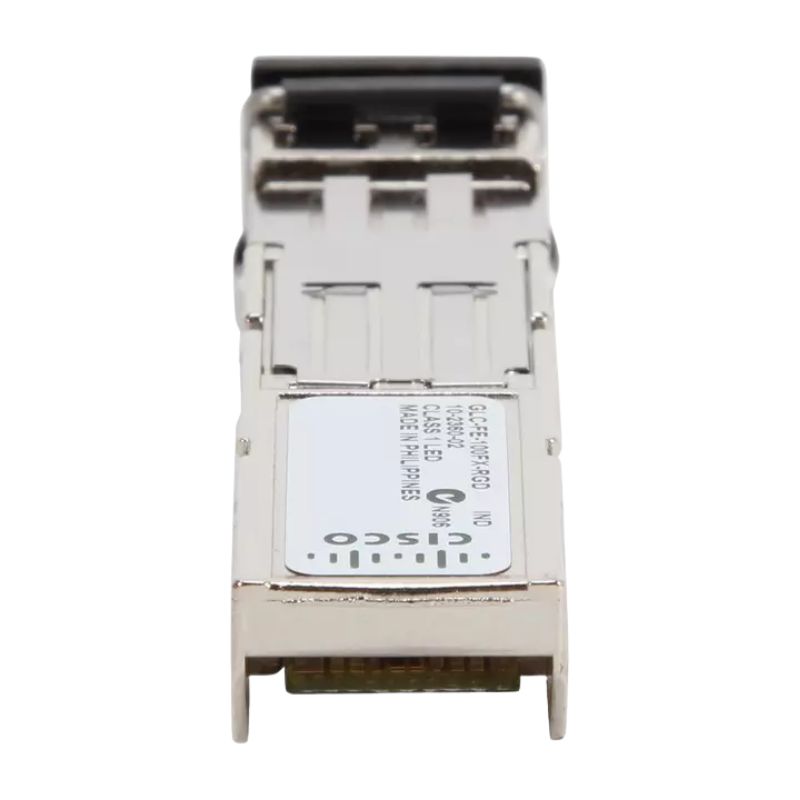
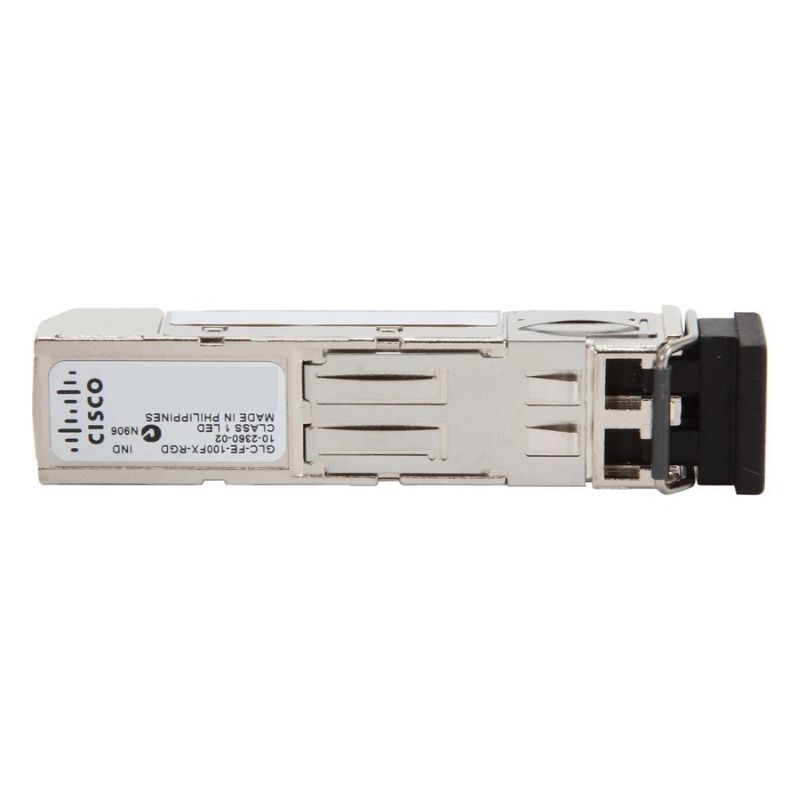
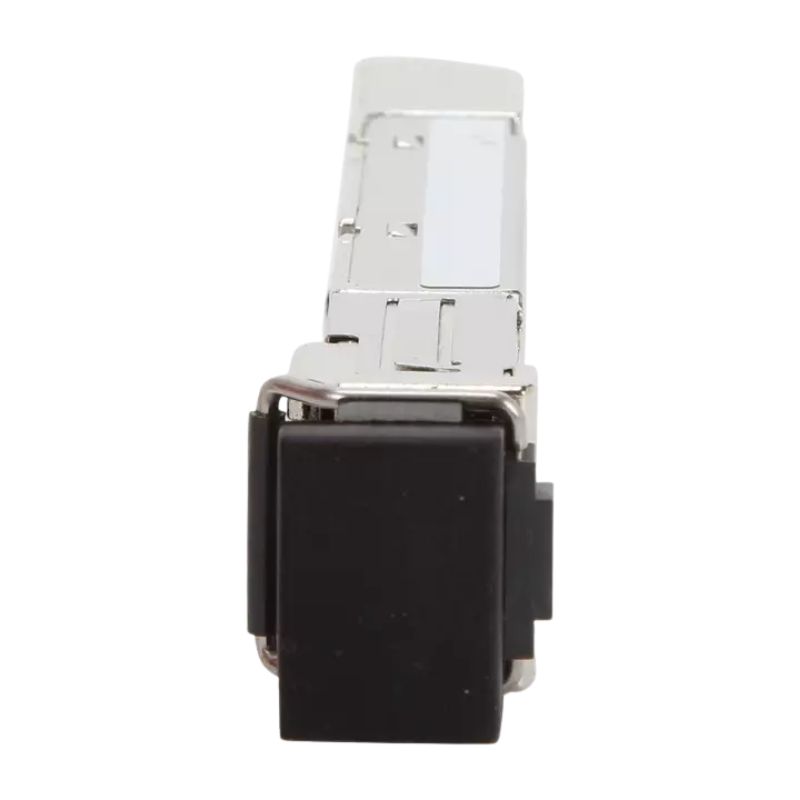
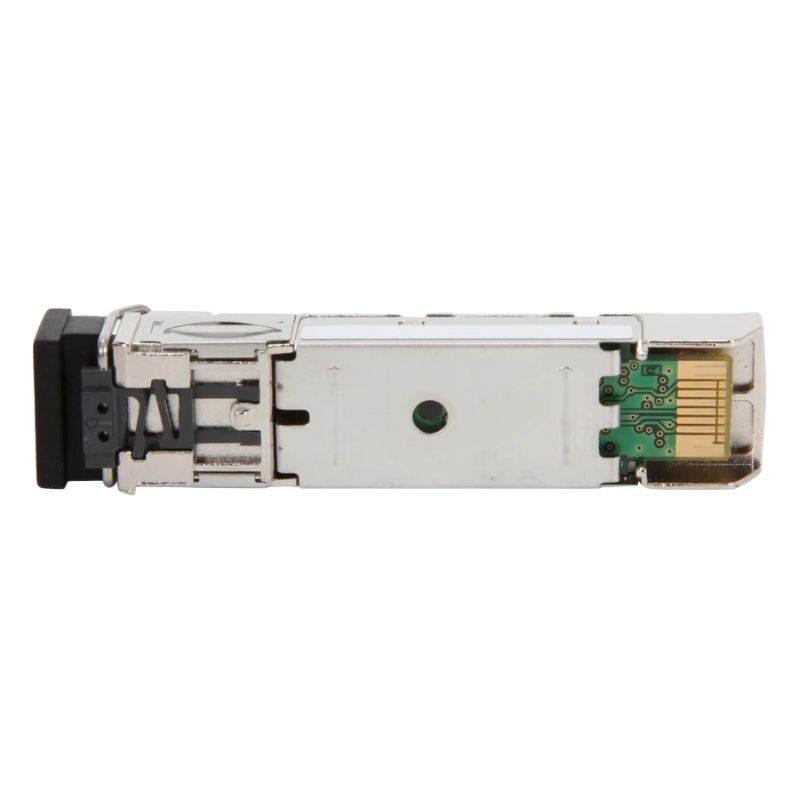
Cisco GLC-FE-100FX-RGD= Compatible 100BASE-FX SFP 1310nm 2km DOM Duplex LC MMF Optical Transceiver Module. Factory-Sealed New in Original Box (FSB) with 1 year replacement warranty
The Cisco GLC-FE-100FX-RGD= is a ruggedized 100BASE-FX SFP optical transceiver module engineered for dependable Fast Ethernet fiber connectivity in industrial and temperature-sensitive networking environments. Built for stable 100Mbps data transmission, this hot-swappable Cisco-compatible SFP uses a 1310nm optical wavelength and supports multimode fiber links up to 2 kilometers. It features a duplex LC interface for secure fiber termination, Digital Optical Monitoring (DOM) for real-time link diagnostics, and an industrial operating temperature range of -40°C to 85°C, making it a practical solution for factory automation, utility networks, transportation systems, outdoor cabinets, and other harsh deployment scenarios where standard commercial transceivers may not be sufficient.
The Cisco GLC-FE-100FX-RGD= Compatible 100BASE-FX SFP 1310nm 2km DOM Duplex LC MMF Optical Transceiver Module belongs to a specialized class of Fast Ethernet optical transceivers engineered for dependable short-to-medium distance fiber connectivity in industrial, enterprise, and edge networking environments. This category is centered on 100BASE-FX SFP modules designed to transmit Fast Ethernet traffic over multimode fiber using a 1310nm wavelength and a duplex LC optical interface. It addresses organizations that still rely on 100Mb fiber links for industrial automation, legacy control systems, utility networks, transportation systems, surveillance infrastructure, secure plant-floor communications, and ruggedized access switching deployments where reliability matters more than headline bandwidth.
Unlike generic copper uplinks or standard office-oriented optics, the Cisco GLC-FE-100FX-RGD= compatible module category focuses on stable optical communication for applications where environmental conditions, port compatibility, and deterministic link behavior are critical. These modules are intended for hardware platforms that support 100BASE-FX operation through Small Form-Factor Pluggable interfaces, particularly within industrial Ethernet product families, legacy Fast Ethernet switching layers, specialized automation equipment, and network edge devices deployed in harsher operating conditions than a conventional office network closet.
The designation of this transceiver category reveals its core functional profile. The 100BASE-FX standard identifies Fast Ethernet transmission over fiber. The SFP form factor ensures compact hot-swappable deployment. The 1310nm optical wavelength is commonly used for Fast Ethernet fiber links and supports dependable communication across multimode fiber plant infrastructure. The 2km reach makes the category practical for building-to-building links, plant extensions, utility corridors, production halls, warehouse interconnects, security control zones, and field equipment aggregation points. Duplex LC connectivity supports a familiar and space-efficient fiber termination approach, while DOM capability adds valuable diagnostic visibility for monitoring optical health and operational stability.
The Cisco GLC-FE-100FX-RGD= compatible optical transceiver sits within the broader category of Fast Ethernet fiber modules, yet it occupies a more specialized subcategory because it is associated with ruggedized deployment scenarios and Cisco-oriented industrial network compatibility. Standard office switching environments increasingly favor Gigabit or higher uplinks, but many industrial, control, and embedded network architectures continue to depend on 100Mb fiber connectivity because the attached systems, controllers, and access equipment were designed around that speed. As a result, the 100BASE-FX SFP category remains highly relevant in sectors where network modernization must coexist with long equipment lifecycles.
100BASE-FX transceivers are not interchangeable with every SFP environment simply because they share the same physical form factor. A key characteristic of this category is that the module is designed for Fast Ethernet optical operation rather than generic Gigabit optical transport. That distinction matters in environments where port support, interface negotiation, and platform compatibility determine whether a link will come up reliably. For industrial Ethernet operators, utility network managers, and plant administrators, selecting the correct 100BASE-FX optic is often less about maximizing throughput and more about preserving application continuity, minimizing downtime, and ensuring that older or specialized devices remain integrated into the wider network.
This category is especially important where network links carry supervisory control traffic, telemetry, process data, security video backhaul, serial-over-IP traffic, or operational commands between edge devices and central systems. In those cases, link consistency, optical budget suitability, and hardware compatibility often outweigh the push toward higher-speed uplinks. The Cisco GLC-FE-100FX-RGD= compatible transceiver category exists precisely to satisfy these requirements while fitting into Cisco-oriented switching or routing infrastructures that still need dependable 100BASE-FX fiber operation.
In Cisco-centric environments, compatible optical transceiver categories are often used to extend switch and router interfaces over fiber without forcing administrators to redesign the physical layer. The Cisco GLC-FE-100FX-RGD= compatible model is associated with Cisco platforms that support Fast Ethernet optical modules, especially in industrial or ruggedized contexts. This makes the category valuable for users who operate Cisco Industrial Ethernet equipment, selected edge devices, field switches, or specialized platforms that must maintain 100Mb fiber links to existing assets.
Because the module is compatible rather than necessarily branded as an original OEM optic, the category also appeals to organizations seeking cost-effective maintenance, sparing, lifecycle extension, and phased replacement strategies. A compatible Cisco GLC-FE-100FX-RGD= optical transceiver can help keep legacy infrastructure productive without the expense of replacing every switch, media converter, or field endpoint simply to accommodate a new optical standard. This is particularly useful in industrial environments where a single networking change can trigger recertification, retesting, or service interruption across multiple systems.
The Cisco GLC-FE-100FX-RGD= compatible category is defined by a combination of optical, electrical, mechanical, and environmental attributes that together support reliable Fast Ethernet fiber communication. The 100BASE-FX standard specifies a 100Mb optical Ethernet link, and the module is designed around that transport profile rather than around Gigabit Ethernet signaling. The SFP mechanical format allows compact installation in switches and routers that expose SFP cages for modular connectivity. Because SFPs are hot-swappable in supported platforms, they enable faster service operations, easier replacement, and simpler inventory management.
The 1310nm wavelength used by this category is a central part of its identity. In the Fast Ethernet fiber world, 1310nm has long been associated with dependable multimode optical transport, particularly for medium-distance campus and industrial links. The 2km distance profile makes the module suitable for longer multimode runs than many very short-range optics while still keeping it aligned with practical industrial and enterprise edge topologies. The duplex LC connector format further supports neat patching, high port density, and compatibility with modern fiber panels and cable assemblies.
DOM, also called digital optical monitoring or digital diagnostics monitoring, is another meaningful element in this category. A DOM-capable transceiver can expose operating information that helps administrators monitor optical performance and detect emerging problems before they result in service interruption. In networks where uptime matters and remote sites are expensive to access, this visibility can be extremely useful for maintenance planning and fault isolation.
Fast Ethernet over fiber may seem modest compared with current multi-gigabit standards, but it remains important in real-world deployments where application traffic volumes are moderate and infrastructure stability is paramount. Industrial controllers, remote terminal units, environmental sensors, traffic systems, field cameras, access control devices, and legacy automation platforms often do not require Gigabit bandwidth. What they do require is a predictable and stable physical connection that remains operational under difficult conditions.
The 100BASE-FX standard answers that need by providing fiber-based Fast Ethernet transport that is resistant to electromagnetic interference and suitable for longer distances than copper Fast Ethernet. In industrial spaces with motors, power equipment, high-voltage infrastructure, rail systems, and electrically noisy production environments, fiber is often the preferred medium because it isolates network traffic from electrical interference and ground potential issues. The Cisco GLC-FE-100FX-RGD= compatible category is therefore not simply about older network speed; it is about maintaining a communications method that continues to be practical for many operational technology environments.
The use of 1310nm optics over multimode fiber is one of the defining characteristics of this category. In practical deployment terms, that means the transceiver is designed for multimode fiber infrastructure rather than single-mode cabling. This distinction is critical during procurement, installation, and troubleshooting. Administrators need to match the transceiver to the actual fiber plant, patching hardware, and link design. A mismatch between fiber type, wavelength expectations, and platform support can lead to failed links or unstable communication.
For facilities with established multimode fiber runs, the Cisco GLC-FE-100FX-RGD= compatible module category can be particularly attractive because it allows continued use of installed cabling rather than forcing an expensive rebuild. Industrial campuses, manufacturing complexes, transport depots, and utilities often have long-lived multimode fiber infrastructure already in place between cabinets, control rooms, substations, or buildings. A compatible 100BASE-FX optic with 1310nm transmission enables those assets to remain useful while the network around them evolves.
The RGD portion of the Cisco GLC-FE-100FX-RGD= naming convention points toward ruggedized deployment intent. Within the transceiver market, rugged and industrial optics are associated with extended operating temperature ranges, enhanced reliability expectations, and suitability for installations beyond climate-controlled enterprise wiring closets. This matters because many 100BASE-FX use cases are found not in corporate office towers but in transportation cabinets, factory floors, outdoor enclosures, substations, municipal control points, logistics yards, and energy sector facilities.
Industrial networking environments introduce conditions that can stress standard networking hardware. Temperature variation, dust, vibration, electrical noise, and physical access limitations all influence equipment selection. While a transceiver alone does not solve every environmental challenge, choosing a module category intended for ruggedized contexts supports overall deployment resilience. In practical terms, that means the Cisco GLC-FE-100FX-RGD= compatible transceiver category is well suited to installations where the surrounding switch, enclosure, and fiber plant are also designed for industrial duty.
Operational technology networks often differ significantly from mainstream enterprise LANs. They may include programmable logic controllers, distributed control systems, supervisory control and data acquisition equipment, industrial HMIs, IP surveillance, badge systems, telemetry units, machine gateways, and specialized embedded devices. Traffic patterns are frequently predictable, bandwidth requirements are moderate, and network changes must be carefully managed to avoid production disruption. In such environments, a stable 100BASE-FX fiber uplink can remain the right choice for years.
The Cisco GLC-FE-100FX-RGD= compatible transceiver category aligns with this reality by providing optical connectivity that fits older or specialized network designs while still benefiting from modular SFP installation. This makes it useful in brownfield modernization projects, control network expansions, plant-floor segmentation, remote monitoring rollouts, and utility communication upgrades where the core requirement is dependable link transport rather than maximum speed.
Transportation networks often span stations, roadside cabinets, signaling systems, surveillance endpoints, and control facilities. Utility networks connect substations, field devices, meters, relays, monitoring systems, and secure access equipment. Manufacturing environments connect production cells, robotic lines, safety systems, machine controllers, and process-monitoring assets. In all of these cases, the Cisco GLC-FE-100FX-RGD= compatible category offers a practical option for 100Mb optical uplinks where multimode fiber and Fast Ethernet remain part of the infrastructure baseline.
These environments place a premium on service continuity. A transceiver category associated with ruggedized operation, Cisco compatibility, and diagnostic monitoring can reduce uncertainty during deployment and replacement. Instead of forcing an immediate redesign toward a different optical standard, network teams can continue supporting proven link types while gradually modernizing adjacent layers of the network.
The duplex LC connector is one of the most widely used optical interfaces in modern networking because it combines compact size with secure, familiar patching. In the Cisco GLC-FE-100FX-RGD= compatible category, duplex LC supports separate transmit and receive fiber paths, which is standard for many Fast Ethernet and Gigabit optical links. This arrangement simplifies fiber management, makes polarity easier to understand, and fits neatly into structured patch panels and high-density switch deployments.
For installers and maintenance teams, the duplex LC interface also helps standardize inventory. Patch cords, couplers, panels, and cleaning tools for LC-based environments are widely available, which reduces operational friction when replacing or expanding links. In facilities where multiple optical technologies coexist, having a common LC connector format can simplify cross-team coordination even when the underlying Ethernet speed differs between systems.
Duplex fiber architecture remains popular because it offers straightforward physical separation of transmit and receive paths. That separation can simplify troubleshooting, especially in industrial sites where fiber runs pass through multiple cabinets or field enclosures. If a link problem occurs, administrators can evaluate each direction of the path more easily and verify polarity, patching integrity, and connector cleanliness with standard fiber maintenance procedures.
For the Cisco GLC-FE-100FX-RGD= compatible transceiver category, duplex LC multimode connectivity provides a practical balance of reliability, familiarity, and serviceability. It supports fixed point-to-point links between switches, controllers, media converters, and aggregation devices without requiring the additional wavelength-planning considerations that often accompany single-fiber bidirectional optics.
DOM capability adds a valuable operational layer to the Cisco GLC-FE-100FX-RGD= compatible category. In environments where physical access to devices may be limited or expensive, remote visibility into optical conditions is highly beneficial. Digital optical monitoring can expose measurements or status information related to the transceiver’s operation, helping administrators assess whether a link is healthy, degrading, or approaching failure thresholds.
While the exact telemetry set can vary by implementation and platform support, DOM generally helps network teams monitor the transceiver rather than treating it as a completely opaque component. This is especially useful in industrial and distributed deployments where a fiber issue may not be immediately visible but can gradually impact performance. Monitoring tools can incorporate DOM data into broader network health dashboards, alerting workflows, or preventive maintenance routines.
Legacy networks are often harder to maintain than modern greenfield environments because documentation may be incomplete, spare hardware may be limited, and the physical path may traverse challenging spaces. A DOM-capable 100BASE-FX transceiver improves maintainability by providing more operational context when a link experiences intermittent behavior or optical degradation. If a remote cabinet begins to experience temperature stress, contamination, connector wear, or marginal optical loss, the ability to review transceiver diagnostics can shorten troubleshooting time and reduce guesswork.
For organizations managing remote industrial locations, transportation corridors, substations, or distributed utility infrastructure, every truck roll and maintenance visit carries cost. The Cisco GLC-FE-100FX-RGD= compatible category becomes more valuable when it contributes not only connectivity but also visibility into the health of that connectivity.
The word compatible is especially important in this product category. A Cisco-compatible transceiver is generally designed, programmed, and tested to operate in Cisco equipment that supports the relevant optical standard and form factor. Compatibility, however, should always be evaluated in the context of the exact platform, software version, and port capability. The physical SFP shape alone does not guarantee operational support. A switch may accept SFP optics mechanically but only support certain Ethernet modes or specific optical families on a given port.
For the Cisco GLC-FE-100FX-RGD= compatible category, compatibility usually means the transceiver is intended to emulate the behavior of the corresponding Cisco optic in supported hardware. This can be valuable for organizations standardizing on Cisco infrastructure but seeking flexible sourcing options, maintenance spares, or lower-cost replacements. It can also support large fleets of industrial devices where replacing original optics one by one over time is more practical than a full hardware refresh.
When selecting a Cisco GLC-FE-100FX-RGD= compatible transceiver, one of the most important practical considerations is whether the target device supports 100BASE-FX on the relevant SFP port. Some Cisco and non-Cisco devices support only Gigabit optical modules in their SFP slots, while others support Fast Ethernet fiber operation or dual-rate behavior. In industrial and legacy environments, this distinction can be crucial. Network planners should confirm that the switch, router, or media conversion equipment is designed to bring up a 100BASE-FX optical link using the intended optic.
From a category-page perspective, this is part of what makes the Cisco GLC-FE-100FX-RGD= compatible module different from generic transceivers. It belongs to a subcategory where protocol support and device-level compatibility are as important as connector type or wavelength. Buyers often arrive at this category because they already know the remote device requires a 100BASE-FX optic, or because an installed industrial network is built around this standard.
The 2km multimode reach profile makes the Cisco GLC-FE-100FX-RGD= compatible transceiver category suitable for a wide range of deployment scenarios that fall beyond the reach of short copper Ethernet but do not require long-haul single-mode optics. This includes campus-style layouts, industrial campuses, warehouses, production facilities, energy compounds, logistics terminals, and municipal infrastructure where buildings, cabinets, or zones must be interconnected over moderate distances.
In manufacturing environments, network equipment is often distributed across production halls, utility rooms, machine cells, test labs, packaging areas, and warehouse sections. A 100BASE-FX multimode fiber link can connect edge switches back to an aggregation layer while resisting electromagnetic interference from motors, drives, and heavy equipment. The Cisco GLC-FE-100FX-RGD= compatible transceiver category is well aligned with this use case because it provides the fiber uplink needed for reliable transport without forcing every connected device to operate at Gigabit speeds.
Many campuses, industrial estates, hospitals, educational sites, and utility compounds contain separate buildings or field structures connected by multimode fiber. In these scenarios, a 2km Fast Ethernet fiber optic module can provide enough reach for access-layer uplinks, security control networks, or equipment room interconnections. The category is especially useful when the remote device is older, when the application bandwidth is moderate, or when the installed multimode plant is already certified and in regular use.
Electrical utilities, water facilities, energy sites, and environmental monitoring systems often use field cabinets and control enclosures connected over fiber. The moderate distance capability and rugged deployment relevance of this category make it appropriate for substations, pumping stations, remote cabinets, metering points, and telemetry hubs. In such installations, the optical link often carries monitoring traffic, supervisory control, alarm data, and management access rather than massive user traffic, which makes Fast Ethernet entirely appropriate.
Although the Cisco GLC-FE-100FX-RGD= compatible transceiver category is straightforward in concept, reliable optical networking still depends on proper link design. Fiber type, patch quality, connector cleanliness, panel loss, splice condition, and device compatibility all influence real-world performance. Even when a transceiver is correctly specified, poor cabling practices or unverified legacy infrastructure can create instability. That is why this category is often purchased by professionals who understand that the optic is one part of a broader physical-layer design.
In a well-designed 100BASE-FX deployment, the transceiver’s wavelength, optical budget, and distance profile align with the installed multimode fiber and the overall loss budget of the link. Patch cords are selected correctly, LC connectors are kept clean, and the receiving platform is confirmed to support the optic’s signaling mode. When these fundamentals are in place, a Cisco GLC-FE-100FX-RGD= compatible transceiver can provide a highly dependable optical connection for years.
Fiber contamination is one of the most common causes of optical problems. Dust, oil, or residue on an LC connector can increase loss, reduce signal quality, or prevent a link from establishing. In industrial environments, the risk of contamination can be even higher due to dust exposure, enclosure openings, and field maintenance activity. For this reason, the category is best supported by disciplined patch management, inspection, cleaning, and labeling practices.
Using the correct multimode patch cords, maintaining bend-radius discipline, and documenting each optical path all contribute to stable long-term operation. DOM capability can complement these practices by helping teams identify links whose optical condition is trending in the wrong direction before a hard failure occurs.


 Contact Us
 Information
 Catalog
 Solid State Drives (SSD)
 Network Switches
 Hard Disk Drives
 HBA & Controllers
 PC & Servers
 PC & Server Memory
 CPU & Processors
 Network Routers
 Power Supplies
 Tape Drives & Libraries
 Network Devices
 Computer & Network Cables