(7% discount is applied at checkout)
Cart is empty
Your go-to destination for cutting-edge server products


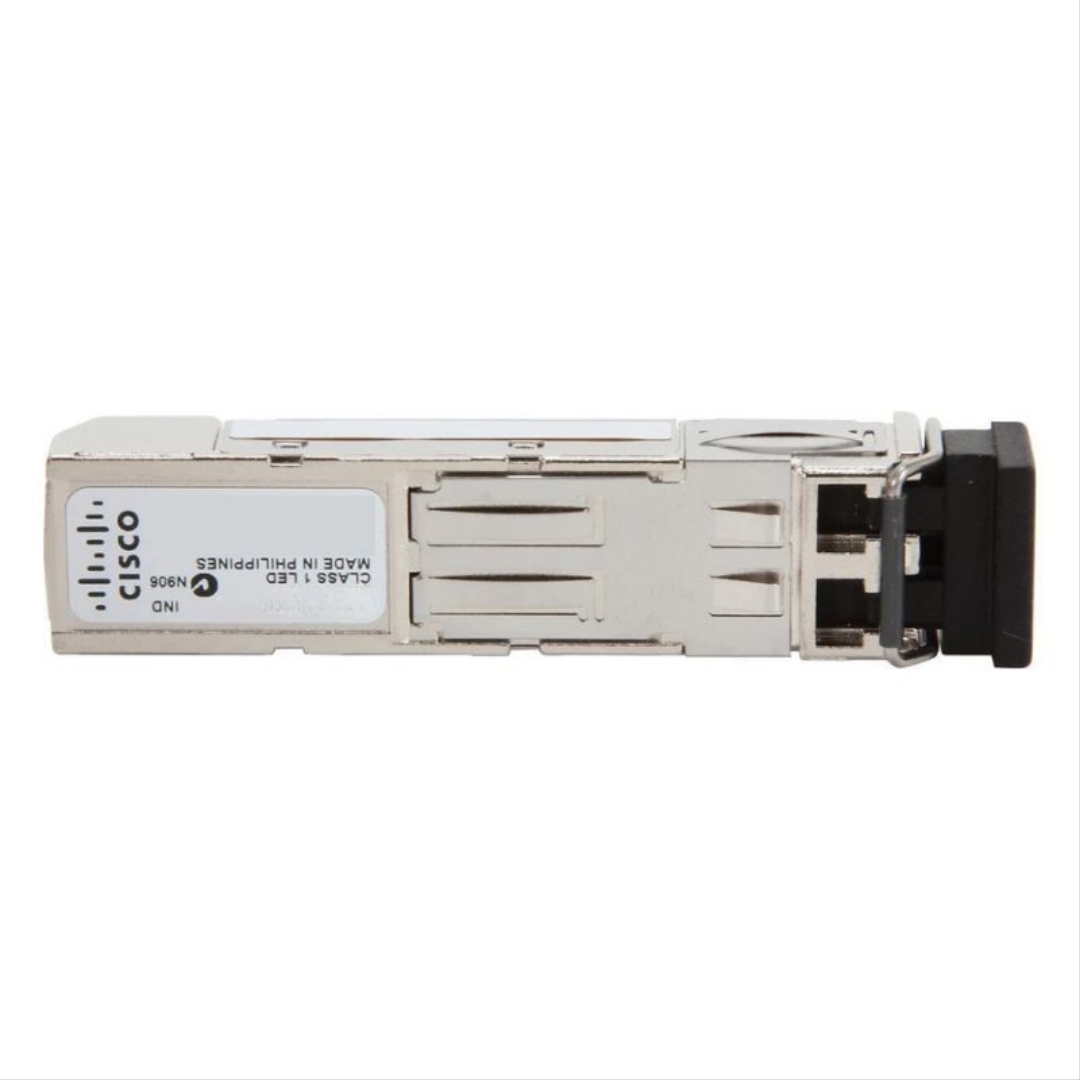
Cisco GLC-FE-100LXRGD Rugged SFP-SFP (mini-GBIC) Transceiver Module-100Mb LAN-100Base-LX-LC Single-mode-Up To 6.2 Miles-1310 Nm. Excellent Refurbished with 1 year replacement warranty
The Cisco GLC-FE-100LXRGD is a ruggedized 100BASE-LX small form-factor pluggable transceiver designed for dependable Fast Ethernet fiber connectivity in demanding network environments. Built for 100Mb LAN deployments, this Cisco transceiver uses a 1310 nm wavelength and an LC optical interface to deliver stable data transmission across single-mode fiber links at distances of up to 10 km, which is approximately 6.2 miles. As a hot-swappable mini-GBIC module, it enables simple installation, replacement, and network expansion without interrupting system uptime, making it a practical choice for industrial Ethernet networks, utility communication systems, transportation infrastructure, outdoor cabinets, and other mission-critical applications where durability and reliable optical performance matter.
The Cisco GLC-FE-100LXRGD Rugged SFP SFP mini GBIC transceiver module is built for dependable Fast Ethernet fiber connectivity in industrial, enterprise edge, transportation, energy, utility, manufacturing, and outdoor networking environments where stable communication and rugged hardware performance are essential. This 100Mb LAN 100Base LX LC single mode optical transceiver is designed to support long distance network links up to 6.2 miles using 1310 nm wavelength transmission, making it an important component in environments where copper limitations, electromagnetic interference, temperature stress, and physical installation challenges demand a hardened fiber networking solution.
As a member of Cisco compatible rugged transceiver infrastructure, the Cisco GLC-FE-100LXRGD category is especially relevant for network architects and IT procurement teams that need a compact pluggable optical module capable of supporting legacy Fast Ethernet infrastructure while still delivering the durability and reliability expected in industrial applications. In many field deployments, Fast Ethernet remains widely used for control systems, automation, surveillance, access infrastructure, substation communication, and remote site interconnection. The Cisco GLC-FE-100LXRGD fills this requirement by enabling stable single mode optical transmission with an LC connector interface in a form factor suitable for compatible Cisco switches and networking platforms.
Rugged transceivers are often selected for applications where standard commercial optics may not provide the environmental tolerance needed for mission critical operation. The Cisco GLC-FE-100LXRGD category addresses this challenge by combining optical communication performance with a hardened design approach suitable for industrial switching and long reach deployment scenarios. Because the module uses 100Base LX technology over single mode fiber, it becomes especially useful for extending network reach beyond the practical limits of traditional copper Ethernet while also improving resistance to electrical noise and signal degradation in demanding locations.
The Cisco GLC-FE-100LXRGD belongs to a specialized category of rugged small form factor pluggable transceiver modules that support 100Mb Fast Ethernet optical communication. Unlike higher speed modules focused on Gigabit or multi Gigabit environments, this model is intended for installations where Fast Ethernet remains the standard for control systems, legacy equipment integration, field communications, and industrial edge connectivity. In these settings, the value of the transceiver lies not only in data transport, but also in reliability, compatibility, link stability, and long distance signal delivery.
Many organizations continue to operate infrastructure that depends on 100Mb Ethernet because the connected equipment itself does not require higher throughput. Programmable logic controllers, industrial cameras, remote terminal units, environmental sensors, access control systems, power monitoring devices, and specialized manufacturing equipment often rely on stable Fast Ethernet communication rather than high bandwidth uplinks. The Cisco GLC-FE-100LXRGD category supports these applications by allowing fiber deployment over single mode cabling with a practical long distance optical reach.
This category is also important in network modernization projects where organizations want to preserve existing Fast Ethernet equipment while improving physical connectivity and resilience. Instead of replacing all installed endpoints, network teams can use rugged optical modules to extend the life of installed switching platforms and industrial Ethernet networks. This makes the Cisco GLC-FE-100LXRGD a strategic component in phased upgrades, infrastructure stabilization projects, and long distance edge network expansion.
Standard office networking equipment is usually deployed in temperature controlled indoor spaces with low exposure to vibration, dust, humidity, and electrical interference. Industrial and field environments are very different. Networking hardware may be placed in control cabinets, substations, roadside enclosures, transportation hubs, manufacturing floors, plant rooms, utility distribution facilities, or outdoor protected cabinets where conditions are less predictable. Rugged SFP modules are designed to align with these deployment realities.
The Cisco GLC-FE-100LXRGD category is relevant wherever network links must remain stable under demanding operating conditions. A rugged optical module is especially beneficial when the network serves automation systems, operational technology environments, public infrastructure, or distributed industrial applications where downtime can affect production, safety, or service delivery. By using single mode fiber and a compact rugged transceiver, organizations can reduce susceptibility to electromagnetic noise while extending network reach across larger physical footprints.
100Base LX is a Fast Ethernet optical standard used for long distance fiber communication over single mode media. In the context of the Cisco GLC-FE-100LXRGD category, this means the module is designed for 100Mb communication with optical signaling at 1310 nm and support for long reach fiber runs up to 6.2 miles. This makes it well suited for campus edge links, industrial site interconnects, remote building connections, perimeter security networks, and distributed infrastructure installations where copper Ethernet would be impractical or unreliable.
Single mode fiber remains an excellent choice for these deployments because it provides low attenuation, strong long distance performance, and better immunity to interference than copper cabling. When paired with a rugged Cisco compatible transceiver, it creates a dependable communication path for low to moderate bandwidth traffic in environments that value stability over raw speed.
The Cisco GLC-FE-100LXRGD category is defined by a combination of Fast Ethernet optical transmission, single mode fiber support, LC optical interface compatibility, ruggedized design intent, and compact SFP form factor flexibility. These characteristics make it suitable for network administrators who need a reliable fiber module for installed Cisco equipment in industrial and remote connectivity scenarios.
The module is built for 100Mb LAN communication, which remains common in industrial automation, monitoring, control, and edge network applications. While many enterprise backbone environments have transitioned to higher speed standards, Fast Ethernet still plays a significant role in operational technology networks and field infrastructure where bandwidth demands are modest and equipment lifecycles are long. The Cisco GLC-FE-100LXRGD provides a way to maintain this network layer using optical transport rather than relying solely on short distance copper runs.
Fast Ethernet transceivers like this one are often used in systems where predictable communication, deterministic device interaction, and long term platform consistency are more important than throughput expansion. As a result, this category continues to be relevant in industrial and specialized enterprise deployments.
The 100Base LX optical standard is central to the Cisco GLC-FE-100LXRGD module category. It is designed for fiber based Fast Ethernet transmission over longer distances than common copper Ethernet can support. This allows network designers to link cabinets, buildings, control rooms, substations, warehouses, and remote equipment locations while preserving signal integrity and reducing dependence on electrical media.
Because 100Base LX is associated with optical transmission over single mode fiber, it offers a practical balance of reach, reliability, and compatibility for organizations operating legacy Fast Ethernet systems across larger sites. It is especially useful where copper limitations, grounding concerns, or interference risks make optical cabling the better long term option.
Single mode fiber support is one of the most important attributes of the Cisco GLC-FE-100LXRGD category. Single mode fiber is commonly selected for long range network connections because it supports greater distances and lower signal loss than multimode alternatives in long haul Fast Ethernet applications. In industrial networks, this makes it ideal for connecting facilities separated by substantial distances, such as plant buildings, outdoor infrastructure cabinets, utility distribution points, traffic control cabinets, and security monitoring posts.
Using single mode fiber also helps organizations standardize around long distance optical cabling for multiple applications. Even when the active equipment remains at 100Mb speed, the cabling plant can support future flexibility and improved physical resilience compared with short copper segments. This contributes to a more durable and scalable infrastructure strategy.
The LC optical connector interface used by the Cisco GLC-FE-100LXRGD module supports compact fiber termination and is widely adopted in enterprise and industrial optical networking. LC connectors are known for their small footprint and suitability for high density equipment designs. In field deployments, they offer a practical and familiar connection method for technicians working with fiber patching, cabinet installation, and switch uplink configuration.
Because LC connectors are common across many optical networking environments, they simplify cable planning and maintenance workflows. This is valuable in organizations that manage mixed infrastructure with both standard enterprise equipment and industrial networking platforms.
The use of a 1310 nm optical wavelength aligns the Cisco GLC-FE-100LXRGD with long distance single mode transmission practices. This wavelength is widely associated with stable performance over single mode fiber and supports the module’s intended reach up to 6.2 miles. In real world deployment planning, the wavelength specification matters because it influences compatibility with installed fiber paths, attenuation calculations, and optical design choices.
For network engineers, a 1310 nm rugged Fast Ethernet transceiver offers a reliable option for extending communication to distant industrial assets, edge facilities, and site infrastructure components without introducing unnecessary complexity. It also supports clean separation between optical transport layers and electrical switching domains in noise sensitive environments.
Distance capability is one of the strongest reasons to choose the Cisco GLC-FE-100LXRGD category. A reach of up to 6.2 miles makes this transceiver useful for much more than short rack to rack or room to room links. It supports broader site architectures and geographically distributed operational environments where communication must cross campus grounds, plant areas, transportation corridors, utility facilities, or security perimeters.
Long reach connectivity is especially valuable in industrial sectors where devices and facilities are physically separated by significant distances. By using a rugged single mode transceiver, organizations can establish dependable optical links between critical network points without the grounding and noise concerns often associated with long copper runs.
The rugged nature of the Cisco GLC-FE-100LXRGD category is a major differentiator. Many transceiver modules are designed primarily for office, data center, or controlled telecom environments. Rugged modules address a different need by supporting networking in places where environmental conditions are less predictable and the cost of link failure can be high.
Industrial Ethernet networks frequently support operational technology rather than only information technology. This means the network may be tied to production systems, power systems, environmental monitoring, traffic systems, field communications, building controls, or security operations. In such environments, transceiver durability, consistent optical performance, and dependable long term operation are highly valuable.
Manufacturing plants and process control facilities often include large physical footprints, electrically noisy machinery, automation cabinets, and distributed control stations. Fiber communication is attractive in these settings because it resists electromagnetic interference and can span long distances between buildings, production lines, and monitoring locations. The Cisco GLC-FE-100LXRGD category is well aligned with these requirements because it brings rugged Fast Ethernet optical capability to installed Cisco compatible platforms.
In manufacturing, the module may support communication for production monitoring, machine networking, warehouse links, packaging systems, robotics support networks, environmental controls, and plant security infrastructure. Because many industrial devices still use Fast Ethernet, a rugged 100Base LX module remains a practical and cost effective connectivity solution.
Utility companies, energy providers, and substation operators often rely on rugged networking hardware to connect remote assets, control systems, monitoring devices, and communications infrastructure. Electrical environments can create interference challenges for copper media, while the physical distances between control rooms, substations, cabinets, and field equipment can exceed standard Ethernet limits. The Cisco GLC-FE-100LXRGD category helps address these challenges by enabling single mode fiber communication with long reach and industrial suitability.
Typical utility use cases include power distribution monitoring, relay communication, remote terminal unit connectivity, perimeter surveillance, access control, and facility management systems. In these settings, optical communication helps preserve signal integrity and improve deployment flexibility across wide service areas.
Transportation systems often require network connectivity between stations, roadside equipment, signaling cabinets, security cameras, access points, and operations centers. These environments may expose networking equipment to temperature fluctuations, vibration, dust, and long cable runs. The Cisco GLC-FE-100LXRGD category is relevant because it combines rugged deployment value with the ability to deliver Fast Ethernet over single mode fiber across meaningful distances.
Transportation operators may use this type of module for rail communications, traffic management, tolling infrastructure, surveillance backhaul, tunnel networking, platform systems, and remote facility interconnection. Since many transportation systems emphasize uptime and operational consistency, rugged optical components are often preferred over standard office grade alternatives.
Many organizations deploy network equipment in roadside enclosures, utility cabinets, perimeter checkpoints, campus edge facilities, remote security posts, water treatment sites, and environmental monitoring stations. These sites often need long distance fiber connectivity back to a central switch or aggregation point. The Cisco GLC-FE-100LXRGD category supports this architecture by providing a compact rugged transceiver that can connect remote equipment over single mode fiber using 100Base LX technology.
Outdoor and remote site deployments frequently prioritize hardware longevity, stable communication, and reduced maintenance visits. Rugged optical modules can help meet these objectives by supporting reliable connectivity in installations where access is difficult or service interruption is costly.
The Cisco GLC-FE-100LXRGD category offers value not only in technical performance but also in procurement planning, maintenance consistency, and infrastructure lifecycle management. For organizations that standardize on Cisco networking platforms or support mixed enterprise and industrial deployments, having access to a rugged Fast Ethernet single mode SFP module simplifies inventory decisions and deployment planning.
The SFP mini GBIC design is one of the reasons this category remains useful. A compact pluggable transceiver allows network teams to configure compatible switches according to actual site requirements rather than committing to fixed port media at the time of hardware purchase. This flexibility is especially helpful in industrial projects where some links are copper, others are multimode, and some require long reach single mode optics. The Cisco GLC-FE-100LXRGD enables a targeted approach to port configuration while preserving a familiar Cisco networking workflow.
Pluggable optical modules are generally easier to replace and standardize than fixed optical interfaces. In operational environments, this matters because maintenance windows may be limited and field technicians may need straightforward service procedures. A transceiver based design allows a failed or mismatched module to be swapped without replacing the entire switch. For distributed industrial networks, this can reduce downtime and simplify spare parts strategy.
The Cisco GLC-FE-100LXRGD category therefore supports not only network performance but also maintainability, lifecycle planning, and operational resilience.
Organizations that operate industrial, utility, transportation, or campus edge networks often plan infrastructure over long time horizons. Equipment may remain deployed for many years, and connectivity choices need to support durability, compatibility, and service continuity. The Cisco GLC-FE-100LXRGD category fits this planning model because it supports existing Fast Ethernet applications while improving the physical connectivity layer through long reach single mode fiber.
For procurement teams, this means the module category can serve as part of a strategic maintenance and modernization program. It helps preserve installed investments, improve link resilience, and support remote infrastructure communication without forcing a full network overhaul.


 Contact Us
 Information
 Catalog
 Solid State Drives (SSD)
 Network Switches
 Hard Disk Drives
 HBA & Controllers
 PC & Servers
 PC & Server Memory
 CPU & Processors
 Network Routers
 Power Supplies
 Tape Drives & Libraries
 Network Devices
 Computer & Network Cables