(7% discount is applied at checkout)
Cart is empty
Your go-to destination for cutting-edge server products


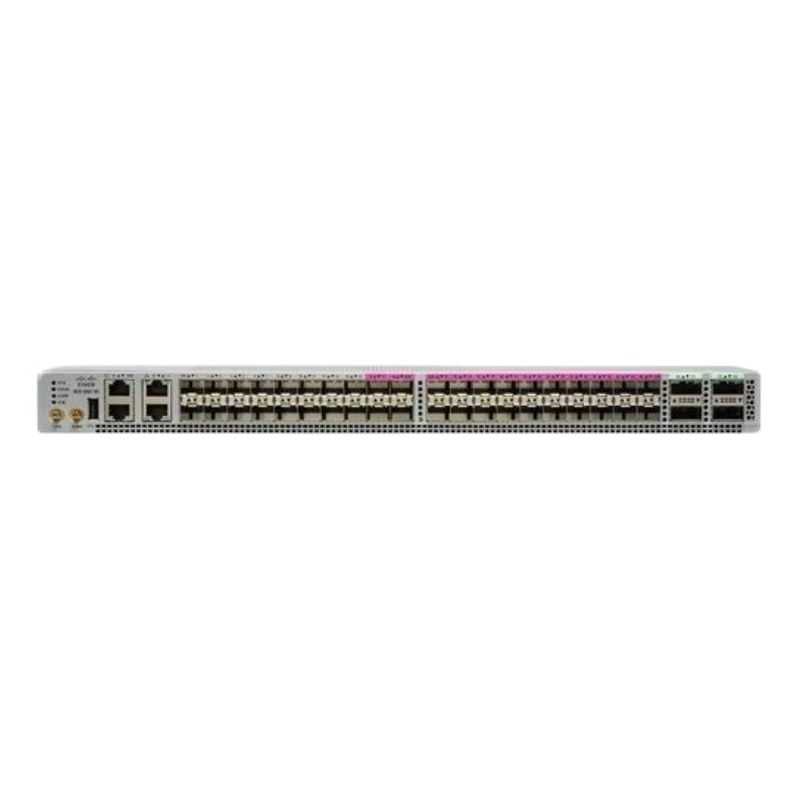
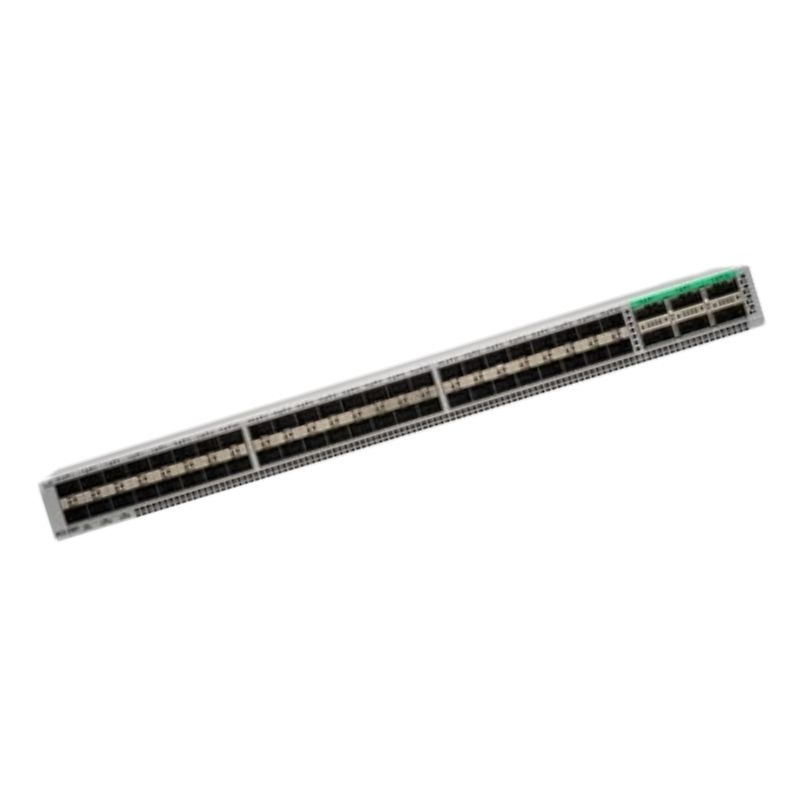
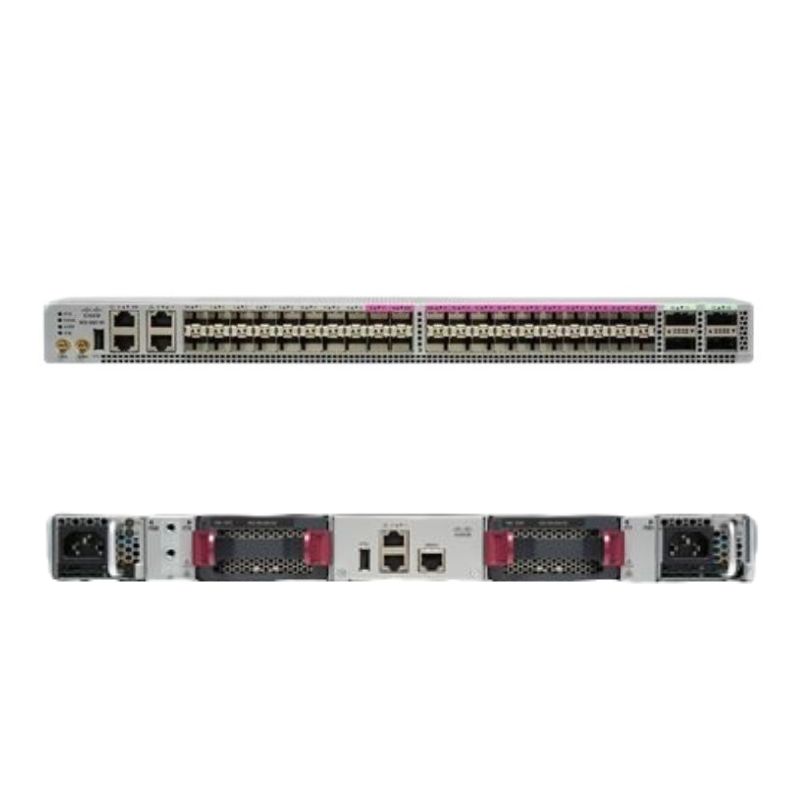
Cisco NCS-5501-SE 8 Port Network Convergence System 5501 Rack-Mountable Router. Excellent Refurbished with 1-Year Replacement Warranty
The Cisco NCS-5501-SE 8-port Network Convergence System router is engineered for high-capacity enterprise and service-provider deployments. Designed to support multi-gigabit data flows, advanced routing intelligence, and resilient network performance, this rack-mountable 1U platform delivers exceptional scalability for dense environments.
The Cisco NCS-5501-SE 8 Port Network Convergence System 5501 Rack-Mountable Router represents a significant advancement in scalable edge routing, engineered for intensive data environments that depend on predictable, high-capacity throughput. This platform is purpose-built for service providers, data centers, cloud infrastructures, and enterprise backbones that require dependable forwarding performance, reduced latency, and robust packet processing with consistent efficiency. As part of the broader Cisco NCS 5500 family, this model delivers extended route scale, enhanced buffering, integrated environmental resiliency, and a flexible operating model designed to handle increasing traffic volumes across dynamic network topologies.
The routing architecture of the Cisco NCS-5501-SE focuses on providing a unified framework that accommodates high-bandwidth services, dense IPv4 and IPv6 routing deployments, and the rapid expansion of multi-layer connectivity models. Its forwarding engine is optimized for predictable results even when networks experience unpredictable load variations. This design ensures stability for operators handling content delivery, enterprise connectivity, 5G transport, metro aggregation, and high-density peering applications. Integrated hardware acceleration enhances packet operations, reducing overhead normally associated with software-driven routing techniques. The platform also incorporates advanced QoS structures, enabling detailed traffic shaping, packet prioritization, and well-defined quality control that is crucial for environments delivering real-time services such as VoIP, streaming, or synchronized data applications.
The NCS-5501-SE incorporates eight high-performance ports engineered for modularity and scalability within complex infrastructures. This port arrangement supports various optics and speeds depending on the operator’s needs, ensuring flexible service growth without requiring extensive platform changes. Its design reduces limitations associated with older chassis-based architectures by providing a fixed-form-factor solution with powerful forwarding resources. This smaller footprint router is ideal for distributed deployments where physical space, energy consumption, and heat dissipation are critical considerations. Dense multi-rate connectivity ensures seamless interoperability with existing ecosystem hardware, allowing operators to modernize their infrastructure while maintaining operational continuity.
Packet forwarding efficiency is a key focus of the Cisco NCS-5501-SE, with hardware-accelerated processing pipelines that ensure deterministic performance across diverse traffic patterns. The router supports deep buffering, accommodating bursts that commonly occur in high-demand environments such as broadband networks, enterprise campuses, and hyperscale data centers. Its architectural consistency delivers predictable latency characteristics, a vital requirement for network operators working with service-level agreements or handling mission-critical workloads. Cisco’s consistent integration of forwarding innovations ensures that the platform remains adaptable to emerging performance expectations in next-generation routing landscapes.
Continuous operation is a core component of the NCS-5501-SE design philosophy, ensuring that service providers can maintain uninterrupted connectivity even during evolving operational demands. Its hardware layout is crafted to minimize points of failure and includes redundant features that sustain network stability under demanding conditions. Power redundancy, cooling optimization, and environmental protection mechanisms work together to produce a reliable infrastructure foundation. This resilience is essential for distributed edge environments, metro networks, and geographically diverse applications where rapid failover capabilities support consistent uptime expectations.
The Cisco NCS-5501-SE leverages the Cisco IOS XR operating system, delivering a modular, carrier-grade software environment capable of supporting evolving network architectures. IOS XR is recognized for its stability, programmability, and streamlined operational workflows. The open and flexible control framework enables operators to automate tasks, enhance configuration accuracy, and reduce human error across large-scale deployments. Features such as model-driven programmability, telemetry streaming, and support for software-defined networking principles help organizations build adaptive infrastructures that evolve alongside modern traffic demands. Continuous software innovation ensures that the platform retains long-term relevance.
Network management efficiency is a priority within the router’s design, allowing operators to coordinate complex routing policies, monitoring functions, and service upgrades with streamlined workflows. Real-time visibility into performance metrics enables data-driven operational decisions that improve service quality and anticipate congestion patterns. The platform supports automation frameworks that assist with configuration deployment, network verification, and event resolution. This reduces time spent on repetitive tasks and allows engineers to focus on strategic infrastructure development. The router’s open APIs and telemetry support ensure interoperability with a wide range of workflow automation systems.
The Cisco NCS-5501-SE incorporates a layered approach to network security. Integrity protection, secure boot processes, encrypted control plane options, and continuous security monitoring collectively reduce risk in high-exposure environments. By incorporating strong authentication protocols and flexible traffic filtering structures, the router supports operators seeking to safeguard their infrastructure from evolving digital threats. These security protocols integrate directly into routing workflows without compromising performance or responsiveness, ensuring that operators maintain secure connectivity alongside consistent throughput delivery.
Designed to support a broad set of routing roles, the NCS-5501-SE adapts well to multiple infrastructure architectures where scalability, reliability, and flexible integration are essential. Its role in metro aggregation, high-density edge routing, data center interconnects, and cloud scale fabrics demonstrates the extensive range of environments in which it performs reliably. This versatility allows organizations to optimize their network investments by deploying a consistent routing platform within different operational segments without compromising on performance standards.
Service provider infrastructures benefit significantly from the predictability and performance scalability of the Cisco NCS-5501-SE. Its high-capacity forwarding and efficient resource utilization support increasing traffic demands associated with broadband expansion, bandwidth-intensive applications, and high-speed peering sessions. The router is engineered for dense urban deployments where rapid service activation and consistent throughput are necessary to meet user expectations. Its compact form factor is ideal for infrastructure expansion projects where physical space constraints require high-density hardware solutions.
The NCS-5501-SE provides exceptional performance within data center and cloud transport environments. Its architecture is optimized to deliver low-latency communications, predictable packet handling, and seamless integration with spine-and-leaf structures or hybrid multi-cloud configurations. Operators benefit from enhanced routing convergence, reliable service delivery, and streamlined operational workflows that reduce administrative overhead. The router’s programmable environment supports dynamic scaling as cloud workloads expand or shift across distributed compute environments.
Enterprise networks with extensive branch connectivity requirements rely on robust routing capabilities to ensure consistent service delivery across geographically diverse environments. The Cisco NCS-5501-SE supports high-density enterprise architectures requiring enhanced routing scale, advanced telemetry, and flexible automation. Corporate environments that manage traffic-intensive collaboration services, secure remote access, and synchronized data applications benefit from its advanced performance characteristics.
The hardware construction of the Cisco NCS-5501-SE emphasizes modular internal design, thermal efficiency, and optimized resource utilization. These elements ensure that the platform can remain serviceable and relevant across long deployment cycles, reducing total cost of ownership while supporting evolving bandwidth and routing requirements. Its forward-looking architecture supports a wide range of optics, packet types, and control structures that contribute to extended service life.


 Contact Us
 Information
 Catalog
 Solid State Drives (SSD)
 Network Switches
 Hard Disk Drives
 HBA & Controllers
 PC & Servers
 PC & Server Memory
 CPU & Processors
 Network Routers
 Power Supplies
 Tape Drives & Libraries
 Network Devices
 Computer & Network Cables