(7% discount is applied at checkout)
Cart is empty
Your go-to destination for cutting-edge server products
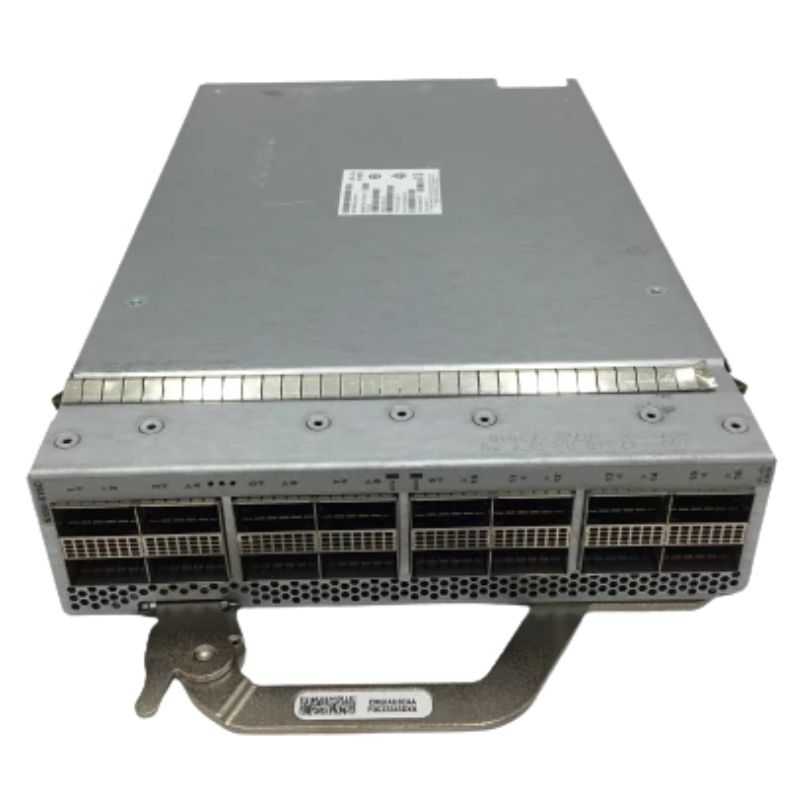


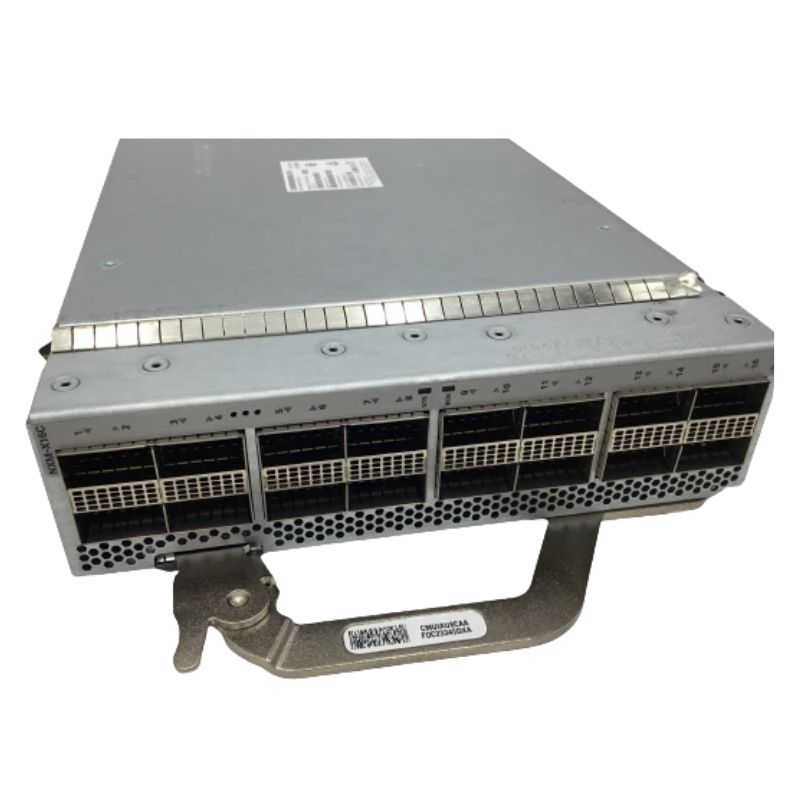
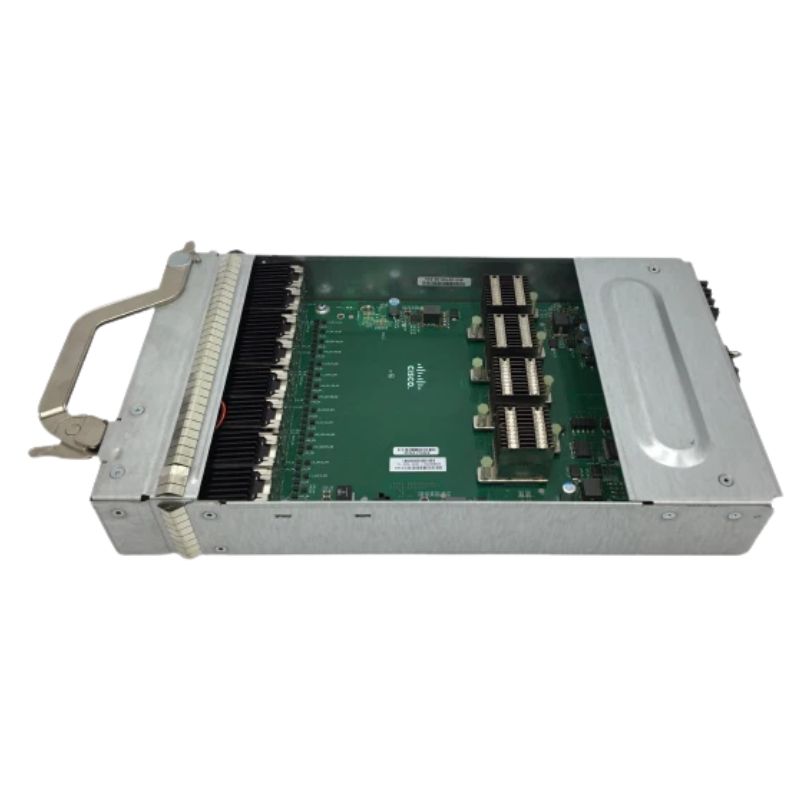
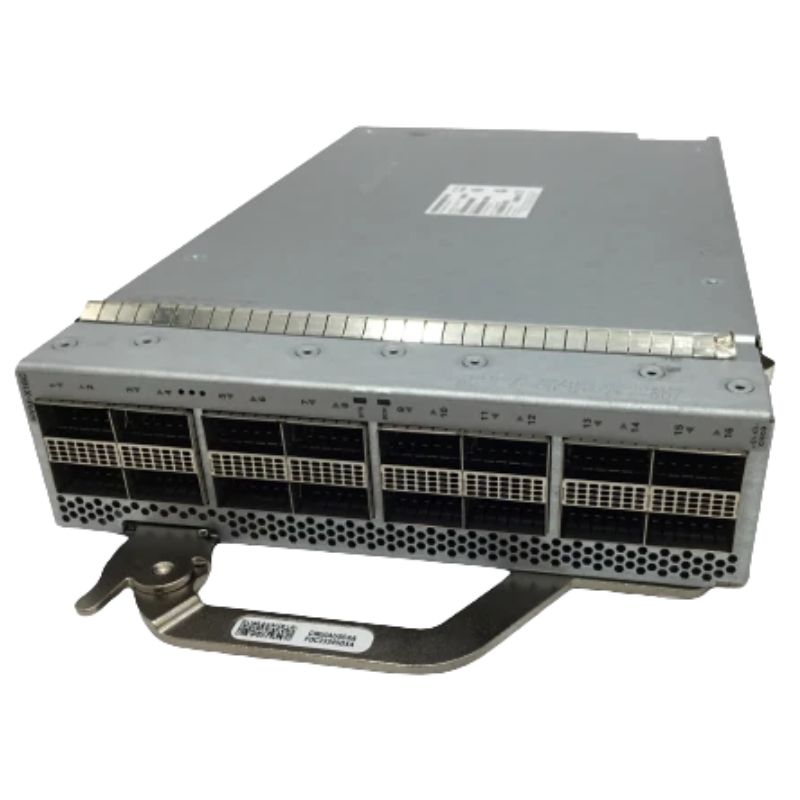
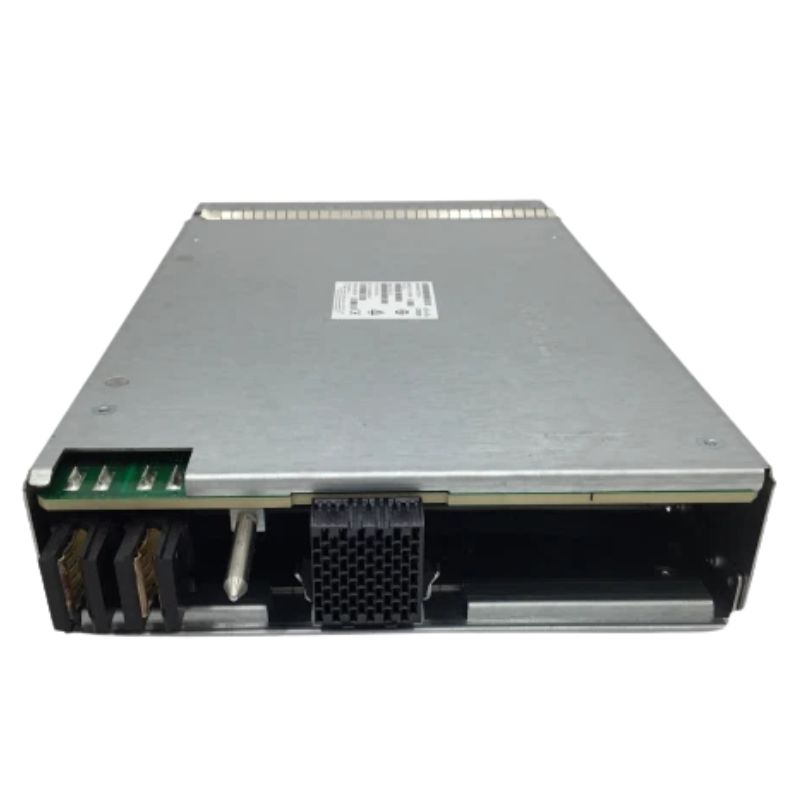
Cisco NXM-X16C Nexus 16 Ports 100G Line Expansion Module. Excellent Refurbished with 1 Year Replacement Warranty
The Cisco NXM-X16C is a high-performance expansion module designed to enhance the capabilities of Cisco Nexus switches. Engineered for enterprise-grade networks, this 16-port module delivers exceptional data throughput, reliability, and scalability for modern data centers.
The NXM-X16C is designed for demanding networking environments, offering:
Ensure compatibility and advanced network integration with support for:
The Cisco NXM-X16C is built with modularity in mind:
This 16-port expansion module ensures operational stability with:
The Cisco NXM-X16C is a high-density 100 Gigabit Ethernet line expansion module (LEM) engineered for the Cisco Nexus modular chassis family. It provides sixteen QSFP28 ports in a single plug-in module footprint, enabling data centers and enterprise aggregation/access layers to scale east-west traffic with low latency and predictable performance. The module is designed to deliver dense 100G connectivity while retaining backward compatibility with lower-rate QSFP breakout modes (e.g., 40G, 25G, 10G) for flexible uplink and server-facing architectures.
At the heart of the NXM-X16C is a 16-port QSFP28 array that supports full 100 Gbps per port. Each QSFP28 port can typically operate in multiple speed modes depending on the optics and configuration: native 100G (QSFP28), 50G, 40G (QSFP+), 25G, and 10G with appropriate breakout and transceiver modules. This flexibility lets network architects choose between high-throughput 100G links or breakout configurations for finer-grained connectivity to servers and leaf switches.
The NXM-X16C is built to preserve the low-latency switching characteristics of the Nexus platform. When installed in a compatible Nexus chassis (for example the Nexus 3408-S family), combinations of multiple NXM-X16C modules provide massive aggregated bandwidth — scaling to hundreds of 100G ports per chassis depending on the chassis model and configuration. The module is engineered for line-rate forwarding on all ports and supports modern data-center needs such as congestion management and hardware-based buffering.
The NXM-X16C is intended to be inserted into compatible Nexus switch chassis that accept LEMs (Line Expansion Modules). In practice this means choosing a chassis model that exposes the LEM slot architecture (for example, models in the Nexus 3000-S family such as the 3408-S). When planning deployments, account for slot availability, front-to-back or back-to-front airflow orientation, and power budget per chassis to ensure modules operate within thermal and electrical limits.
One of the most useful features of the NXM-X16C is breakout capability. Each QSFP28 port can be configured in breakout modes that divide a single 100G interface into multiple lower-speed interfaces (commonly 4x25G or 4x10G). Breakout mappings depend on the chassis and NX-OS software support; when breakout is enabled the original 100G port is logically replaced by the set of lower-rate interfaces and any prior configuration on that parent interface is cleared — plan configuration changes carefully when enabling breakout.
The NXM-X16C is optimized for deterministic, low-latency forwarding which is crucial for high-performance computing, financial trading and hyperscale cloud workloads. Hardware QoS mechanisms — including ACLs, priority queuing, and congestion management — operate at line rate on the module. For environments that are sensitive to microbursts or jitter, ensure the overall system buffer capacity and queueing configuration on the chassis-level fabric match application requirements.
Large cloud providers and hyperscale data centers use modules like the NXM-X16C for leaf-spine fabrics where density, power efficiency, and port flexibility matter. Deploy the module as spine-to-leaf interconnects or as high-density uplink modules in leaf switches to aggregate many server-facing ports into a compact, high-bandwidth fabric. The ability to mix 100G, 25G, and 10G modes via breakouts makes it easy to serve diverse server NIC speeds without replacing hardware.
For enterprises modernizing their campus or data-center cores, NXM-X16C modules provide a clear upgrade path to 100G aggregation. They allow combining existing 10G/25G server or TOR (top-of-rack) connections into higher-capacity uplinks while preserving investment in existing optics through breakout capabilities. Use them where high throughput, predictable latency, and advanced NX-OS feature support are required (VXLAN, EVPN, BGP EVPN overlays, and hardware-based multicast/telemetry features).
HPC deployments that exchange large datasets between compute nodes benefit from high-bandwidth, low-latency modules. The NXM-X16C can be part of a dense switching tier that minimizes hops and reduces cumulative latency for distributed compute workloads. For HPC, ensure the transceiver choices and cabling topology (direct-attach copper for short runs vs. SR/DR optics for longer distances) match the cluster layout.
Cisco publishes hardware compatibility matrices and detailed installation guides that list supported LEMs for each Nexus chassis. The NXM-X16C is commonly referenced for Nexus 3400-S series chassis and other modular Nexus platforms that accept 100G LEMs; consult the official chassis datasheet and hardware installation guide to confirm slot compatibility, supported airflow direction, and firmware requirements before purchase. Using the recommended chassis and NX-OS versions minimizes integration headaches and ensures supportability.
The module's QSFP28 cages support a broad range of optics and AOCs (active optical cables). Cisco and many third-party optics vendors offer compatible QSFP28 transceivers for 100G (SR4, LR4, ER4 where applicable), as well as breakout QSA/ADAPTERs that enable mixed-speed connectivity. Note that many organizations choose Cisco-branded optics for guaranteed compatibility; if third-party optics are used, validate interoperability with the chassis and NX-OS release.
While the NXM-X16C is a Cisco-branded LEM, it typically interoperates with other vendors' switches at the L2/L3 protocol level (Ethernet, MLAG/EVPN, BGP, etc.). However, hardware-specific features (management agent telemetry, optics diagnostics, and proprietary transceiver diagnostics) may vary across vendors and optics — plan cross-vendor mixes carefully, test extensively, and document fallback/rollback steps for firmware upgrades.
The NXM-X16C is managed through the Cisco NX-OS software that runs on the compatible Nexus chassis. NX-OS provides the CLI, REST APIs, telemetry and automation hooks (e.g., NXAPI, gNMI/NETCONF) that let administrators script provisioning, collect counters and integrate the module into programmability workflows. Be sure to consult the NX-OS release notes for the chassis to confirm that the chosen NX-OS version includes support for all LEM features, breakout behaviors, and transceiver diagnostics.
Modern data centers rely on automated configuration and real-time telemetry. The Nexus platform supports telemetry streams, sampled and streaming telemetry, sFlow, and other monitoring paradigms. Use these features to monitor port-level health, optical power, bit-error rates and environment sensors. Telemetry is critical for proactive troubleshooting and capacity planning when operating dense 100G fabrics.
Like any network module, the NXM-X16C can require NX-OS and module firmware updates to patch security issues and enable new features. Follow vendor guidance for staged rollouts, test upgrades in non-production environments, and ensure you have out-of-band management and documented rollback procedures. Always verify the compatibles lists and read upgrade advisories for any known caveats with specific module + chassis + NX-OS combinations.
Confirm the chassis power budget before installing multiple NXM-X16C modules. High-density LEMs draw measurable power; combining many modules can exceed the chassis' available power if additional power supplies are not provisioned. Cisco's installation guides and datasheets provide per-module power figures and recommended redundant power configurations. Proper planning avoids unexpected thermal hotspots and maintains high availability.
Many Nexus chassis support different airflow orientations (front-to-back or back-to-front). Install modules consistently with the chassis' designated airflow direction and consult the hardware installation guide for fan tray and blanking panel placement to maintain predictable cooling. Failure to follow recommended airflow and blanking guidelines can reduce module life and cause thermal alarms.
When used in redundant chassis and fabric designs, the NXM-X16C participates in high-availability topologies. Pairing modules with dual power supplies and redundant fan trays in the chassis ensures that single-fault conditions do not bring down the switching plane. For higher layers, technologies such as vPC, MLAG, or EVPN-based multihoming provide resilient traffic paths in the fabric.
Use NX-OS and external monitoring systems to track port errors, optics diagnostics (Tx/Rx power, temperature), and module health. Many sellers of refurbished or used NXM-X16C modules also provide test reports — when procuring from secondary markets, request test verification and warranty options to lower risk.
The NXM-X16C is available through Cisco's official channels as well as many authorized resellers and secondary-market suppliers. Buying new ensures vendor warranty and full support; refurbished units can be cost-effective but require careful vendor vetting and proof of testing. Consider warranties, return policies, and included support contracts when calculating TCO.
Maintain a small inventory of spare optics and at least one blanking panel per unused slot to preserve airflow. If your architecture depends on immediate replacement of failed LEMs, procure at least one network spare to minimize downtime. Also track NX-OS lifecycle calendars to plan end-of-life and end-of-support transitions for chassis and modules.
Harden management interfaces by using AAA (RADIUS/TACACS+), role-based access control, encrypted management channels (SSH over Telnet), and segmented management networks. Regularly update firmware and NX-OS images within maintenance windows to minimize exposure to CVEs and known vulnerabilities. Use least-privilege administration for operational access.
Cisco hardware typically conforms to RoHS and other regional safety and EMC standards. If your organization has strict environmental or regulatory requirements, validate compliance certificates and data-sheet declarations for the specific module revision you plan to deploy.


 Contact Us
 Information
 Catalog
 Solid State Drives (SSD)
 Network Switches
 Hard Disk Drives
 HBA & Controllers
 PC & Servers
 PC & Server Memory
 CPU & Processors
 Network Routers
 Power Supplies
 Tape Drives & Libraries
 Network Devices
 Computer & Network Cables