(7% discount is applied at checkout)
Cart is empty
Your go-to destination for cutting-edge server products
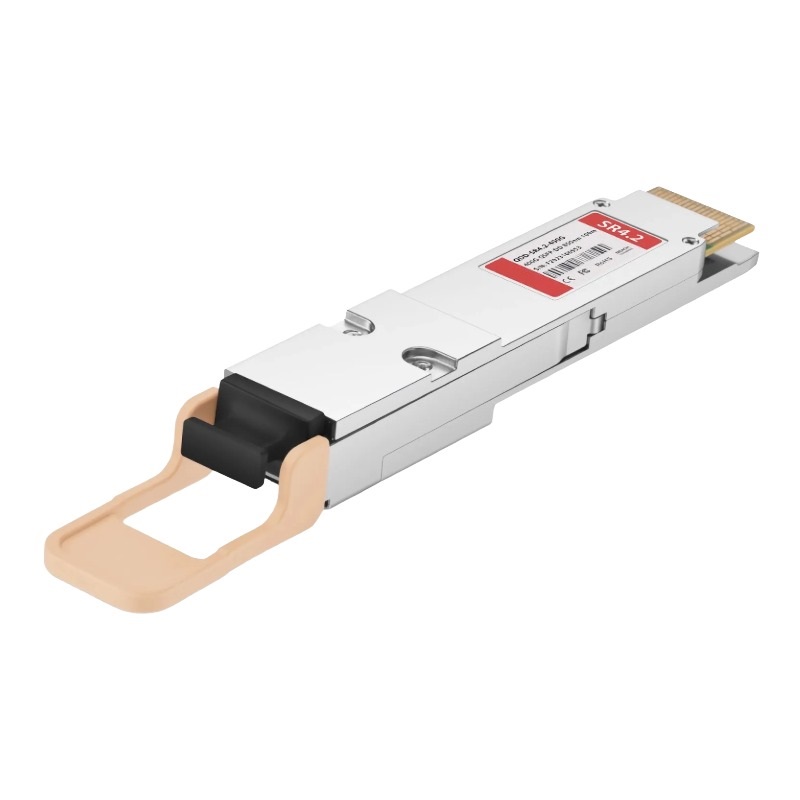


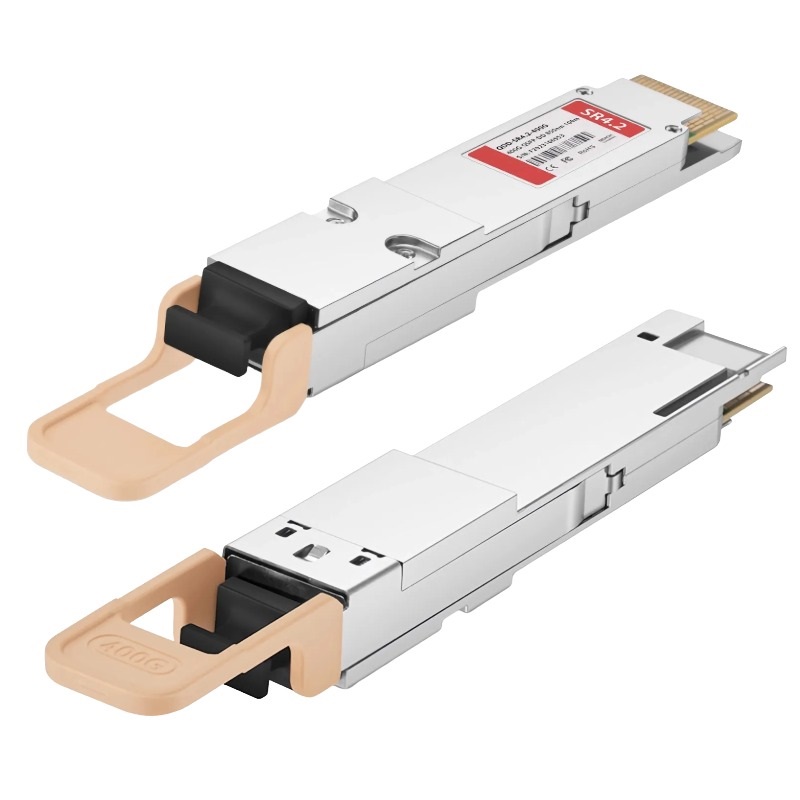
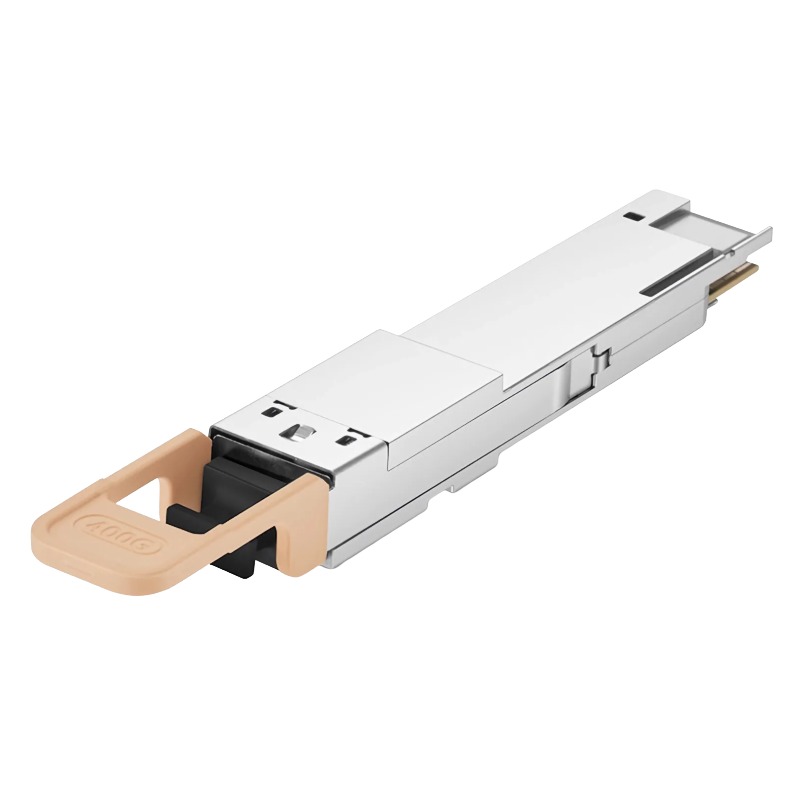
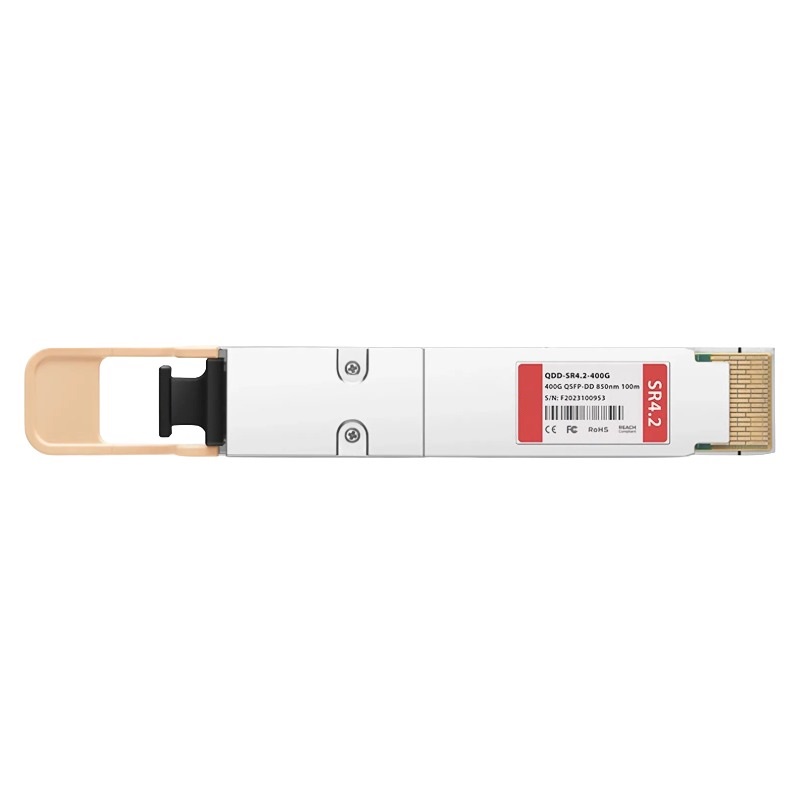
Cisco QDD-400G-SR4.2-BD QSFP-DD 8 x 50G PAM4 850nm 100m MMF Transceiver Module. Factory-Sealed New in Original Box (FSB) with 1 Year Replacement Warranty
The Cisco QDD-400G-SR4.2-BD QSFP-DD transceiver module is a cutting-edge optical connectivity solution designed for ultra-high-speed data center and enterprise networking environments. Supporting 400GBASE-SR4.2 short-range transmission, this module delivers exceptional bandwidth efficiency, low latency, and reliable performance for next-generation network infrastructures.
The Cisco QDD-400G-SR4.2-BD 400GBASE-SR4.2 QSFP-DD 8 x 50G PAM4 850nm 100m MMF Transceiver Module is a next-generation high-speed optical networking component engineered for ultra-high bandwidth data center environments, enterprise backbone infrastructure, cloud-scale switching architectures, and advanced high-performance computing (HPC) clusters.
As data traffic continues to grow exponentially due to artificial intelligence workloads, machine learning pipelines, hyperscale cloud computing, and virtualization, the need for efficient and scalable optical transceivers has become critical. The QDD-400G-SR4.2-BD addresses this demand by offering a compact QSFP-DD form factor combined with 8 lanes of 50G PAM4 electrical and optical signaling over 850nm wavelength multimode fiber, ensuring high bandwidth density within short-reach environments such as top-of-rack (ToR) and end-of-row (EoR) switch architectures.
The 400GBASE-SR4.2 standard is designed to enable short-range optical communication at 400 Gbps over multimode fiber infrastructure using parallel optics. Unlike long-reach single-lane wavelength division multiplexing systems, SR4.2 uses multiple optical lanes to transmit data simultaneously, significantly improving parallel data throughput. This architecture is especially effective in structured cabling systems already deployed in enterprise and data center environments where OM4 or OM5 multimode fiber is prevalent.
At the core of the Cisco QDD-400G-SR4.2-BD is 8 x 50G PAM4 (Pulse Amplitude Modulation 4-level) signaling. PAM4 enables the encoding of two bits per symbol, effectively doubling the data rate without increasing the required bandwidth per lane. This efficiency is essential for 400G systems where physical space, power consumption, and thermal constraints are critical design considerations. Each lane operates independently, allowing parallel data transmission across eight optical channels.
PAM4 modulation introduces higher spectral efficiency compared to traditional NRZ signaling. This enables higher throughput within the same optical bandwidth, reducing infrastructure overhead and improving port density. In environments such as hyperscale data centers and AI training clusters, this translates into reduced cabling complexity, improved rack utilization, and significantly enhanced scalability.
The QSFP-DD (Quad Small Form-factor Pluggable Double Density) interface is a key innovation enabling 400G optical connectivity in compact hardware designs. The double-density architecture supports additional electrical lanes compared to traditional QSFP28 modules, allowing seamless migration from 100G and 200G infrastructures to 400G without redesigning entire switching platforms.
The QDD-400G-SR4.2-BD leverages this form factor to deliver high-speed connectivity while maintaining backward compatibility with existing QSFP port ecosystems through appropriate switch hardware support. This ensures that organizations can scale their networks without immediate replacement of all legacy systems.
One of the most critical engineering challenges in high-speed optics is heat dissipation. QSFP-DD modules are designed with improved airflow pathways and optimized power consumption profiles. The Cisco SR4.2-BD module maintains efficient thermal performance even under sustained high-load conditions, making it suitable for densely packed switch environments where cooling efficiency is essential.
The 850nm wavelength is widely used in multimode fiber systems due to its optimal balance between cost efficiency and performance for short-range communication. Vertical-Cavity Surface-Emitting Laser (VCSEL) technology is employed in the Cisco QDD-400G-SR4.2-BD to generate stable and high-speed optical signals across multimode fiber channels.
This transceiver is designed for use with OM4 and OM5 multimode fiber cabling infrastructure. These fiber types support high bandwidth and low attenuation over short distances, making them ideal for intra-data center communication links. The 100-meter reach capability ensures flexible deployment across racks, rows, and adjacent networking zones.
Maintaining signal integrity in multimode fiber requires careful control of modal dispersion. The Cisco SR4.2-BD module is engineered with advanced equalization techniques and precise optical alignment systems that minimize signal degradation over distance. This ensures reliable data transmission even in complex fiber routing scenarios within large-scale data centers.
The 100-meter transmission range of the Cisco QDD-400G-SR4.2-BD makes it ideal for short-reach interconnects within modern data centers. This includes switch-to-switch communication, spine-leaf architecture deployments, and high-bandwidth server-to-switch links. The design prioritizes ultra-low latency communication essential for real-time computing environments.
Low-latency performance is a critical requirement in AI training clusters and financial trading systems. By utilizing parallel optics and PAM4 signaling over short distances, this module minimizes serialization delay and optical propagation latency, contributing to faster data processing cycles across distributed computing systems.
In hyperscale cloud environments, scalability is the most important architectural requirement. The Cisco QDD-400G-SR4.2-BD enables seamless scaling of network bandwidth by allowing aggregation of multiple 400G links across spine and leaf switches. This helps cloud providers accommodate rapidly growing user demand without bottlenecks in internal data transport systems.
Artificial intelligence and machine learning workloads require extremely high data throughput between GPU clusters and storage arrays. The high-bandwidth capabilities of 400GBASE-SR4.2 ensure that data movement does not become a limiting factor in training large-scale neural networks. This contributes directly to faster model training cycles and improved computational efficiency.
HPC environments rely heavily on fast interconnects to synchronize distributed computing nodes. The Cisco SR4.2-BD module supports these environments by providing consistent and deterministic performance across multiple parallel lanes, reducing jitter and ensuring stable cluster communication.
Modern data center architectures frequently adopt spine-leaf topology to maximize scalability and reduce latency. The QDD-400G-SR4.2-BD fits seamlessly into this architecture by providing high-speed uplinks between leaf and spine switches, ensuring balanced traffic distribution and minimal congestion.
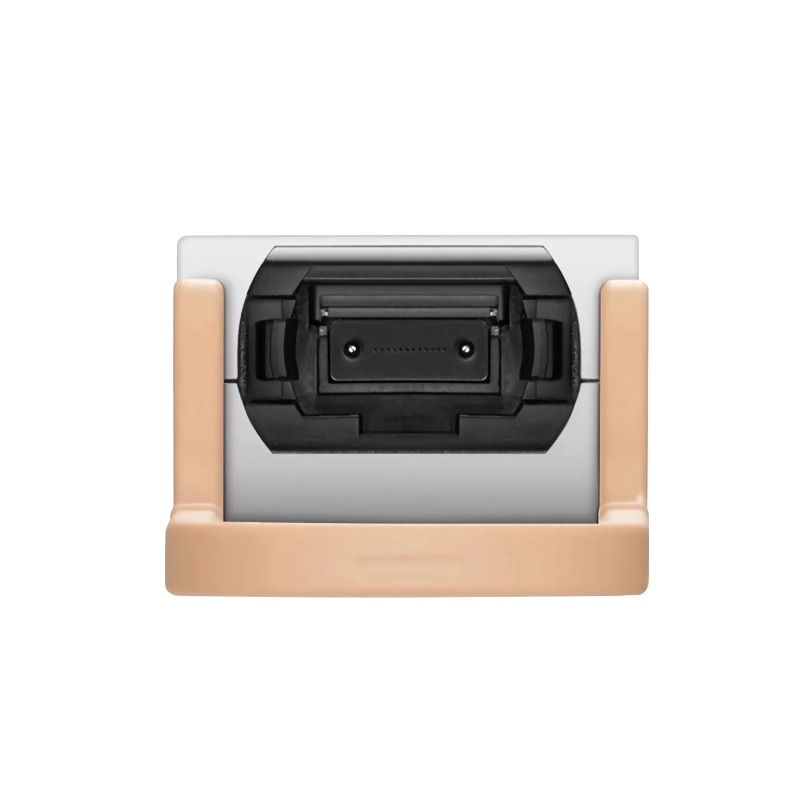
Proper fiber cabling design is essential for maximizing the performance of 400G multimode transceivers. Structured cabling systems must account for polarity, insertion loss budgets, and connector quality. The use of MPO/MTP connectors is common in SR4.2 deployments, enabling efficient multi-fiber parallel transmission.
Even within short-reach environments, signal attenuation can impact performance. The Cisco QDD-400G-SR4.2-BD is engineered to operate within strict optical power budgets, ensuring stable performance across various installation conditions.
Balancing power consumption with high throughput is a fundamental design challenge in 400G optics. This module is optimized to deliver maximum performance per watt, making it suitable for large-scale deployments where energy efficiency directly impacts operational costs.
The QSFP-DD architecture allows improved airflow management within switching chassis. Efficient heat dissipation ensures that the module can operate continuously under heavy network loads without performance degradation.
While SR4.2 is optimized for short-range multimode fiber transmission, LR4 (Long Reach 4-lane) solutions are designed for single-mode fiber and longer distances. SR4.2 offers cost efficiency and lower power consumption for data center internal links, whereas LR4 is typically used for campus or inter-building connectivity.
Multimode solutions such as SR4.2 reduce overall infrastructure cost by leveraging existing fiber installations. This makes the Cisco QDD-400G-SR4.2-BD an attractive option for organizations upgrading legacy 10G or 40G multimode networks to 400G.


 Contact Us
 Information
 Catalog
 Solid State Drives (SSD)
 Network Switches
 Hard Disk Drives
 HBA & Controllers
 PC & Servers
 PC & Server Memory
 CPU & Processors
 Network Routers
 Power Supplies
 Tape Drives & Libraries
 Network Devices
 Computer & Network Cables