(7% discount is applied at checkout)
Cart is empty
Your go-to destination for cutting-edge server products
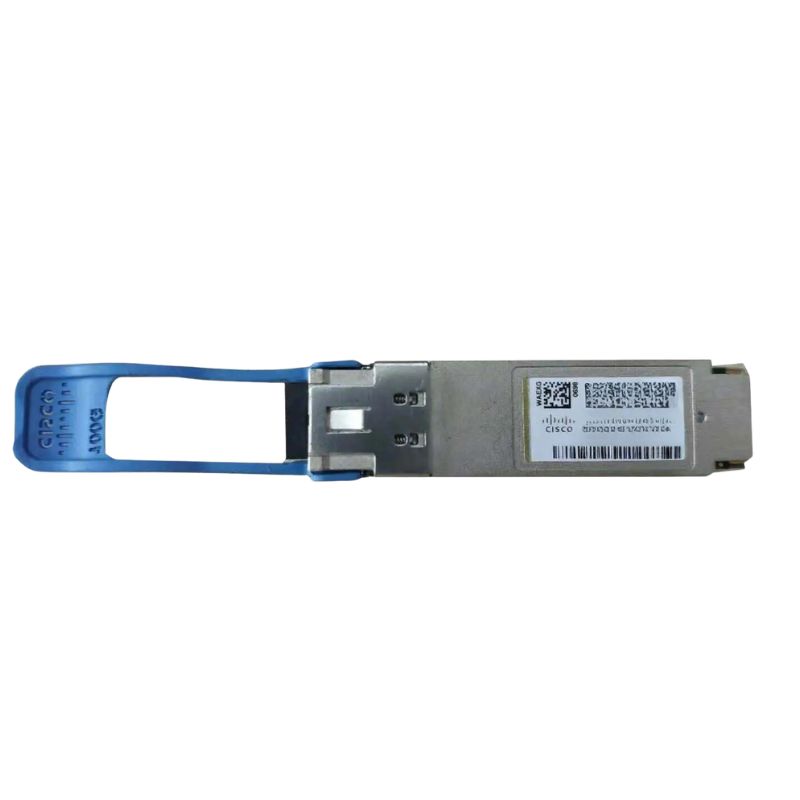


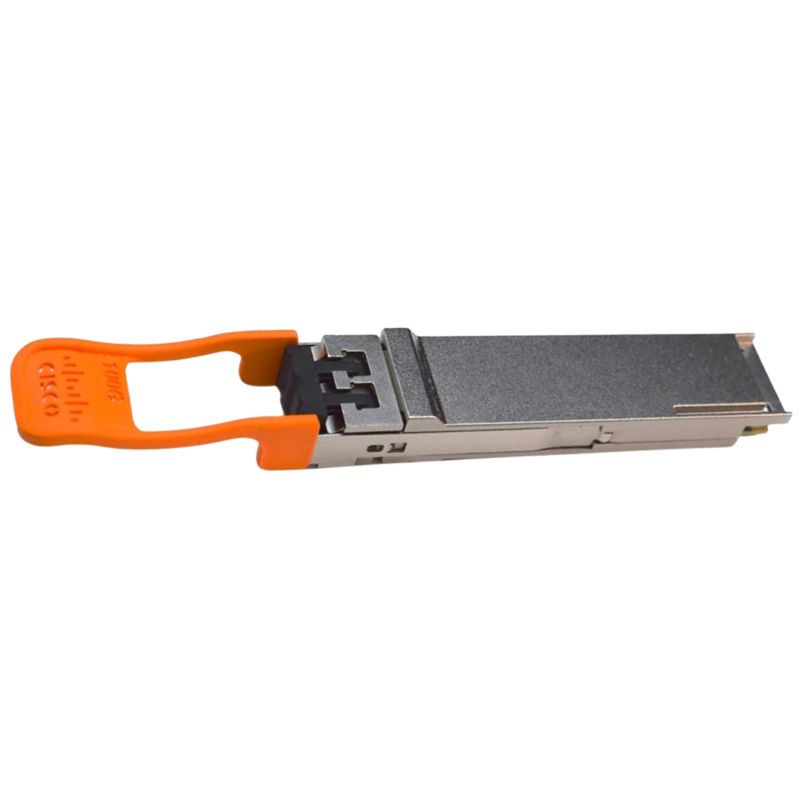
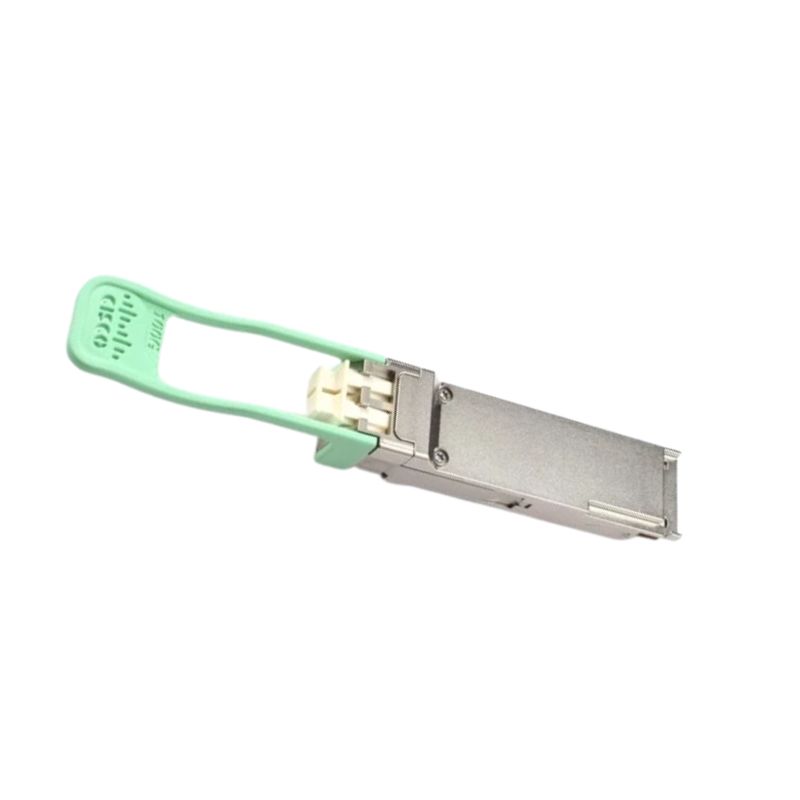
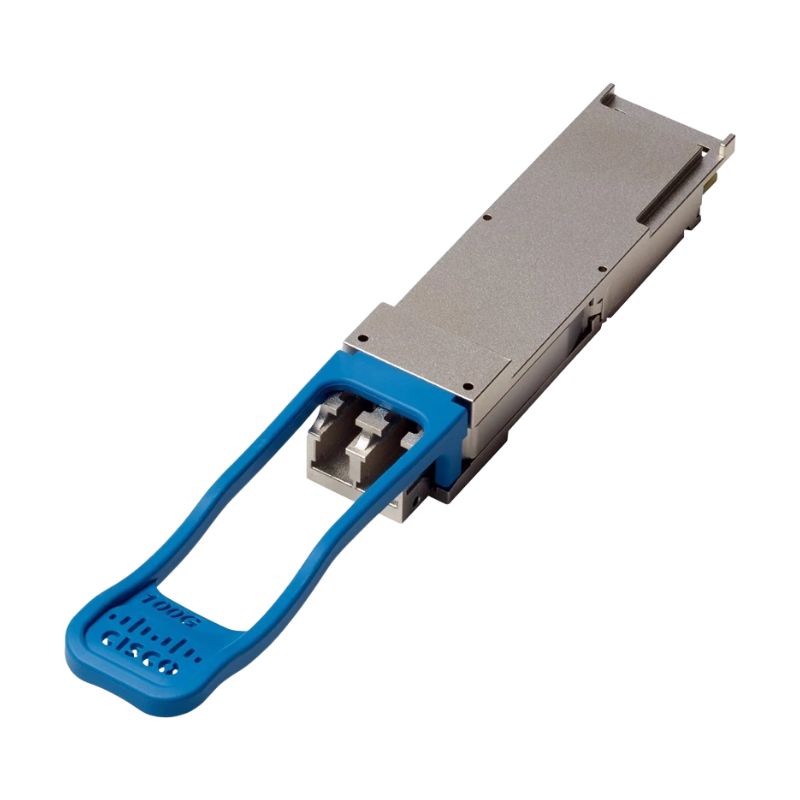
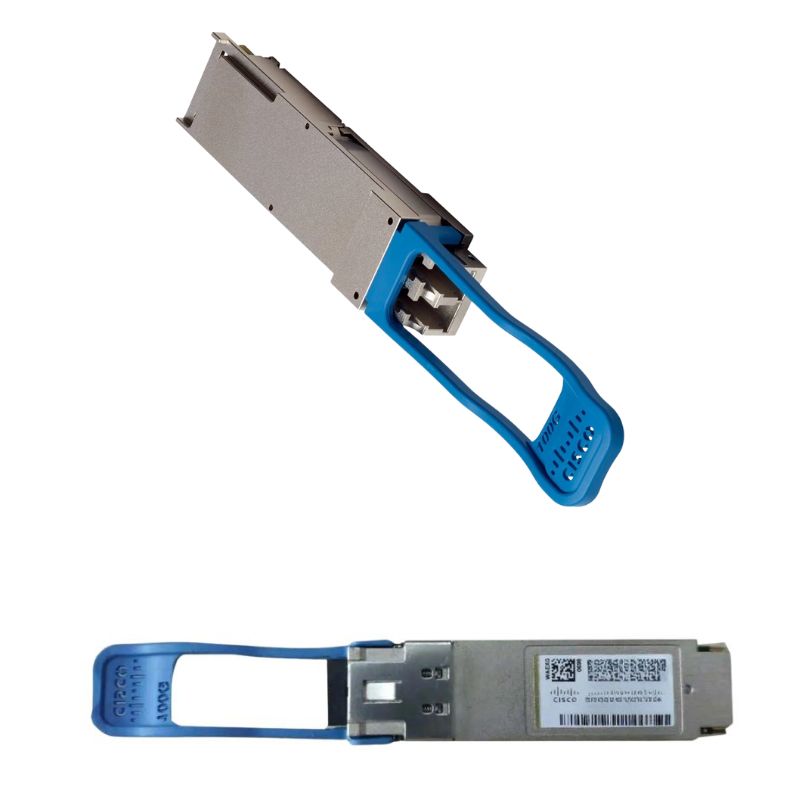
Cisco QDD-8X100G-FR 800GBPS 2 Km Maximum Distance 8 X Expansion Slots Optical Transceiver Module. Excellent Refurbished with 1-Year Replacement Warranty
The Cisco QDD-8X100G-FR module is an advanced 800Gbps optical transceiver engineered for contemporary data infrastructure requiring powerful throughput, dependable transmission stability, and adaptable connectivity. Designed to support 8x100GBASE-FR channels, this device enables high-bandwidth interconnects across parallel single-mode fiber (SMF) networks up to 2 kilometers. With dual MPO-12/APC interfaces, it delivers scalable optical pathways suitable for cloud computing environments, hyperscale data centers, and enterprise-grade network upgrades.
Eight 100G lanes allow operators to bond multiple channels or allocate them independently, supporting flexibility across different architectures and service requirements.
Its design enables compatibility with equipment supporting multiple downstream optical lanes, enhancing modular scaling and streamlined routing across optical domains.
The realm of high-bandwidth parallel optics continually evolves to meet the expanding demands of hyperscale data centers, carrier aggregation infrastructures, and multilayered cloud fabrics. Within this environment, the Cisco QDD-8X100G-FR QSFP-DD transceiver category stands as an essential component for architectures requiring dependable 100GBASE-FR and 100GBASE-FR1 optical performance across extended short-reach single-mode fiber. Featuring dual MPO-12/APC connectors and an optical layout optimized for parallel SMF transmission, these QSFP-DD modules supply network designers with a technologically mature and highly compatible solution for multichannel data distribution. The category encompasses transceivers engineered to maintain consistent 1310 nm wavelength performance while supporting long-distance point-to-point connectivity up to two kilometers, addressing the challenges of scale, throughput, and signal accuracy in next-generation environments.
This optical transceiver class incorporates parallel SMF signaling, enabling up to eight separate 100G lanes that provide an aggregate throughput reaching 800G, depending on the chassis backplane and platform configuration. The Cisco QDD-8X100G-FR design demonstrates exceptional optical stability across each lane, maintaining low latency transmission even when integrated into high-density switches, routers, and border aggregation platforms. Because the QSFP-DD form factor is backward-aware and structurally enhanced compared with earlier QSFP generations, the modules contribute to minimizing rack congestion and improving thermal distribution within crowded systems. These attributes are especially relevant in facilities that operate massive clusters using repetitive top-of-rack, leaf, and spine interconnections.
The category relies upon 1310 nm optical signaling, a globally recognized wavelength standard for short and medium-range single-mode fiber applications. This wavelength allows the Cisco QDD-8X100G-FR transceiver to maintain consistent transmission characteristics across multiple fiber strands, supporting robust error correction and dependable optical uniformity. The inherent stability of this wavelength ensures improved performance against chromatic dispersion and modal interference, allowing each individual 100G channel to perform at consistently high levels even as data streams traverse distances up to the two-kilometer maximum reach.
Parallel SMF architecture in this category provides a distinct advantage for organizations that manage vast numbers of devices across distributed data islands. By separating lanes into independent tracks while retaining a unified module design, this transceiver type allows network engineers to scale throughput without diversifying the optical ecosystem. Large-scale platforms that require predictable link budgets and repeatable deployment cycles benefit from the transceiver’s lane-level reliability, which simplifies diagnostics, reduces downtime, and enhances traffic predictability across high-density fabric modules.
Through its refined optical budget and amplification-free operating parameters, the category supports low-latency packet delivery essential for clustered compute activities and transaction-heavy workloads. The balanced modulation scheme ensures integrity even under variable environmental conditions, safeguarding performance during sustained high-throughput operations. Network administrators deploying these modules within multipod, multiregion, or hybrid architectures gain the advantage of predictable energy consumption and stable thermals, which positively influence long-term operational expenses and equipment longevity.
Within the family of Cisco QSFP-DD solutions, the QDD-8X100G-FR category provides eight distinct expansion lanes suitable for modular growth and flexible fabric deployment. The ability to accommodate eight independent 100G interfaces within a single transceiver encourages efficient port utilization. Large edge systems can adopt these modules to expand bandwidth without physically restructuring the chassis or introducing additional high-power switch cards. This scalable design aligns with modern philosophies of modular network growth, where administrators increase optical density only as service demand rises, rather than overbuilding capacity from the outset.
The QSFP-DD mechanical footprint enables the use of these transceivers across Cisco Nexus, Catalyst, and other compatible data center platforms. High-density line cards equipped with QSFP-DD ports can utilize the QDD-8X100G-FR units to establish consistent interconnects between core, aggregation, and access layers. The multi-lane parallel arrangement ensures seamless interaction with optical breakout applications, load-shared distribution frameworks, and multilayer redundancy systems that rely on stable optical lane mapping. These characteristics reinforce the transceiver’s role in mission-critical infrastructures.
The thermal envelope of the Cisco QDD-8X100G-FR category is engineered to support continuous heavy throughput without compromising system stability. The optimized electrical interface ensures clean signal transitions between the host system and the optical lanes. These features reduce the risk of packet disruption, electrical noise propagation, and heat-related degradation—issues common in installations that operate at the edge of thermal thresholds. The QSFP-DD format also uses robust shielding and precise connector alignment to maintain electrical stability across the module’s extended lifecycle.
Dual MPO-12/APC connectors provide reliable mating alignment, ensuring that each optical lane receives a clean transmission pathway. The angled physical contact design minimizes return loss, protecting sensitive optical components from light reflections that can cause signal distortion. The durability of this connector arrangement contributes to the broader category’s reputation for longevity, allowing the module to function consistently even in facilities where continuous reconfiguration or hardware refresh cycles are routine.
The category integrates seamlessly into a variety of networking ecosystems spanning enterprise computing, hyperconverged cloud services, telecommunications backbones, and multi-layered data center fabrics. The modules promote efficient workload distribution, high-speed peer-to-peer communication, and stable multilane application streaming across parallel fiber channels. Operators managing AI clusters, blockchain processing farms, virtualization stacks, and containerized workloads adopt these modules to reinforce bandwidth headroom and ensure uninterrupted traffic paths.
The Cisco QDD-8X100G-FR transceiver category excels in environments that deploy spine-and-leaf architectures optimized for low-hop east–west communication. As organizations expand their footprint to accommodate advanced compute nodes and memory-intense services, the need for consistent parallel optical throughput becomes essential. This category meets these needs by offering a highly structured, multi-lane transport mechanism capable of supporting large-scale virtualization, distributed memory clusters, and software-defined networking frameworks.
Cloud providers depend on high-reliability optical modules to sustain traffic between compute pools, storage arrays, and regional hubs. The multi-lane separation of the Cisco QDD-8X100G-FR family reduces the risks associated with microbursts, congestion buildup, and asymmetric traffic patterns. The two-kilometer reach supports connectivity across campus-scale data center footprints, enabling facilities to adopt flexible equipment placement strategies without compromising optical stability.
High-performance compute workloads generate massive inter-node communication requirements that must remain predictable and loss-resistant. The parallel fiber architecture of this transceiver category ensures that training clusters, inference nodes, and simulation workloads operate without bottlenecks, especially during synchronized data transfers. The modules’ consistent wavelength handling and low-jitter characteristics provide the reliable performance required for next-generation AI computing environments.
The category’s interoperability with both 100GBASE-FR and 100GBASE-FR1 standards ensures structural alignment with a wide range of networking hardware. System designers gain the flexibility to deploy these modules alongside various host platforms, optical distribution frames, and structured cable pathways. Because the modules follow universally recognized parallel fiber guidelines, cross-compatibility remains consistent even when deployed in mixed-vendor data centers that rely heavily on open networking principles.
The two-kilometer maximum distance rating positions this transceiver category as a valuable tool for inter-building connectivity, multi-floor data center links, and campus aggregation scenarios. Administrators deploying these modules benefit from predictable attenuation behavior and consistent dispersion performance due to the standardized wavelength and single-mode operation. This reach enables organizations to segment data center clusters into multiple zones without requiring active optical amplification or repeater infrastructure.
The optical reliability associated with the Cisco QDD-8X100G-FR ensures uninterrupted service within redundant link groups and active-active backbone configurations. The modules maintain stable performance even during path re-routing, failover events, or topology shifts initiated by software-defined control systems. This reliability ensures that critical services continue operating without disruption, even under escalating load or complex traffic adjustments.
Parallel lane organization ensures that bursts are absorbed evenly across channels, maintaining steady throughput without amplifying jitter or introducing packet loss. This behavior is essential for data center environments that experience fluctuating traffic surges from backup operations, logging sequences, or microservice deployment waves. The result is a transceiver category that provides predictable and resilient performance during both standard operations and peak utilization.
Because the Cisco QDD-8X100G-FR supports up to eight expansion lanes, organizations can implement incremental growth strategies by activating channels according to operational need. This modular approach prevents overspending and reduces network complexity while ensuring that future performance requirements can be met without extensive re-engineering. As digital transformation broadens across industries, the flexible nature of this category becomes increasingly valuable for maintaining service continuity.
The QSFP-DD format allows data centers to increase port density without expanding equipment footprint. This architectural efficiency reduces the total amount of cabling, power consumption, and hardware needed to support large-scale connectivity. As facilities transition toward higher-bandwidth fabrics, the ability to maintain dense, efficient optical layouts ensures that physical infrastructure constraints do not impede future growth.


 Contact Us
 Information
 Catalog
 Solid State Drives (SSD)
 Network Switches
 Hard Disk Drives
 HBA & Controllers
 PC & Servers
 PC & Server Memory
 CPU & Processors
 Network Routers
 Power Supplies
 Tape Drives & Libraries
 Network Devices
 Computer & Network Cables