(7% discount is applied at checkout)
Cart is empty
Your go-to destination for cutting-edge server products
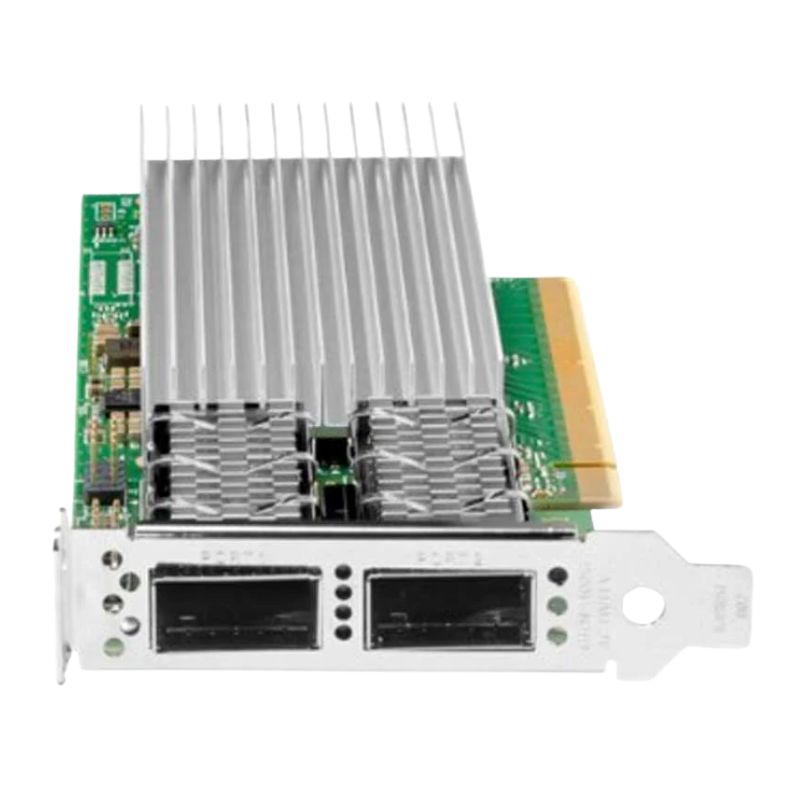


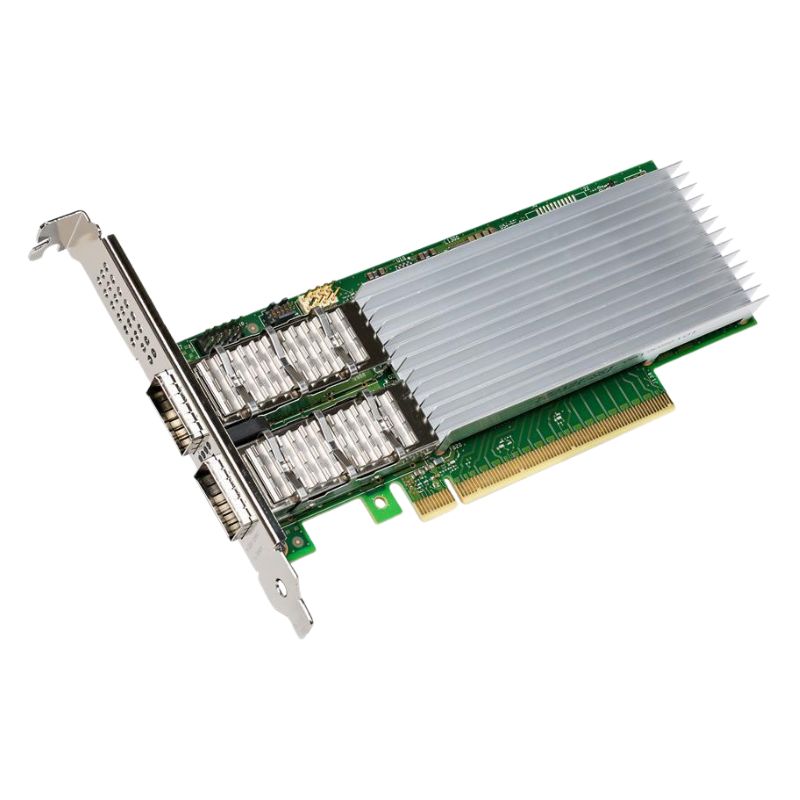
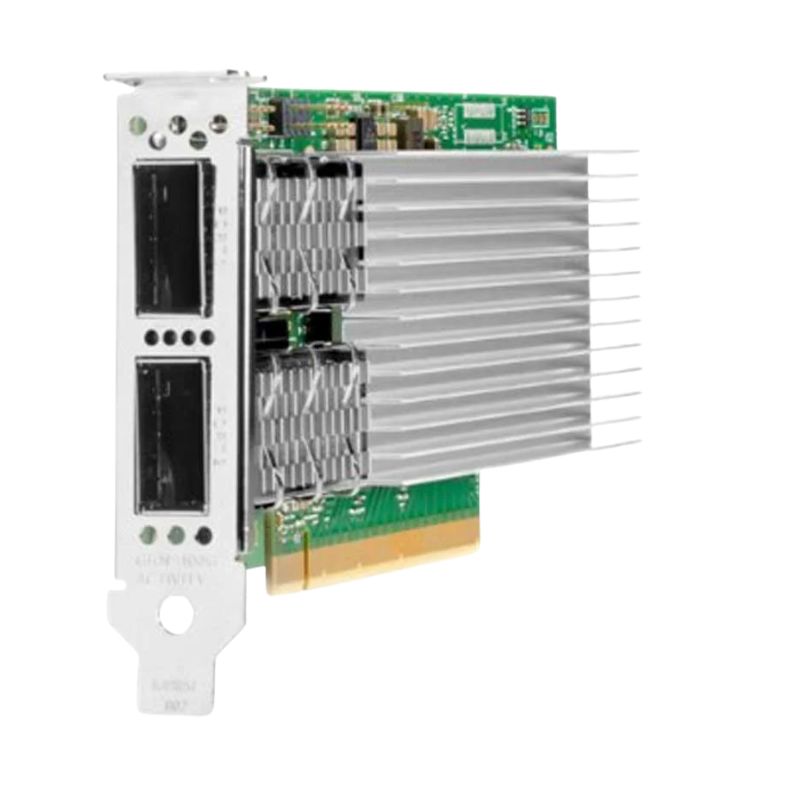
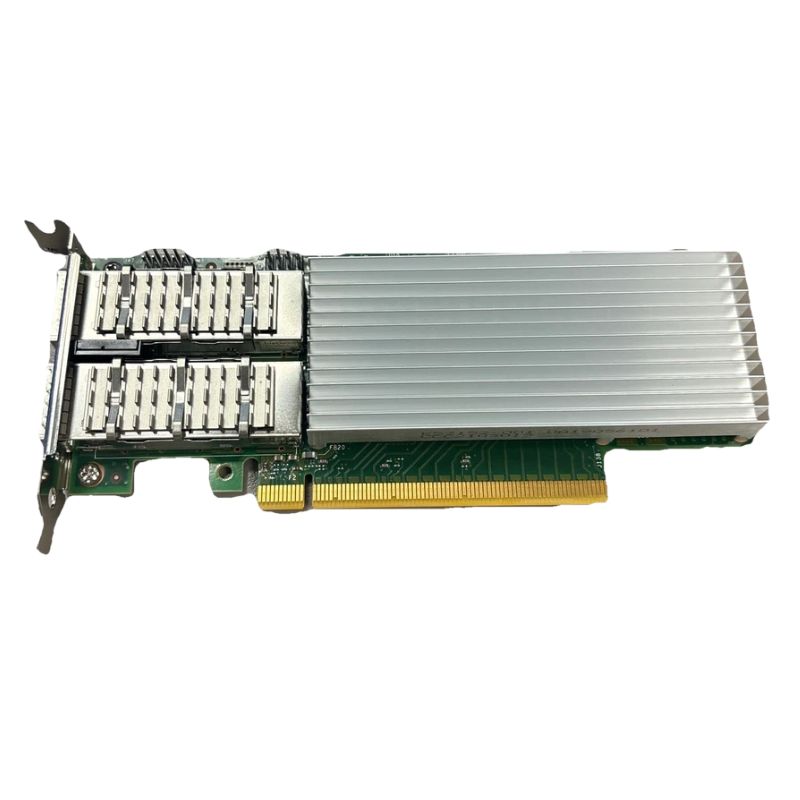
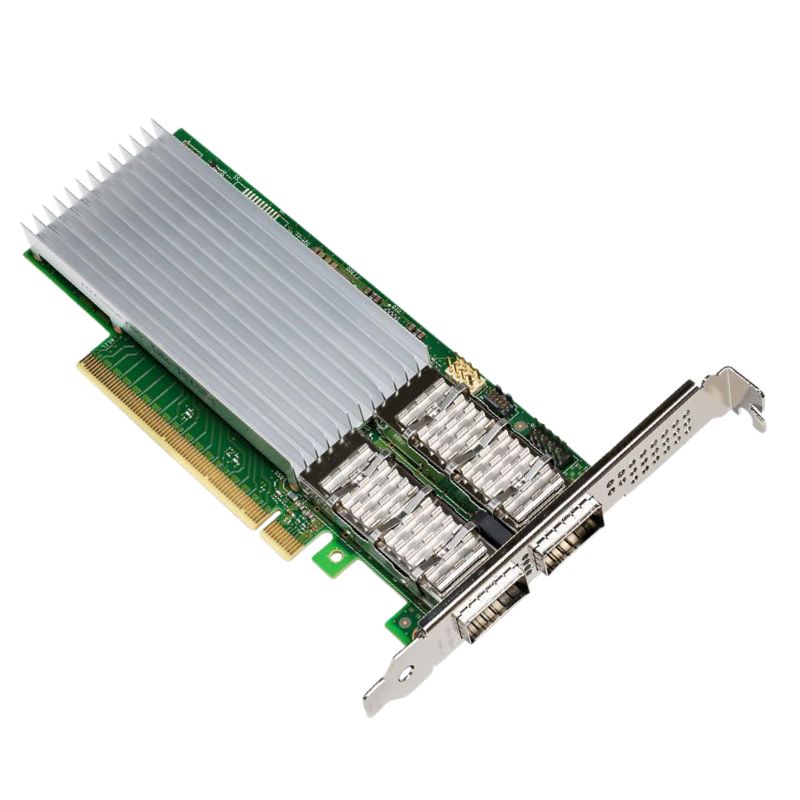
Cisco UCSC-P-I8D100GF Intel 2 Ports QSFP28 100GBPS PCI Express 4.0 x16 Network Adapter. Excellent Refurbished with 1 Year Replacement Warranty
The Cisco UCSC-P-I8D100GF is a robust network interface card designed for high-speed data transfer. With a dual-port configuration, this PCI Express 4.0 x16 card ensures ultra-fast 100 Gbit/s connectivity, making it ideal for enterprise-grade servers and data centers.
The Cisco UCSC-P-I8D100GF E810cqda2 2x100 Gbe QSFP28 PCIe network interface card represents a high-performance category of server networking adapters designed for data center-class throughput, low latency, and enterprise-grade reliability. This category centers on 100 Gigabit Ethernet connectivity using QSFP28 optical interfaces and PCI Express 4.0 x16 host connectivity, powered by the Intel E810 series silicon. The category addresses modern infrastructure requirements where demanding applications, virtualized environments, AI/ML workloads, storage fabrics, and high-frequency trading platforms require deterministic performance and advanced offload capabilities. Products in this segment are engineered to bring multi-tenant cloud data centers, hyperconverged infrastructures, and high-performance computing clusters the necessary bandwidth and efficiency to scale without compromise.
At the heart of this card family lies the Intel E810-cqda2 controller, a purpose-built Data Plane Development Kit-friendly silicon that supports high packet rates, hardware offloads, and flexible virtualization features. The host interface is a PCI Express 4.0 x16 link which doubles the per-lane throughput of PCIe 3.0 and provides the headroom to fully utilize both 100 Gbps ports concurrently while also enabling future acceleration functions. The QSFP28 ports provide optical fiber connectivity for multimode or single-mode transceivers, enabling link distances from short-reach server interconnects to long-haul optical links across campus and metro data centers. The combination of modern host connectivity, a powerful network ASIC, and standardized QSFP28 optics positions this category to meet the throughput and latency demands of next-generation workloads.
Flavors of cards in this group are tuned for line-rate performance at 100 Gbit/s on each port, delivering sustained throughput for both small and large packets. These adapters are designed to handle millions of packets per second with minimal per-packet overhead, reducing CPU load and improving application responsiveness. Advanced flow steering and receive side scaling are implemented to spread traffic processing across multiple CPU cores, ensuring throughput scales as compute resources are added. Low latency is achieved through optimized hardware pathing and precise flow scheduling, important for latency-sensitive applications such as distributed databases, real-time analytics, and financial services.
While the card form factor adheres to common full-height, double-width PCIe standards, system designers and purchasers must validate mechanical clearance, thermal headroom, and available PCIe lanes in the target server chassis. The PCI Express 4.0 x16 requirement implies that older servers with only PCIe 3.0 or reduced lane counts will still operate but may not realize full theoretical bandwidth. Compatibility with Cisco UCS servers and Cisco-branded systems is typical for this SKU, but the underlying Intel silicon and industry-standard electrical and logical interfaces allow interoperability across a wide range of OEM servers. For blade and modular platforms, compatibility matrices should be checked because backplane lane mapping and BIOS-level passthrough constraints can impact feature availability.
The QSFP28 ports require compatible optical transceivers or cable assemblies. Choices range from short-range multimode transceivers and Active Optical Cables for top-of-rack and short inter-rack links, to single-mode pluggables for longer distance aggregation and campus connections. When planning connectivity, it is important to match the transceiver type to the switch, patch panel, and fiber plant to avoid transceiver mismatch or link negotiation failures. Proper selection of transceivers influences power consumption, heat dissipation, and link budget, all of which affect the card's operational envelope. Some deployments prefer direct attach copper for short distances to minimize cost and power, while fiber is selected for its lower attenuation over longer runs and immunity to electromagnetic interference in dense environments.
Security considerations for this category include both data-plane and management-plane protections. Hardware-enforced access control lists and packet filtering reduce the attack surface by blocking unwanted traffic in early processing stages. The cards support secure boot and signed firmware to prevent unauthorized code execution in the device. In virtualized or multi-tenant contexts, SR-IOV provides hardware-backed isolation between guest domains, while VLAN offloads and protocol filtering allow network administrators to enforce segmentation policies directly at the NIC layer. TLS termination or IPsec acceleration is generally handled by higher-layer devices or dedicated accelerators, but the NIC's ability to perform checksum and segmentation offloads can indirectly improve the performance of encrypted traffic flows by reducing CPU demand.
The 2x100 Gbe QSFP28 NIC category is frequently deployed in leaf and spine architectures where high north-south and east-west traffic flows are expected. In hyperconverged infrastructures, these NICs serve as the high-bandwidth fabric for converged compute and storage traffic. Large-scale virtualization clusters use the cards to supply multiple 25/50/100 Gbps uplinks aggregated through bonding or virtual switch fabrics. AI and machine learning clusters rely on 100 Gbps fabrics to accelerate distributed training across GPU nodes and to feed high-throughput datasets to accelerators. Storage environments, particularly those leveraging NVMe over Fabrics, exploit the low latency and high throughput characteristics to achieve near-local storage performance across the network fabric.
Optimizing performance requires a combination of hardware configuration, driver tuning, and OS-level adjustments. Administrators should align receive queue counts to the number of server CPU cores and use RSS or RPS to ensure balanced processing. Interrupt moderation settings and adaptive coalescing should be tuned to achieve the desired trade-off between latency and CPU utilization. When deploying virtualized workloads, it is recommended to isolate CPU cores for networking tasks and use huge pages where appropriate to reduce TLB pressure. For storage and RDMA traffic, proper MTU selection helps to reduce protocol overhead; jumbo frames can increase throughput for large sequential transfers but must be end-to-end enabled across switches and routers. Continuous performance monitoring will detect anomalies and allow incremental tuning rather than broad changes that could inadvertently disrupt service quality.
Although the SKU is Cisco-branded, the underlying Intel E810 architecture ensures wide interoperability with major switch vendors and orchestration stacks. Within the Cisco ecosystem, these NICs integrate smoothly with Nexus and UCS fabric interconnects, enabling features such as Data Center Network Manager visibility and Cisco-specific offloads when supported. Third-party orchestration and SDN controllers can manage instance-level network policies through standard APIs and common drivers. Interoperability testing remains a recommended step for mixed-vendor environments, especially when leveraging advanced features like RDMA or vendor-specific acceleration.


 Contact Us
 Information
 Catalog
 Solid State Drives (SSD)
 Network Switches
 Hard Disk Drives
 HBA & Controllers
 PC & Servers
 PC & Server Memory
 CPU & Processors
 Network Routers
 Power Supplies
 Tape Drives & Libraries
 Network Devices
 Computer & Network Cables