(7% discount is applied at checkout)
Cart is empty
Your go-to destination for cutting-edge server products
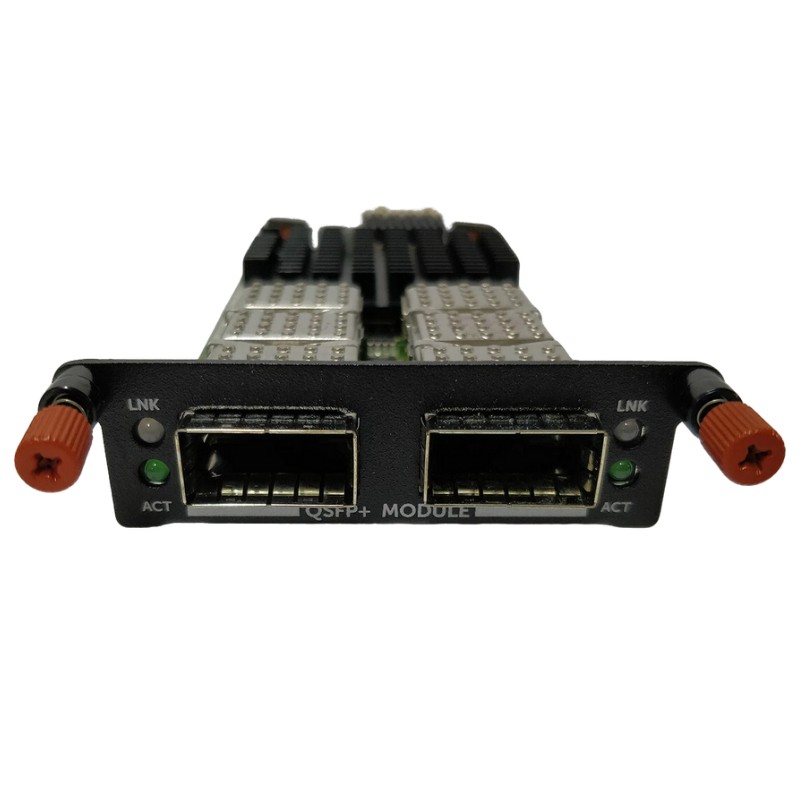


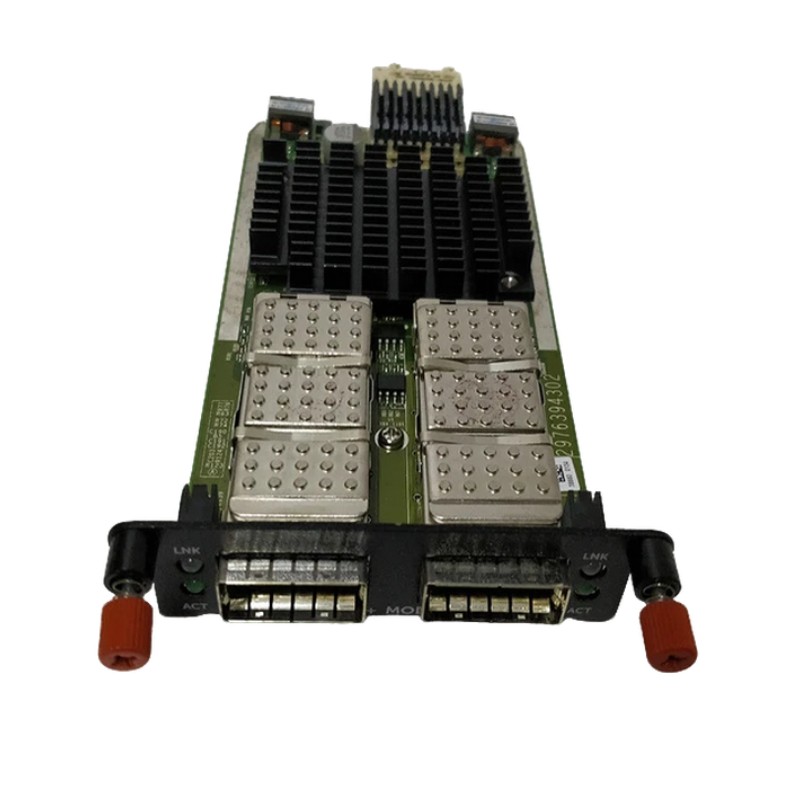
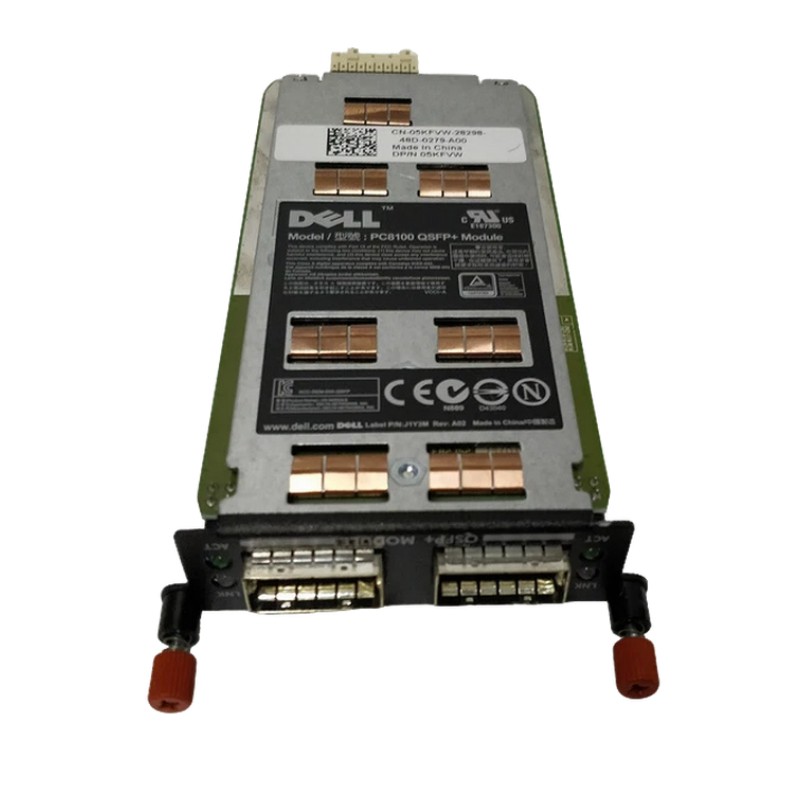
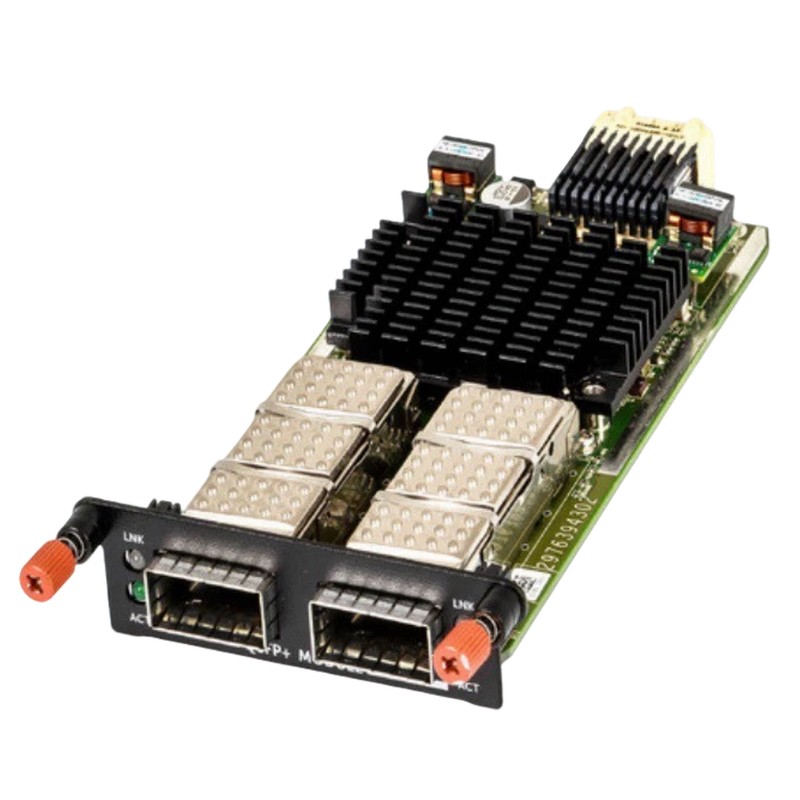
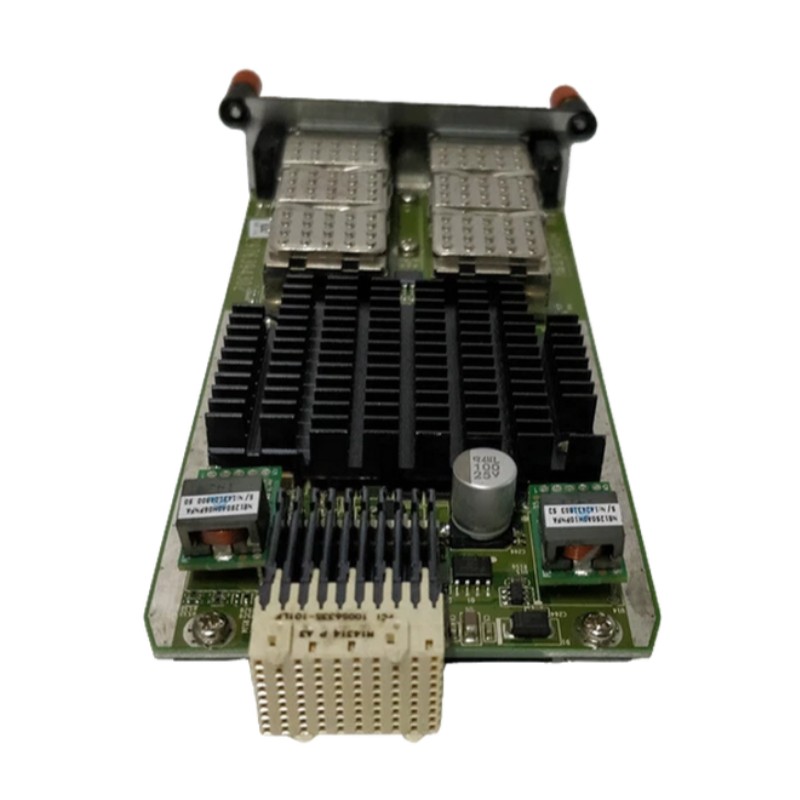
Dell 409-BBCP Powerconnect Stacking Expansion Module 40 Gigabit QSFP. New Sealed in Box (NIB) with 1 Year Warranty
| SKU/MPN | Warranty | Price | Condition | You save |
|---|---|---|---|---|
| 409-BBCP | 1 Year Warranty | $234.00 | New Sealed in Box (NIB) | You save: $81.90 (26%) |
| 409-BBCP | 1 Year Warranty | $75.00 | Excellent Refurbished | You save: $26.25 (26%) |
The Dell 409-BBCP PowerConnect Stacking Expansion Module is a high-performance networking accessory designed to enhance switch scalability, simplify network management, and deliver reliable high-bandwidth connectivity. Engineered for Dell PowerConnect networking environments, this expansion module provides 40 Gigabit QSFP stacking capabilities that allow multiple switches to operate as a unified system.
By enabling high-speed inter-switch communication, the Dell 409-BBCP module helps organizations create efficient, resilient, and scalable network infrastructures suitable for enterprise data centers, campus networks, and growing business environments.
The Dell 409-BBCP PowerConnect Stacking Expansion Module 40 Gigabit QSFP is a high-performance networking component designed to enhance switch scalability, interconnectivity, and overall data throughput within enterprise-grade network infrastructures. Engineered to support advanced stacking capabilities, this module enables multiple switches to operate as a single logical unit, significantly improving manageability and network efficiency in both small and large-scale IT environments. Developed within the Dell networking ecosystem by this stacking module plays a critical role in building resilient, high-bandwidth network topologies for modern businesses and data centers.
At its core, the Dell 409-BBCP module is designed to provide ultra-fast stacking connectivity between compatible Dell PowerConnect switches. With support for 40 Gigabit QSFP interfaces, the module enables high-speed inter-switch communication that is essential for low-latency networking environments. This functionality allows multiple physical switches to be interconnected, forming a unified switching system that behaves as a single management entity. Such an architecture simplifies configuration, monitoring, and maintenance while increasing overall network bandwidth capacity.
The integration of QSFP-based 40 Gigabit technology ensures that data transfer between stacked switches occurs at extremely high speeds, reducing bottlenecks and enhancing performance for data-heavy applications such as virtualization, cloud computing, and enterprise storage systems.
The architecture of the Dell 409-BBCP PowerConnect stacking module is built around high-density data transmission and redundancy. The QSFP (Quad Small Form-Factor Pluggable) interface is capable of aggregating multiple lanes of data into a single high-speed channel, making it ideal for stacking configurations where throughput and reliability are critical. This design ensures that network switches connected via the module can share forwarding tables, routing information, and configuration settings seamlessly.
The interconnect fabric created by the stacking module operates as a dedicated high-speed backbone between switches. This backbone ensures that internal switch-to-switch communication does not interfere with external network traffic, preserving bandwidth for end-user applications. The use of 40 Gigabit QSFP links also allows for minimal latency, which is crucial in environments such as financial trading systems, real-time analytics platforms, and cloud infrastructure deployments.
One of the essential features of the Dell 409-BBCP module is its support for redundant stacking pathways. In a multi-switch stack, redundancy ensures that if one physical link fails, traffic is automatically rerouted through alternate paths without disrupting network operations. This failover capability significantly enhances network resilience and uptime, making it suitable for mission-critical applications where downtime is unacceptable.
The use of stacking technology through the Dell 409-BBCP module provides numerous advantages for enterprise networking environments. By consolidating multiple switches into a single logical unit, organizations can reduce administrative overhead and simplify network management. Instead of managing multiple devices individually, IT administrators can configure, monitor, and troubleshoot the entire stack as a unified system.
Scalability is a fundamental requirement in modern IT infrastructure. The Dell 409-BBCP stacking module enables seamless expansion of network capacity by allowing additional switches to be added to an existing stack. This modular approach eliminates the need for complete network redesigns when scaling operations, thereby reducing both cost and complexity.
With stacking enabled through the 40 Gigabit QSFP module, network administrators benefit from centralized management capabilities. A single control plane governs all stacked switches, ensuring uniform configuration policies across the entire network. This reduces configuration errors, improves consistency, and streamlines firmware updates and security policy deployment.
Performance optimization is another key benefit of the Dell 409-BBCP module. By enabling high-speed interconnects between switches, the module reduces congestion and ensures efficient traffic distribution. This is particularly beneficial in environments with heavy east-west traffic, such as virtualization clusters and distributed application architectures.
The Dell 409-BBCP PowerConnect Stacking Expansion Module is engineered for enterprise-grade performance, supporting 40 Gigabit per second QSFP links that facilitate high-throughput stacking configurations. The module is designed to integrate seamlessly with compatible Dell PowerConnect switch series, ensuring full interoperability within the Dell networking ecosystem.
QSFP technology allows multiple data lanes to be combined into a single optical or electrical interface. In the context of the Dell 409-BBCP module, this enables extremely high-speed stacking connections that are both compact and efficient. The use of QSFP also ensures compatibility with a range of transceivers and cabling options, depending on deployment requirements.
Latency reduction is a critical aspect of modern networking. The stacking module minimizes delay between switches by providing direct high-speed pathways. This ensures that data packets are transmitted with minimal processing overhead, resulting in faster response times for applications and services dependent on real-time communication.
Despite its high performance capabilities, the Dell 409-BBCP module is designed with energy efficiency in mind. The optimized architecture reduces power consumption while maintaining high throughput levels. Additionally, the module is engineered to operate within the thermal constraints of PowerConnect switches, ensuring stable performance even under heavy network loads.
The versatility of the Dell 409-BBCP stacking module makes it suitable for a wide range of enterprise and data center applications. Its ability to create unified switch systems with high-speed interconnects allows it to support diverse networking scenarios.
In data centers, the demand for high bandwidth and low latency connectivity is extremely high. The Dell 409-BBCP module enables efficient stacking of top-of-rack and aggregation switches, allowing for simplified management and improved traffic distribution across server clusters and storage systems.
For enterprise campus environments, the module provides a scalable solution for connecting multiple access layer switches. This ensures consistent performance across different departments, floors, or buildings while maintaining centralized control over network policies.
Virtualized environments require fast and reliable network backbones to handle dynamic workloads. The stacking capabilities provided by the Dell 409-BBCP module allow virtual machine traffic to move efficiently across physical hosts, supporting load balancing and high availability configurations.
Reliability is a cornerstone of enterprise networking, and the Dell 409-BBCP PowerConnect Stacking Expansion Module contributes significantly to fault-tolerant architectures. By enabling redundant stacking connections and synchronized switch operation, the module ensures continuous network availability even in the event of hardware or link failures.
In the event of a link failure within the stacking ring, the system automatically recalculates optimal data paths and restores connectivity without manual intervention. This automated recovery process reduces downtime and ensures uninterrupted service delivery.
The stacking system distributes switching intelligence across all connected devices, preventing a single point of failure. This distributed architecture enhances overall network robustness and ensures that traffic continues to flow even under adverse conditions.
When deploying the Dell 409-BBCP stacking module, IT professionals must consider factors such as switch compatibility, network topology design, and bandwidth requirements. Proper planning ensures that the stacking architecture delivers optimal performance and scalability.
The module is designed specifically for compatibility with select Dell PowerConnect switches. Ensuring correct hardware pairing is essential for achieving full stacking functionality and maximizing performance benefits.
Network architects often design stacking topologies in ring or mesh configurations to optimize redundancy and performance. The Dell 409-BBCP module supports these advanced topologies, allowing flexible deployment strategies tailored to specific organizational needs.
In high-density networking environments, performance optimization is critical to maintaining service quality. The Dell 409-BBCP module enhances performance by reducing inter-switch latency and increasing available bandwidth for critical applications.
The stacking architecture enables intelligent traffic segmentation across multiple switches, ensuring that network loads are evenly distributed. This prevents congestion and improves overall throughput efficiency.
Applications such as video streaming, large-scale data processing, and cloud computing benefit significantly from the high-speed capabilities of the 40 Gigabit QSFP stacking module. The increased bandwidth ensures smooth and uninterrupted data flow even under heavy usage conditions.
By consolidating multiple switches into a single logical system, the module reduces operational complexity and simplifies network administration. This leads to lower operational costs and improved IT efficiency across the organization.


 Contact Us
 Information
 Catalog
 Solid State Drives (SSD)
 Network Switches
 Hard Disk Drives
 HBA & Controllers
 PC & Servers
 PC & Server Memory
 CPU & Processors
 Network Routers
 Power Supplies
 Tape Drives & Libraries
 Network Devices
 Computer & Network Cables