(7% discount is applied at checkout)
Cart is empty
Your go-to destination for cutting-edge server products
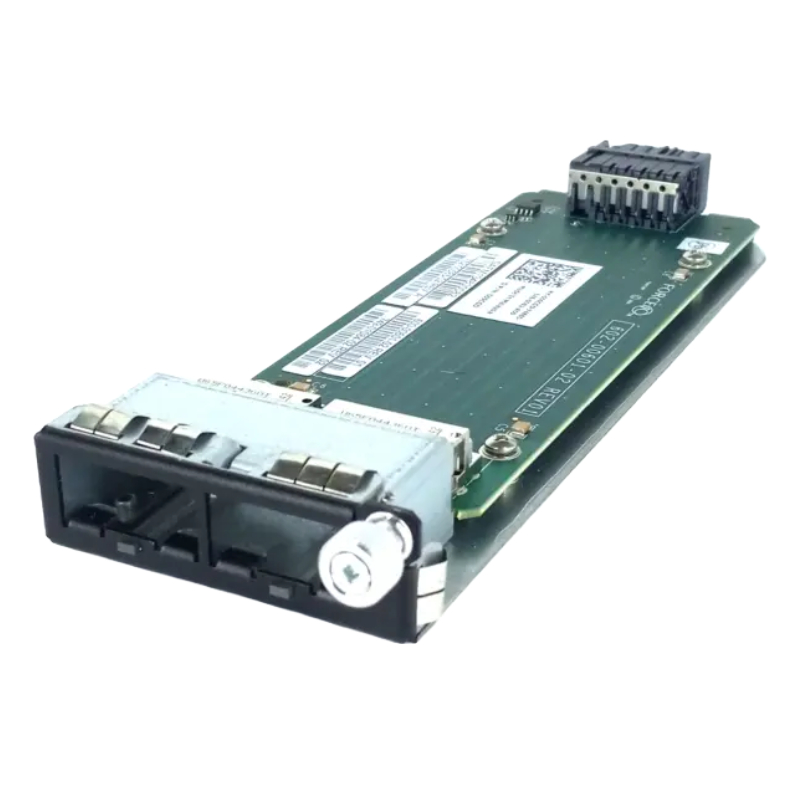


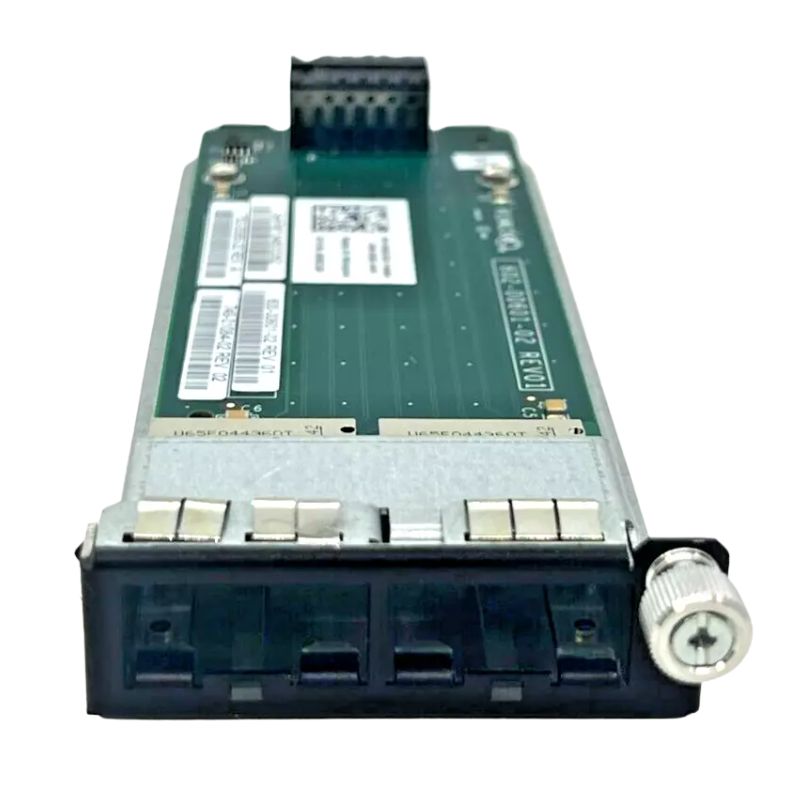
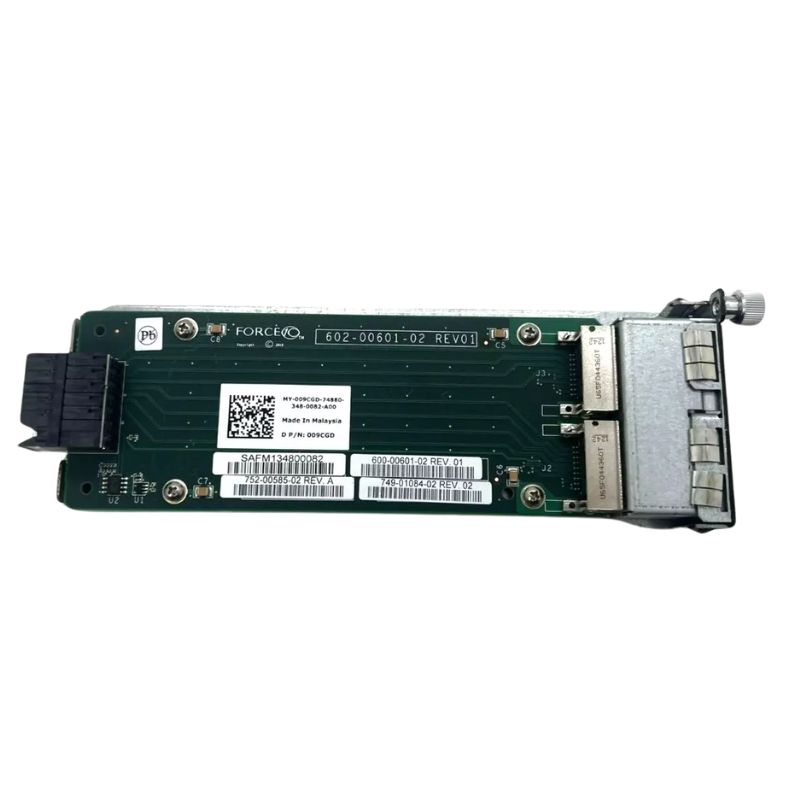
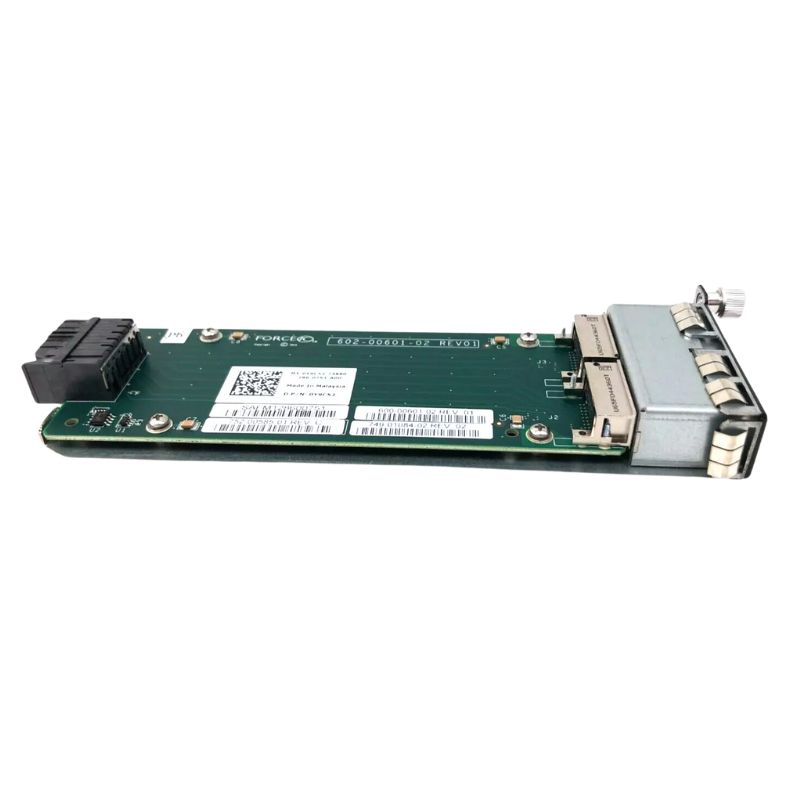
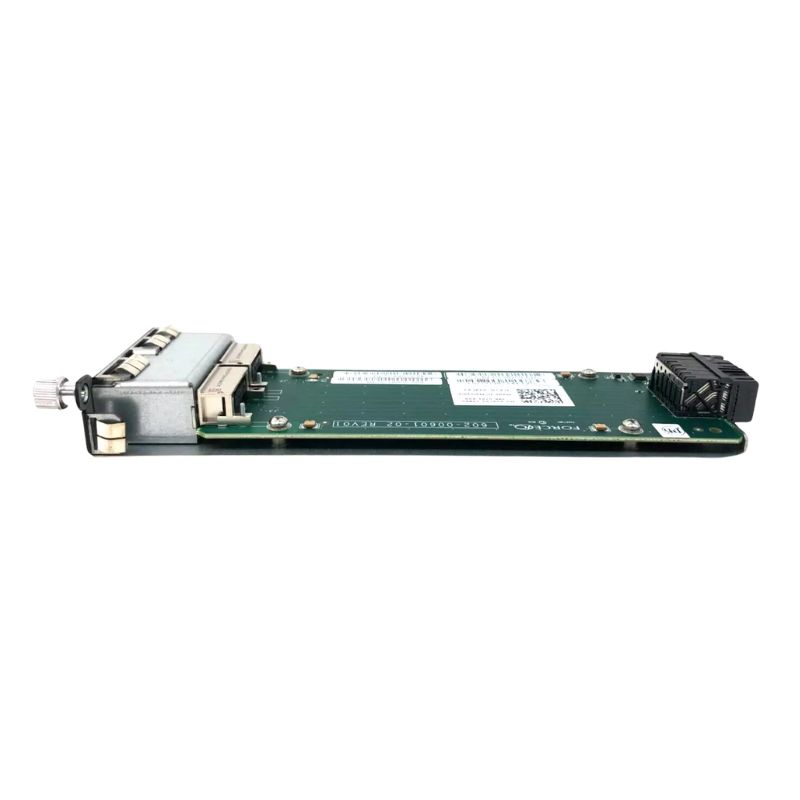
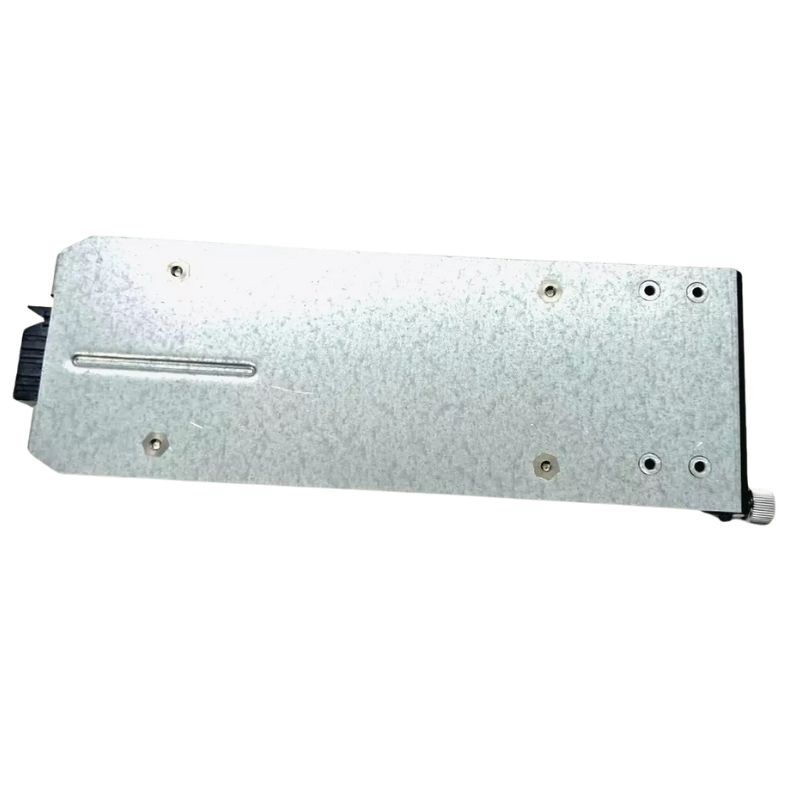
Dell 602-00601-02 Force10 S60 Dual Port 12GB QSFP Stack Module. Excellent Refurbished with 1 year replacement warranty
The 602-00601-02 Dell Force10 S60 QSFP Stack Dual Port 12GB Expansion Module is a specialized networking hardware component designed to extend the capability, scalability, and performance of compatible Dell Force10 S60 series switches. Built for enterprise-grade environments, this expansion module enables high-speed interconnectivity, efficient stacking, and enhanced throughput across data center and aggregation network layers. It is engineered to support demanding workloads that require low latency, high bandwidth aggregation, and reliable redundancy across multiple switch nodes.
In modern network infrastructures, expansion modules like this play a crucial role in ensuring that organizations can scale their switching environments without replacing entire systems. Instead of full hardware replacement, administrators can integrate this QSFP-based module to enhance existing switch performance, particularly in environments where virtualization, cloud computing, and high-volume data transfer are core operational requirements.
The Dell Force10 S60 QSFP Stack Dual Port 12GB Expansion Module is engineered to provide two high-speed QSFP (Quad Small Form-factor Pluggable) ports, each capable of supporting up to 12Gb stacking bandwidth. This allows multiple switches in the S60 series to be interconnected into a unified logical system, simplifying management while improving performance and redundancy.
The design intent behind this module is to provide a modular scaling mechanism for enterprise networks. Instead of relying on standalone switch units, network architects can create stacked configurations that behave as a single logical switch. This dramatically reduces administrative complexity while improving failover resilience and traffic distribution efficiency.
QSFP technology is at the heart of this expansion module’s performance capabilities. Each QSFP port is designed to support high-density, high-bandwidth data transmission, making it suitable for aggregation layers, spine-leaf architectures, and data center interconnects. The use of QSFP interfaces allows for flexible connectivity options using compatible DAC (Direct Attach Copper), fiber optic cables, or breakout configurations depending on network requirements.
With 12GB stacking capability per port, the module ensures that inter-switch communication remains fast and consistent even under heavy traffic loads. This is particularly important in environments where large-scale virtualization platforms, storage replication systems, or distributed applications are deployed.
One of the primary use cases of the 602-00601-02 module is switch stacking. Stacking allows multiple physical switches to operate as a single logical device, which simplifies configuration management and improves operational efficiency. With dual-port stacking support, network administrators can build redundant ring or mesh topologies to eliminate single points of failure.
Stacking architecture enabled by this module provides several advantages including unified control plane management, simplified firmware upgrades, and consistent policy enforcement across all connected switches. It also enables automatic load balancing of traffic across multiple switches, improving overall network utilization.
The dual-port design ensures redundancy in the stacking fabric. If one link fails, the second port can continue to carry traffic, maintaining uninterrupted connectivity between stacked devices. This feature is critical in mission-critical environments such as financial institutions, healthcare systems, and cloud data centers where downtime is unacceptable.
This expansion module is specifically designed for compatibility with Dell Force10 S60 switches. The integration process is seamless, allowing IT administrators to install the module directly into the expansion slot of supported switches without complex configuration changes. Once installed, the switch automatically recognizes the module and enables stacking functionality.
The tight hardware-software integration ensures optimal performance and stability. Dell Force10 operating systems are designed to detect and utilize the module efficiently, enabling advanced networking features such as dynamic routing updates, aggregated link management, and synchronized configuration across stacked units.
Modern data centers demand scalable infrastructure that can grow with organizational needs. The 602-00601-02 expansion module contributes directly to this goal by enabling incremental scaling of switching capacity without major infrastructure overhauls. By adding stacking capability, organizations can increase port density and bandwidth availability while maintaining a unified management structure.
In high-performance environments, such as cloud service providers or large enterprise IT deployments, minimizing latency and maximizing throughput is essential. This module helps achieve these goals by reducing inter-switch communication delays and enabling direct high-speed links between stacked devices.
The dual-port QSFP stacking design provides flexibility in network topology design. Administrators can deploy ring, chain, or mesh stacking configurations depending on redundancy and performance requirements. Each topology has its own benefits in terms of resilience, scalability, and cable management efficiency.
In a ring topology, switches are connected in a circular fashion, allowing traffic to circulate in multiple directions. This ensures that if one link fails, data can still travel in the opposite direction, maintaining network continuity.
Mesh configurations provide maximum redundancy by connecting multiple switches with multiple interlinks. This is often used in mission-critical environments where uptime and fault tolerance are top priorities.
Chain configurations offer a simpler, cost-effective approach to stacking where switches are connected linearly. While less redundant than ring or mesh designs, this topology is often used in smaller deployments or controlled environments.
Scalability is one of the defining characteristics of this expansion module. Organizations can begin with a small number of interconnected switches and gradually expand their network by adding more S60 units as demand increases. This modular approach prevents overinvestment in infrastructure while ensuring that future growth can be accommodated easily. As businesses transition toward cloud-native architectures, scalable switching solutions like this module become essential. They allow IT teams to adapt quickly to changing workloads, user demands, and application requirements without redesigning the entire network.
The 12GB per-port stacking bandwidth ensures that traffic between switches flows efficiently without creating bottlenecks. This is particularly important in environments where east-west traffic (server-to-server communication) dominates. By optimizing internal switch communication, the module enhances overall network responsiveness. Traffic optimization is further improved through intelligent load distribution mechanisms supported by the Force10 operating system. These mechanisms ensure that no single link becomes overloaded while others remain underutilized.
Reliability is a core requirement in enterprise networking hardware. The 602-00601-02 module is built with robust components designed to withstand continuous operation in high-temperature, high-load environments. Its enterprise-grade design ensures long-term stability and minimal maintenance requirements.
Additionally, Dell Force10 hardware undergoes rigorous testing to ensure compliance with industry standards for networking performance, electromagnetic compatibility, and operational resilience. This makes it suitable for deployment in mission-critical infrastructures.
The versatility of the Dell Force10 S60 QSFP Stack Dual Port 12GB Expansion Module allows it to be used across a wide range of industries. In cloud computing environments, it supports scalable server connectivity and efficient data routing. In enterprise IT systems, it simplifies network management while increasing bandwidth availability.
In telecommunications infrastructure, it can be used to support aggregation layers where multiple data streams need to be consolidated efficiently. In educational institutions and research facilities, it provides a cost-effective way to expand network capacity without significant infrastructure redesign.
One of the most important advantages of this module is the simplification of network management. By enabling stacking, administrators can manage multiple physical switches as a single logical device. This reduces configuration overhead and ensures consistent policy enforcement across the entire stack. Firmware updates, configuration changes, and monitoring tasks can all be executed centrally, reducing operational complexity and minimizing the risk of configuration errors.
Investing in modular expansion solutions such as this QSFP stacking module provides long-term value by extending the lifespan of existing switching hardware. Instead of replacing entire systems, organizations can incrementally upgrade capabilities as needed. This approach reduces capital expenditure while ensuring that network infrastructure remains adaptable to future technological advancements and increasing data demands.


 Contact Us
 Information
 Catalog
 Solid State Drives (SSD)
 Network Switches
 Hard Disk Drives
 HBA & Controllers
 PC & Servers
 PC & Server Memory
 CPU & Processors
 Network Routers
 Power Supplies
 Tape Drives & Libraries
 Network Devices
 Computer & Network Cables