(7% discount is applied at checkout)
Cart is empty
Your go-to destination for cutting-edge server products
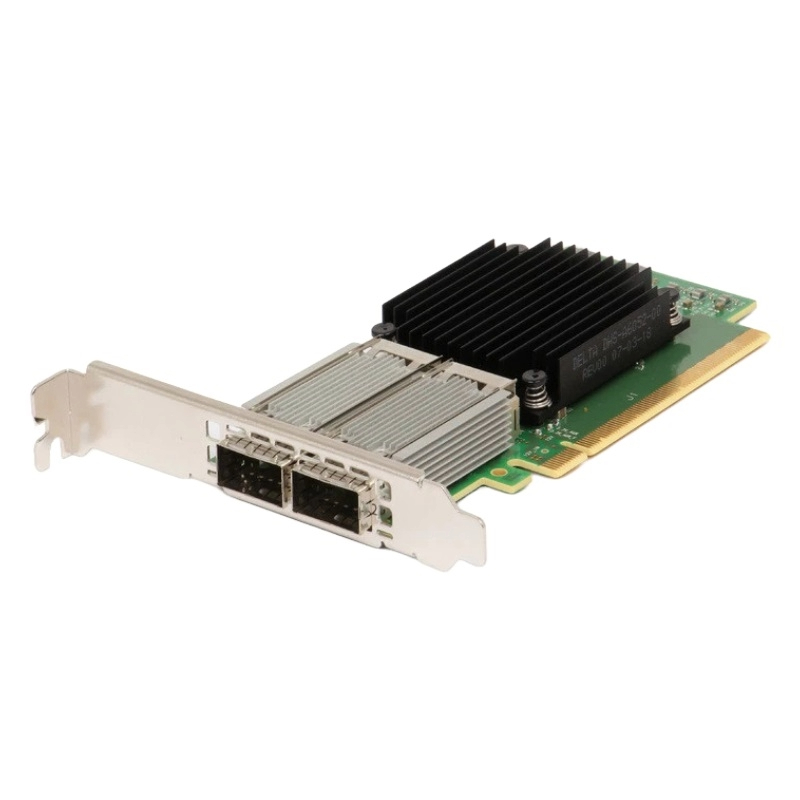


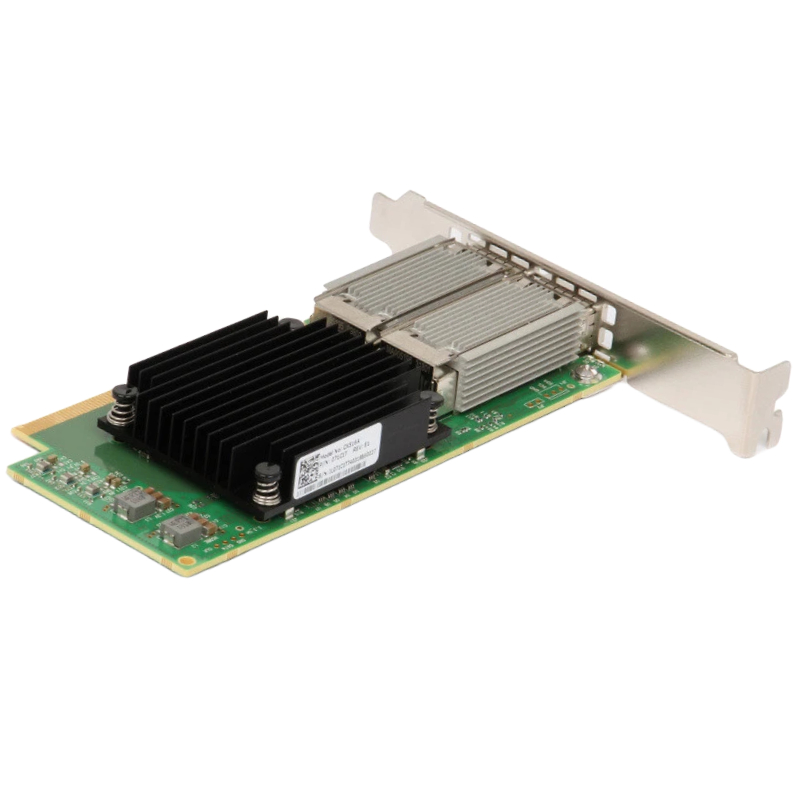
Dell 540-BCIW ConnectX-5 Ex EN 100GbE 2-Ports QSFP28 PCIe 4.0 x16 Network Interface Card. Excellent Refurbished with 1 year replacement warranty
| SKU/MPN | Warranty | Price | Condition | You save |
|---|---|---|---|---|
| 540-BCIW | 1 Year Warranty | $455.00 | Excellent Refurbished | You save: $159.25 (26%) |
| 540-BCIW | 1 Year Warranty | $594.00 | New Sealed in Box (NIB) | You save: $207.90 (26%) |
The Dell 540-BCIW ConnectX-5 Ex EN Network Interface Card is a high-performance enterprise networking solution designed to deliver ultra-low latency, massive bandwidth, and advanced data center connectivity. Engineered for next-generation workloads, this 100GbE dual-port NIC provides exceptional throughput, making it ideal for cloud computing, virtualization, storage networking, high-performance computing (HPC), and large-scale enterprise infrastructures.
The Dell 540-BCIW ConnectX-5 Ex EN 100GbE 2-Port QSFP28 PCIe 4.0 x16 Network Interface Card represents a high-performance networking solution engineered for modern enterprise data centers, cloud infrastructures, and high-performance computing environments. Built on advanced Ethernet architecture, this network adapter is designed to deliver ultra-low latency, high throughput, and exceptional scalability for workloads that demand consistent and reliable data transmission at extreme speeds.
This category of network interface card is positioned for environments where traditional networking hardware cannot meet the increasing demand for bandwidth-intensive applications such as virtualization clusters, distributed storage systems, artificial intelligence training workloads, real-time analytics platforms, and hyperscale cloud services. The integration of 100GbE connectivity and PCIe 4.0 x16 interface ensures that the adapter can fully utilize modern server bus architectures without bottlenecks.
The foundation of this network interface card lies in its 100 Gigabit Ethernet capability, which enables extremely fast data transmission between servers, storage arrays, and network infrastructure components. This level of bandwidth is essential for enterprise workloads that rely on constant data movement and synchronization across distributed systems.
The dual-port QSFP28 interface allows simultaneous high-speed connections, effectively doubling the networking flexibility within a single PCIe slot. Each port is capable of supporting 100GbE links depending on transceiver and cable configuration, ensuring that the adapter can be deployed in both single-link high-throughput scenarios and dual-link redundant architectures.
Latency optimization is a critical aspect of this category of network interface card. The architecture minimizes data transfer delays by leveraging hardware offloading capabilities that reduce CPU involvement in networking tasks. This ensures that packet processing, segmentation, and reassembly operations are handled efficiently at the adapter level.
In environments such as high-frequency trading systems or real-time analytics platforms, even microsecond-level latency improvements can significantly affect performance outcomes. The Dell 540-BCIW is engineered to reduce these delays through optimized data paths and intelligent packet processing engines.
With 100GbE throughput per port, this network interface card supports extremely large data streams without congestion. This makes it particularly suitable for distributed file systems, large-scale backup operations, and data replication across geographically dispersed data centers.
The high throughput capacity ensures that multiple virtual machines or containerized applications can share the same physical hardware without experiencing network contention. This is essential for modern cloud-native architectures where resource efficiency and scalability are critical.
The PCIe 4.0 x16 interface plays a crucial role in ensuring that the network card can deliver its full performance potential. PCIe 4.0 doubles the bandwidth of its predecessor, enabling faster communication between the NIC and the CPU, memory, and other system components.
This high-bandwidth interface ensures that the network adapter does not become a bottleneck in high-performance environments. Instead, it acts as a seamless extension of the server's internal architecture, enabling data to flow efficiently between networking and compute resources.
The PCIe 4.0 standard allows significantly improved bandwidth utilization compared to previous generations. This improvement is essential for 100GbE network cards, as lower PCIe generations could restrict throughput and reduce overall system performance.
By leveraging x16 lane configuration, the adapter ensures maximum data flow capacity, allowing simultaneous transmission and reception of large data packets without degradation in performance. This is particularly beneficial for virtualization hosts running multiple network-heavy workloads.
This network interface card is designed for integration with modern Dell PowerEdge servers and other enterprise-grade hardware platforms that support PCIe 4.0 architecture. Its compatibility ensures that organizations can upgrade networking capabilities without requiring a complete infrastructure overhaul.
The adaptability of this card allows it to be deployed in both new server installations and upgrade scenarios, making it a flexible solution for evolving IT environments.
The QSFP28 interface is a widely adopted standard for high-speed networking, particularly in data center environments. The Dell 540-BCIW utilizes dual QSFP28 ports to provide maximum flexibility in network design and deployment strategies.
Each port supports high-speed optical or direct attach copper connections, allowing organizations to tailor their network infrastructure based on distance, bandwidth, and cost considerations.
Dual-port configurations enable redundancy at the hardware level, ensuring continuous network availability even if one link experiences failure. This is a critical requirement for enterprise environments where downtime can result in significant operational and financial impact.
Redundant configurations also support load balancing across both ports, improving overall network efficiency and distributing traffic more evenly across available resources.
Scalability is a key requirement in modern IT environments, and the dual-port QSFP28 design supports seamless scaling of network infrastructure. Organizations can expand their network capacity without replacing existing hardware, simply by integrating additional switches or upgrading optical modules.
This scalability ensures long-term value and adaptability, particularly in cloud environments where demand can grow rapidly and unpredictably.
The Dell 540-BCIW network interface card is designed to support high-performance computing workloads that require rapid data exchange between nodes in a compute cluster. These workloads often involve complex simulations, scientific computations, machine learning training, and big data analytics.
In such environments, network performance directly impacts computational efficiency. The faster data can be transferred between nodes, the faster distributed computations can be completed.
Distributed computing frameworks rely heavily on fast and reliable networking to synchronize data across multiple nodes. The 100GbE capability of this network card ensures that distributed systems can operate at maximum efficiency without network-induced delays.
This is particularly important for frameworks that split large workloads into smaller tasks distributed across multiple servers, requiring constant communication and data sharing.
Artificial intelligence and machine learning workloads require massive datasets to be transferred between storage systems and compute nodes. The high throughput and low latency of this network interface card ensure that GPUs and CPUs remain fully utilized without waiting for data transfers.
This improves training times for neural networks and enhances the efficiency of large-scale model development pipelines.
Modern data centers rely heavily on virtualization technologies to maximize hardware utilization and reduce operational costs. The Dell 540-BCIW network interface card supports advanced virtualization features that allow multiple virtual machines to share the same physical network resources efficiently.
In virtualized environments, network traffic from multiple virtual machines must be processed simultaneously. This adapter supports hardware offloading techniques that reduce CPU overhead and improve overall system efficiency.
This ensures that virtual machines maintain consistent network performance even under heavy workloads, improving service reliability and user experience.
Container-based architectures such as microservices require efficient networking to communicate between distributed services. The high-speed connectivity provided by this network card ensures that containerized applications can scale efficiently without network constraints.
This is particularly important for cloud-native applications that rely on rapid communication between microservices to maintain responsiveness and performance.
Remote Direct Memory Access (RDMA) and RoCE (RDMA over Converged Ethernet) are critical technologies supported in advanced network interface cards like the Dell 540-BCIW. These technologies enable direct memory-to-memory data transfer between servers without involving the CPU.
This significantly reduces latency and CPU overhead, making it ideal for performance-sensitive applications such as storage replication and high-performance computing clusters.
By offloading networking tasks to dedicated hardware, RDMA-capable network cards allow CPUs to focus on application processing rather than data transfer tasks. This improves overall system efficiency and reduces bottlenecks in compute-heavy environments.
This is especially beneficial in environments where CPU resources are highly valuable and must be allocated efficiently across multiple workloads.
NVMe over Fabrics technology benefits significantly from high-speed 100GbE networking. The Dell 540-BCIW enables fast storage access across networked environments, effectively extending local storage performance across distributed systems.
This allows organizations to build high-performance storage architectures that combine the scalability of network storage with the speed of NVMe drives.
Security is a critical aspect of modern network infrastructure, and this network interface card includes multiple hardware-based security enhancements to protect data integrity during transmission.
These features help ensure that data remains secure as it travels across internal data center networks and external communication channels.
Traffic isolation capabilities allow different workloads to operate securely on shared infrastructure. This ensures that sensitive data is protected from unauthorized access and that network segmentation can be enforced at the hardware level.
This is particularly important in multi-tenant cloud environments where different customers share the same physical infrastructure.
The adapter incorporates advanced error detection and correction mechanisms to ensure that transmitted data remains accurate and consistent. These features reduce packet loss and improve overall network reliability.
Such reliability is essential for mission-critical applications where data corruption or loss cannot be tolerated.
High-performance network cards generate significant heat due to their processing capabilities. The Dell 540-BCIW is designed with advanced thermal management features that ensure stable operation even under sustained high-load conditions.
Efficient heat dissipation mechanisms help maintain optimal operating temperatures, preventing performance degradation due to thermal throttling.
Despite its high performance, this network interface card is engineered to maintain energy efficiency. Power optimization features help reduce energy consumption during lower network utilization periods, contributing to overall data center efficiency.
This balance between performance and efficiency is critical for large-scale deployments where energy costs can significantly impact operational budgets.
The Dell 540-BCIW ConnectX-5 Ex EN 100GbE NIC is suitable for a wide range of deployment scenarios, including enterprise data centers, cloud service providers, research institutions, and telecommunications infrastructure.
Its versatility allows it to be used in both new deployments and system upgrades, providing organizations with a scalable networking solution that adapts to evolving requirements.
As organizations modernize their data centers, upgrading to high-speed networking infrastructure becomes essential. This network card supports such initiatives by providing a clear upgrade path from lower-speed Ethernet technologies.
Its compatibility with existing enterprise ecosystems ensures minimal disruption during deployment and integration processes.
In high-density server environments, efficient use of PCIe slots and network ports is essential. The dual-port design of this adapter ensures maximum connectivity within limited hardware space, making it ideal for compact server configurations.


 Contact Us
 Information
 Catalog
 Solid State Drives (SSD)
 Network Switches
 Hard Disk Drives
 HBA & Controllers
 PC & Servers
 PC & Server Memory
 CPU & Processors
 Network Routers
 Power Supplies
 Tape Drives & Libraries
 Network Devices
 Computer & Network Cables