(7% discount is applied at checkout)
Cart is empty
Your go-to destination for cutting-edge server products
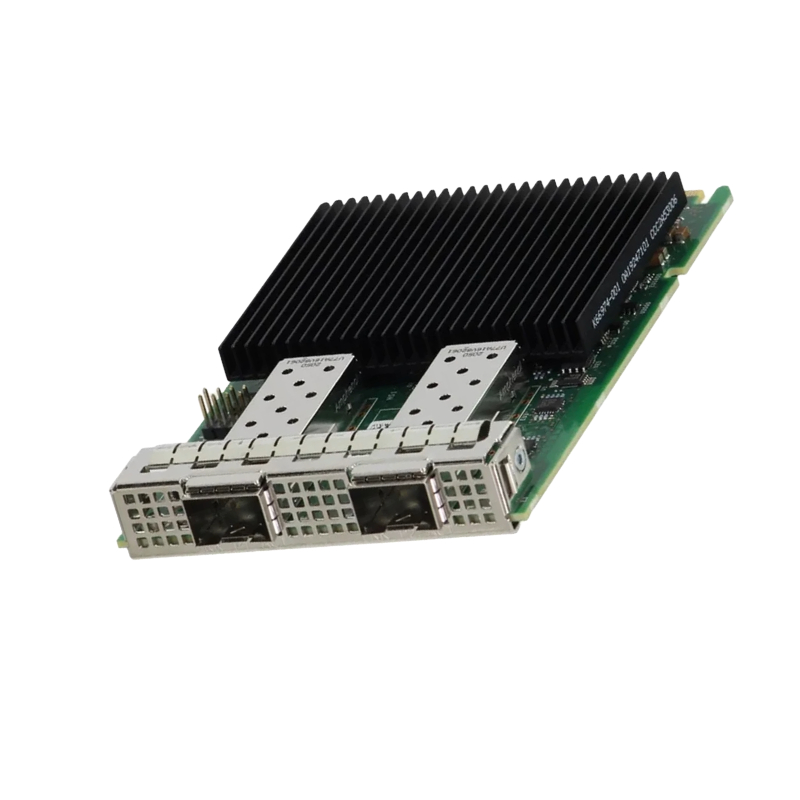


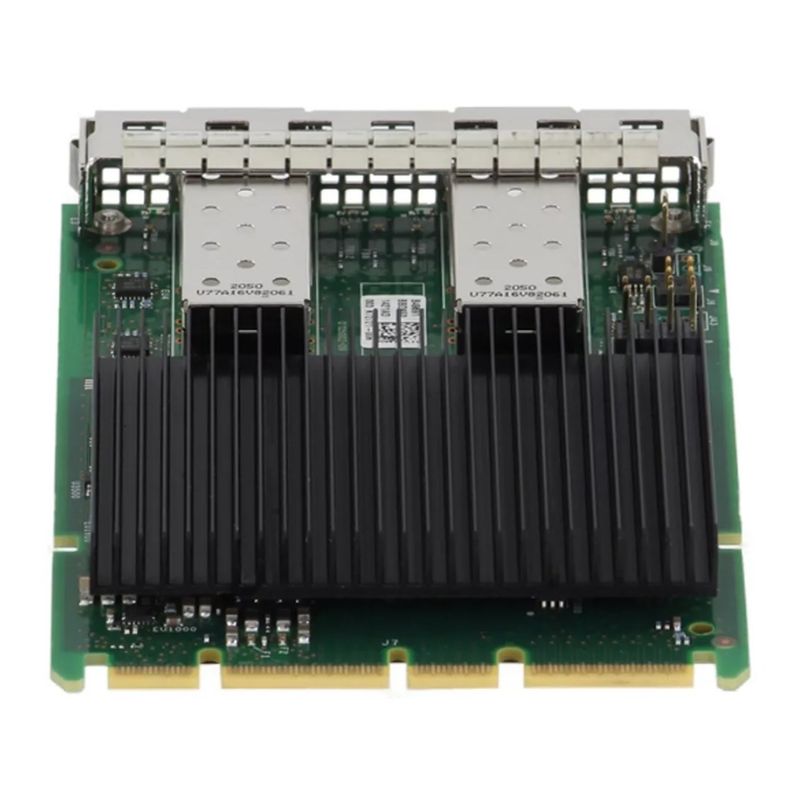
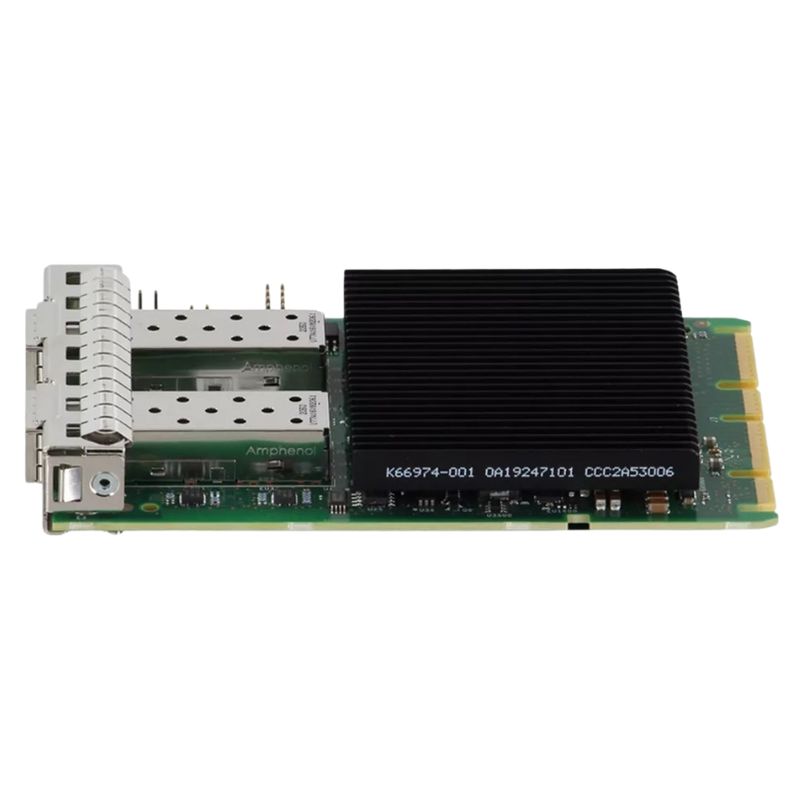
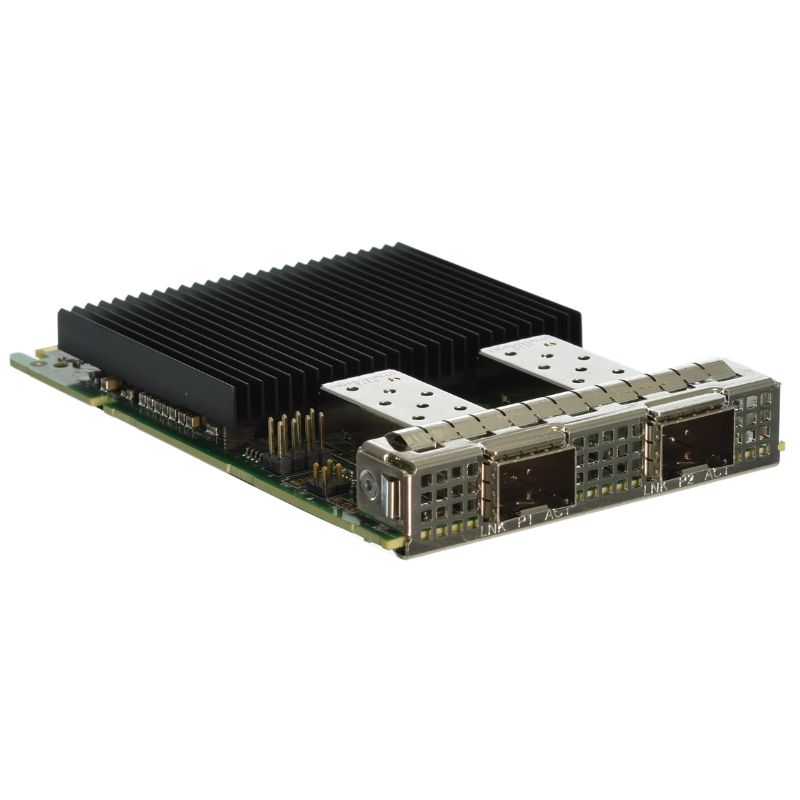
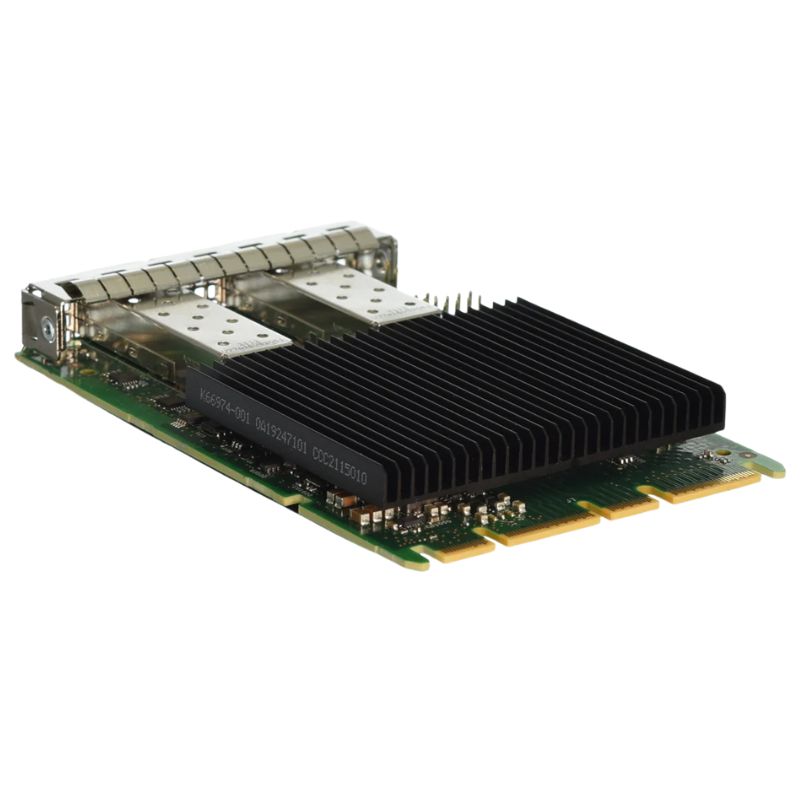
Dell 61X09 Intel E810 2 Port 25GbE SFP28 OCP NIC 3.0. New Sealed in Box (NIB) with 1-Year Replacement Warranty - Intel Version
| SKU/MPN | Warranty | Price | Condition | You save |
|---|---|---|---|---|
| 61X09 | 1 Year Warranty | Contact us for a price | Excellent Refurbished | |
| 61X09 | 1 Year Warranty | $298.00 | New Sealed in Box (NIB) | You save: $104.30 (26%) |
The 61X09 Dell E810 2 Port 25GbE SFP28 OCP 3.0 Network Adapter category represents a high-performance class of modern data center networking hardware designed for next-generation enterprise workloads. Built around advanced Intel Ethernet E810 controller technology and deployed in an Open Compute Project (OCP) 3.0 form factor, this adapter delivers ultra-low latency, high bandwidth density, and exceptional scalability for cloud infrastructure, virtualization environments, high-performance computing (HPC), and enterprise storage networks.
As modern IT ecosystems evolve toward hybrid cloud architectures and software-defined networking (SDN), the demand for 25 Gigabit Ethernet (25GbE) solutions continues to increase. This category of network adapters is specifically engineered to meet these demands by providing dual-port SFP28 connectivity, optimized throughput per watt, and flexible integration into dense server environments.
At the heart of the 61X09 Dell E810 2 Port 25GbE SFP28 OCP 3.0 Network Adapter lies the Intel Ethernet E810 controller family, which is designed to support high-throughput, low-latency networking for cloud-scale workloads. The architecture enables enhanced packet processing, intelligent offloading, and improved virtualization support. This ensures that CPU cycles are preserved for application workloads rather than being consumed by network processing tasks. The controller supports advanced features such as dynamic device personalization, flow director technologies, and hardware-based virtualization acceleration. These capabilities make the adapter highly suitable for environments where network predictability and performance consistency are critical.
The SFP28 interface used in this category is a significant advancement over traditional SFP+ 10GbE modules. Operating at 25Gbps per port, SFP28 delivers a 2.5x increase in throughput while maintaining compatibility with existing optical transceivers and DAC cables designed for SFP form factors. This balance between performance and compatibility makes 25GbE an ideal upgrade path for data centers transitioning from 10GbE infrastructure. Additionally, SFP28 technology supports both fiber optic and direct attach copper (DAC) cabling solutions, enabling flexible deployment across short-reach and long-distance networking topologies.
The OCP 3.0 specification is a modern open standard designed to improve server hardware modularity, serviceability, and airflow efficiency. The 61X09 Dell E810 2 Port 25GbE SFP28 OCP 3.0 Network Adapter is engineered specifically for this form factor, allowing seamless integration into compatible Dell server platforms and other OCP-compliant infrastructure.
One of the most significant benefits of OCP 3.0 is improved thermal efficiency. By relocating network adapters into a dedicated modular bay, airflow within the server chassis is optimized, reducing thermal congestion and improving overall system reliability. This design also simplifies maintenance and upgrades, as adapters can be replaced without disrupting core system components. OCP 3.0 also supports multiple interface types, including Ethernet and storage accelerators, making it a versatile platform for converged infrastructure deployments.
With two independent 25GbE SFP28 ports, this network adapter delivers a combined potential throughput of 50Gbps per device. This level of bandwidth density is critical for modern workloads such as distributed databases, real-time analytics, AI training clusters, and containerized microservices environments. Dual-port configurations also enable network redundancy, ensuring failover capabilities in mission-critical environments. If one link experiences degradation or failure, traffic can be automatically rerouted through the secondary interface, maintaining uninterrupted service availability.
Advanced load balancing features allow network traffic to be distributed efficiently across both ports. This reduces congestion, improves throughput consistency, and enhances application responsiveness. Combined with intelligent packet steering and flow classification, the adapter ensures optimal utilization of available network resources.
In cloud data centers, scalability and efficiency are essential. The 61X09 Dell E810 2 Port 25GbE SFP28 OCP 3.0 Network Adapter supports multi-tenant architectures and virtualized workloads with ease. Its hardware offload capabilities reduce CPU overhead, allowing cloud providers to maximize compute density per server node.
HPC clusters require extremely fast interconnects to support parallel computing workloads. This adapter provides low-latency communication paths between compute nodes, enabling faster data synchronization and reduced processing delays in scientific simulations, financial modeling, and AI training workloads.
Storage systems such as NVMe over Fabrics (NVMe-oF) benefit significantly from 25GbE connectivity. The adapter ensures high-throughput access to distributed storage arrays while maintaining low latency, which is critical for database performance and real-time analytics platforms.
Virtualized environments using hypervisors or container orchestration platforms such as Kubernetes rely heavily on efficient networking. This adapter supports SR-IOV (Single Root I/O Virtualization), enabling virtual machines and containers to access physical network resources directly with minimal overhead.
The adapter includes advanced offloading features such as TCP/UDP checksum offload, segmentation offload (TSO/LSO), and receive-side scaling (RSS). These features reduce CPU utilization by delegating repetitive networking tasks to dedicated hardware components.
SR-IOV support allows the creation of multiple virtual functions, enabling efficient sharing of network resources among virtual machines. This improves isolation, reduces latency, and enhances performance predictability in virtualized environments.
The Intel Ethernet E810 architecture includes optimized packet classification engines that improve throughput under heavy network loads. This ensures consistent performance even in high-density traffic scenarios such as microservices communication and east-west data center traffic flows.
Compared to traditional 10GbE adapters, the 25GbE SFP28 category provides 2.5 times higher bandwidth while using similar physical infrastructure. This allows organizations to upgrade network performance without completely redesigning their cabling systems.
While 40GbE offers higher raw bandwidth, it often comes with increased power consumption and reduced flexibility. The 25GbE standard provides a more balanced approach, delivering high performance with better scalability and energy efficiency, particularly in cloud-scale deployments.
In modern rack-scale deployments, these adapters are commonly used to connect compute nodes to top-of-rack (ToR) switches. This architecture reduces network hops, minimizes latency, and improves overall data flow efficiency across the data center fabric.
Edge computing deployments require compact yet powerful networking solutions. The OCP 3.0 form factor allows integration into edge servers where space, power efficiency, and thermal management are critical considerations.
Hybrid cloud infrastructures rely on fast and secure connectivity between on-premises data centers and public cloud platforms. The high throughput and low latency of this adapter make it ideal for secure data replication, backup synchronization, and hybrid workload distribution.
The 25GbE SFP28 interface supports a wide range of optical transceivers, including short-range (SR), long-range (LR), and extended-range modules. These transceivers enable flexible deployment across various data center distances and topologies.
For short-distance connections within racks, DAC cables provide a cost-effective and low-latency solution. They also reduce power consumption compared to optical modules, making them ideal for dense server clusters.
The adapter includes built-in support for secure packet processing, reducing the risk of CPU-based bottlenecks in encrypted traffic environments. This is particularly important for organizations handling sensitive data workloads.
SR-IOV-based segmentation ensures that virtual machines remain isolated at the network level, reducing the risk of cross-tenant data leakage in multi-tenant cloud environments.
Within the enterprise hardware ecosystem developed by the 61X09 Dell E810 2 Port 25GbE SFP28 OCP 3.0 Network Adapter is optimized for seamless compatibility with Dell PowerEdge server platforms. This ensures consistent firmware support, validated driver compatibility, and enterprise-grade lifecycle management. Integration within Dell infrastructure also enables centralized management through enterprise orchestration tools, allowing administrators to monitor network performance, update firmware, and configure adapters at scale.
The 25GbE standard continues to gain traction as enterprises modernize their infrastructure. It provides an optimal balance between cost, performance, and scalability, making it a preferred choice for next-generation data centers.
As artificial intelligence and machine learning workloads become more distributed, high-speed interconnects like the 61X09 Dell E810 2 Port 25GbE SFP28 OCP 3.0 Network Adapter are essential for synchronizing large datasets across compute clusters.
Hyperscale environments benefit from the modularity and efficiency of OCP 3.0-based network adapters, enabling rapid scaling of compute and networking resources without disrupting existing infrastructure.


 Contact Us
 Information
 Catalog
 Solid State Drives (SSD)
 Network Switches
 Hard Disk Drives
 HBA & Controllers
 PC & Servers
 PC & Server Memory
 CPU & Processors
 Network Routers
 Power Supplies
 Tape Drives & Libraries
 Network Devices
 Computer & Network Cables