(7% discount is applied at checkout)
Cart is empty
Your go-to destination for cutting-edge server products
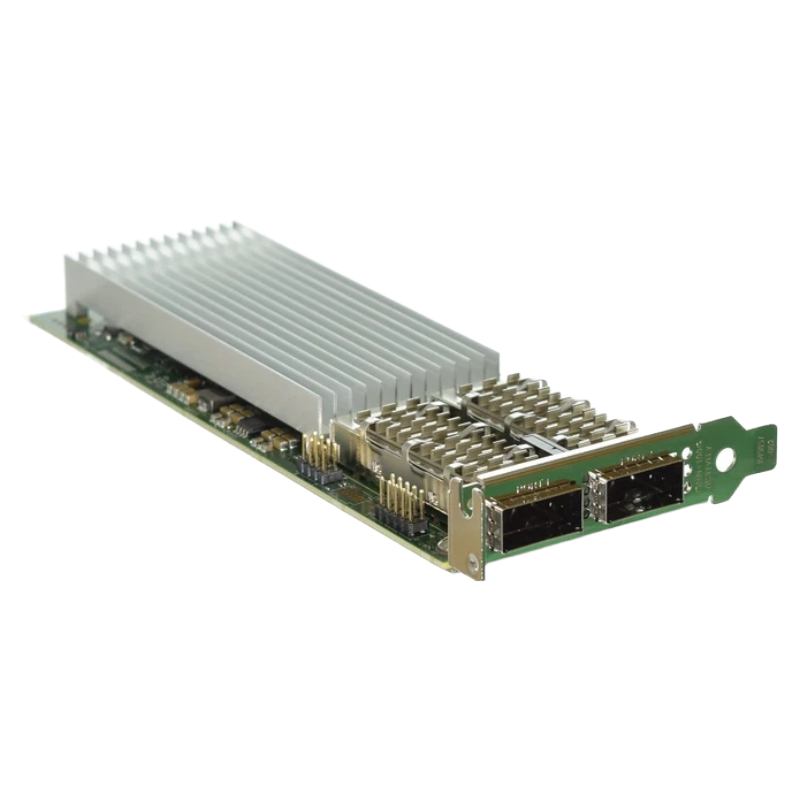


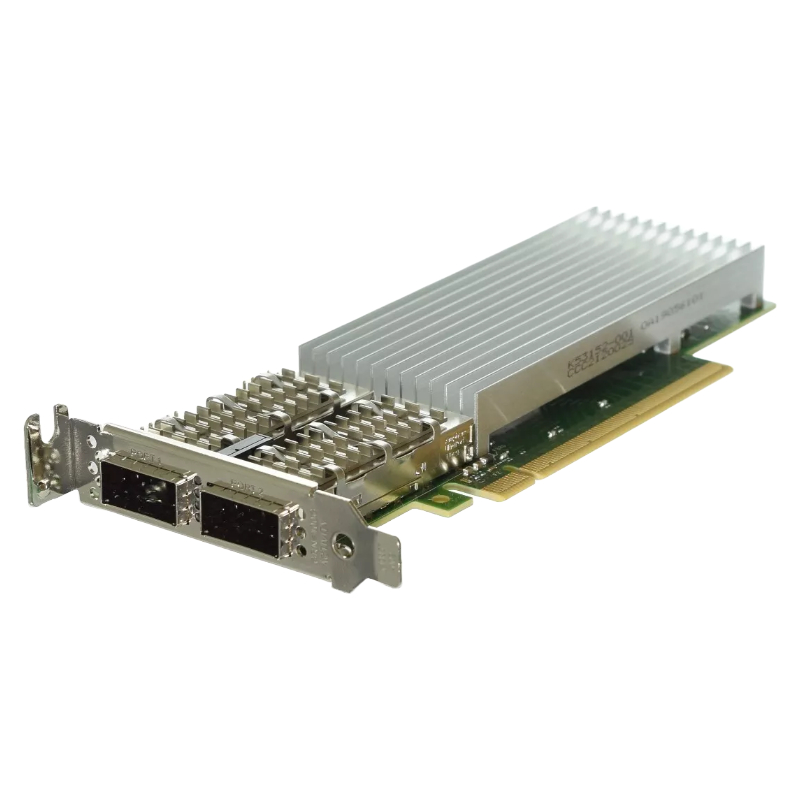
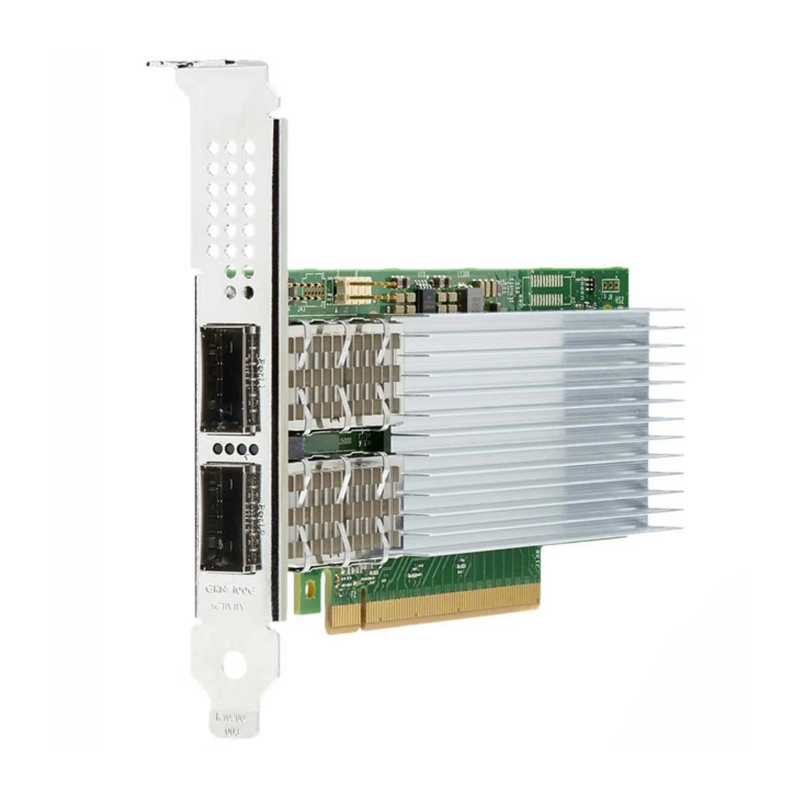
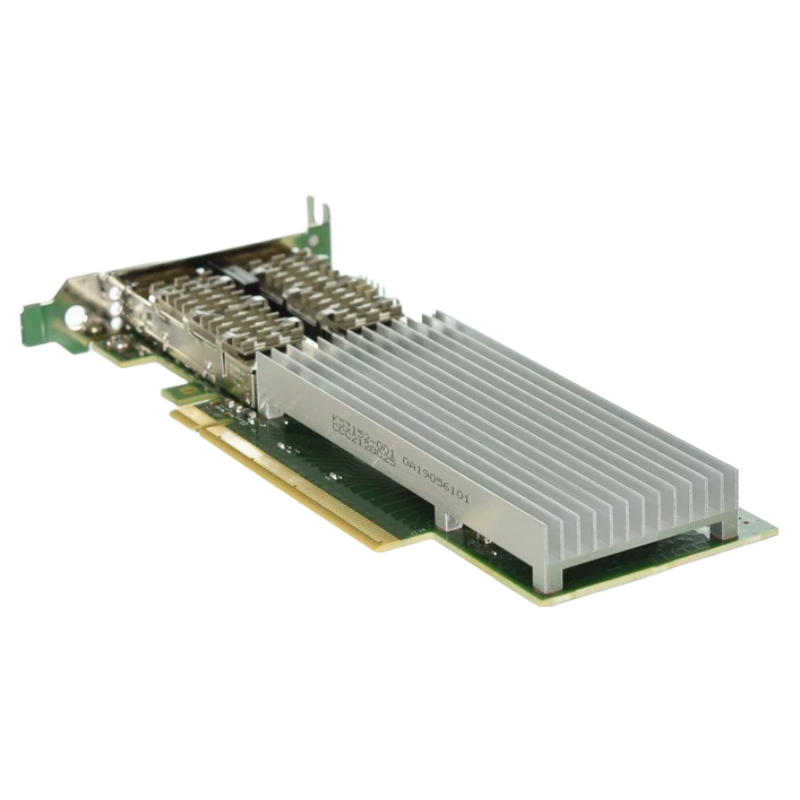
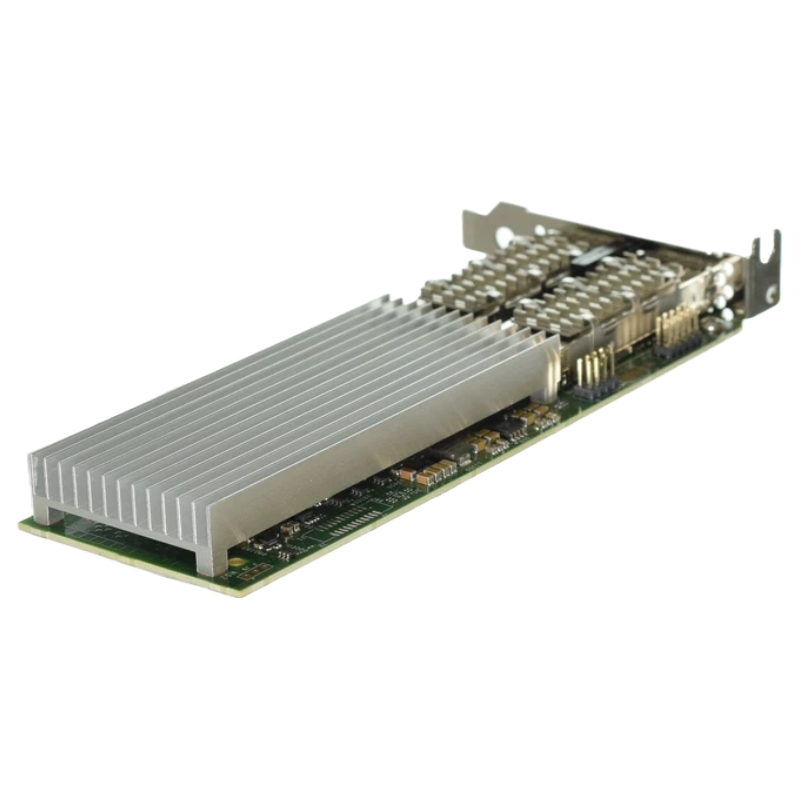
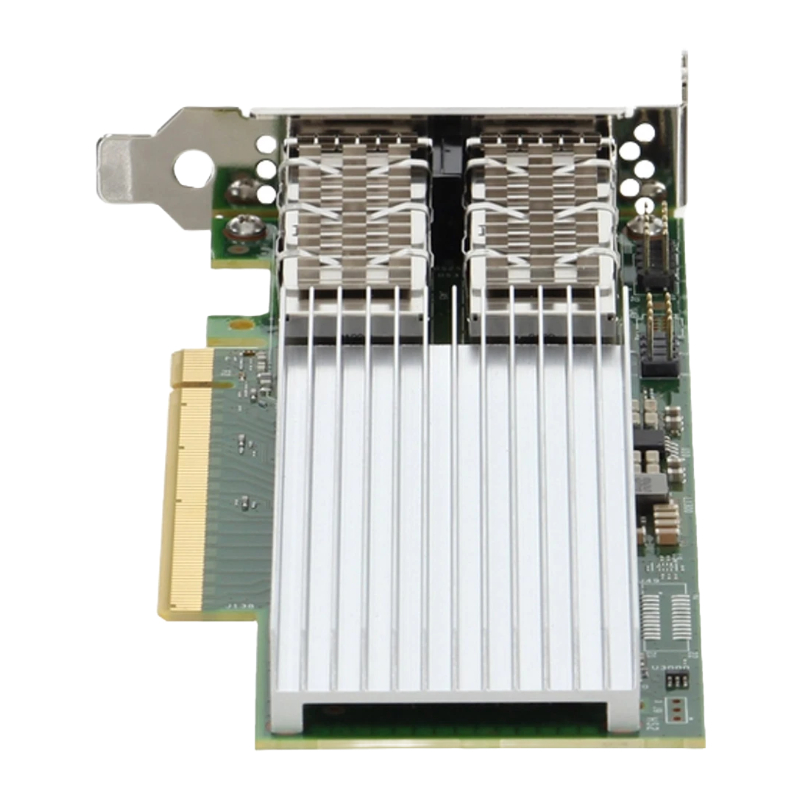
Dell G03JF Intel E810-CQDA2 100GB 2-Port Ethernet Adapter PCI-E. Excellent Refurbished with 1 year replacement warranty
| SKU/MPN | Warranty | Price | Condition | You save |
|---|---|---|---|---|
| G03JF | 1 Year Warranty | Contact us for a price | Excellent Refurbished | |
| G03JF | 1 Year Warranty | $584.00 | New Sealed in Box (NIB) | You save: $204.40 (26%) |
The Dell G03JF Intel E810-CQDA2 100GB 2-Port Ethernet Adapter PCI-E is a high-performance plug-in network card engineered for modern data centers, cloud infrastructures, and enterprise environments that demand ultra-fast, reliable wired connectivity.
The category of ultra-high-speed Ethernet adapters built around 100 Gigabit technology represents a critical foundation for next-generation data centers, cloud computing environments, and enterprise networking architectures. Within this advanced segment, the G03JF Intel E810-CQDA2 100GB 2-Port Ethernet Adapter PCI-E stands as a powerful example of scalable, high-throughput networking hardware engineered for demanding workloads that require extreme bandwidth, low latency, and high reliability.
Designed for virtualization-heavy environments, hyperscale infrastructures, and performance-centric computing clusters, this category of network interface cards (NICs) delivers unmatched data transfer efficiency and optimized traffic handling across multiple workloads. The integration of dual-port 100GbE connectivity ensures that servers can maintain sustained throughput under heavy I/O pressure while supporting modern protocols such as RDMA, NVMe over Fabrics, and advanced packet processing.
As enterprise applications evolve toward cloud-native architectures, traditional Gigabit and 10 Gigabit Ethernet solutions are no longer sufficient. The adoption of 100GbE PCI Express adapters enables servers to eliminate network bottlenecks, allowing seamless communication between compute nodes, storage arrays, and distributed applications. This category of adapters is specifically designed to handle massive parallel data streams while maintaining consistent latency levels.
Dual-port configurations, such as those found in the Intel E810-CQDA2-based adapter family, offer significant advantages in redundancy, load balancing, and traffic segmentation. By providing two independent 100GbE interfaces, these adapters allow administrators to separate workloads, enhance fault tolerance, and optimize network utilization without requiring additional physical hardware.
At the core of this category lies the Intel Ethernet 800 Series controller architecture, engineered to support high-density packet processing and hardware acceleration features. These controllers are optimized for virtualization environments where multiple virtual machines or containers require simultaneous network access without compromising performance.
The adapter integrates multiple offload engines designed to reduce CPU overhead by handling networking tasks directly on the hardware layer. This includes checksum offloading, segmentation offloading, and intelligent packet filtering. These capabilities allow server processors to dedicate more resources to application workloads rather than network management tasks.
The internal pipeline architecture ensures efficient handling of inbound and outbound traffic by distributing packet workloads across multiple processing queues. This reduces congestion and improves overall throughput consistency, especially in environments where microsecond-level latency is critical.
The PCIe interface used in this adapter category provides high-speed communication between the network card and the host system. With support for advanced PCIe generations, the adapter ensures that the full 100Gbps bandwidth is effectively utilized without saturation at the bus level.
Modern rack servers are designed with multiple PCIe slots to accommodate expansion cards like high-speed NICs. This allows enterprises to scale network performance horizontally by adding multiple adapters or vertically by upgrading to higher-capacity models within the same infrastructure.
In hyperscale environments, networking demands are extremely high due to the large number of virtual machines and distributed services operating simultaneously. The Dell G03JF Intel E810-CQDA2 100GB 2-Port Ethernet Adapter PCI-E category is specifically designed to handle this complexity by ensuring consistent data flow across server clusters.
Virtualized environments such as VMware, Hyper-V, and KVM benefit significantly from high-bandwidth NICs. Each virtual machine requires dedicated or shared network bandwidth, and 100GbE adapters ensure that even dense virtualization deployments do not suffer from network congestion.
Modern application architectures rely heavily on microservices that communicate frequently over the network. High-speed adapters reduce inter-service latency and improve application responsiveness in distributed environments.
High-performance computing (HPC) clusters and artificial intelligence training systems require rapid data exchange between compute nodes. 100GbE adapters are essential in such environments to maintain synchronization and reduce training times for machine learning models.
Scientific simulations in fields such as genomics, physics, and weather modeling generate massive datasets that must be transferred quickly between storage systems and compute nodes. High-bandwidth Ethernet adapters ensure that these workloads operate efficiently without network delays.
Latency reduction is a key design goal in this category. The hardware architecture minimizes packet traversal time by eliminating unnecessary software stack processing. This ensures that time-sensitive applications can operate with minimal delay.
Advanced queue management systems allow network administrators to prioritize traffic based on application requirements. This ensures that critical workloads receive higher bandwidth allocation during peak network usage.
Quality of Service (QoS) mechanisms embedded within the adapter firmware help maintain consistent performance across mixed traffic environments. This is particularly important in enterprise networks where storage, compute, and user traffic coexist.
Despite delivering extremely high throughput, modern 100GbE adapters are engineered to optimize power consumption. Efficient thermal design ensures stable operation even under sustained workloads in densely packed server environments.
High-speed Ethernet adapters play a critical role in storage networking by enabling protocols such as NVMe over Fabrics (NVMe-oF). This allows remote storage devices to perform with near-local latency characteristics, significantly improving performance in distributed storage systems.
Converged infrastructure models combine storage, compute, and networking into unified systems. 100GbE adapters reduce infrastructure complexity by enabling a single high-speed network fabric to handle multiple types of traffic simultaneously.
Dual-port adapter configurations enhance system resilience by providing redundant communication paths. If one network path fails, the second port ensures continuous data transmission without service interruption.
Adapters in this category are designed for compatibility with major enterprise operating systems including Linux distributions, Windows Server editions, and virtualization hypervisors. This ensures seamless integration into heterogeneous environments.
Specialized drivers improve performance in virtualized environments by enabling direct device assignment and reducing hypervisor overhead. This leads to improved throughput and lower latency for virtual machines.
Installing a 100GbE PCIe adapter requires careful consideration of airflow, slot configuration, and thermal design within rack-mounted servers. Proper installation ensures maximum performance and hardware longevity.
High-speed Ethernet adapters typically rely on advanced optical transceivers and fiber cabling solutions to achieve maximum transmission distance and stability. Proper cabling infrastructure is essential for maintaining signal integrity at 100Gbps speeds.
Enterprise network architects must design scalable topologies that accommodate increasing traffic demands. 100GbE adapters provide the backbone for spine-leaf architectures commonly used in modern data centers.
While 100GbE represents a current standard for high-performance networking, the industry is rapidly evolving toward 200GbE and 400GbE solutions. However, 100GbE adapters remain a critical transitional technology that supports a wide range of enterprise workloads.
Future generations of Ethernet adapters are expected to incorporate AI-driven traffic optimization systems that dynamically adjust bandwidth allocation based on workload behavior and predictive analytics.


 Contact Us
 Information
 Catalog
 Solid State Drives (SSD)
 Network Switches
 Hard Disk Drives
 HBA & Controllers
 PC & Servers
 PC & Server Memory
 CPU & Processors
 Network Routers
 Power Supplies
 Tape Drives & Libraries
 Network Devices
 Computer & Network Cables