(7% discount is applied at checkout)
Cart is empty
Your go-to destination for cutting-edge server products
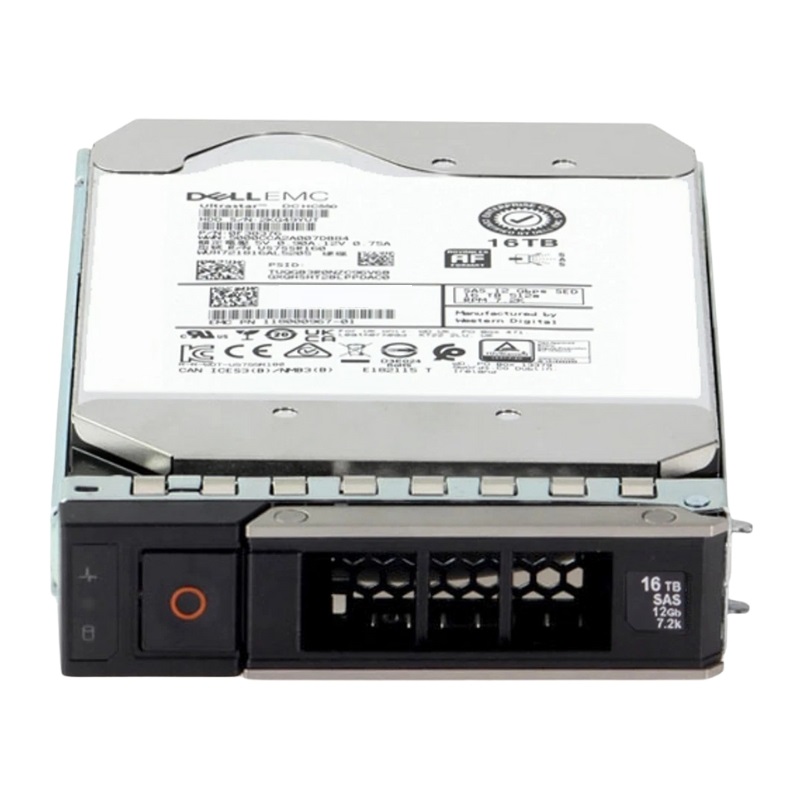


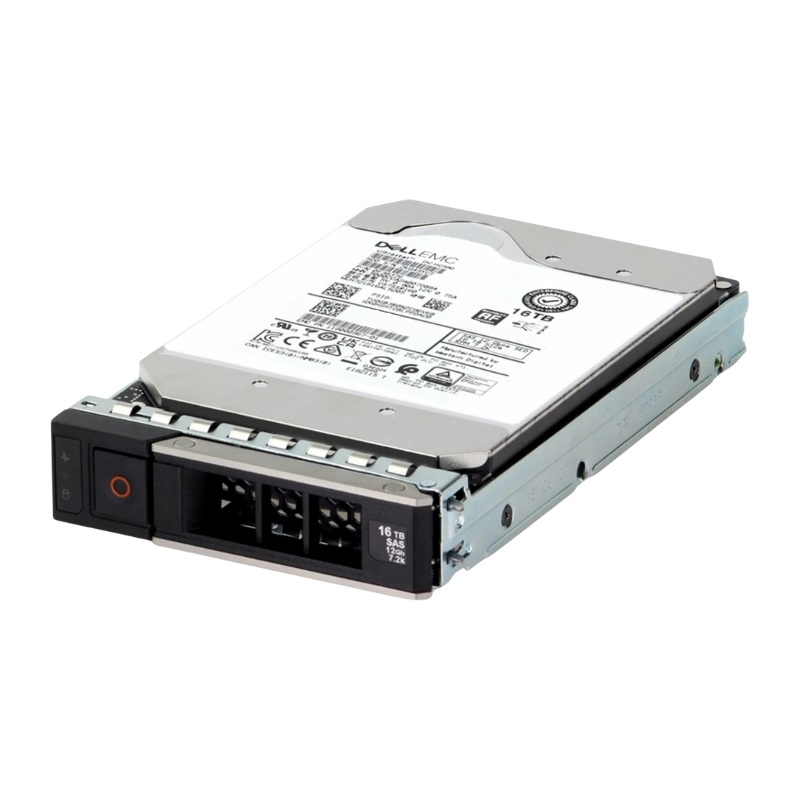
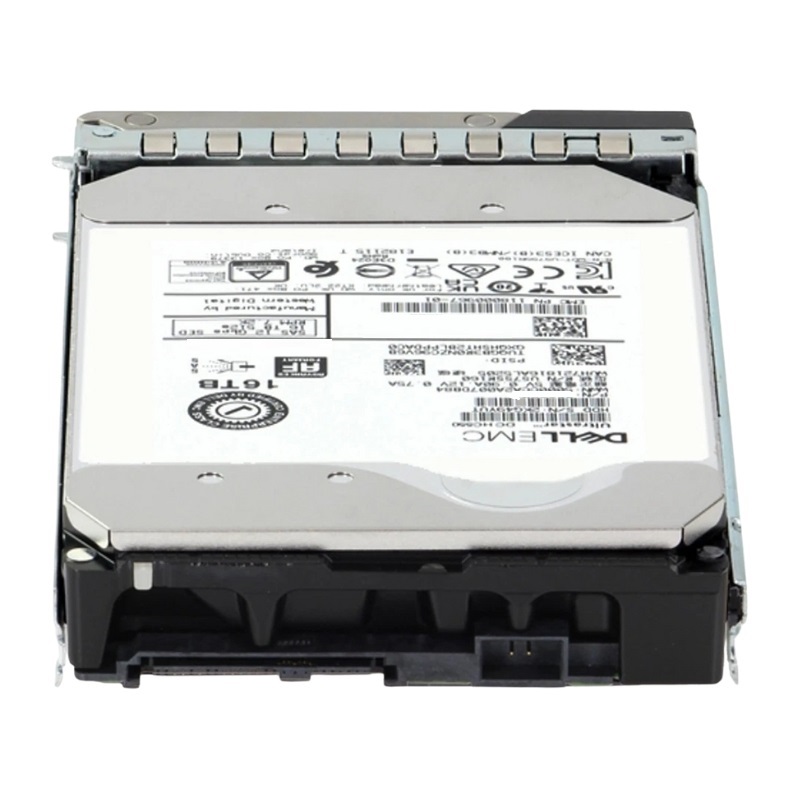
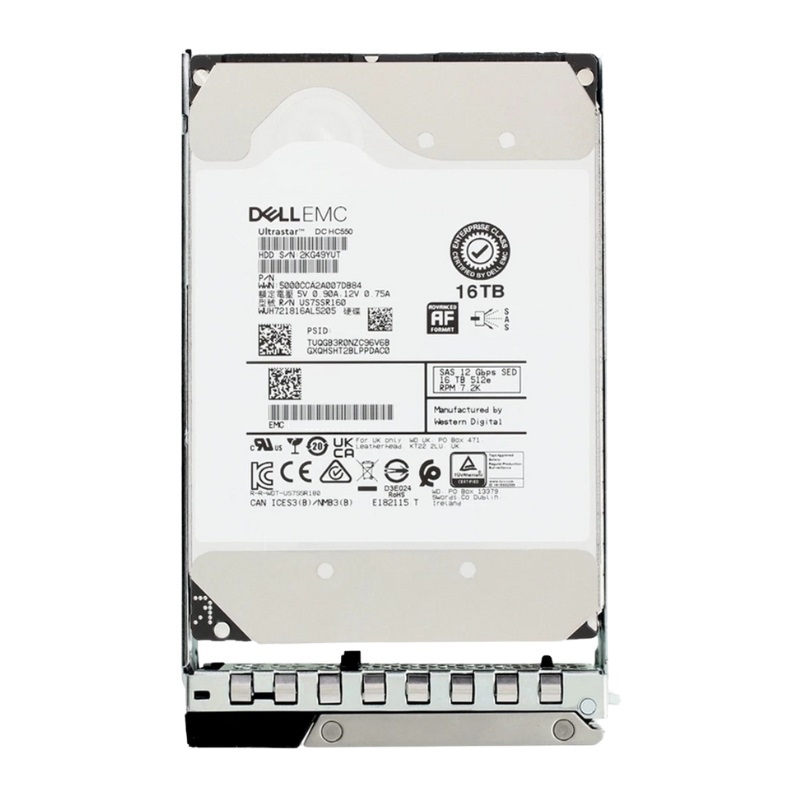
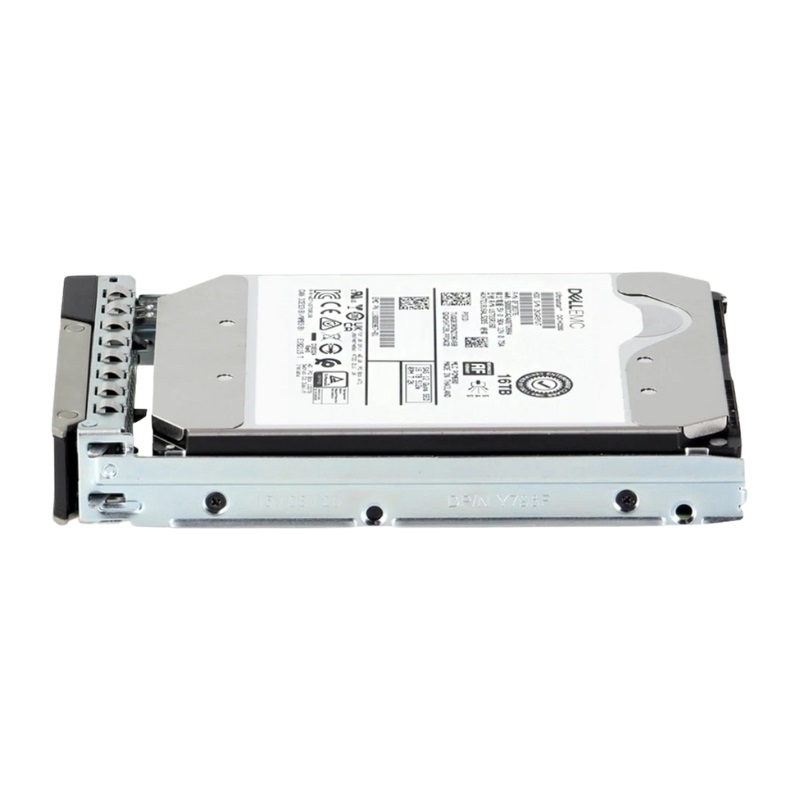
Dell V0TFD 16TB 7.2K RPM SAS 12GBPS Hot-Swap Hard Drive. Excellent Refurbished with 1 year replacement warranty
| SKU/MPN | Warranty | Price | Condition | You save |
|---|---|---|---|---|
| V0TFD | 1 Year Warranty | $599.00 | Excellent Refurbished | You save: $209.65 (26%) |
| V0TFD | 1 Year Warranty | $944.00 | New Sealed in Box (NIB) | You save: $330.40 (26%) |
The Dell V0TFD 16TB 7.2K RPM SAS 12Gbps Hot-Swap Hard Drive is a high-capacity enterprise storage solution engineered for speed, scalability, and reliability. With advanced SAS interface, hot-plug functionality, and large buffer memory, it is ideal for mission-critical workloads and modern data centers.
The Dell V0TFD 16TB 7.2K RPM SAS 12Gbps Hot-Swap Hard Drive represents a high-capacity enterprise storage solution designed for modern data-driven infrastructures requiring reliability, scalability, and sustained performance under continuous workloads. Built for compatibility with enterprise servers and storage arrays, this category of hard drives is engineered to deliver stable throughput for archival systems, backup environments, cloud storage nodes, and large-scale data centers. With a 16TB storage density, this drive significantly enhances storage consolidation, reducing physical footprint while maximizing data retention capabilities across mission-critical applications. The 7,200 RPM spindle speed combined with SAS 12Gbps interface ensures balanced performance optimized for sequential workloads and high-availability environments.
Within enterprise infrastructure ecosystems, high-capacity SAS hard drives such as the Dell V0TFD serve as foundational components for bulk data storage layers. These drives are positioned between performance-intensive SSD tiers and cold archival storage systems, enabling organizations to manage hybrid storage architectures efficiently. Their role is particularly important in environments where data durability, long-term retention, and cost-per-terabyte optimization are key priorities. Enterprises operating virtualization clusters, large-scale database archives, and surveillance data systems rely on this category of hard drives for consistent and predictable performance. The design philosophy emphasizes endurance and continuous operation rather than peak transactional speed, making it suitable for workloads where sustained data availability is more critical than low-latency response times.
The Dell V0TFD 16TB drive is optimized for workloads that demand large sequential read and write operations. These workloads typically include backup and recovery systems, content distribution networks, media archiving platforms, and enterprise file storage repositories. The 7.2K RPM rotational speed ensures that mechanical wear is minimized while still maintaining sufficient data access speed for bulk operations. The SAS 12Gbps interface enhances data throughput stability, reducing bottlenecks in multi-drive configurations. This makes the drive particularly effective in RAID arrays where redundancy and performance consistency are required simultaneously. Its architecture supports continuous operation under heavy I/O cycles, ensuring that enterprise applications maintain uptime and operational integrity without degradation over time.
Integration of Dell V0TFD drives into data center environments is streamlined due to standardized SAS connectivity and hot-swap capability. These features allow system administrators to replace or upgrade drives without shutting down entire systems, thereby maintaining service continuity. In densely populated storage arrays, hot-swappable functionality significantly reduces maintenance downtime and improves operational efficiency. Compatibility with Dell PowerEdge servers and SAS-compatible storage backplanes ensures seamless deployment across existing infrastructure. The drive is engineered to function within multi-bay chassis systems where airflow, thermal regulation, and vibration tolerance are critical factors influencing long-term reliability and performance stability.
The internal architecture of the Dell V0TFD 16TB SAS hard drive is built on enterprise-grade magnetic storage principles designed to optimize reliability and data integrity. The platters inside the drive are engineered for high-density recording, allowing 16TB of data to be stored in a compact 3.5-inch form factor. The 7.2K RPM spindle speed provides a balance between energy efficiency and data access speed, ensuring that the drive does not generate excessive heat while maintaining consistent read/write performance. The SAS interface supports dual-port connectivity in many enterprise configurations, improving redundancy and failover capabilities in clustered storage environments.
The magnetic storage layer of this enterprise hard drive is designed to maximize areal density while preserving data integrity under continuous operation. Advanced encoding techniques allow more data to be stored per platter surface, enabling the 16TB capacity without requiring additional physical expansion. This efficiency is critical in modern data centers where rack space optimization directly influences operational costs. The drive’s firmware manages read/write head positioning with high precision, reducing latency variations during sequential data operations. This ensures stable performance when handling large datasets such as virtual machine images, database backups, and multimedia archives.
Thermal stability is a crucial factor in enterprise-grade HDD design. The Dell V0TFD incorporates optimized airflow pathways and vibration-resistant components that allow it to function efficiently in high-density server environments. Continuous operation generates mechanical heat, and the drive’s design ensures heat dissipation is managed through chassis airflow systems. Vibration tolerance is particularly important in multi-drive configurations, where multiple spinning disks operate in close proximity. The drive’s internal balancing mechanisms reduce rotational vibration, ensuring that performance degradation is minimized even under heavy workload conditions. This contributes to long-term durability and predictable lifecycle performance.
Enterprise SAS drives such as the Dell V0TFD rely heavily on advanced firmware systems that manage error correction, sector remapping, and predictive failure analysis. These mechanisms continuously monitor drive health and performance metrics, ensuring that potential issues are detected before data loss occurs. Error correction algorithms improve data reliability by compensating for minor read/write inconsistencies that may arise due to mechanical wear or environmental factors. This proactive approach to data integrity is essential in mission-critical environments where downtime or data corruption can have significant operational consequences.
Performance in enterprise HDDs is defined not only by raw speed but also by consistency, throughput stability, and workload endurance. The Dell V0TFD 16TB SAS drive is optimized for sequential workloads that dominate enterprise storage environments. While it does not compete with SSDs in terms of latency, it excels in sustained throughput over long-duration operations. The 12Gbps SAS interface ensures that multiple drives can operate simultaneously without bandwidth saturation, making it suitable for RAID configurations and distributed storage systems. The drive’s caching algorithms further enhance performance by temporarily storing frequently accessed data, improving access efficiency in repetitive workload scenarios.
In large-scale deployments, sequential throughput becomes a critical performance metric. The Dell V0TFD is designed to handle sustained data transfer rates across multiple drives working in parallel. When deployed in RAID 5, RAID 6, or RAID 10 configurations, the drive contributes to aggregate throughput that supports enterprise-level data processing demands. This scalability allows organizations to expand storage capacity without sacrificing performance stability. The SAS protocol further enhances scalability by enabling dual-port redundancy, ensuring continuous access even in case of controller failure or path disruption.
Latency in mechanical hard drives is influenced by rotational speed, seek time, and workload distribution. The 7.2K RPM speed of the Dell V0TFD is optimized to balance latency with energy efficiency. While not designed for ultra-low latency applications, it provides predictable and stable response times suitable for bulk storage tasks. Enterprise optimization techniques embedded in firmware reduce latency spikes by intelligently managing read/write queues and prioritizing sequential operations. This ensures that system performance remains consistent even under heavy multi-user access conditions.
When integrated into RAID arrays, the Dell V0TFD contributes significantly to system fault tolerance and performance stability. RAID configurations rely on multiple drives working in coordination, and enterprise SAS drives are specifically designed for such environments. The high capacity of 16TB per drive reduces the number of physical units required to achieve large storage pools, simplifying RAID management and reducing failure points. The drive’s error recovery and sector remapping capabilities ensure that RAID rebuild operations can be completed efficiently without compromising data integrity.
The Dell V0TFD 16TB SAS hard drive is widely applicable across diverse enterprise deployment scenarios where high-capacity storage is required. These include cloud infrastructure providers, enterprise backup systems, surveillance storage networks, and archival data centers. Its design supports continuous 24/7 operation, making it suitable for mission-critical applications where downtime is not acceptable. Organizations implementing hybrid cloud architectures also use such drives for cold storage tiers, where large volumes of infrequently accessed data must be preserved cost-effectively.
In cloud storage infrastructures, the Dell V0TFD plays a vital role in providing scalable backend storage for virtual machines, containerized workloads, and distributed file systems. Its high capacity reduces the need for frequent hardware expansion, allowing cloud providers to optimize rack density. Virtualization platforms benefit from the drive’s ability to handle large disk images and snapshots efficiently. While SSDs handle high-performance tiers, SAS HDDs like this model manage bulk storage layers that support long-term data persistence.
Backup and disaster recovery systems rely heavily on high-capacity hard drives that can store large volumes of replicated data. The Dell V0TFD 16TB drive is well-suited for these environments due to its cost-per-terabyte efficiency and durability under sustained write operations. Archival systems benefit from its ability to retain data over long periods without performance degradation. Disaster recovery infrastructure depends on reliable replication processes, and this drive ensures that large backup sets can be written and retrieved consistently when needed.
Surveillance systems generate continuous streams of video data that require stable and uninterrupted storage solutions. The Dell V0TFD supports such workloads by providing sustained write performance over extended periods. Its large capacity allows for extended retention of high-resolution video footage without frequent overwriting. In security and monitoring environments, reliability is essential, and SAS-based enterprise drives ensure that data capture processes remain uninterrupted even under 24/7 operational conditions.
Reliability is one of the most critical aspects of enterprise storage hardware design. The Dell V0TFD 16TB SAS drive is engineered with durability in mind, ensuring that it can withstand continuous operation in demanding environments. Mechanical components are tested for extended lifecycle endurance, and firmware systems actively monitor operational health. Predictive failure analysis allows system administrators to replace drives before catastrophic failure occurs, reducing risk and maintaining data integrity. This proactive reliability model is essential in large-scale infrastructure deployments where even minor downtime can have significant consequences.
Modern enterprise drives incorporate smart diagnostic systems that track performance metrics such as temperature, read/write error rates, and spin-up cycles. The Dell V0TFD utilizes these monitoring capabilities to provide early warnings of potential issues. This allows administrators to perform scheduled maintenance rather than reactive replacements, improving overall system reliability. Predictive analytics contribute to reducing unexpected downtime and ensuring that storage infrastructure remains stable over long operational cycles.


 Contact Us
 Information
 Catalog
 Solid State Drives (SSD)
 Network Switches
 Hard Disk Drives
 HBA & Controllers
 PC & Servers
 PC & Server Memory
 CPU & Processors
 Network Routers
 Power Supplies
 Tape Drives & Libraries
 Network Devices
 Computer & Network Cables