(7% discount is applied at checkout)
Cart is empty
Your go-to destination for cutting-edge server products
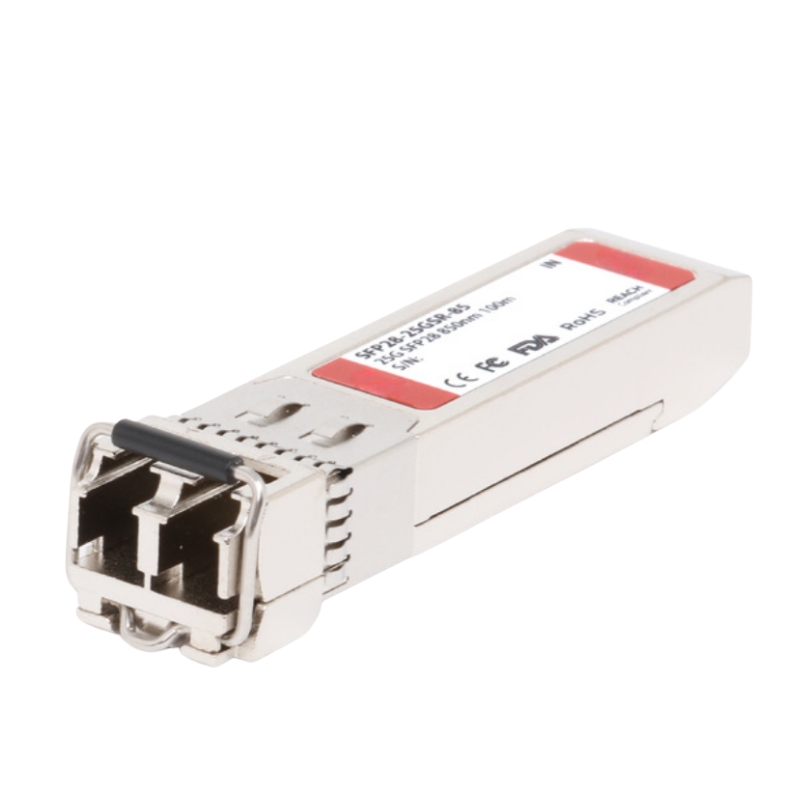


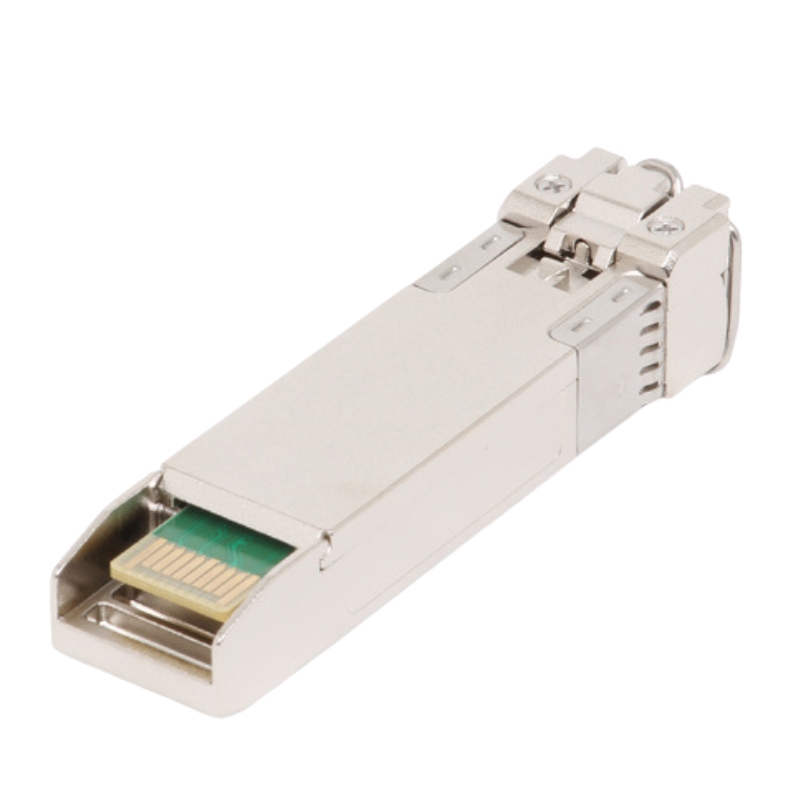
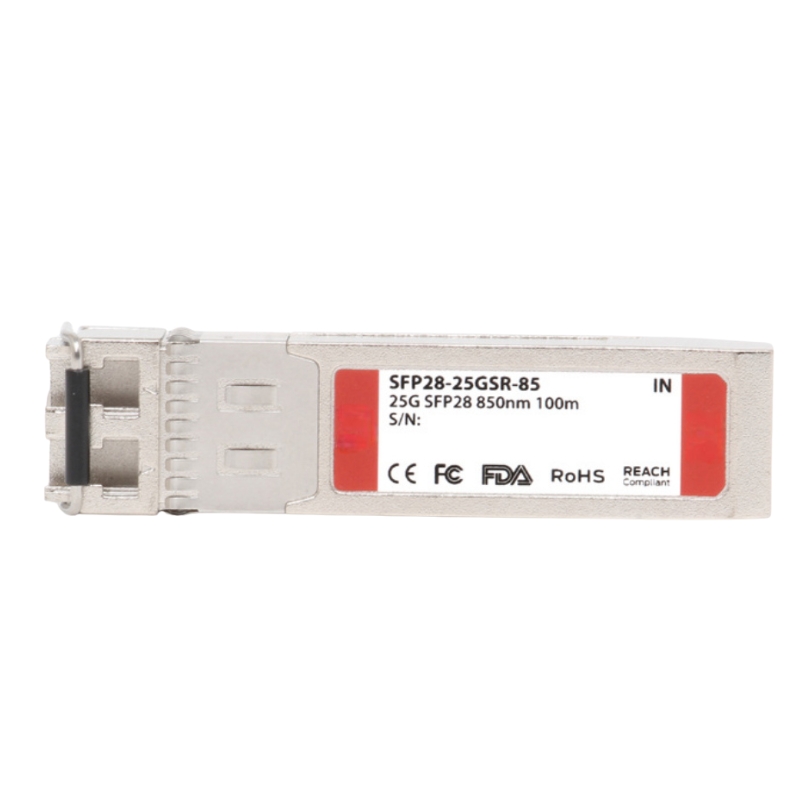
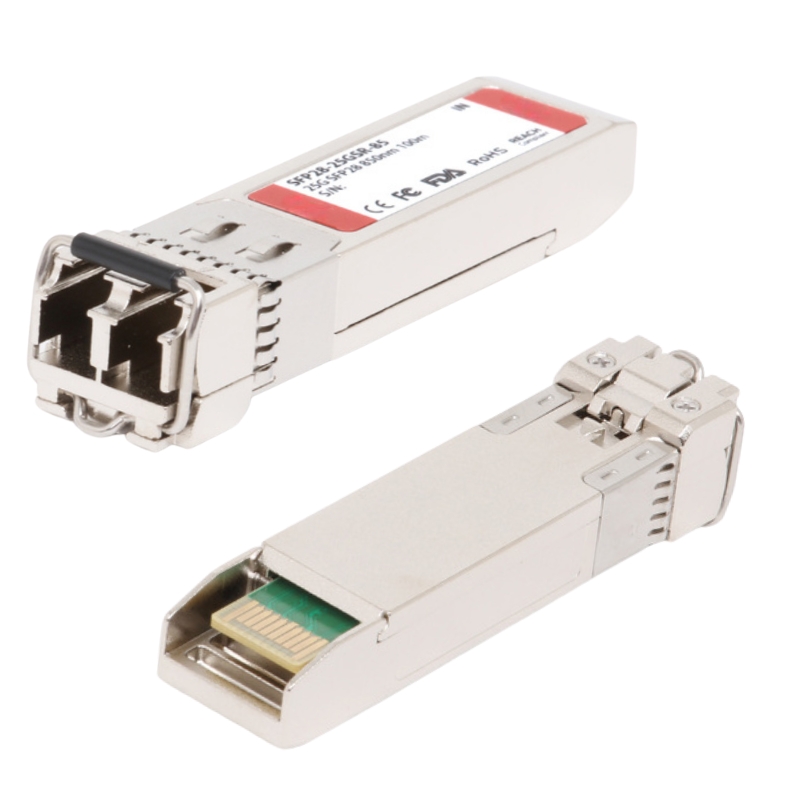
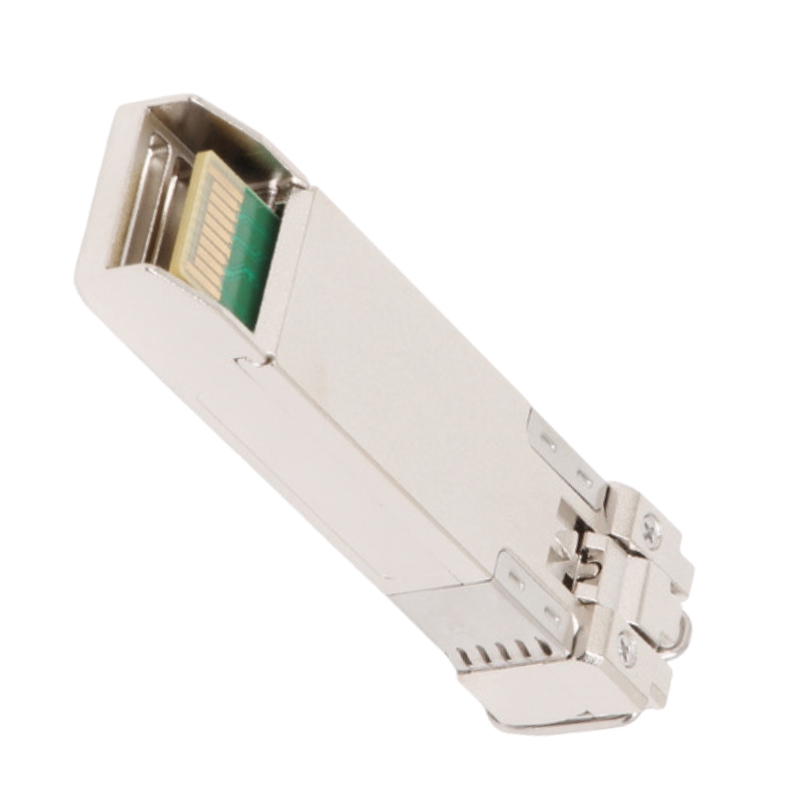
Intel E25GSFP28SR-A1 25G SFP28 Optical Fiber Transceiver Module. New Sealed in Box (NIB) with 3 Years Warranty
The Intel E25GSFP28SR-A1 is a high-speed 25GbE SFP28 optical transceiver module designed for modern data center, enterprise networking, and server connectivity environments that require dependable short-range fiber communication. Built for 25 Gigabit Ethernet deployments, this Intel transceiver delivers fast, stable, and efficient optical performance for bandwidth-intensive workloads, virtualization platforms, cloud infrastructure, storage networking, and high-density server environments. It is engineered to support short-range optical transmission over multimode fiber, making it a practical solution for top-of-rack switching, server-to-switch connectivity, and scalable network expansion where low latency and reliable throughput are essential.
Brand: Intel
Part Number: E25GSFP28SR-A1
Product Type: Ethernet SFP28 Transceiver Module
The Intel E25GSFP28SR-A1 25G SFP28 Optical Fiber Transceiver Module belongs to the high-speed optical networking category built for 25 Gigabit Ethernet connectivity in modern enterprise, cloud, storage, and data center environments. This product category is centered on compact hot-pluggable optical transceivers that allow network adapters, switches, routers, and server platforms to establish reliable short-range fiber links while preserving port density, signal quality, and infrastructure flexibility. In practical deployment scenarios, the Intel E25GSFP28SR-A1 category addresses the need for efficient east-west traffic movement, server-to-switch uplinks, storage traffic transport, virtualization workloads, and high-bandwidth aggregation across data-intensive computing environments.
The SFP28 form factor is widely recognized for enabling 25GbE connectivity in a compact footprint. Compared with older 10GbE optics, a 25G SFP28 transceiver supports a substantial jump in bandwidth while preserving a similar physical size and operational simplicity. This makes the Intel E25GSFP28SR-A1 an important category component for organizations transitioning from 10GbE access layers to 25GbE server and switch interconnects. As data centers continue to consolidate workloads, expand virtualization, adopt hyperconverged infrastructure, and accelerate cloud-native application delivery, the value of 25G optical connectivity continues to increase across enterprise and service provider environments.
The Intel E25GSFP28SR-A1 is positioned in the short-range multimode optical transceiver segment, a category typically used for structured cabling inside data centers, enterprise campuses, edge computing facilities, and high-performance server rooms. Intel documentation for the E25GSFP28SR family identifies it as an Intel Ethernet SFP28 SR optic, and Intel support references confirm that this SR optic uses a multimode fiber connection with an LC connector type. Intel product and support materials also place the E25GSFP28SR family within the 25GBASE-SR optical category used for high-speed short-distance fiber links.
The 25GbE optical networking segment has become one of the most practical upgrade paths for organizations that require more bandwidth than 10GbE can provide but do not necessarily need 40GbE or 100GbE at every access point. The Intel E25GSFP28SR-A1 sits directly in this performance sweet spot. It supports the transition to 25G server access and switch uplinks while helping network designers preserve cabling efficiency and power-conscious deployment strategies. Because 25GbE can offer higher lane efficiency and improved cost-per-gigabit economics compared with older architectures, SFP28 optics are frequently selected for high-density server farms, private cloud environments, AI-ready infrastructure staging, storage traffic segmentation, and latency-sensitive business applications.
For data center operators, this category matters because the optical transceiver is the physical interface that turns a capable 25GbE port into an operational fiber link. The module bridges the electrical signaling of the host device and the optical signaling required for fiber transport. That conversion function is essential in environments where copper cabling is not optimal due to distance, electromagnetic interference, airflow constraints, or rack-to-rack design considerations. As a result, the Intel E25GSFP28SR-A1 is more than a simple accessory. It is a mission-critical connectivity element that directly influences signal integrity, deployment distance, interoperability planning, and the long-term scalability of 25GbE network infrastructure.
Intel’s published material for its Ethernet SFP28 optics category identifies the E25GSFP28SR product family as an SFP28 short-range optic associated with 10G and 25GBASE-SR commercial deployment, while support resources confirm its compatibility focus around Intel Ethernet adapters with SFP28 connectivity. Intel also notes that 25G SR modules are recommended for OM4 multimode fiber runs up to 100 meters in the SR category, reinforcing the module’s role as a short-reach optical link component for structured enterprise and data center cabling.
One of the defining strengths of the Intel E25GSFP28SR-A1 category is the SFP28 form factor itself. SFP28 was developed to deliver 25GbE performance in a compact pluggable module size that aligns with modern switch and adapter density requirements. In practical terms, this means organizations can deploy a large number of 25G optical links across top-of-rack switches, aggregation layers, and high-port-count network interface cards without consuming excessive chassis space. In environments where every rack unit and every front-panel port matters, the compactness of SFP28 modules plays a direct role in infrastructure efficiency.
Port density is especially important in virtualization clusters, software-defined storage platforms, containerized application environments, and multi-tenant cloud deployments. These environments often rely on dozens or hundreds of server uplinks within a single row or pod. A compact optical transceiver such as the Intel E25GSFP28SR-A1 supports that scale by allowing network teams to preserve front-panel density while still moving to 25GbE throughput. This is particularly attractive for organizations replacing legacy 10GbE optics because it allows them to increase link performance without adopting a physically larger transceiver type for every access connection.
The hot-pluggable nature of the SFP28 format also supports operational flexibility. Data center teams can install, replace, or reconfigure optics without the same level of disruption associated with fixed optical interfaces. This modularity is beneficial in staged migrations, maintenance windows, hardware refresh cycles, and mixed-speed network environments. If a business is expanding from a smaller virtualization footprint to a larger private cloud architecture, SFP28 optics help preserve incremental upgrade flexibility rather than forcing a single all-at-once infrastructure overhaul.
The Intel E25GSFP28SR-A1 category benefits from the operational convenience of pluggable optics. In real-world data center operations, serviceability is not a minor feature. Technicians and infrastructure teams need the ability to identify, replace, and validate optical links quickly. SFP28 transceivers support this need by providing a straightforward insertion and removal process, enabling rapid maintenance in dense environments where downtime and access constraints can affect productivity. In enterprise server rooms and co-location facilities alike, that serviceability becomes an important part of lifecycle management.
Because the module is intended for use with compatible Intel Ethernet networking products and SFP28-capable platforms, it also fits naturally into standardized rack designs where network cards and switches are deployed in repeatable patterns. This matters for large organizations that maintain multiple data halls or distributed edge facilities. Standardized optical modules simplify sparing strategies, reduce deployment inconsistency, and make it easier to document and manage the physical network layer.
The Intel E25GSFP28SR-A1 is positioned in the short-range optical transceiver class commonly associated with 25GBASE-SR connectivity over multimode fiber. This category is especially valuable for structured data center cabling where high-speed connections are needed across server rows, within pods, between cabinets, or between nearby network zones. Short-range optics occupy a strategic place in modern network design because not every high-speed link requires long-haul reach. In fact, a significant percentage of data center interconnects are relatively short, making SR optics one of the most efficient choices for server access and lateral data center traffic.
Intel’s documentation around the E25GSFP28SR family indicates that the module is an SR optic and that the cable type used with the SR module is multimode fiber. Intel support also confirms that the connector type for the E25GSFP28SR is LC, which aligns with common multimode patching practices in enterprise and data center environments. Intel technical material for the SFP28 SR optic family further describes the module as a short-range SFP28 optic designed for 25GBASE-SR use and references the expected SR optical characteristics and multimode operation profile.
For buyers and infrastructure planners, this means the Intel E25GSFP28SR-A1 category is typically associated with OM3 and OM4 multimode cabling environments where predictable short-range optical performance is required. Intel support guidance on related SFP28 SR optics states that 25G SR modules are the recommended choice for OM4 multimode fiber up to 100 meters. That guidance helps define the practical deployment category for this module and clarifies why it is commonly selected for intra-data-center fiber runs rather than long-distance campus backbone or metro links.
Short-range optics remain highly relevant because the majority of high-speed server and switch interconnects occur within contained physical spaces. Top-of-rack to server access, end-of-row to aggregation, hyperconverged node interconnects, and storage network uplinks often fall well within the reach envelope of multimode SR optics. When these links are multiplied across a large data center, the result is a substantial installed base of short-range optical modules. The Intel E25GSFP28SR-A1 category fits directly into this environment by providing the optical building block needed for those 25G links.
Another reason SR optics remain attractive is cabling familiarity. Many organizations already maintain multimode fiber infrastructure in their server rooms and data centers. When upgrading from 10GbE SR optics to 25GbE SR optics, those organizations can often preserve a portion of their physical cabling strategy while gaining a significant bandwidth increase at the port level. This reduces disruption and supports phased modernization. For procurement teams, that can translate into better investment efficiency because the transition to 25GbE does not necessarily require a full rethinking of every short-distance optical path.
The category value of the Intel E25GSFP28SR-A1 is closely tied to the broader performance advantages of 25GbE networking. As enterprise applications become more data-intensive and infrastructure becomes more distributed, 10GbE links can become a bottleneck for storage access, virtualization mobility, backup operations, east-west traffic, and large-scale analytics movement. A 25G optical transceiver helps remove that bottleneck by enabling a much higher throughput ceiling per port while still fitting into compact server and switch designs.
In virtualized clusters, for example, multiple virtual machines or containers may share the same physical uplink. If those workloads include database transactions, backup replication, media processing, analytics pipelines, or software-defined storage traffic, the available bandwidth on the host uplink becomes a key performance factor. A 25GbE SFP28 optic allows the underlying server adapter or switch port to carry far more traffic than a 10GbE optic, reducing congestion risk and supporting more aggressive workload density.
Latency-sensitive environments also benefit from a modern optical module category like this one. Although many performance discussions focus on raw throughput, consistency and responsiveness matter just as much. In clustered applications, virtual desktop environments, database replication, and real-time transaction systems, link stability and high-bandwidth headroom contribute to smoother traffic patterns and better overall service delivery. By serving as the optical layer for 25GbE connections, the Intel E25GSFP28SR-A1 category supports those performance objectives in a practical, infrastructure-focused way.
One of the strongest reasons to consider the Intel E25GSFP28SR-A1 category is the improvement it brings over legacy 10GbE optical deployments. While 10GbE remains present in many environments, the rapid growth of storage traffic, virtualization, AI data preparation, software-defined networking, and east-west application communication has made 25GbE a far more appropriate access-layer speed for many modern racks. A single 25GbE link can reduce the need for multiple aggregated lower-speed links, simplify cable management, and improve bandwidth utilization at the server edge.
From a network design perspective, moving to 25GbE can also improve scalability. Rather than adding more 10GbE ports to handle increasing load, organizations can standardize on 25GbE for new deployments and gain more growth room within the same or similar physical footprint. This makes the Intel E25GSFP28SR-A1 category highly relevant to infrastructure refresh projects, especially where organizations are modernizing Intel-based server platforms and want an optical module aligned with current-generation Ethernet performance expectations.
The Intel E25GSFP28SR-A1 category is especially important in Intel-centric networking environments. Intel support materials for SFP28 modules reference compatibility with Intel Ethernet adapters such as the XXV710 family, and Intel positions the E25GSFP28SR family as an Intel Ethernet SFP28 optic for these high-speed Ethernet deployments. This category alignment matters because optical transceiver compatibility is one of the most important practical considerations in network planning. Buyers do not simply purchase an optic based on speed alone. They also need assurance that the module will align with the host adapter, the firmware environment, the switch platform, and the intended fiber topology.
Intel’s support documentation notes that the XXV710 family supports Intel Ethernet SFP28 SR optics and also references Intel-validated modules and cables for these environments. This provides useful category context for infrastructure teams deploying Intel adapters in servers or appliances and looking for an optical module that aligns with Intel’s own support ecosystem. Intel also notes that certain XXV710 adapters are open optic, which is relevant when buyers evaluate interoperability options, but an Intel-branded SR optic remains the most straightforward choice when a deployment is being standardized around Intel hardware validation and support practices.
The Intel E25GSFP28SR-A1 category has broad relevance across data center networking scenarios. One of the most common use cases is server-to-switch connectivity in top-of-rack designs. In this model, a 25GbE network adapter installed in a server connects through an SFP28 SR optic to a nearby switch using multimode fiber. This allows the server to access the aggregation layer, storage fabric, virtualization network, or software-defined network underlay at a much higher bandwidth than older 10GbE deployments.
Another common use case is storage networking. Hyperconverged platforms, NVMe over Fabrics environments, software-defined storage clusters, and backup infrastructures all generate substantial internal traffic. A 25G optical module can support the movement of storage replication, metadata synchronization, backup streams, and east-west application traffic without placing the same constraints on link capacity that a lower-speed optic would impose. In these environments, the optical transceiver becomes part of the performance foundation for the entire storage stack.
Cloud and hosting providers also benefit from the Intel E25GSFP28SR-A1 category. Multi-tenant hosting environments often require dense server connectivity, flexible rack-level cabling, and rapid port turn-up for customer workloads. A short-range 25G optical module aligns well with these needs because it supports high bandwidth, compact installation, and predictable short-distance fiber operation. The same is true for private cloud deployments inside enterprises, where internal business units may consume infrastructure as a service across a virtualized or containerized platform.
Virtualization and hyperconverged infrastructure have changed the performance profile of the modern server edge. A single host can now carry management traffic, storage traffic, virtual machine data, backup streams, replication, and east-west application communication across a limited number of physical uplinks. This makes high-bandwidth network connectivity increasingly important, especially in environments consolidating many workloads per node. The Intel E25GSFP28SR-A1 category directly supports these architectures by enabling 25GbE optical links in a compact pluggable format.
In hyperconverged platforms, storage and compute often coexist on the same node. That means the network uplink must support both user-facing application traffic and internal storage communication. A 25GbE SFP28 optic provides a much stronger foundation for these mixed traffic patterns than older 10GbE optics. In private cloud environments, where orchestration platforms dynamically move workloads across hosts, link bandwidth becomes equally important for live migration, storage synchronization, and tenant isolation.
The value of the Intel E25GSFP28SR-A1 category in these environments is not limited to speed alone. Optical links also help with cabling flexibility and signal quality in dense racks. Fiber can be easier to route cleanly in high-density environments, and short-range optical modules can support organized patching architectures that align with structured data center design practices. For businesses modernizing virtualization clusters or building new private cloud pods, this optical transceiver category represents a practical path to higher server-edge bandwidth without moving immediately to much more expensive high-speed fabric designs.


 Contact Us
 Information
 Catalog
 Solid State Drives (SSD)
 Network Switches
 Hard Disk Drives
 HBA & Controllers
 PC & Servers
 PC & Server Memory
 CPU & Processors
 Network Routers
 Power Supplies
 Tape Drives & Libraries
 Network Devices
 Computer & Network Cables