(7% discount is applied at checkout)
Cart is empty
Your go-to destination for cutting-edge server products


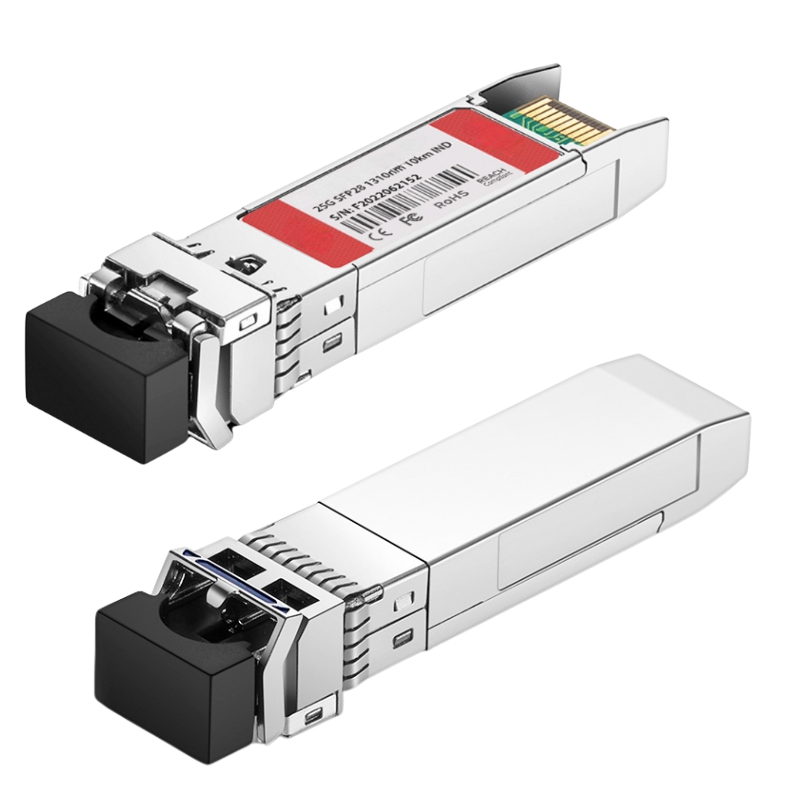
Intel E25GSFP28SR 25GB Multi-mode Fiber Duplex LC Connector SFP28 Transceiver. New Sealed in Box (NIB) with 3 Years Warranty
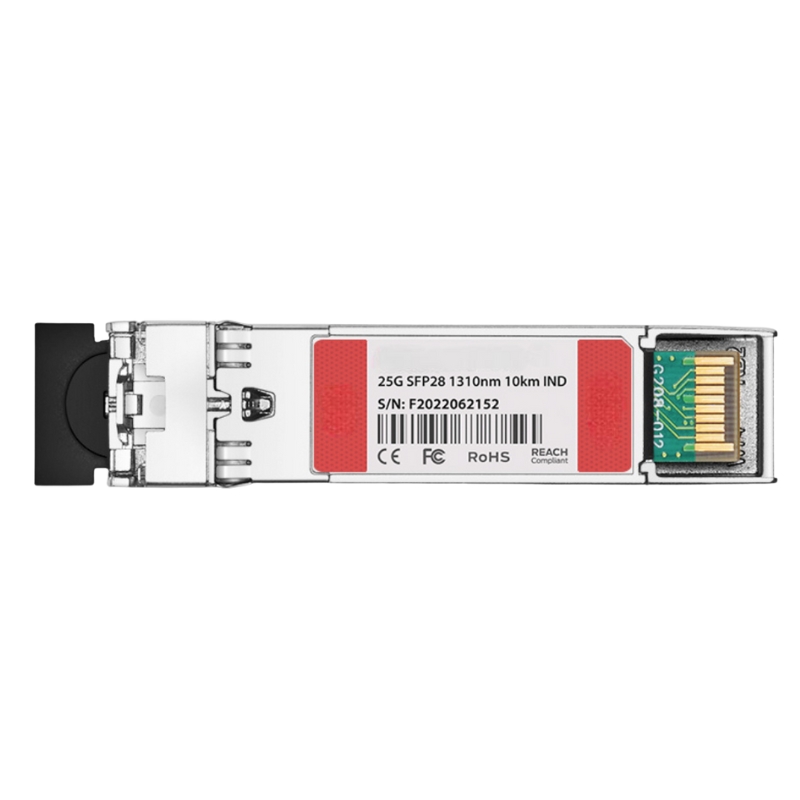
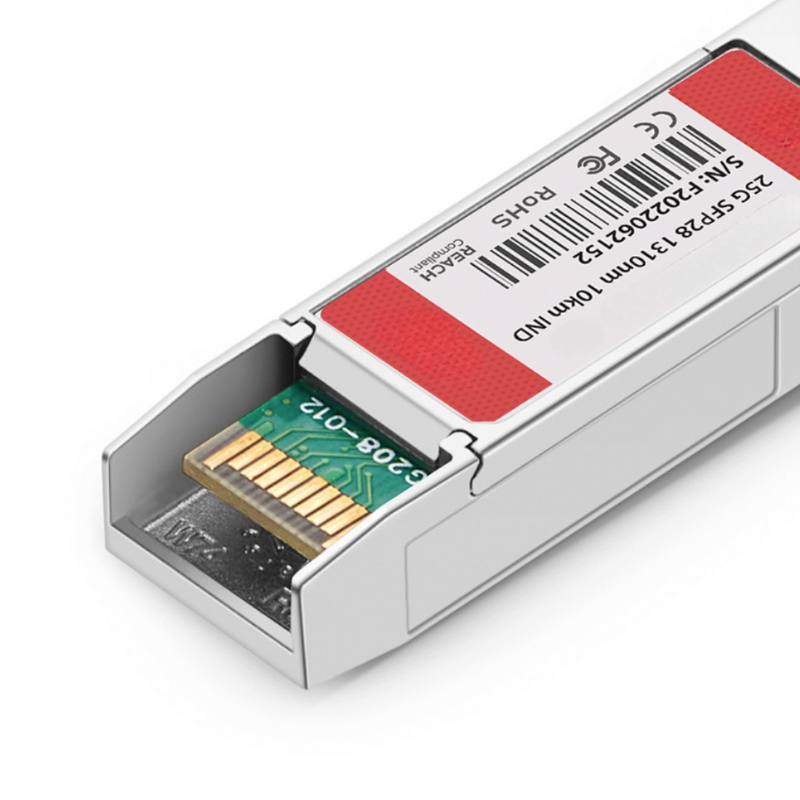
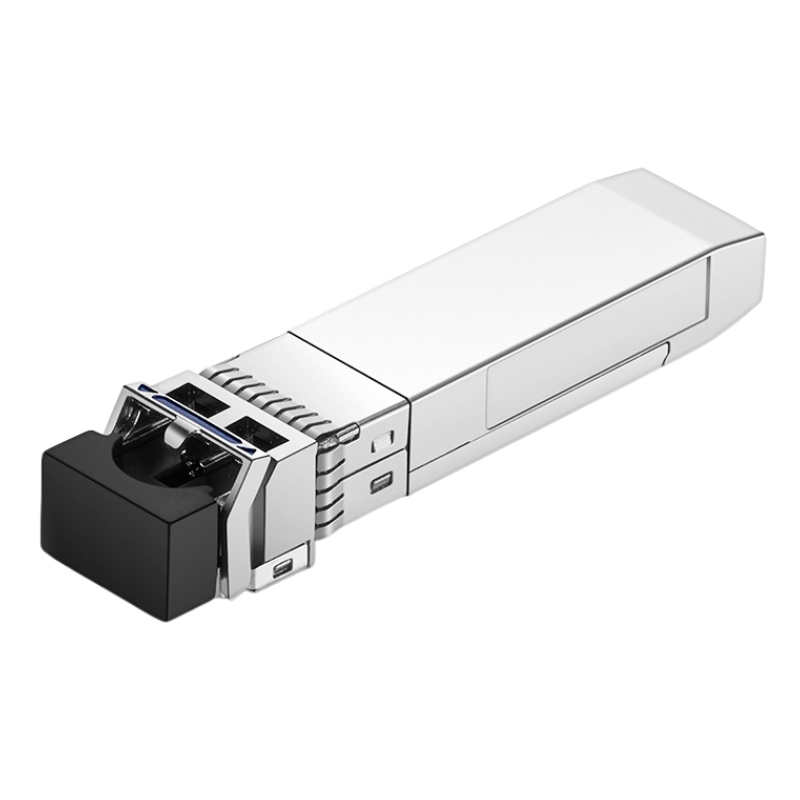
The Intel E25GSFP28SR is a 25GbE short-range optical transceiver designed for high-speed data transmission across enterprise networks, cloud environments, and modern data center infrastructures. Built in the compact SFP28 form factor, this Intel optical module supports 25 Gigabit Ethernet connectivity over multimode fiber and uses a duplex LC connector for stable, efficient signal delivery. It is engineered for organizations that require dependable low-latency communication between switches, servers, storage arrays, and high-bandwidth network appliances while maintaining a compact and scalable cabling design.
Brand: Intel
Part Number: E25GSFP28SR
Product Type: optical transceiver
The Intel E25GSFP28SR 25GB Multi-mode Fiber Duplex LC Connector SFP28 Transceiver belongs to a high-performance category of optical networking components built for 25 Gigabit Ethernet environments where speed, low latency, signal stability, and efficient rack-level connectivity are essential. This transceiver is designed for short-range optical communication across multimode fiber infrastructure and is commonly selected for enterprise data centers, cloud environments, high-density server clusters, virtualization platforms, storage networks, and modern network edge deployments that require reliable 25GbE optical interconnects.
As a member of the Intel Ethernet SFP28 optics family, the Intel E25GSFP28SR supports 25GbE networking through a compact SFP28 form factor that helps maximize switch and adapter port density while maintaining installation flexibility. Intel positions the E25GSFP28SR as a short-range optic for 10G and 25G Ethernet optical links, and Intel documentation identifies it as part of the Intel Ethernet SFP28 optics portfolio for data center and server networking applications. The product brief for Intel Ethernet SFP28 optics lists E25GSFP28SR as an SFP28 short-range optic aligned with 10G and 25GBASE-SR usage, while Intel guidance for 25G SR optics references multimode fiber operation and reach expectations in short-distance environments.
In practical deployment terms, this transceiver category addresses one of the most important infrastructure requirements in modern networking: delivering 25GbE throughput over fiber while preserving scalability, thermal efficiency, and compatibility with enterprise network adapters and switches. The Duplex LC connector design supports a familiar cabling model for multimode optical environments, making the module especially attractive for data centers already using structured fiber cabling with LC terminations. By combining the SFP28 mechanical form factor, 25GbE optical signaling, multimode fiber support, and Intel platform alignment, the Intel E25GSFP28SR category serves as a strong fit for organizations modernizing from 10GbE to 25GbE without moving directly to more expensive or higher-power 40GbE or 100GbE topologies.
The Intel E25GSFP28SR is part of the SFP28 transceiver class, which is a compact pluggable optical module category used for single-lane 25GbE communication. Compared with older 10GbE SFP+ optics, SFP28 enables a higher data rate while preserving a similar physical design philosophy, allowing dense port layouts and simplified migration paths in switches, network adapters, and server NIC environments. Intel documentation for SFP28 optics places the E25GSFP28SR in the short-range optical segment of the Intel Ethernet transceiver lineup and associates SFP28 with 25GbE operation over multimode fiber.
The value of the SFP28 form factor extends beyond simple compactness. In dense server rooms and hyperscale racks, every millimeter of front-panel space matters. A smaller pluggable optic helps networking teams preserve faceplate density, deploy more ports per switch, and maintain a modular cabling strategy that can be adapted as workloads grow. Instead of relying on permanently attached optics or fixed copper ports, organizations can install, replace, or standardize transceivers according to distance, cable type, and rack design. This flexibility is especially important when network planners need to scale east-west traffic between servers, storage arrays, and leaf-spine switching infrastructure.
The hot-pluggable nature of the SFP28 transceiver category also supports operational efficiency. Technicians can replace a module during maintenance windows, swap optics during migration projects, or standardize spare inventory across multiple server clusters. In environments where uptime, change control, and infrastructure consistency are critical, a hot-swappable optic with a widely recognized connector and media profile can simplify both deployment and support processes. Intel also frames its Ethernet optics as pluggable optical connectivity solutions designed for interoperable use in Ethernet networking systems, reinforcing the role of the E25GSFP28SR as a modular building block within high-speed data communication architectures.
High-density switching remains one of the central design goals in modern data center architecture. When operators move from 10GbE to 25GbE, they often want to improve bandwidth per port without multiplying power draw, cabling complexity, or rack space consumption. The Intel E25GSFP28SR category supports that objective by enabling 25GbE throughput in a small transceiver footprint that can be installed in a large number of ports across adapters and switches.
This density benefit matters in top-of-rack switching, leaf-spine fabrics, hyperconverged infrastructure, and clustered compute environments. A compact SFP28 optic allows administrators to connect more hosts, more storage nodes, and more inter-switch uplinks in the same physical footprint. It also helps preserve airflow patterns compared with bulkier cabling or larger optical module classes. For operators trying to optimize power, cooling, and cable management simultaneously, the SFP28 optic format is often one of the most efficient ways to scale 25GbE access.
The modular design of the Intel E25GSFP28SR category aligns with the way enterprise and cloud networking environments are managed today. A hot-pluggable optical module reduces the operational burden of hardware refresh projects because it can be inserted or replaced independently of the larger network adapter or switch. This approach helps preserve investment in switching platforms and server NICs while allowing the optical layer to be adapted according to rack distance, fiber type, or workload location.
Modular serviceability also helps organizations build standardized spare inventories. Instead of maintaining entirely separate network interface cards for different optical media requirements, administrators can maintain a common 25GbE adapter strategy and vary only the transceiver where needed. This simplifies planning, improves repair workflows, and makes it easier to scale clusters over time.
The Intel E25GSFP28SR is a multi-mode fiber optical transceiver designed for short-range communication. In the 25GbE optic category, short-range multimode modules are frequently chosen for intra-data-center connectivity, including server-to-switch links, switch-to-switch links within the same row, and storage fabric connections that do not require long-distance single-mode transport. Intel support and product brief materials place SR optics in the multimode fiber category and distinguish them from LR optics that are intended for longer single-mode links. Intel support documentation specifically notes that 25G SR modules are the recommended choice for OM4 multimode fiber environments, and it cites up to 100 meters on OM4 for 25G SR operation.
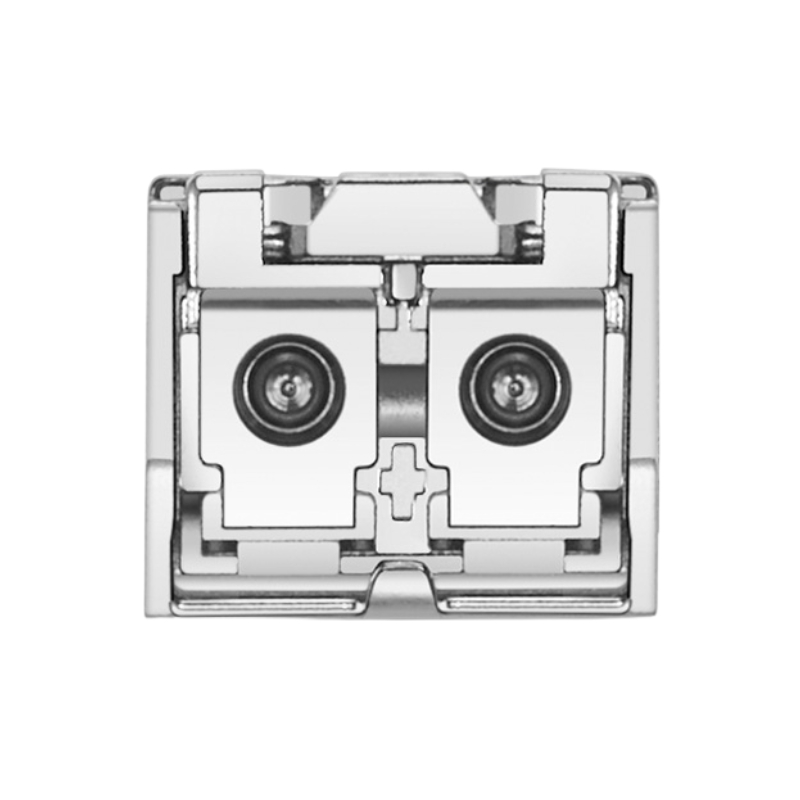
The Duplex LC connector design is equally important because it reflects the cabling reality of many enterprise and colocation facilities. LC connectors are widely used in structured fiber systems due to their compact size, dependable retention, and compatibility with high-density patch panels and transceiver cages. A Duplex LC interface allows separate transmit and receive paths over paired multimode fibers, making the transceiver straightforward to integrate into established optical cabling layouts.
For organizations with existing OM3 or OM4 multimode cabling, a module like the Intel E25GSFP28SR can be a practical way to increase port speed without replacing the entire physical fiber plant. The optic is especially well suited to controlled, short-distance environments where multimode fiber is already installed and where the economics of SR optics are favorable compared with longer-reach single-mode modules. This combination of 25GbE signaling, multimode compatibility, and LC termination makes the E25GSFP28SR category particularly relevant to data halls, server pods, and enterprise core rooms where many short optical runs must be deployed quickly and consistently.
Although single-mode fiber often receives attention for long-distance transport and future-proof reach, multimode fiber continues to play a major role inside data centers where links are relatively short and high port counts are common. In these environments, the cost profile and established cabling base of multimode fiber often make SR optics the preferred option. A transceiver like the Intel E25GSFP28SR fits naturally into this model because it is designed for short-range multimode optical communication rather than extended campus or metro fiber runs.
Multi-mode deployments are particularly attractive for server access layers, rack aggregation, and lateral switching where the required reach is measured in meters rather than kilometers. In these scenarios, an SR optic can provide the needed throughput with a familiar installation model and a lower overall optical infrastructure burden than long-range optics.
The Duplex LC connector remains one of the most widely used optical connector formats in enterprise networking. Its small size supports dense front-panel layouts, while its common presence in patch panels and structured cabling systems helps reduce deployment friction. For buyers and infrastructure planners, the presence of a Duplex LC interface on the Intel E25GSFP28SR is significant because it supports consistency across switches, adapters, patch panels, and preterminated cable assemblies.
Standardized LC-based cabling also simplifies inventory management. Organizations can maintain a more unified spare parts strategy across 10GbE and 25GbE optical layers where compatible cabling practices are already established. This can reduce installation errors and accelerate rollout timelines when adding new servers or expanding network capacity.
The Intel E25GSFP28SR category is centered on 25 Gigabit Ethernet optical connectivity, a speed tier that has become highly important in modern server networking. Intel’s Ethernet cable and transceiver guide identifies SFP28 as a 25GbE transceiver class, and Intel’s product brief for Ethernet SFP28 optics places the E25GSFP28SR in the short-range 25GBASE-SR segment.
25GbE offers a compelling balance between bandwidth growth and infrastructure efficiency. Compared with 10GbE, it provides significantly more throughput per port, which is valuable for virtualization clusters, storage traffic, east-west application communication, and software-defined networking environments. At the same time, 25GbE can often be deployed using a lane-efficient architecture that aligns well with modern switch ASICs and server adapter designs. This makes 25GbE an attractive stepping stone or long-term standard for organizations that want more bandwidth than 10GbE but do not yet need the economics or architecture of 100GbE at every connection point.
The Intel E25GSFP28SR therefore fits into a strategic performance tier. It supports higher throughput for bandwidth-hungry workloads such as distributed storage, VM mobility, containerized application fabrics, database replication, analytics pipelines, and backup windows that increasingly strain 10GbE links. In many enterprise environments, the move to 25GbE is not only about raw speed but also about reducing oversubscription, improving application response consistency, and preparing the network for future east-west traffic growth.
One of the strongest reasons to choose the Intel E25GSFP28SR category is the transition path it supports from legacy 10GbE infrastructures to 25GbE architectures. Many enterprises spent years standardizing on 10GbE for server access, storage connectivity, and virtualization hosts. As data volumes increased and CPU platforms became more powerful, 10GbE links began to show limitations in heavily consolidated environments. A 25GbE optic allows organizations to raise throughput per link without necessarily redesigning the entire switching philosophy.
For hypervisors, clustered databases, backup appliances, and software-defined storage systems, a move to 25GbE can improve transfer windows, reduce congestion, and support more simultaneous east-west traffic flows. This becomes especially valuable in environments where a single server may host many virtual machines or containers, each generating its own network demand profile.
Data center traffic patterns have shifted dramatically toward east-west communication between servers, nodes, storage targets, and service layers. In this type of environment, the network interconnect is not merely an uplink to users but a core part of application performance. Optical 25GbE links such as those enabled by the Intel E25GSFP28SR are frequently chosen for predictable latency, clean signal delivery, and the ability to maintain performance across dense cabling environments.
When applications rely on replication, clustering, service mesh communication, or distributed computing frameworks, stable short-range optical connectivity can help reduce bottlenecks and support more consistent workload behavior. The transceiver category therefore contributes not only to line-rate bandwidth but also to the overall quality of internal application communication.
Another major strength of the Intel E25GSFP28SR category is its alignment with Intel Ethernet adapter ecosystems. Intel compatibility guidance for the XXV710 family states that Intel Ethernet SFP28 SR optics can be purchased separately and that XXV710 series adapters support SFP28 SR and LR optics. Intel’s XXV710-DA2 adapter specifications also identify support for SFP28 SR and LR optics alongside direct attach cable options.
This matters because transceiver selection is rarely isolated from the rest of the networking stack. Buyers often need assurance that the optic will work correctly with server NICs, firmware expectations, thermal design assumptions, and management tools. A transceiver developed within the same vendor ecosystem as the network adapter can simplify procurement, interoperability validation, and support coordination. For organizations building around Intel-based server connectivity, the E25GSFP28SR is therefore more than a generic 25GbE optic. It is a platform-aligned module that fits naturally into Intel Ethernet infrastructure planning.
Compatibility also has a practical effect on deployment confidence. When a data center team installs a supported optic in a validated adapter family, it can reduce the risk of link negotiation issues, unsupported module messages, and troubleshooting complexity. This is particularly valuable in large-scale environments where hundreds or thousands of optics may be deployed and where operational consistency matters as much as peak performance.
The Intel E25GSFP28SR is especially well suited to short-range optical applications in enterprise and cloud data centers. Because it is a multimode SR optic in the SFP28 class, it aligns with the kinds of connections most commonly found within a room, row, or rack cluster rather than across long campus distances. Its role is therefore closely tied to internal infrastructure communication where high port density and predictable short-reach optical performance are needed.
One major use case is server-to-switch connectivity in top-of-rack and leaf switching architectures. In these environments, each server or storage node may require a 25GbE uplink to a local switch, and the cumulative port count can become very large. A compact SR optic with Duplex LC connectivity allows dense patching and efficient use of existing multimode cabling systems.
Another important use case is hyperconverged and software-defined infrastructure. These platforms often generate heavy east-west traffic because compute, storage, and management functions are distributed across multiple nodes. A 25GbE optical transceiver can help provide the bandwidth needed for replication, storage synchronization, migration traffic, and cluster communication.


 Contact Us
 Information
 Catalog
 Solid State Drives (SSD)
 Network Switches
 Hard Disk Drives
 HBA & Controllers
 PC & Servers
 PC & Server Memory
 CPU & Processors
 Network Routers
 Power Supplies
 Tape Drives & Libraries
 Network Devices
 Computer & Network Cables