(7% discount is applied at checkout)
Cart is empty
Your go-to destination for cutting-edge server products
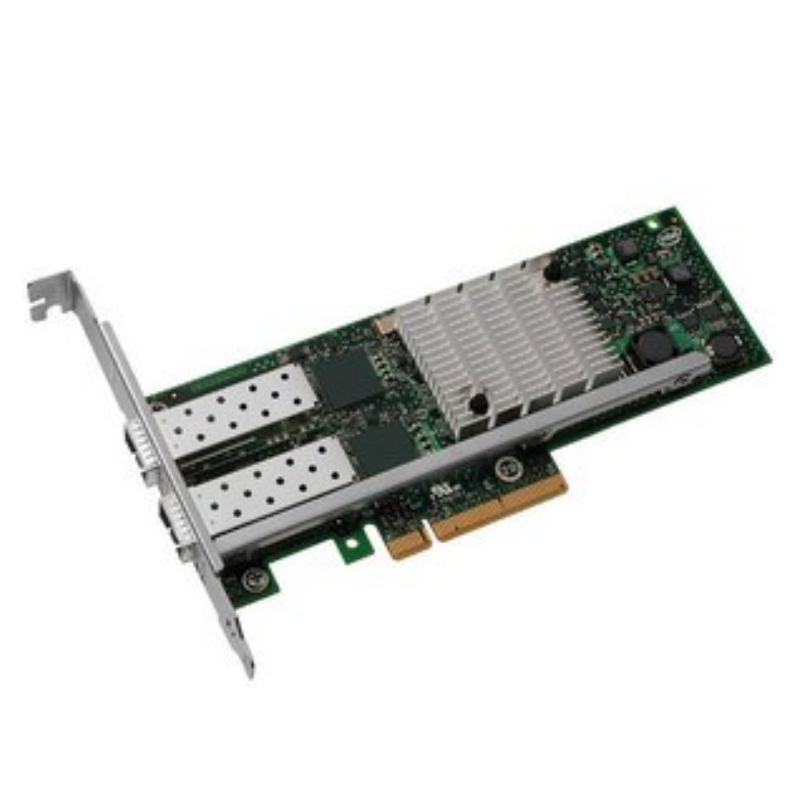


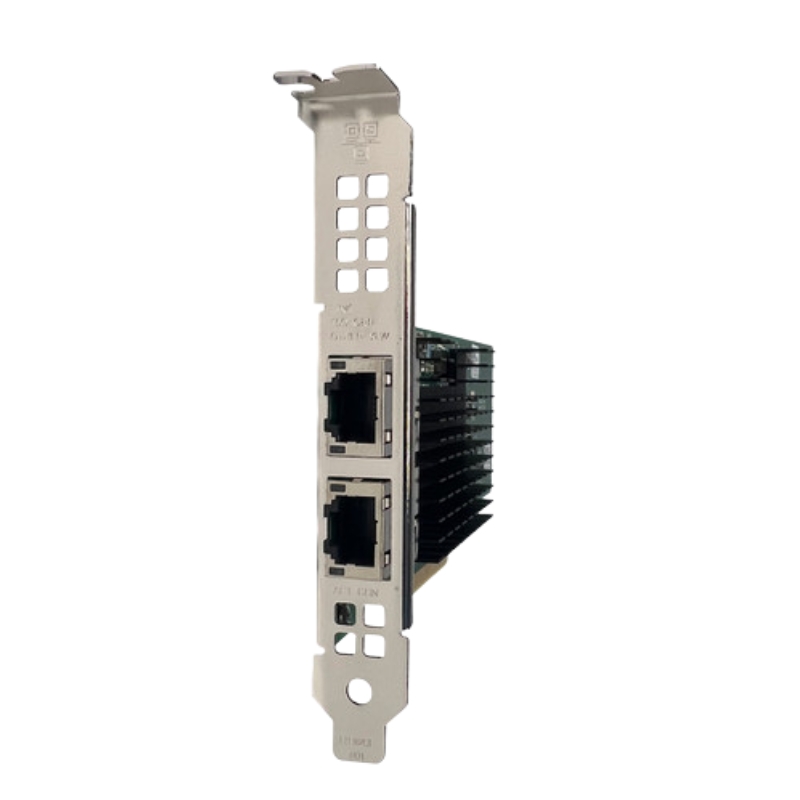
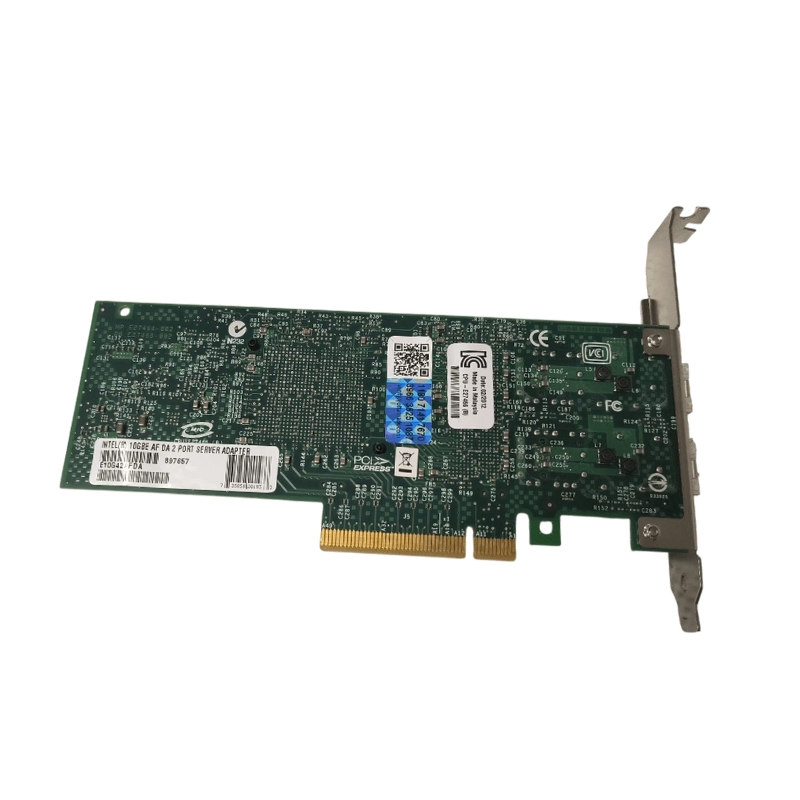
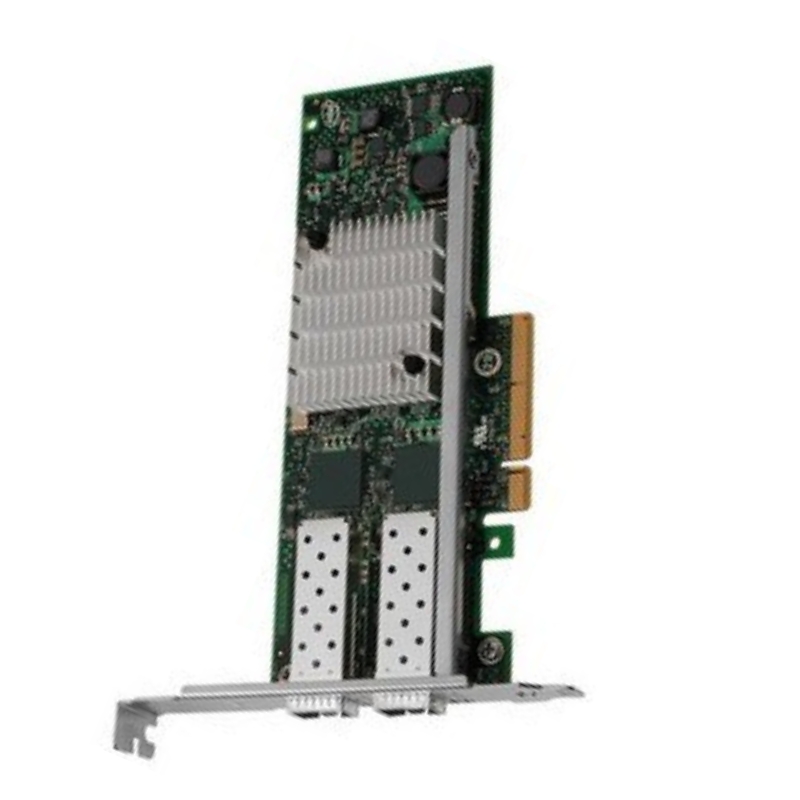
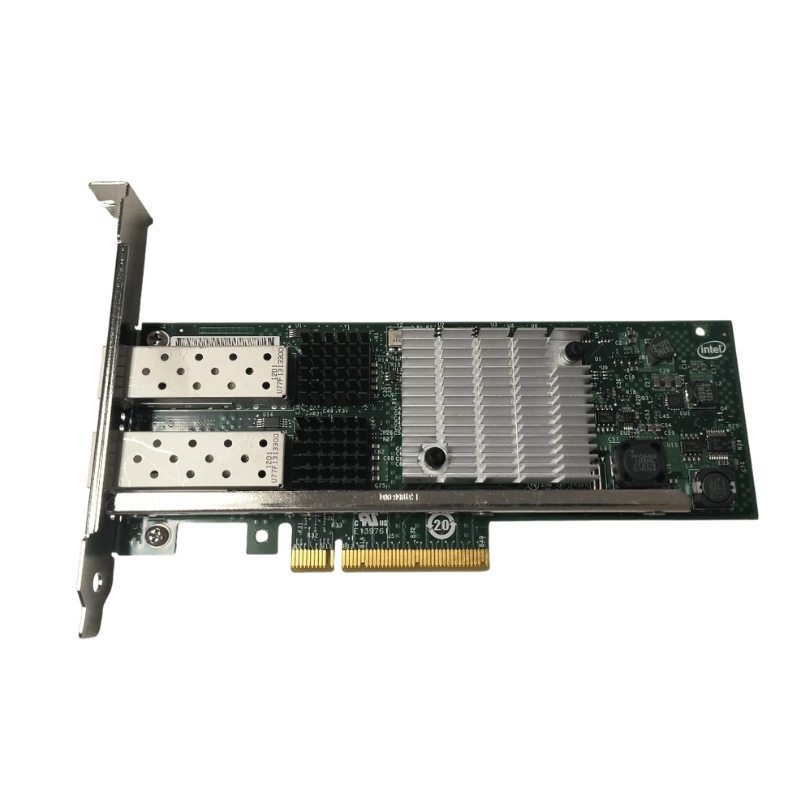
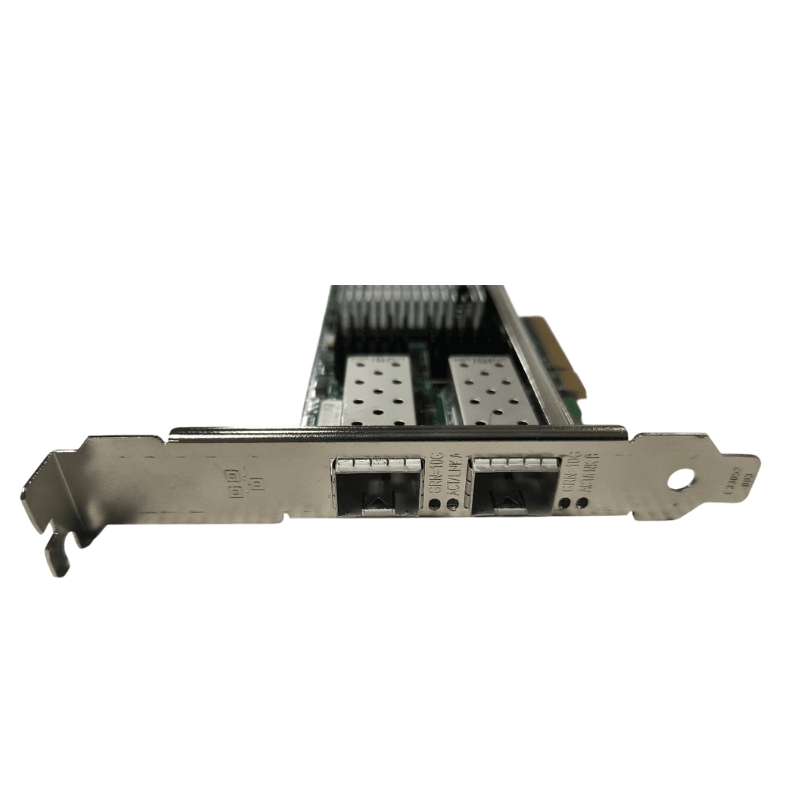
Intel EX710DA2G1P5 Dual-Ports Copper 10Gbps PCI Express Low Profile Ethernet Server Adapter. Excellent Refurbished with 1 year replacement warranty
| SKU/MPN | Warranty | Price | Condition | You save |
|---|---|---|---|---|
| EX710DA2G1P5 | 1 Year Warranty | $320.00 | Factory-Sealed New in Original Box (FSB) | You save: $112.00 (26%) |
| EX710DA2G1P5 | 1 Year Warranty | $122.00 | Excellent Refurbished | You save: $42.70 (26%) |
Intel EX710DA2G1P5 Server Network Adapter
The Intel EX710DA2G1P5 is a high-speed dual-port Ethernet server adapter engineered for demanding enterprise networks, virtualization platforms, cloud computing environments, and data center infrastructures. Featuring two 10 Gigabit SFP+ interfaces, this low-profile PCI Express adapter delivers exceptional throughput, advanced traffic management, and enhanced network efficiency.
The Intel EX710DA2G1P5 Dual-Ports Copper 10Gbps PCI Express Low Profile Ethernet Server Adapter is designed to address the increasing demand for high-bandwidth network connectivity in modern enterprise, cloud, virtualization, and data center environments. As organizations continue to generate and process larger volumes of data, traditional networking infrastructures often become bottlenecks that limit application performance and business productivity. This dual-port 10Gbps Ethernet server adapter provides a reliable and scalable solution for delivering high-speed network communication while maintaining compatibility with a broad range of server platforms.
Built around advanced Intel Ethernet technologies, the adapter enables organizations to enhance network throughput, improve application responsiveness, and support bandwidth-intensive workloads. Its dual-port architecture offers flexibility for network segmentation, redundancy, failover protection, and load balancing, making it a valuable component in enterprise-grade networking deployments. The low-profile design further increases deployment versatility by allowing installation in compact servers, rack-mounted systems, and space-constrained computing environments.
Server adapters are critical components within modern networking infrastructures because they serve as the interface between computing resources and network communications. As applications become increasingly data intensive, organizations require networking hardware capable of supporting high-speed data transfers without introducing latency or performance limitations.
The Intel EX710DA2G1P5 Dual-Ports Copper 10Gbps PCI Express Low Profile Ethernet Server Adapter is engineered to meet these requirements by providing two independent 10 Gigabit Ethernet ports. This level of connectivity significantly exceeds the capabilities of traditional Gigabit Ethernet adapters, enabling organizations to support demanding workloads such as virtualization, cloud computing, big data analytics, database operations, software-defined storage, and high-performance computing environments.
The adapter allows servers to communicate more efficiently with storage arrays, application servers, virtualization hosts, and network infrastructure components. By reducing data transfer bottlenecks, organizations can achieve better utilization of server resources and improved overall system performance.
The dual-port configuration of the Intel EX710DA2G1P5 provides organizations with additional flexibility when designing and managing network infrastructures. Each port can operate independently, allowing network administrators to separate traffic flows according to business requirements.
One interface may be dedicated to production traffic while the second interface supports storage communications, backup operations, virtualization traffic, or management functions. This separation helps improve performance consistency and simplifies network administration across complex environments.
Dual-port configurations also contribute to greater network resilience. In situations where one network connection becomes unavailable, traffic can be redirected through the secondary interface, minimizing disruptions and maintaining service availability.
High availability remains a priority for organizations that depend on uninterrupted access to applications, databases, and digital services. The dual-port design enables redundant network paths that help reduce the impact of hardware failures or network interruptions.
By leveraging redundant connectivity strategies, enterprises can improve business continuity and ensure critical workloads remain accessible even during maintenance activities or unexpected network events. This capability is particularly important for financial institutions, healthcare providers, cloud service operators, and large-scale enterprise environments.
The presence of two 10Gbps interfaces provides opportunities for network traffic distribution across multiple links. By balancing workloads between available connections, organizations can optimize bandwidth utilization and improve application performance.
Load distribution helps eliminate congestion while supporting increased throughput for data-intensive applications. This capability is especially valuable in environments characterized by large-scale virtualization, storage networking, and high-volume transactional processing.
The transition from Gigabit Ethernet to 10 Gigabit Ethernet represents a substantial increase in available bandwidth. The Intel EX710DA2G1P5 delivers the performance necessary to support modern enterprise workloads that generate significant volumes of network traffic.
Applications involving large database transactions, cloud-based services, virtualization migrations, video streaming, software distribution, and backup operations all benefit from increased throughput. Higher bandwidth availability helps reduce transfer times and improves overall operational efficiency.
Organizations seeking to eliminate networking bottlenecks often deploy 10Gbps Ethernet adapters as part of broader infrastructure modernization initiatives. The result is improved responsiveness across applications and enhanced user experiences.
As more users, applications, and devices share network resources, congestion can negatively impact performance. The Intel EX710DA2G1P5 helps alleviate these challenges by providing substantially greater data transmission capacity than conventional network adapters.
With higher throughput available, organizations can support larger numbers of concurrent users and applications without experiencing the performance degradation commonly associated with network saturation.
Large-scale file transfers, storage replication, disaster recovery operations, and virtual machine migrations place significant demands on networking infrastructure. The adapter's 10Gbps capabilities enable these processes to complete more efficiently, reducing operational delays and supporting business productivity objectives.
Faster data movement also contributes to improved backup windows, more efficient resource utilization, and enhanced application responsiveness across enterprise environments.
The Intel EX710DA2G1P5 utilizes PCI Express technology to establish a high-performance communication pathway between the server motherboard and the network adapter. PCI Express offers significantly greater bandwidth compared to older bus architectures, ensuring that the adapter can fully leverage its networking capabilities.
This high-speed interface helps prevent internal system bottlenecks that could otherwise limit network performance. By providing efficient communication between networking hardware and server resources, PCI Express contributes to consistent and reliable data transfer operations.
Efficient server networking requires both external bandwidth and internal data handling capabilities. The PCI Express architecture supports rapid packet processing and minimizes delays associated with moving data between system components.
This optimization helps organizations achieve maximum value from their networking investments while supporting demanding enterprise workloads that require sustained high-performance communications.
The low-profile form factor makes the Intel EX710DA2G1P5 suitable for deployment in servers where physical space is limited. Many modern data centers prioritize high-density computing environments that maximize resource utilization within available rack space.
Low-profile adapters enable organizations to deploy advanced networking capabilities without compromising server density objectives. This flexibility supports efficient infrastructure planning and accommodates a wide range of hardware configurations.
Infrastructure requirements vary significantly across organizations. Some environments utilize full-height server platforms, while others depend on compact systems designed for maximum density. The low-profile design of the Intel EX710DA2G1P5 accommodates these diverse deployment scenarios and supports flexible infrastructure planning strategies.
Virtualization has become a foundational technology within enterprise computing environments. Multiple virtual machines often share the same physical server resources, generating substantial network traffic that requires efficient handling.
The Intel EX710DA2G1P5 provides the bandwidth necessary to support virtual machine communications, storage access, migration processes, and application traffic simultaneously. This capability contributes to improved virtualization performance and resource utilization.
Live migration technologies allow organizations to move workloads between physical hosts without disrupting services. These migration processes involve transferring large volumes of memory and storage data across network connections.
The adapter's 10Gbps throughput capabilities help accelerate migration operations, reducing transition times and supporting dynamic resource allocation within virtualized infrastructures.
Hypervisors rely heavily on network connectivity to manage communications between virtual machines, storage systems, and external resources. The Intel EX710DA2G1P5 enhances these interactions by delivering high-bandwidth connectivity that supports demanding virtualization environments.
Organizations can achieve greater consolidation ratios and improved workload performance while maintaining network reliability.
Cloud computing environments require robust networking solutions capable of handling large volumes of east-west and north-south traffic. The Intel EX710DA2G1P5 provides the bandwidth and reliability necessary to support cloud-based services, multi-tenant environments, and distributed application architectures.
Its dual-port design enables flexible network segmentation strategies that improve security, performance, and resource management within cloud infrastructures.
As organizations modernize their data centers, upgrading network connectivity becomes a critical component of infrastructure transformation initiatives. The Intel EX710DA2G1P5 supports this modernization process by providing high-speed Ethernet connectivity that aligns with contemporary application requirements.
Enhanced throughput capabilities help organizations prepare for future growth while supporting current operational demands.
Modern storage systems generate substantial network traffic due to backup operations, replication activities, and centralized storage architectures. The adapter supports these environments by delivering reliable 10Gbps connectivity capable of handling intensive storage communications.
Improved storage networking performance contributes to faster data access, reduced backup windows, and enhanced disaster recovery capabilities.
Modern Intel Ethernet technologies incorporate advanced hardware acceleration features that reduce processor overhead associated with networking operations. By offloading specific networking tasks from the server CPU, the adapter helps improve overall system efficiency.
Reduced processor utilization allows computing resources to remain focused on application workloads rather than network management tasks, contributing to improved system performance.
Business-critical applications depend on consistent and dependable network connectivity. The Intel EX710DA2G1P5 is designed for enterprise environments where reliability and stability are essential operational requirements.
Its robust architecture supports continuous operation under demanding workloads while helping maintain predictable network performance.
Enterprise networking investments must deliver value over extended deployment periods. The Intel EX710DA2G1P5 combines high-speed Ethernet performance, dual-port flexibility, low-profile compatibility, and PCI Express efficiency to support long-term infrastructure objectives.
Organizations can leverage the adapter across a wide range of workloads, ensuring continued relevance as networking requirements evolve over time.
Financial institutions depend on low-latency networking and reliable connectivity to support transaction processing, market analysis, risk management systems, and customer-facing applications. The adapter's 10Gbps capabilities help facilitate rapid data movement and consistent performance in these demanding environments.
Healthcare organizations generate substantial volumes of digital information through electronic medical records, diagnostic imaging systems, telemedicine platforms, and research applications. High-speed networking adapters support efficient data exchange while helping maintain responsive access to critical information.
Universities, laboratories, and research facilities frequently process large datasets associated with scientific analysis, simulations, and collaborative projects. The Intel EX710DA2G1P5 provides the bandwidth necessary to support these activities while enabling efficient communication between computing resources and storage systems.
The Intel EX710DA2G1P5 Dual-Ports Copper 10Gbps PCI Express Low Profile Ethernet Server Adapter represents a powerful networking solution for organizations seeking enhanced bandwidth, improved scalability, and enterprise-grade reliability. Through its dual-port architecture, 10 Gigabit Ethernet performance, PCI Express connectivity, low-profile compatibility, virtualization optimization, and support for cloud and data center environments, this server adapter delivers the networking capabilities required by modern enterprise infrastructures. Its ability to support demanding workloads while maintaining deployment flexibility makes it an essential component for organizations focused on maximizing server performance and building future-ready networking environments.


 Contact Us
 Information
 Catalog
 Solid State Drives (SSD)
 Network Switches
 Hard Disk Drives
 HBA & Controllers
 PC & Servers
 PC & Server Memory
 CPU & Processors
 Network Routers
 Power Supplies
 Tape Drives & Libraries
 Network Devices
 Computer & Network Cables