(7% discount is applied at checkout)
Cart is empty
Your go-to destination for cutting-edge server products
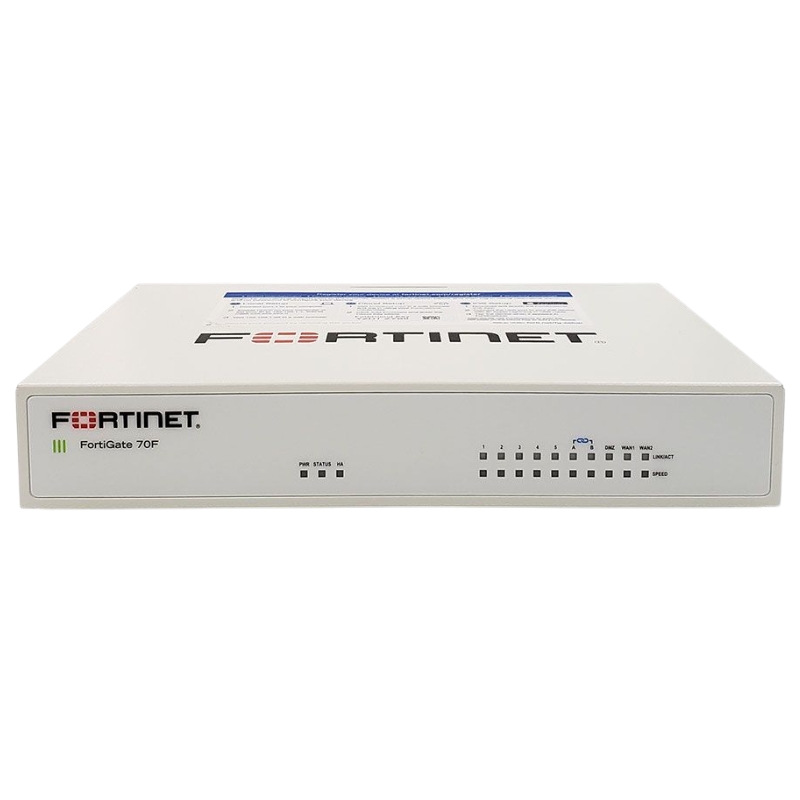


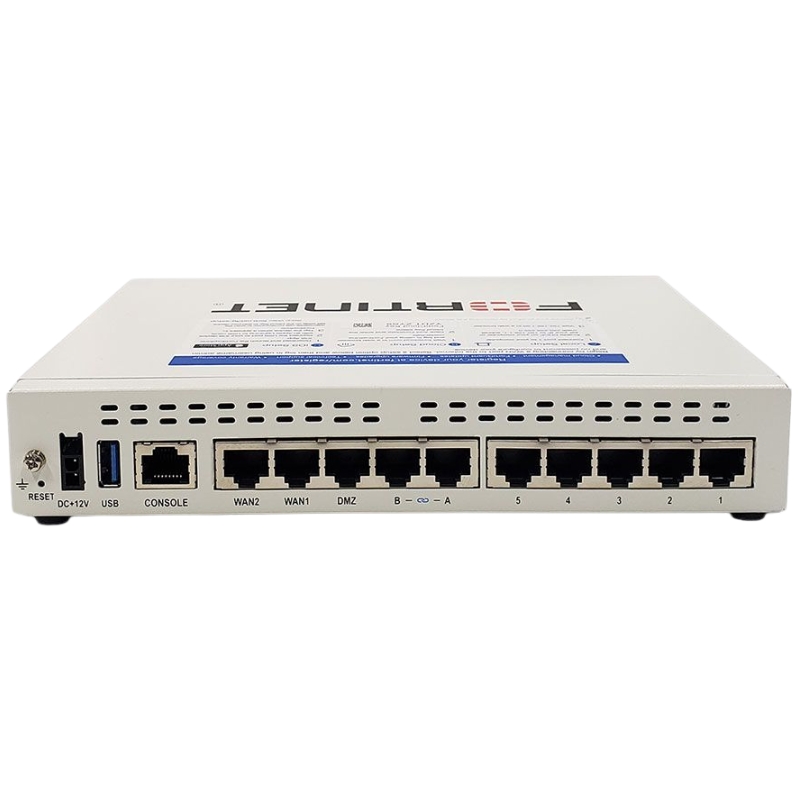
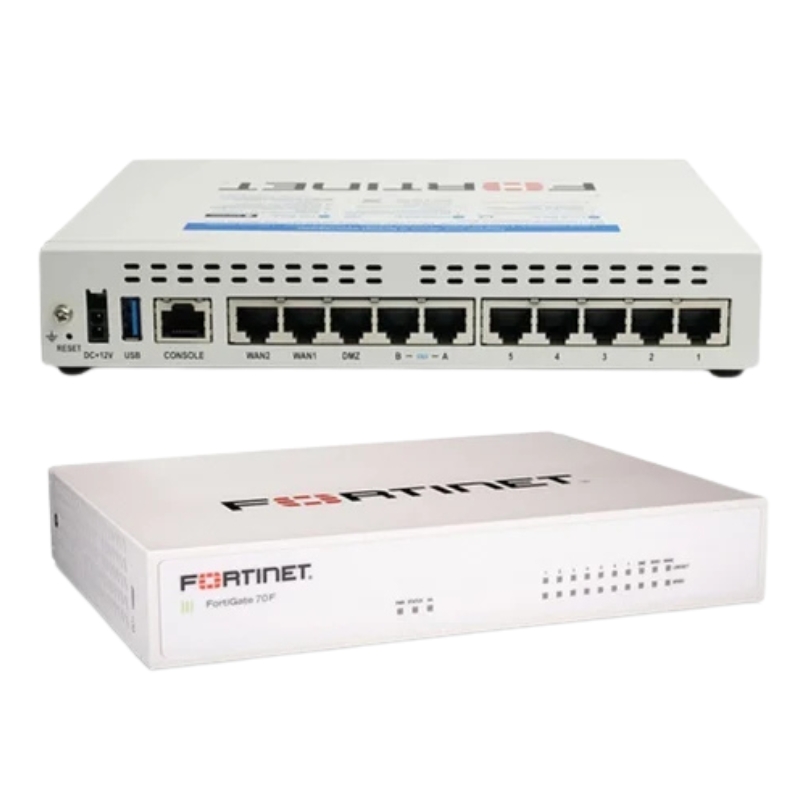
Fortinet FG-70F Fortigate Network Security/Firewall Appliance. Factory-Sealed New in Original Box (FSB) with 3-Years Warranty
The Fortinet FG-70F FortiGate Network Security Appliance is a high-performance cybersecurity solution designed to deliver advanced threat protection, secure connectivity, and efficient traffic management for modern enterprise and branch environments. Built to support scalable network infrastructures, this next-generation security device combines firewall intelligence, VPN capabilities, and SD-WAN optimization in a compact desktop form factor, ensuring reliable protection against evolving cyber threats while maintaining smooth network performance.
The Fortinet FG-70F Fortigate Network Security Appliance represents a next generation network security platform designed for modern branch environments, distributed enterprises, and organizations requiring high performance unified threat protection with integrated networking intelligence. This security appliance is positioned within the Fortinet FortiGate family, delivering advanced firewall capabilities, intrusion prevention, secure VPN connectivity, application control, and intelligent traffic management through a tightly integrated hardware and software architecture.
Modern business environments depend on secure connectivity between users, applications, cloud platforms, and remote offices. The FG-70F appliance is engineered to support these requirements by combining high throughput security processing with intelligent inspection engines that analyze traffic behavior in real time. This enables organizations to maintain consistent protection across all network layers while preserving application performance and user experience.
The security engine within the FG-70F platform is built on a specialized processing architecture optimized for network traffic inspection and enforcement. Instead of relying solely on general purpose processing, the appliance integrates dedicated acceleration components that improve throughput for security services such as deep packet inspection, intrusion detection, and encrypted traffic analysis.
This architecture supports continuous monitoring of network sessions while maintaining low latency performance, making it suitable for environments where real time applications such as voice communication, video conferencing, and cloud based services are critical to business operations. The firewall system operates across multiple layers of the network stack, enabling granular visibility and control over application behavior, user activity, and data flows.
The FG-70F platform integrates multiple security functions into a unified protection framework designed to reduce complexity while improving defense capabilities. This framework includes intrusion prevention, antivirus scanning, web filtering, application control, and advanced malware detection mechanisms. Each of these components works in coordination to identify malicious activity and enforce security policies dynamically.
Unified threat protection ensures that network traffic is continuously evaluated against known signatures and behavioral patterns. This allows the system to detect both known threats and emerging attack vectors. The appliance is capable of inspecting encrypted traffic flows, providing visibility into secure communications that might otherwise conceal malicious payloads.
Remote connectivity has become a fundamental requirement for distributed organizations. The FG-70F supports secure VPN technologies that enable encrypted communication between branch offices, remote users, and centralized data centers. These VPN capabilities ensure that sensitive business data remains protected during transmission across public and private networks.
The appliance supports both site to site and client based VPN architectures. Site to site connectivity allows secure communication between office locations, while client based remote access enables employees and contractors to securely connect to corporate resources from external environments. This flexibility supports hybrid workforce models and geographically distributed operations.
Modern enterprise networks require intelligent traffic routing mechanisms that optimize performance across multiple connectivity links. The FG-70F integrates SD WAN capabilities that dynamically select optimal network paths based on application requirements, link performance, and security policies.
SD WAN functionality enables organizations to combine multiple internet connections, private links, and broadband circuits into a unified transport architecture. Traffic is continuously monitored and routed based on latency, jitter, packet loss, and application sensitivity. This ensures that critical applications maintain high performance even under variable network conditions.
Application awareness is a core component of modern network security. The FG-70F appliance provides deep visibility into application traffic, enabling administrators to identify, classify, and control applications traversing the network. This includes cloud applications, productivity tools, communication platforms, and custom enterprise applications.
Application control policies allow organizations to prioritize business critical applications while restricting or limiting non essential traffic. This improves bandwidth utilization and ensures that important services receive the necessary network resources. It also reduces exposure to risky or unauthorized applications that may introduce security vulnerabilities.
The intrusion prevention system integrated within the FG-70F continuously analyzes network traffic for suspicious patterns and known attack signatures. It is designed to detect and block exploits targeting vulnerabilities in operating systems, applications, and network protocols.
Threat intelligence feeds enhance the detection capability by providing updated information about emerging threats, malicious domains, and attack behaviors. The system can automatically adapt its defense mechanisms based on evolving threat landscapes, ensuring proactive protection rather than reactive response.
As organizations increasingly adopt cloud computing platforms, secure integration between on premises infrastructure and cloud environments becomes essential. The FG-70F supports hybrid network architectures that extend security policies consistently across physical and virtual environments.
This integration enables secure access to cloud based applications, protected data synchronization, and consistent enforcement of security rules across distributed workloads. Organizations can maintain unified visibility over traffic flowing between data centers, cloud services, and remote endpoints.
Encryption plays a central role in protecting sensitive data in transit. The FG-70F supports advanced encryption standards to ensure secure communication across all network channels. This includes encrypted tunnels for VPN connections as well as inspection capabilities for encrypted traffic streams.
The ability to inspect encrypted traffic without compromising security allows organizations to identify threats hidden within secure sessions. This ensures that encryption does not become a blind spot within the security architecture.
Modern security strategies increasingly rely on segmentation and zero trust principles to reduce attack surfaces and limit lateral movement within networks. The FG-70F supports segmentation capabilities that allow administrators to divide network environments into isolated zones with specific security policies.
Zero trust implementation ensures that every connection request is authenticated, authorized, and continuously validated. This reduces the risk of unauthorized access and helps contain potential breaches within limited segments of the network.
The FG-70F integrates into a broader security ecosystem that allows multiple security devices and services to share intelligence and coordinate defense mechanisms. This interconnected approach improves visibility across the entire network infrastructure.
Security fabric integration enables automated response to threats, centralized monitoring, and coordinated enforcement of security policies across multiple devices. This reduces operational complexity while enhancing overall security posture.
Modern enterprise environments rely on cloud applications, collaboration tools, and data intensive workloads. The FG-70F is designed to optimize performance for these applications while maintaining strict security enforcement.
By intelligently managing traffic flows and prioritizing application performance, the system ensures that users experience minimal latency and consistent service quality. This is particularly important for organizations using software as a service platforms and real time communication tools.
As digital transformation continues to evolve, network security requirements become more complex and demanding. The FG-70F is designed with future readiness in mind, supporting scalable security frameworks and integration with emerging technologies.
This ensures that organizations can continue to expand their infrastructure while maintaining strong security controls. The platform’s adaptability supports long term investment protection and operational sustainability in dynamic IT environments.


 Contact Us
 Information
 Catalog
 Solid State Drives (SSD)
 Network Switches
 Hard Disk Drives
 HBA & Controllers
 PC & Servers
 PC & Server Memory
 CPU & Processors
 Network Routers
 Power Supplies
 Tape Drives & Libraries
 Network Devices
 Computer & Network Cables