(7% discount is applied at checkout)
Cart is empty
Your go-to destination for cutting-edge server products
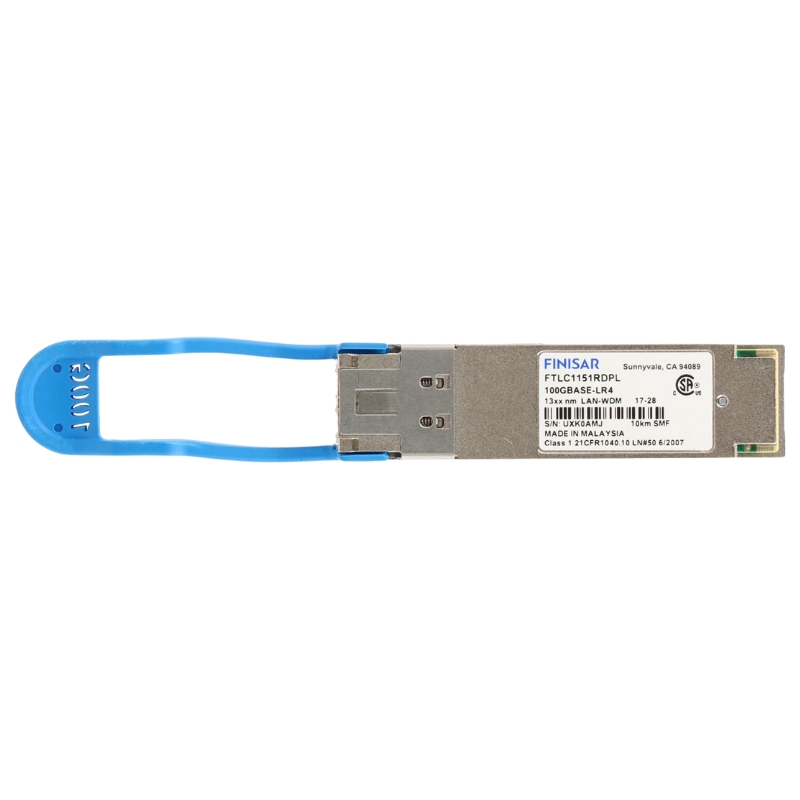


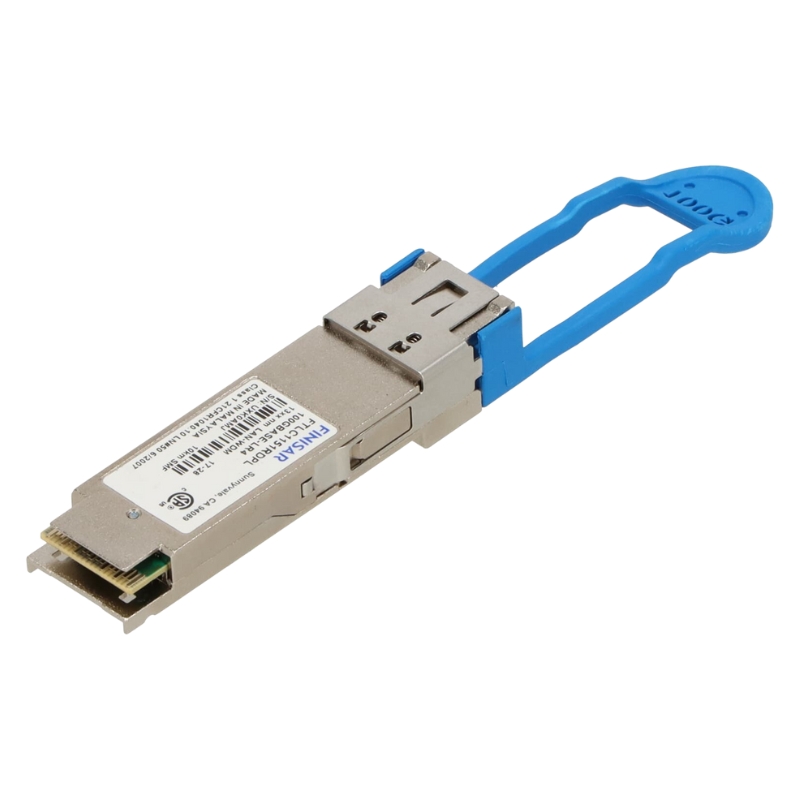
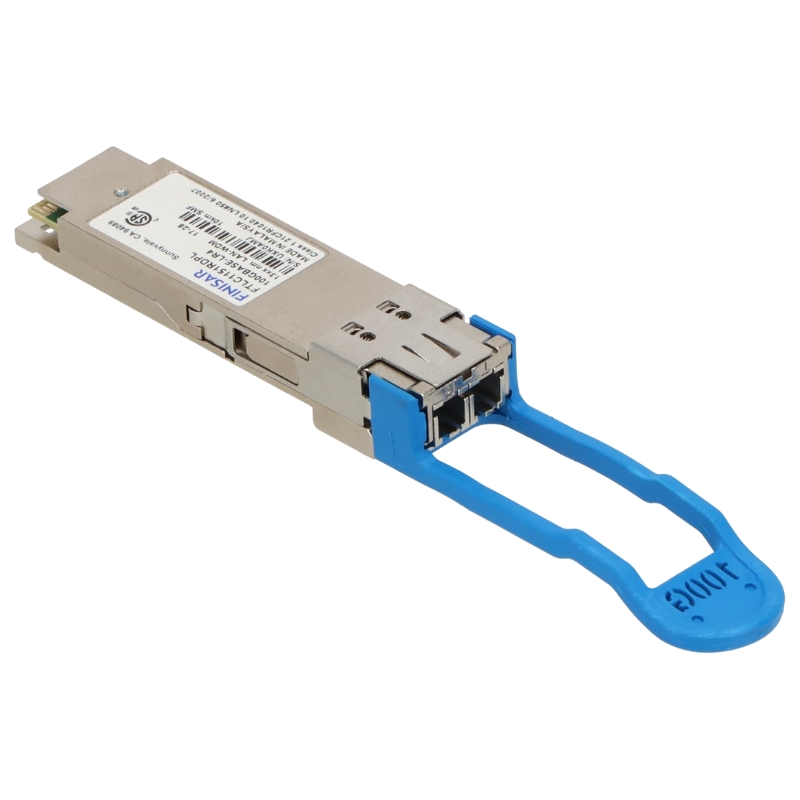
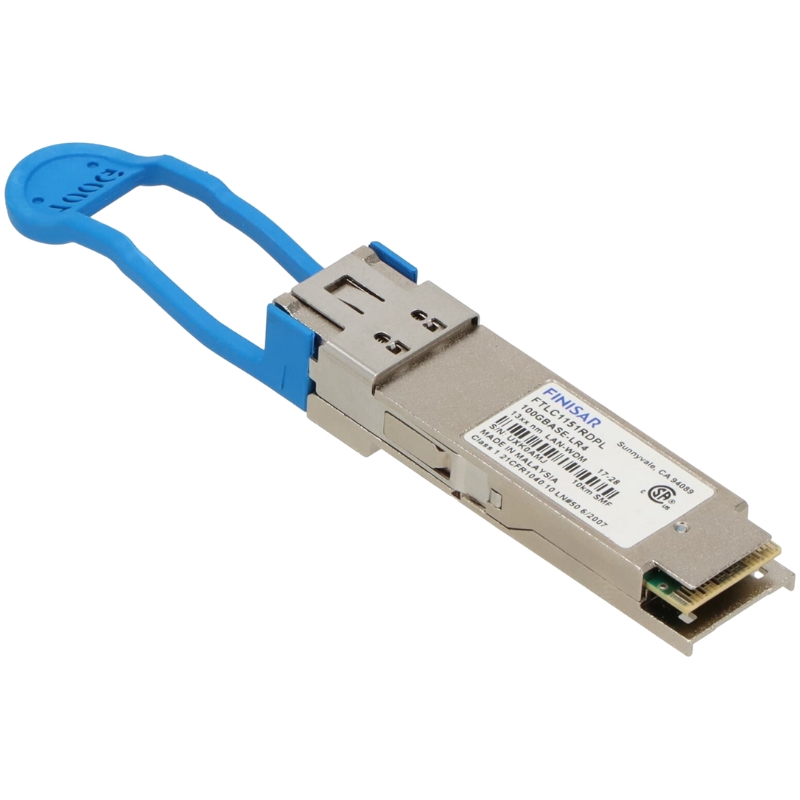
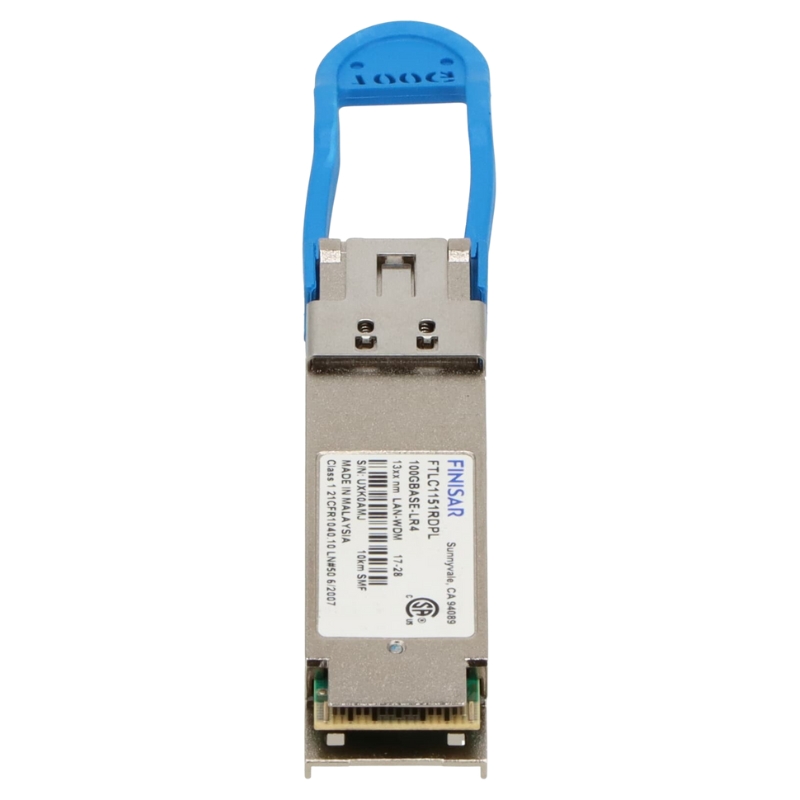
Finisar FTLC1157RGPL2-1Y 100G CWDM4 2km Gen2 SMF QSFP28 Transceiver. Excellent Refurbished with 1-Year Replacement Warranty
The FTLC1157RGPL2-1Y is a high-performance QSFP28 transceiver designed for modern networking demands. Manufactured by Finisar, this component excels in providing reliable and efficient optical connections across a wide array of applications, from data centers to high-speed communication systems.
The Finisar FTLC1157RGPL2-1Y 100G CWDM4 QSFP28 transceiver is designed as a high-performance optical communication module engineered for dense data center interconnects and enterprise backbone networks requiring ultra-low latency and high bandwidth throughput. It operates within the 100 Gigabit Ethernet (100GbE) standard and is optimized for single-mode fiber (SMF) transmission over distances up to 2 kilometers. This module implements Coarse Wavelength Division Multiplexing 4-lane (CWDM4) technology, allowing efficient multiplexing of four separate optical wavelengths into a single fiber pair, significantly reducing fiber infrastructure complexity while maximizing data throughput.
The QSFP28 form factor is a compact, high-density module design that supports 4x25Gbps electrical lanes, delivering an aggregated 100Gbps data rate. The Finisar FTLC1157RGPL2-1Y integrates advanced signal conditioning and retiming capabilities to ensure signal integrity across high-speed channels. The electrical interface is compliant with IEEE 802.3bm standards, allowing seamless interoperability with compatible switches, routers, and network interface cards that support 100G Ethernet infrastructure.
Each of the four electrical lanes is mapped to a corresponding optical wavelength channel. The module performs internal serialization and deserialization (SerDes) processes, ensuring that data is efficiently converted between electrical and optical domains. This architecture minimizes jitter and signal degradation, enabling stable transmission even in high-density switching environments.
CWDM4 technology used in the FTLC1157RGPL2-1Y module leverages four distinct wavelengths typically centered around 1271nm, 1291nm, 1311nm, and 1331nm. These wavelengths are combined using passive optical multiplexers into a single fiber pair, enabling bidirectional communication over a duplex LC connector interface. The demultiplexing process at the receiving end separates the combined signal back into individual channels for processing.
The CWDM approach offers a cost-effective alternative to dense wavelength division multiplexing (DWDM) while maintaining high performance for short-reach applications. The reduced complexity of CWDM optics allows the module to operate with lower power consumption, typically optimized for energy-efficient data center environments where thermal constraints and power budgets are critical design factors.
The Finisar FTLC1157RGPL2-1Y is specifically engineered for transmission distances up to 2 kilometers over standard single-mode fiber. This reach is achieved through carefully calibrated laser driver circuits and receiver sensitivity optimization, ensuring minimal signal attenuation and dispersion over short-to-medium reach interconnects such as intra-data center and campus backbone links.
At 100Gbps speeds, chromatic dispersion becomes a significant factor affecting signal integrity. The module incorporates internal compensation techniques that reduce wavelength-dependent delay spread, allowing stable transmission across the specified 2km range without the need for external dispersion compensation modules.
The optical engine of the FTLC1157RGPL2-1Y is built around a highly integrated optical subassembly that combines laser diodes, photodiodes, and wavelength multiplexing components into a compact structure. This integration improves alignment accuracy and reduces insertion loss, enhancing overall system efficiency.
Each wavelength channel is driven by a directly modulated laser optimized for high-speed operation. The laser drivers are designed to maintain consistent output power across varying temperature ranges, ensuring stable link performance in demanding operating environments such as high-density data centers and telecom switching rooms.
Thermal control circuits embedded within the module continuously monitor and adjust laser bias currents to maintain wavelength stability. This ensures minimal drift across operating temperatures typically ranging from 0°C to 70°C, preserving signal accuracy and reducing bit error rates.
The receiver side of the module incorporates high-sensitivity photodiodes coupled with transimpedance amplifiers (TIAs) that convert incoming optical signals into electrical signals with minimal noise amplification. This design ensures high signal-to-noise ratio (SNR), which is essential for maintaining reliable data transmission at 100Gbps.
Advanced digital signal processing (DSP) techniques are employed to recover timing information, correct signal distortions, and enhance bit error rate performance. The DSP engine plays a crucial role in ensuring interoperability with various host system architectures and compensating for minor optical impairments.
The module supports forward error correction (FEC) mechanisms that significantly improve link reliability. FEC algorithms detect and correct bit-level errors in real-time, ensuring data integrity across long operational periods without requiring retransmission at higher protocol layers.
The QSFP28 connector interface is engineered to support high-frequency electrical signaling with minimal crosstalk and impedance mismatch. Each of the four lanes operates at 25.78125Gbps, providing an aggregate bandwidth of 103.125Gbps raw data rate, which is typically encoded to deliver 100Gbps effective throughput.
Careful impedance matching within the module and host PCB ensures reduced reflection losses and optimized signal transmission. This is critical for maintaining signal integrity at high data rates where even minor impedance discontinuities can result in significant performance degradation.
The module uses a standard duplex LC connector interface, widely adopted in high-speed optical networking due to its compact size and reliable mechanical performance. The LC interface supports bidirectional transmission over a single pair of single-mode fibers.
Engineered for repeated insertion cycles, the LC connectors maintain low insertion loss and high return loss characteristics. This ensures stable optical performance even in environments where frequent module replacement or reconfiguration is required.
The Finisar FTLC1157RGPL2-1Y is widely deployed in leaf-spine network topologies where high-bandwidth, low-latency interconnects are required between leaf switches and spine switches. Its 2km reach makes it suitable for both intra-building and campus-scale deployments.
In hyperscale data centers, the module enables scalable expansion of network fabrics without requiring complex DWDM infrastructure. Its CWDM4 design simplifies optical layer architecture while maintaining high throughput and predictable latency characteristics.
Beyond data centers, this transceiver is suitable for enterprise backbone networks requiring reliable 100GbE connectivity between aggregation switches and core routing devices. Its compatibility with standard SMF infrastructure reduces deployment complexity.
The module’s robust error correction and thermal stability features make it suitable for mission-critical applications where network downtime must be minimized. Redundant link configurations can be implemented to ensure continuous service availability.
The FTLC1157RGPL2-1Y is designed with power efficiency in mind, typically operating within a constrained power envelope suitable for high-density switch environments. Reduced power consumption translates into lower cooling requirements and improved overall system efficiency.
In large-scale deployments where hundreds of transceivers are installed in a single rack, cumulative power savings become significant. The CWDM4 architecture contributes to reduced optical component complexity, further lowering energy usage.
The module is engineered for ultra-low latency transmission, making it suitable for high-frequency trading, real-time analytics, and distributed computing workloads. Optical conversion latency is minimized through optimized internal signal pathways and high-speed processing components.
Consistent latency performance ensures deterministic behavior across network paths, which is essential for synchronized distributed systems and time-sensitive applications.
The module is designed to operate reliably across standard commercial temperature ranges, maintaining performance stability even under fluctuating environmental conditions commonly found in data center racks.
Efficient thermal dissipation mechanisms are integrated into the QSFP28 housing, allowing heat generated by high-speed optical components to be effectively transferred to the host system cooling infrastructure.
The Finisar FTLC1157RGPL2-1Y is built for long-term operational reliability, with rigorous manufacturing standards ensuring low failure rates over extended deployment cycles. Component-level redundancy and robust optical alignment contribute to long service life.
The module is designed to be interoperable with a wide range of networking equipment vendors supporting QSFP28 100G CWDM4 interfaces. This ensures flexibility in network design and procurement strategies.
Compliance with IEEE Ethernet standards ensures that the module functions seamlessly within heterogeneous network environments, supporting both legacy and next-generation infrastructure transitions.
The module communicates with host systems via an I2C interface, enabling real-time monitoring of optical parameters such as temperature, voltage, and optical power levels. This allows proactive network management and fault detection.


 Contact Us
 Information
 Catalog
 Solid State Drives (SSD)
 Network Switches
 Hard Disk Drives
 HBA & Controllers
 PC & Servers
 PC & Server Memory
 CPU & Processors
 Network Routers
 Power Supplies
 Tape Drives & Libraries
 Network Devices
 Computer & Network Cables