(7% discount is applied at checkout)
Cart is empty
Your go-to destination for cutting-edge server products
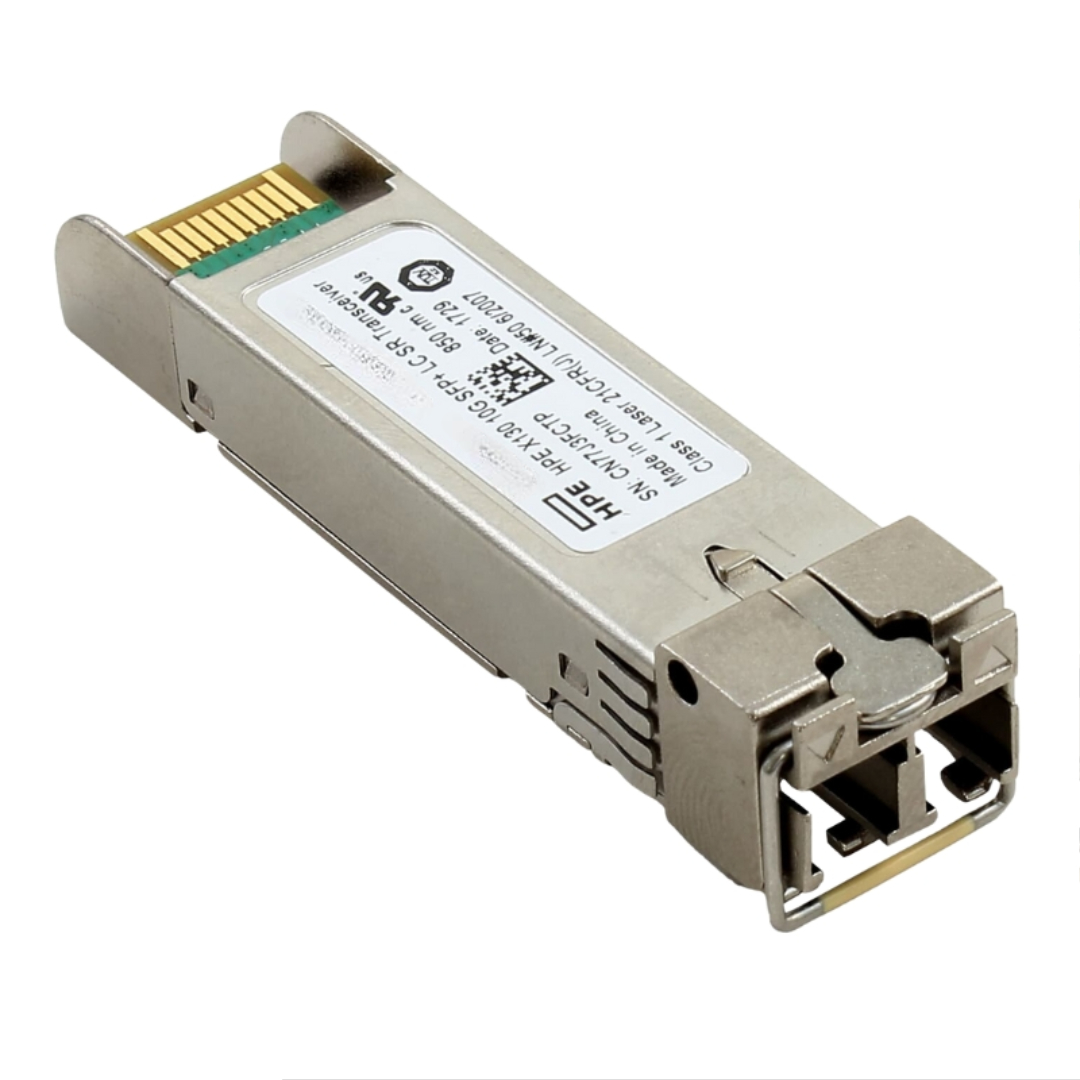


HPE 1990-4793 Aruba SFP+ Mini Gbic Transceiver Module Gige. New Sealed with 1 year replacement warranty
The HPE 1990-4793 Aruba SFP+ Mini GBIC Transceiver Module is engineered to provide reliable Gigabit Ethernet connectivity across enterprise, campus, and data center environments. Designed to integrate seamlessly with compatible Aruba networking equipment, this compact optical transceiver delivers stable signal transmission, efficient bandwidth utilization, and dependable network performance.
The HPE 1990-4793 Aruba 1G SFP LC SX 500M MMF XCVR Transceiver Module is engineered to deliver reliable Gigabit Ethernet connectivity across multimode fiber environments. Designed for compatibility with Aruba networking platforms and enterprise-grade infrastructures, this Small Form-Factor Pluggable transceiver provides stable optical communication for organizations that demand dependable network performance. As data traffic continues to increase across modern business networks, optical transceivers have become essential components for maintaining fast, efficient, and uninterrupted communication between switches, routers, servers, and storage systems.
Supporting 1 Gigabit Ethernet transmission over multimode fiber cabling, this optical module utilizes short-wavelength technology to achieve dependable communication distances of up to 500 meters. The compact SFP design enables flexible deployment while conserving valuable port density within networking equipment. Organizations implementing campus networks, branch offices, data centers, educational institutions, healthcare facilities, and commercial environments benefit from the scalability and performance offered by this transceiver module.
SFP transceivers serve as the bridge between networking hardware and fiber optic cabling. Rather than relying on fixed interfaces, modern switches and routers use modular transceivers that allow administrators to select the appropriate media type and transmission distance according to specific deployment requirements.
The HPE 1990-4793 Aruba 1G SFP LC SX 500M MMF XCVR Transceiver Module enables network devices to communicate through optical signals transmitted over multimode fiber. This modular approach provides greater flexibility when designing or expanding network infrastructure because administrators can choose different transceiver technologies without replacing the entire networking device.
By supporting Gigabit Ethernet connectivity, the module facilitates high-speed data transfers while maintaining signal integrity. Its compatibility with standard SFP ports allows organizations to simplify network upgrades and adapt to changing connectivity requirements with minimal disruption.
Fiber optic technology continues to play a critical role in enterprise networking because it offers significant advantages over traditional copper-based connections. Optical cabling provides enhanced bandwidth capabilities, improved resistance to electromagnetic interference, and longer transmission distances.
Organizations increasingly depend on fiber infrastructure to support cloud applications, virtualization environments, VoIP systems, video conferencing platforms, and large-scale data transfers. The HPE Aruba transceiver contributes to these environments by providing a dependable optical interface capable of sustaining consistent network performance.
In mission-critical operations, network reliability directly impacts productivity, communication, and business continuity. Optical transceivers such as the Aruba 1G SFP LC SX module help ensure stable data transmission while supporting the demands of modern digital infrastructures.
This transceiver module supports Gigabit Ethernet connectivity, enabling data transmission rates of up to 1 Gbps. Such performance is suitable for a wide range of networking applications, including inter-switch links, server connectivity, departmental network segments, and campus backbone deployments.
Gigabit connectivity remains a fundamental requirement for many organizations that seek to balance performance, efficiency, and infrastructure costs. The Aruba 1G SFP module delivers reliable throughput while supporting existing networking architectures.
The module is specifically designed for operation over multimode fiber cabling. Multimode fiber is widely used in enterprise and campus environments due to its cost-effectiveness and suitability for short-to-medium distance communications.
By leveraging multimode fiber technology, organizations can implement high-performance optical links without incurring the expenses typically associated with long-distance single-mode deployments. This makes the transceiver particularly attractive for internal network connections within buildings, campuses, and data center facilities.
The inclusion of an LC duplex connector supports efficient optical connections while maintaining a compact form factor. LC connectors have become a standard choice in enterprise networking because they provide secure connections, high port density, and ease of installation.
The compact connector design allows network administrators to maximize available rack space while maintaining organized cabling structures. This contributes to improved cable management and simplified maintenance procedures.
The Aruba SX transceiver supports communication distances of up to 500 meters over compatible multimode fiber cabling. This range accommodates many enterprise networking scenarios, including building-to-building connectivity, floor-to-floor communication, and distribution layer networking.
The ability to maintain reliable optical performance across these distances helps organizations build scalable network architectures while preserving signal quality and reducing transmission-related issues.
Network reliability is essential for organizations that depend on uninterrupted communication and access to digital resources. Optical transceivers contribute to stable data transmission by minimizing signal degradation and reducing susceptibility to external interference.
The Aruba 1G SFP module is designed to support dependable communication channels that maintain network integrity across demanding operational environments. Reliable connectivity reduces downtime risks and contributes to consistent application performance.
One of the major advantages of SFP technology is its flexibility. Organizations can expand network infrastructure without replacing existing switches or routers. By installing compatible transceiver modules, administrators can adapt connectivity options to meet evolving requirements.
This modular approach simplifies network growth strategies and supports future scalability initiatives. Whether expanding a campus network or upgrading connectivity between departments, the transceiver offers a practical solution for increasing network reach.
The compact SFP form factor enables high-density deployments within networking equipment. This is particularly valuable in data centers and telecommunications environments where rack space is limited and efficiency is critical.
By supporting multiple optical interfaces within a compact footprint, the Aruba transceiver helps organizations maximize hardware investments while maintaining flexibility for future upgrades.
Large organizations often require reliable fiber connectivity between core switches, aggregation layers, and access networks. The HPE Aruba transceiver provides the optical communication necessary to support these network segments while maintaining performance consistency.
Enterprise environments benefit from the module’s ability to deliver dependable Gigabit connectivity across multiple departments, office locations, and operational units.
Educational institutions, government facilities, healthcare campuses, and corporate headquarters frequently rely on fiber optic backbones to connect multiple buildings. The 500-meter transmission capability makes this transceiver well-suited for campus deployments where moderate-distance optical connectivity is required.
By supporting efficient communication between network distribution points, the module contributes to seamless data exchange throughout campus environments.
Within data centers, reliable network communication is essential for server operations, storage systems, virtualization platforms, and cloud services. Optical transceivers play a critical role in supporting these environments by enabling high-speed interconnections between network components.
The Aruba 1G SFP module supports structured cabling architectures commonly found in data centers while facilitating efficient traffic management and resource access.
Branch offices require dependable connectivity to maintain communication with headquarters and centralized services. Optical infrastructure often serves as the foundation for these connections, particularly when extended distances or electromagnetic interference concerns are present.
The transceiver helps organizations establish reliable branch connectivity while supporting essential business applications and collaboration tools.
The HPE 1990-4793 Aruba transceiver is intended for use with compatible Aruba networking platforms. Proper compatibility ensures optimal performance, accurate monitoring capabilities, and reliable link establishment.
Organizations deploying Aruba switches can leverage this module to extend fiber connectivity while maintaining consistency within their networking ecosystem.
The hot-pluggable design characteristic of SFP transceivers simplifies installation and maintenance activities. Network administrators can install or replace modules without extensive downtime, reducing operational disruptions.
This capability is particularly valuable in environments where continuous network availability is a priority. Maintenance teams can perform upgrades and replacements efficiently while preserving service continuity.
Many enterprise networking environments depend on monitoring tools to evaluate link performance, identify issues, and optimize network operations. Compatible transceivers contribute to visibility and management capabilities that help administrators maintain healthy network infrastructures.
Enhanced monitoring support enables proactive troubleshooting and assists organizations in achieving higher levels of operational efficiency.
Multimode fiber remains a popular choice for enterprise networking because it balances performance and affordability. Compared to long-distance optical solutions, multimode deployments often require lower overall implementation costs while still providing substantial bandwidth capabilities.
The Aruba SX transceiver complements these infrastructures by delivering dependable Gigabit Ethernet communication over multimode fiber links.
Within buildings and campus environments, multimode fiber supports efficient communication between network closets, server rooms, and distribution centers. The transceiver helps facilitate these connections while ensuring stable signal transmission across operational distances.
Organizations seeking dependable internal networking solutions frequently choose multimode optical technologies due to their practicality and performance characteristics.
Unlike copper cabling, fiber optic technology is immune to electromagnetic interference. This characteristic makes optical networking particularly beneficial in environments containing industrial equipment, power systems, and other sources of electrical noise


 Contact Us
 Information
 Catalog
 Solid State Drives (SSD)
 Network Switches
 Hard Disk Drives
 HBA & Controllers
 PC & Servers
 PC & Server Memory
 CPU & Processors
 Network Routers
 Power Supplies
 Tape Drives & Libraries
 Network Devices
 Computer & Network Cables