(7% discount is applied at checkout)
Cart is empty
Your go-to destination for cutting-edge server products
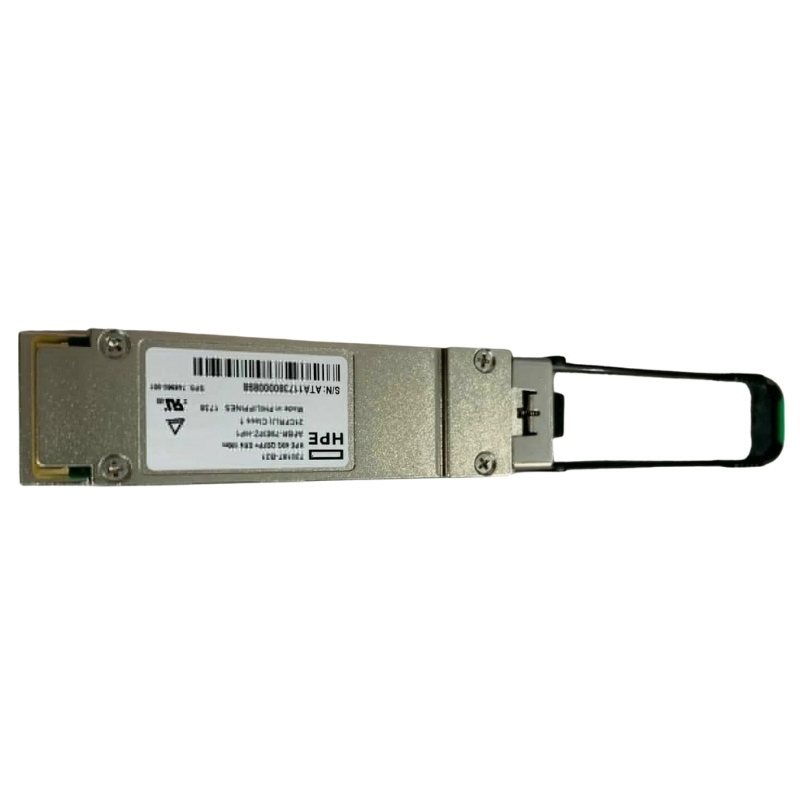


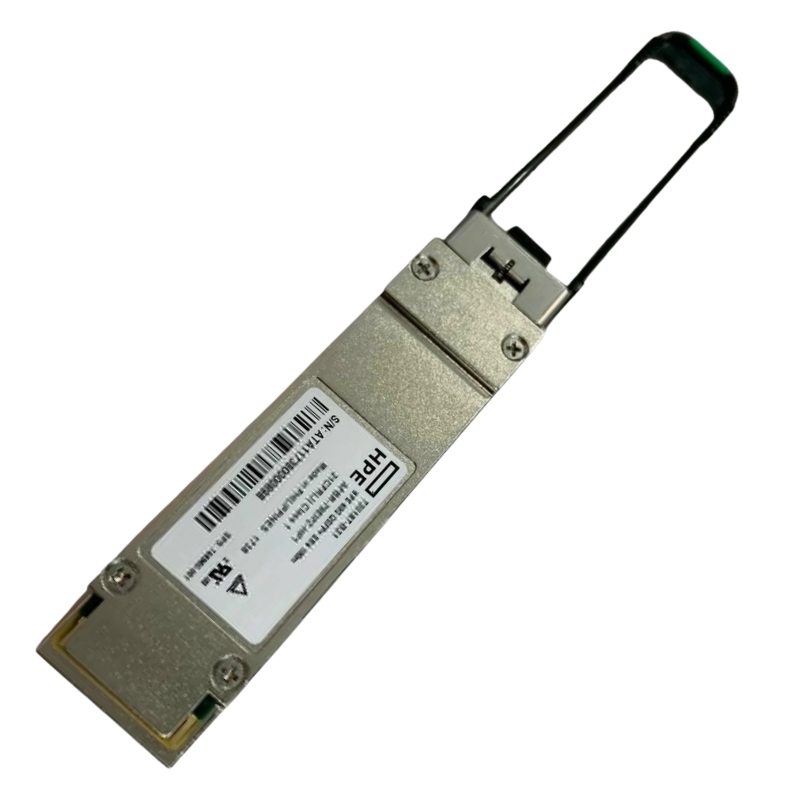
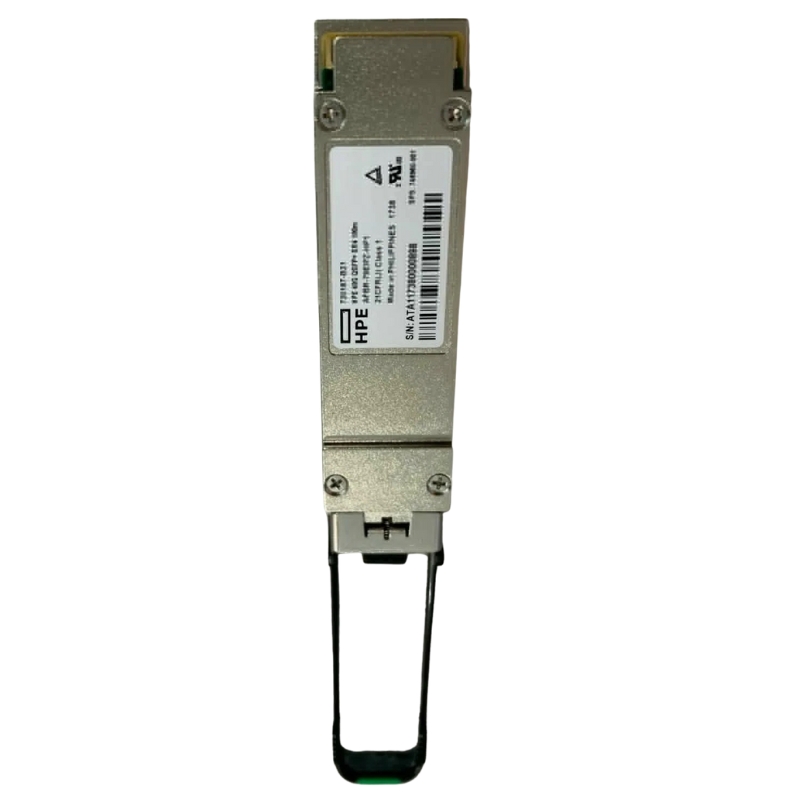
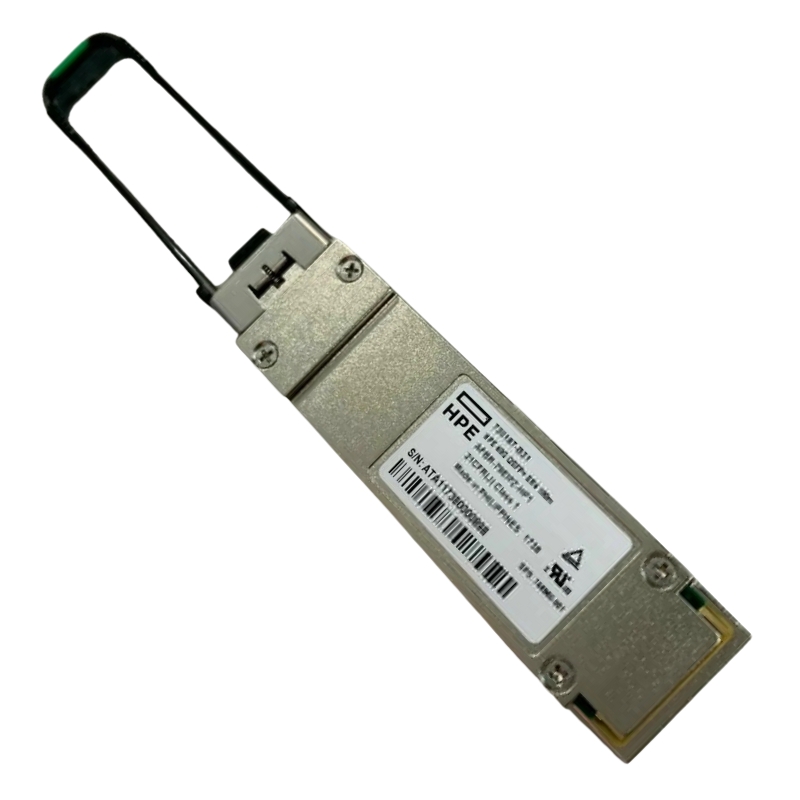
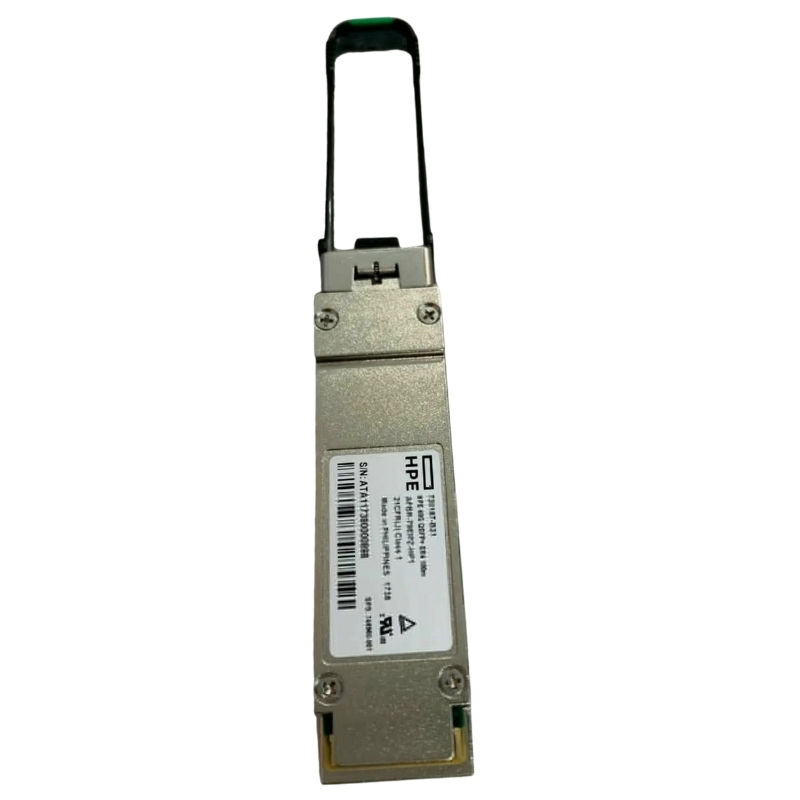
HPE 748742-001 Bladesystem 40GB C-Class QSFP+MPO SR4 300M Transceiver. Excellent Refurbished with 1 year replacement warranty
The HPE 748742-001 QSFP+ transceiver module is a high-performance optical networking solution designed for data-intensive enterprise environments. Built to support ultra-fast data transmission, this module enables seamless 40 Gigabit Ethernet connectivity across compatible networking infrastructure. It is widely used in data centers, blade systems, and high-speed enterprise switching environments requiring reliable and scalable optical communication.
The HPE 748742-001 BladeSystem 40Gb C-Class QSFP+ MPO SR4 300m Transceiver is a high-performance optical networking component engineered to support next-generation data center interconnectivity, high-density computing environments, and enterprise-level storage networking architectures. Designed to operate within Hewlett Packard Enterprise BladeSystem C-Class infrastructure, this transceiver plays a critical role in enabling ultra-fast 40 Gigabit Ethernet communication across short-reach multimode fiber links. Its QSFP+ (Quad Small Form-factor Pluggable Plus) interface ensures compact deployment while maintaining high bandwidth efficiency, making it an essential component in modern cloud computing and virtualization environments.
Built to meet stringent performance and compatibility requirements, this module delivers reliable optical transmission over OM3 and OM4 multimode fiber using MPO (Multi-fiber Push On) connectivity. With a reach capability of up to 300 meters depending on fiber grade, it ensures stable and low-latency communication between switches, servers, and storage systems. The engineering behind this transceiver focuses on minimizing signal loss, maximizing throughput, and supporting dense network architectures where space and energy efficiency are critical factors.
Modern enterprise data centers rely heavily on high-speed optical interconnects to handle massive volumes of data traffic generated by virtualization, cloud workloads, and distributed applications. The HPE 748742-001 QSFP+ SR4 transceiver is purpose-built for these demanding environments, providing four parallel lanes of high-speed transmission, each operating at 10Gbps to achieve a total aggregated bandwidth of 40Gbps. This parallel optics design enables efficient utilization of multimode fiber infrastructure while maintaining signal integrity across short-range interconnects.
Within BladeSystem C-Class environments, this transceiver integrates seamlessly into interconnect modules and switches, supporting high-density blade server configurations. The design ensures compatibility with HPE networking ecosystems, enabling smooth deployment without complex configuration overhead. This makes it particularly valuable for organizations seeking scalable infrastructure expansion while maintaining operational stability and predictable performance characteristics.
In blade server architectures, space efficiency and thermal management are critical considerations. The compact QSFP+ form factor used in the HPE 748742-001 transceiver allows multiple high-speed links to be deployed within a constrained chassis environment. This ensures that data center operators can maximize port density without compromising airflow or increasing power consumption significantly.
The transceiver’s SR4 (Short Range 4-lane) architecture is optimized for intra-rack and inter-rack communication scenarios. It supports high-speed communication between blade enclosures, top-of-rack switches, and aggregation layers. This capability is essential for maintaining low-latency data flow in applications such as virtualization clusters, database replication, and high-performance computing workloads.
The SR4 standard utilized in this transceiver relies on parallel optical transmission, where data is transmitted simultaneously across multiple fiber strands. Each lane carries 10Gbps of data, and the combined throughput reaches 40Gbps. This approach reduces the complexity of achieving high bandwidth over short distances while maintaining cost efficiency in fiber infrastructure deployment.
The MPO connector plays a crucial role in enabling this parallel transmission. It consolidates multiple optical fibers into a single connector interface, reducing cable clutter and simplifying installation in dense environments. This contributes to improved cable management and operational efficiency within large-scale data center deployments.
The HPE 748742-001 transceiver is engineered with precision optical components designed to ensure consistent performance under varying environmental conditions. It incorporates advanced laser technology optimized for multimode fiber transmission, ensuring minimal signal degradation and stable error performance across supported distances.
Thermal stability is another critical aspect of its design. In high-density BladeSystem environments, heat dissipation can become a limiting factor for performance. This transceiver is designed to operate efficiently within specified temperature ranges, ensuring uninterrupted service even under heavy network loads.
The QSFP+ form factor represents a significant advancement in compact high-speed networking interfaces. By integrating four channels into a single module, it significantly reduces physical space requirements compared to traditional single-lane transceivers. This compact design allows network architects to scale bandwidth without increasing rack space consumption.
Additionally, the hot-pluggable nature of QSFP+ modules ensures operational flexibility. Network administrators can replace or upgrade transceivers without shutting down entire systems, thereby minimizing downtime and maintaining service continuity in mission-critical environments.
Maintaining signal integrity in high-speed optical transmission is essential for ensuring reliable data communication. The HPE 748742-001 module incorporates advanced error correction compatibility and optical alignment precision to reduce bit error rates. This ensures stable data flow even in environments with high electromagnetic interference or dense cabling configurations.
The SR4 design also incorporates equalization techniques that help compensate for signal attenuation over multimode fiber. This allows the transceiver to maintain consistent performance over distances up to 300 meters when paired with appropriate fiber types such as OM4.
The HPE 748742-001 transceiver is specifically designed for integration with HPE BladeSystem C-Class environments, ensuring seamless interoperability with compatible switches, interconnect modules, and blade enclosures. This tight integration ensures optimized performance tuning and reduces compatibility risks that may arise with third-party components.
Within BladeSystem architectures, the transceiver supports high-speed uplinks between enclosure interconnect bays and external switching infrastructure. This enables efficient aggregation of blade server traffic and supports scalable network topologies that can adapt to growing enterprise demands.
In BladeSystem deployments, interconnect modules serve as the networking backbone for blade servers. The QSFP+ SR4 transceiver enables these modules to achieve high-throughput connectivity with upstream switches. Its MPO interface ensures rapid deployment and simplifies fiber management in tightly packed chassis environments.
This integration allows organizations to build modular network architectures where compute, storage, and networking resources can be independently scaled while maintaining consistent performance levels across the infrastructure.
Virtualization technologies require high-bandwidth, low-latency networking to support dynamic workload migration, distributed storage access, and multi-tenant environments. The 40Gbps capability of the HPE 748742-001 transceiver ensures that virtual machine traffic flows efficiently between hosts and storage systems without congestion.
This makes it particularly suitable for cloud service providers, enterprise virtualization clusters, and hybrid cloud environments where workload density and network efficiency are critical performance indicators.
The use of multimode fiber in conjunction with MPO connectivity provides a cost-effective and scalable solution for short-range high-speed networking. The HPE 748742-001 transceiver leverages this combination to deliver reliable performance in environments where long-range single-mode fiber is not required.
Multimode fiber enables efficient transmission of multiple light modes simultaneously, making it suitable for data center environments with structured cabling systems. When paired with MPO connectors, it allows for rapid deployment and simplified scalability in high-density networking setups.
The 300-meter reach capability of this transceiver is optimized for intra-data center communication, including connections between racks and adjacent networking zones. This distance range ensures flexibility in data center layout design while maintaining high-speed performance and low latency.
The effective transmission distance may vary depending on fiber quality, particularly OM3 versus OM4 cabling. OM4 fiber typically allows for more efficient signal transmission over longer distances, making it the preferred choice for maximizing the performance of this transceiver module.
The parallel lane structure of SR4 optics ensures that fiber resources are used efficiently. Instead of relying on a single high-capacity channel, the system distributes data across multiple fibers, reducing complexity and improving reliability. This architecture also enhances redundancy within the transmission path, ensuring stable data flow even under partial degradation scenarios.
This efficient utilization of fiber infrastructure reduces overall deployment costs while maintaining high performance, making it an ideal solution for enterprises seeking scalable networking investments.
Cloud computing environments demand high-throughput networking infrastructure capable of handling unpredictable traffic patterns. The HPE 748742-001 transceiver provides consistent 40Gbps bandwidth, ensuring that compute and storage nodes remain synchronized even under peak load conditions.
In enterprise workloads, such as database clusters and large-scale analytics platforms, network performance directly impacts application responsiveness. The low-latency characteristics of this transceiver help maintain optimal performance across distributed systems.
Scalability is a core requirement in modern IT infrastructure. The modular nature of QSFP+ transceivers allows organizations to expand network capacity incrementally without requiring full infrastructure redesign. This flexibility supports phased upgrades and long-term infrastructure planning.
The HPE 748742-001 module fits into this scalability model by providing a standardized interface that can be deployed across multiple generations of BladeSystem hardware, ensuring investment protection and backward compatibility within supported environments.
Energy efficiency is a major concern in large-scale data centers. The optical design of the SR4 transceiver minimizes power consumption while delivering high bandwidth. Compared to copper-based alternatives, optical transceivers significantly reduce energy usage per transmitted bit.
This contributes to lower operational costs and supports sustainability initiatives within enterprise IT environments. The reduced heat output also minimizes cooling requirements, further enhancing overall data center efficiency.


 Contact Us
 Information
 Catalog
 Solid State Drives (SSD)
 Network Switches
 Hard Disk Drives
 HBA & Controllers
 PC & Servers
 PC & Server Memory
 CPU & Processors
 Network Routers
 Power Supplies
 Tape Drives & Libraries
 Network Devices
 Computer & Network Cables