(7% discount is applied at checkout)
Cart is empty
Your go-to destination for cutting-edge server products
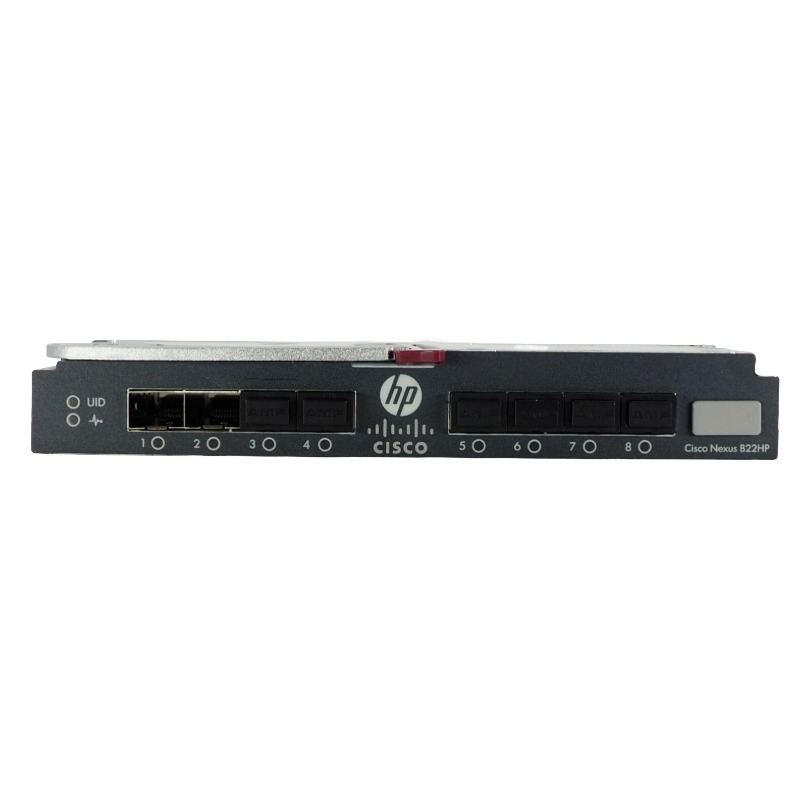


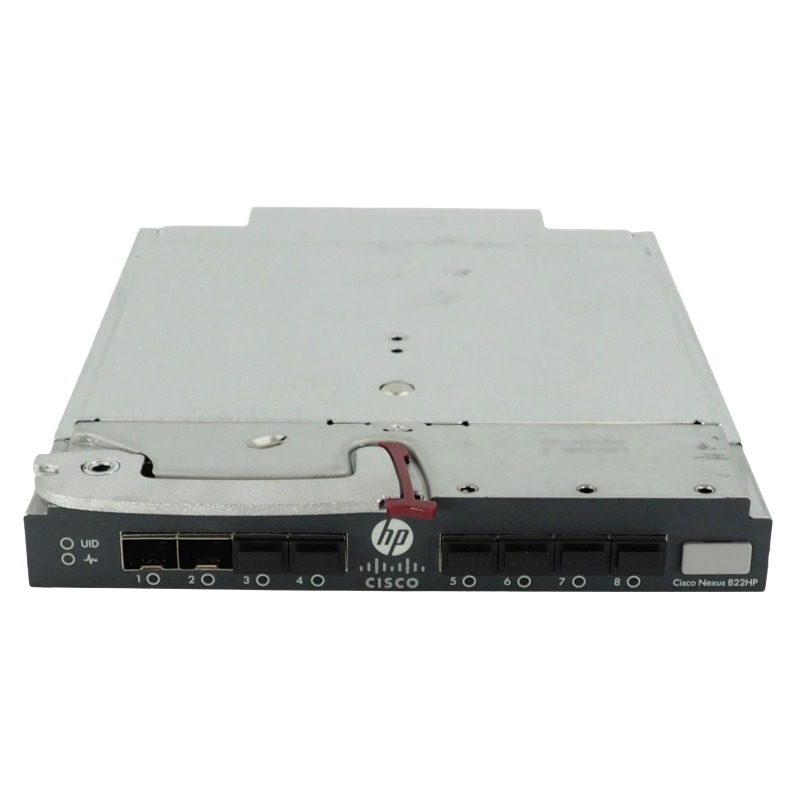
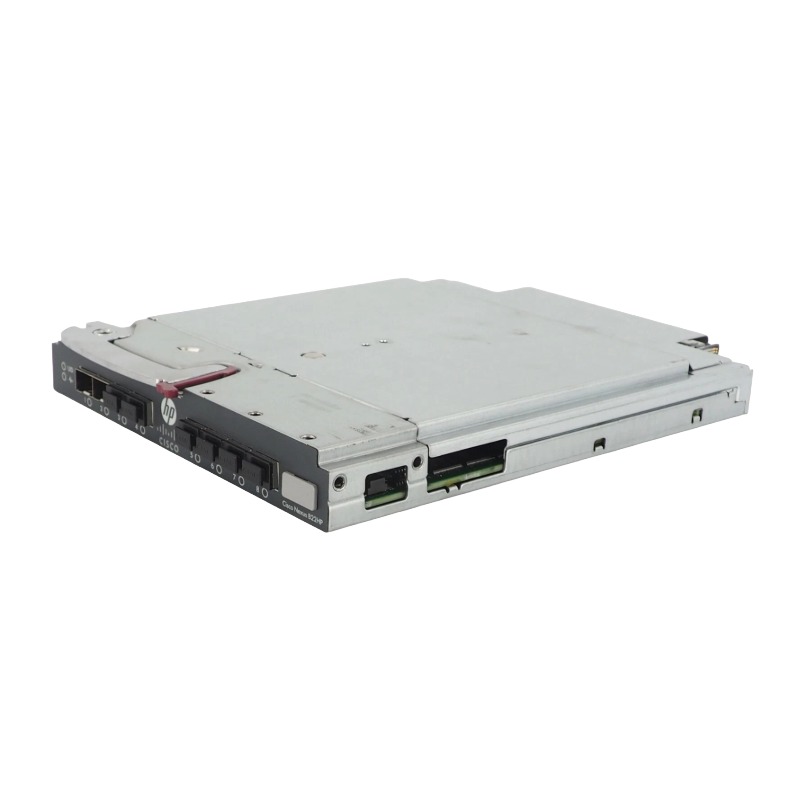
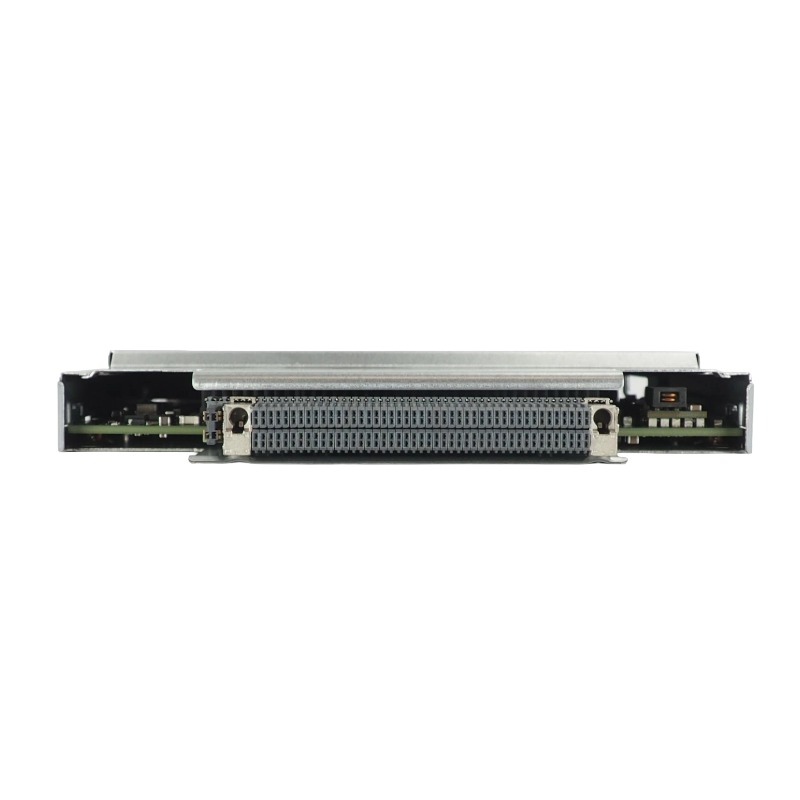
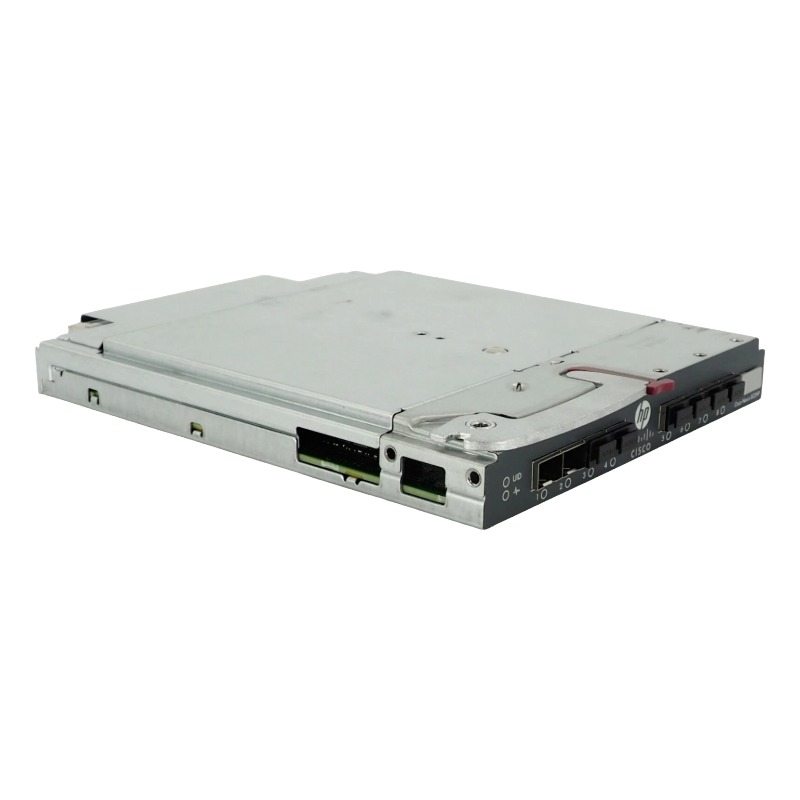
HPE 641148-001 Cisco Nexus B22HP Fabric Extender Module for BladeSystem C-class. Excellent Refurbished with 1 year replacement warranty
The HPE 641148-001 Cisco Nexus B22HP Fabric Extender Module is a high-performance expansion module designed for BladeSystem C-Class environments. It operates as a Fabric Extender (FEX), extending the capabilities of a parent Cisco Nexus switch while maintaining a simplified, centralized architecture. This module is engineered for data center scalability, high-speed connectivity, and efficient network management within enterprise blade infrastructures.
The HPE 641148-001 Cisco Nexus B22HP Fabric Extender Module is a high-performance data center networking component engineered to enhance connectivity within blade server environments, particularly the HPE BladeSystem C-Class architecture. Designed as a Fabric Extender (FEX), this module extends the capabilities of Cisco Nexus switching infrastructure into blade enclosures, enabling simplified network management, reduced operational overhead, and scalable data center architecture. As enterprises continue to evolve toward cloud-based and virtualized infrastructures, the role of fabric extenders such as the Cisco Nexus B22HP becomes increasingly critical in ensuring seamless communication between compute and network layers.
This module operates as an extension of parent Cisco Nexus switches, effectively acting as a remote line card that resides within the blade enclosure. The HPE 641148-001 integration enables centralized switching intelligence while distributing physical connectivity closer to compute nodes. This architecture reduces the complexity of network design while improving scalability and performance consistency across enterprise environments.
The architecture of the Cisco Nexus B22HP Fabric Extender is built on the principle of fabric extension, where control and management functions remain centralized in a parent switch while the forwarding interfaces are distributed into the blade chassis. This separation of control and data planes allows the system to operate with high efficiency and simplified configuration management. The HPE 641148-001 module integrates tightly with Cisco Nexus 5000 and 6000 series switches, creating a unified fabric that behaves as a single logical switching system.
The design emphasizes low-latency communication and high-throughput data transfer, ensuring that blade servers within the HPE C-Class enclosure can communicate efficiently with external networks and storage systems. By reducing the need for individual switch management at each blade enclosure, the architecture significantly lowers administrative complexity and improves operational consistency across large-scale deployments.
Fabric extension technology is central to the functionality of the Cisco Nexus B22HP. It allows multiple physical network interfaces within the blade enclosure to be logically managed by a parent switch. This approach ensures that all policy enforcement, VLAN configuration, and traffic management decisions are handled centrally, reducing duplication of effort and minimizing configuration errors. The HPE 641148-001 module acts as a transparent extension, forwarding traffic efficiently while relying on upstream intelligence for decision-making.
The HPE 641148-001 Cisco Nexus B22HP Fabric Extender is specifically engineered for compatibility with HPE BladeSystem C-Class enclosures. This compatibility ensures seamless integration into existing enterprise blade infrastructures without requiring extensive architectural modifications. The module fits into designated interconnect bays within the enclosure, enabling direct communication between blade servers and the external Cisco Nexus fabric.
Within the C-Class environment, the fabric extender plays a crucial role in consolidating network connections. Instead of each blade server requiring separate external network connections, the module aggregates traffic and routes it efficiently through the parent switch infrastructure. This not only improves port utilization but also simplifies cabling and physical infrastructure management within the data center.
Network consolidation is one of the most significant advantages of deploying the HPE 641148-001 module. By centralizing network control and distributing connectivity through fabric extenders, enterprises can reduce the number of physical switches required within each blade enclosure. This consolidation leads to improved airflow management, reduced power consumption, and a more streamlined hardware footprint, which is essential for modern high-density data centers.
Performance optimization is achieved through intelligent traffic forwarding and centralized policy enforcement. Since the fabric extender itself does not perform independent switching decisions, all traffic handling logic is executed by the upstream Nexus switch. This architecture reduces processing overhead at the edge and ensures predictable performance across all connected devices.
The HPE 641148-001 Cisco Nexus B22HP Fabric Extender is widely deployed in enterprise environments that require scalable and efficient network architectures. Its ability to integrate seamlessly with Cisco Nexus switches and HPE BladeSystem C-Class enclosures makes it suitable for data centers of varying sizes, from mid-scale enterprise setups to large cloud service provider infrastructures.
Scalability is achieved through the ability to add additional blade enclosures and fabric extenders without redesigning the entire network topology. As organizations expand their computing resources, the fabric extender model ensures that network complexity does not increase proportionally. Instead, expansion becomes a matter of extending existing fabric connections, maintaining centralized management and operational simplicity.
One of the key benefits of the HPE 641148-001 module is its ability to simplify network management. By centralizing control functions within the parent Cisco Nexus switch, administrators can manage multiple blade enclosures as a single logical entity. This reduces configuration complexity and ensures consistency across the entire data center network.
Operational efficiency is further enhanced by reducing the number of devices that require independent configuration and monitoring. Since the fabric extender operates as a remote line card, it does not require separate software updates or policy management. This reduces administrative overhead and allows IT teams to focus on higher-level infrastructure optimization tasks.
The centralized policy enforcement model used in the Cisco Nexus B22HP architecture ensures that all network policies are applied uniformly across connected devices. Whether dealing with VLAN segmentation, access control, or traffic prioritization, all decisions are made at the parent switch level. The HPE 641148-001 module simply enforces these policies at the edge, ensuring compliance and reducing configuration drift.
Reliability is a critical design aspect of the HPE 641148-001 Cisco Nexus B22HP Fabric Extender. In enterprise environments, network downtime can result in significant operational disruption, making fault tolerance an essential requirement. The fabric extender architecture supports redundancy through dual-homing capabilities to parent switches, ensuring continuous network availability even in the event of hardware failure.
The module is designed to operate within high-availability environments where continuous uptime is essential. By distributing network connectivity across redundant uplinks, it ensures that data traffic can be rerouted seamlessly in case of a failure. This redundancy is particularly important in mission-critical environments such as financial systems, healthcare infrastructure, and large-scale cloud platforms.
Security within the Cisco Nexus B22HP Fabric Extender framework is enforced at the centralized switch level, ensuring consistent policy application across all connected devices. The HPE 641148-001 module supports secure communication channels between blade servers and the parent switch, reducing exposure to potential threats within the data center network.
By centralizing security controls, administrators can implement consistent access policies, monitor traffic flows, and enforce compliance standards across the entire infrastructure. This reduces the risk of misconfiguration and ensures that security policies are uniformly applied across all blade environments.
Access control and traffic segmentation are fundamental components of the security model. The fabric extender ensures that all segmentation rules defined at the parent switch are enforced consistently across blade servers. This allows enterprises to isolate workloads, protect sensitive data, and maintain regulatory compliance within complex network environments.


 Contact Us
 Information
 Catalog
 Solid State Drives (SSD)
 Network Switches
 Hard Disk Drives
 HBA & Controllers
 PC & Servers
 PC & Server Memory
 CPU & Processors
 Network Routers
 Power Supplies
 Tape Drives & Libraries
 Network Devices
 Computer & Network Cables