
(7% discount is applied at checkout)
Cart is empty
Your go-to destination for cutting-edge server products
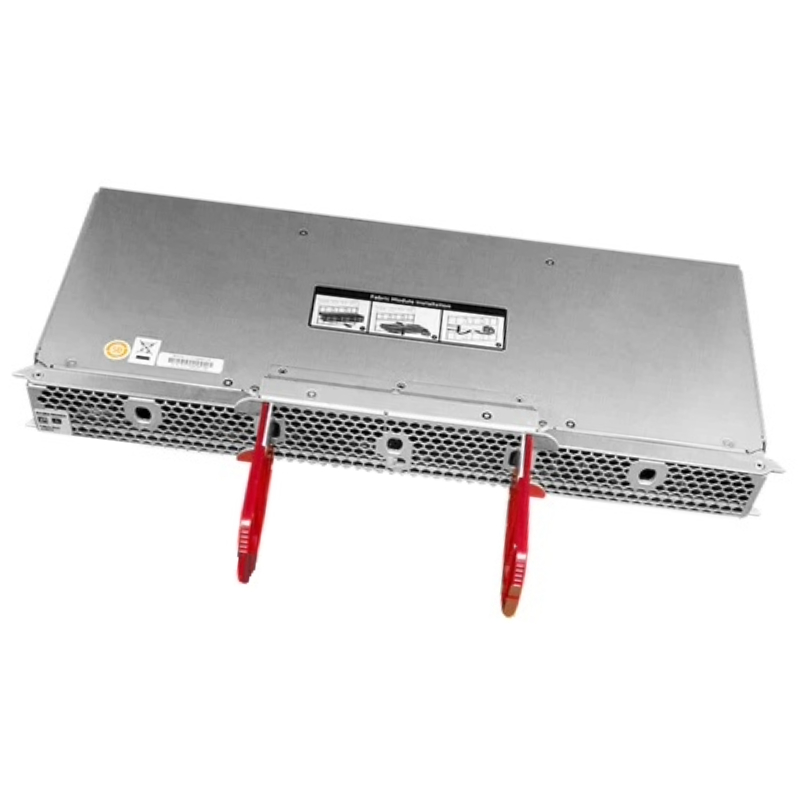
HPE JL367A Aruba 7.2Tbps Fabric Plug-in Module. Excellent Refurbished with 1 year replacement warranty
| SKU/MPN | Warranty | Price | Condition | You save |
|---|---|---|---|---|
| JL367A | 1 Year Warranty | $5,099.00 | Factory-Sealed New in Original Box (FSB) | You save: $1,784.65 (26%) |
| JL367A | 1 Year Warranty | $650.00 | Excellent Refurbished | You save: $227.50 (26%) |
The HPE JL367A Aruba 7.2Tbps Fabric Plug‑in Module is engineered to strengthen large‑scale switching architectures by delivering exceptional fabric bandwidth and seamless internal data movement. Built for high‑performance enterprise networks, this module enhances system scalability, accelerates traffic distribution, and supports mission‑critical workloads with dependable wired connectivity.
The HPE JL367A Aruba 7.2Tbps Fabric Plug-in Module represents a high-performance switching fabric component designed to support advanced enterprise and carrier-grade network infrastructures. Built to enhance modular chassis-based systems, this fabric module delivers extreme backplane throughput, ensuring that data movement across switching and routing elements remains efficient, stable, and highly scalable. Its design focuses on enabling dense network environments where large volumes of traffic must be processed simultaneously without congestion or performance degradation.
This class of fabric module is engineered for environments where predictable latency, deterministic forwarding behavior, and high aggregate bandwidth are essential. By providing a unified high-speed interconnect layer within the chassis, it allows multiple line cards and service modules to communicate seamlessly while maintaining line-rate performance across all active interfaces.
At the core of the HPE JL367A Aruba 7.2Tbps Fabric Plug-in Module is a high-throughput switching architecture optimized for distributed packet forwarding. The internal data path is structured to minimize bottlenecks by distributing traffic across multiple parallel switching channels. This enables simultaneous handling of large-scale east-west and north-south traffic flows in modern data center and enterprise backbone deployments.
The fabric system is designed to operate as the central communication backbone inside modular networking chassis. Each packet entering the system is efficiently routed through the fabric interconnect, which ensures that forwarding decisions are executed with minimal delay. The architecture is optimized for non-blocking communication, allowing every connected module to operate at full potential regardless of traffic intensity.
The 7.2Tbps capacity is achieved through a combination of parallel switching channels and distributed load balancing across the fabric backplane. Each channel is capable of handling a portion of the total traffic load, ensuring that no single pathway becomes a performance bottleneck. This distributed architecture is essential in maintaining consistent throughput during peak utilization scenarios commonly found in cloud computing and large enterprise environments.
The system dynamically balances traffic loads across available fabric lanes, allowing for consistent utilization of hardware resources. This approach significantly reduces congestion and ensures that latency remains predictable even under heavy operational stress.
Scalability is a defining characteristic of the HPE JL367A Aruba 7.2Tbps Fabric Plug-in Module. It is engineered to support network growth without requiring fundamental changes to the underlying infrastructure. As organizations expand their data processing requirements, additional modules can be integrated into the chassis while maintaining uniform performance across the system.
The fabric capacity of 7.2Tbps enables support for large-scale deployments where thousands of network endpoints may be active simultaneously. This makes it suitable for cloud service providers, enterprise data centers, and high-performance computing clusters that demand reliable and expandable switching infrastructure.
The modular nature of the system allows for dynamic expansion, where additional switching and routing resources can be introduced without disrupting existing network operations. The fabric module ensures that newly added components immediately benefit from full bandwidth availability, maintaining system consistency and operational stability.
This expansion model supports long-term infrastructure planning by allowing organizations to scale incrementally rather than requiring complete system replacement during growth phases.
Packet forwarding within the fabric architecture is designed for ultra-low latency and deterministic performance. Each packet is processed through a high-speed internal switching matrix that ensures minimal delay between ingress and egress points. The forwarding mechanism is optimized for both small packet workloads and large data stream transmissions.
This dual optimization is critical in modern networking environments where mixed traffic types are common. Applications such as real-time analytics, virtualization platforms, and cloud orchestration systems benefit from the consistent performance delivered by the fabric interconnect.
Latency reduction is achieved through streamlined data path engineering and elimination of unnecessary processing hops within the chassis. The fabric module ensures that data packets traverse the internal network in the most efficient manner possible, reducing processing overhead and accelerating response times across connected systems.
This low latency behavior is essential for time-sensitive applications such as financial trading systems, distributed computing frameworks, and high-frequency data analysis platforms.
The HPE JL367A Aruba fabric module is built with high availability principles in mind. It supports redundant configurations within compatible chassis systems, allowing for continuous operation even in the event of partial hardware failure. This redundancy ensures that network services remain uninterrupted under critical conditions.
Failover mechanisms are integrated into the fabric system to ensure seamless transition between active and standby pathways. In the event of a module degradation or failure, traffic is automatically rerouted through alternative fabric channels without disrupting ongoing network sessions.
Fault tolerance is achieved through distributed processing and intelligent traffic rerouting mechanisms. The fabric module continuously monitors internal system health and adjusts data paths accordingly to maintain operational stability. This proactive approach reduces downtime and ensures consistent service availability.
The architecture is particularly valuable in mission-critical environments where uninterrupted network connectivity is a fundamental requirement.
The fabric module supports advanced network virtualization environments where logical segmentation of traffic is required. It enables multiple isolated network instances to operate concurrently over shared physical infrastructure. This capability is essential in multi-tenant environments and cloud-based architectures.
Traffic segmentation is handled through intelligent switching logic that ensures isolation between different virtual network domains while maintaining efficient resource utilization. This allows organizations to deploy complex network architectures without sacrificing performance or security.
In multi-tenant environments, the fabric module ensures that each tenant receives predictable performance levels regardless of overall system utilization. This is achieved through structured allocation of fabric resources and controlled traffic distribution mechanisms.
Such capabilities make the module highly suitable for service providers and enterprise environments that require strict separation between operational domains.
The HPE JL367A Aruba 7.2Tbps Fabric Plug-in Module is suitable for a wide range of deployment environments, including enterprise data centers, cloud infrastructure platforms, and high-performance computing networks. Its flexible architecture allows it to adapt to different operational requirements while maintaining consistent performance characteristics.
In large-scale environments, the module plays a critical role in ensuring that network infrastructure remains responsive and scalable. Its ability to handle massive traffic volumes makes it ideal for organizations undergoing rapid digital transformation.
Within enterprise backbone networks, the fabric module ensures seamless connectivity between distributed systems and centralized data resources. It supports high-speed communication between core network layers and edge distribution systems, enabling efficient data movement across the entire organization.
This integration enhances overall network responsiveness and supports complex application ecosystems that rely on continuous data exchange.
The design of the fabric module supports long-term infrastructure stability by ensuring compatibility with evolving network architectures. Its scalable design allows organizations to adopt new technologies without replacing existing core switching systems. This future-ready approach is essential for maintaining investment value in large-scale network deployments.
As network demands continue to evolve, the fabric module provides a stable foundation that can accommodate increased throughput, expanded virtualization requirements, and more complex traffic patterns without compromising operational integrity.
The HPE JL367A Aruba fabric plug-in module is designed for seamless integration into compatible modular networking chassis platforms. It functions as a critical internal component that connects line cards, supervisor modules, and service engines within the system. The integration process is engineered to support high availability configurations where redundancy and failover capabilities are essential.
Once installed, the fabric module becomes the central interconnect medium for all data movement within the chassis. Its backplane communication system ensures that each module can transmit and receive data at high speed without requiring external routing mechanisms. This internalized switching approach significantly reduces complexity and enhances system efficiency.
The backplane design used in conjunction with the fabric module is optimized for minimal signal loss and maximum data integrity. High-speed signaling techniques are employed to ensure that data transmitted across the chassis maintains fidelity even at extreme throughput levels. The electrical and logical separation of traffic lanes allows for reduced interference and improved stability across all operational conditions.


 Contact Us
 Information
 Catalog
 Solid State Drives (SSD)
 Network Switches
 Hard Disk Drives
 HBA & Controllers
 PC & Servers
 PC & Server Memory
 CPU & Processors
 Network Routers
 Power Supplies
 Tape Drives & Libraries
 Network Devices
 Computer & Network Cables