(7% discount is applied at checkout)
Cart is empty
Your go-to destination for cutting-edge server products


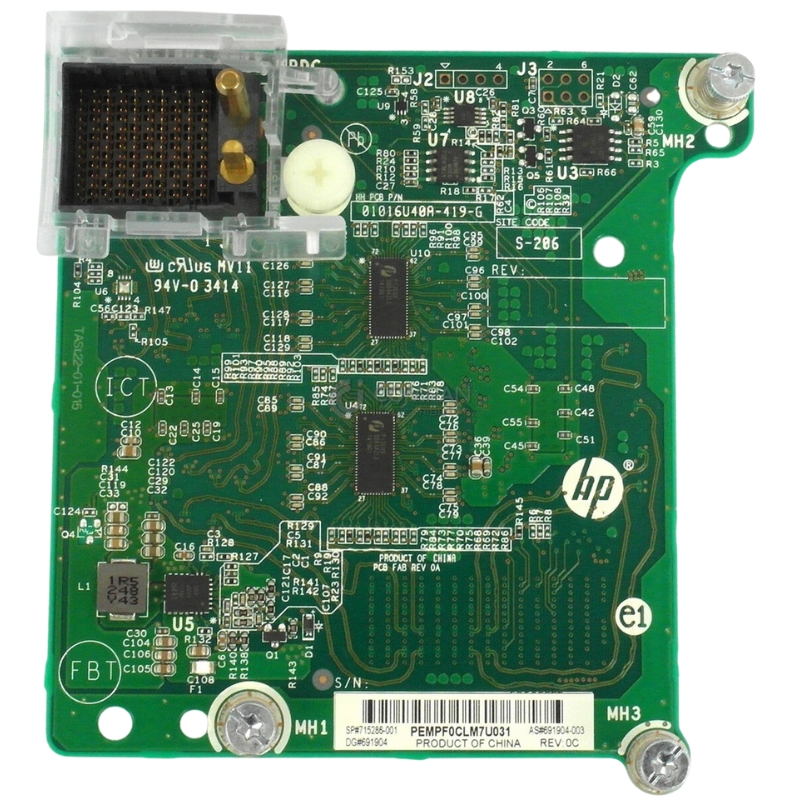
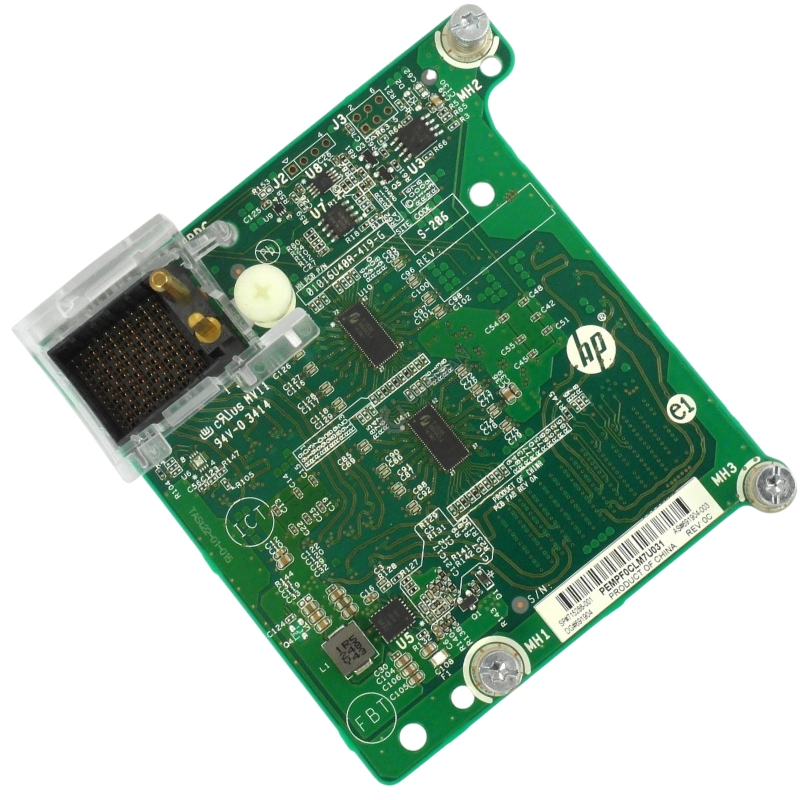
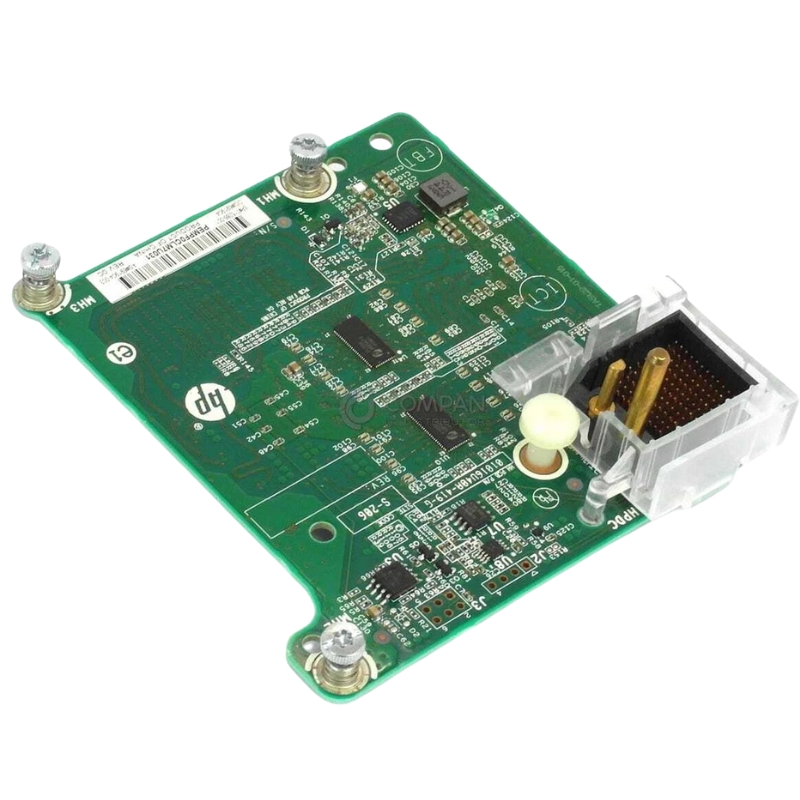
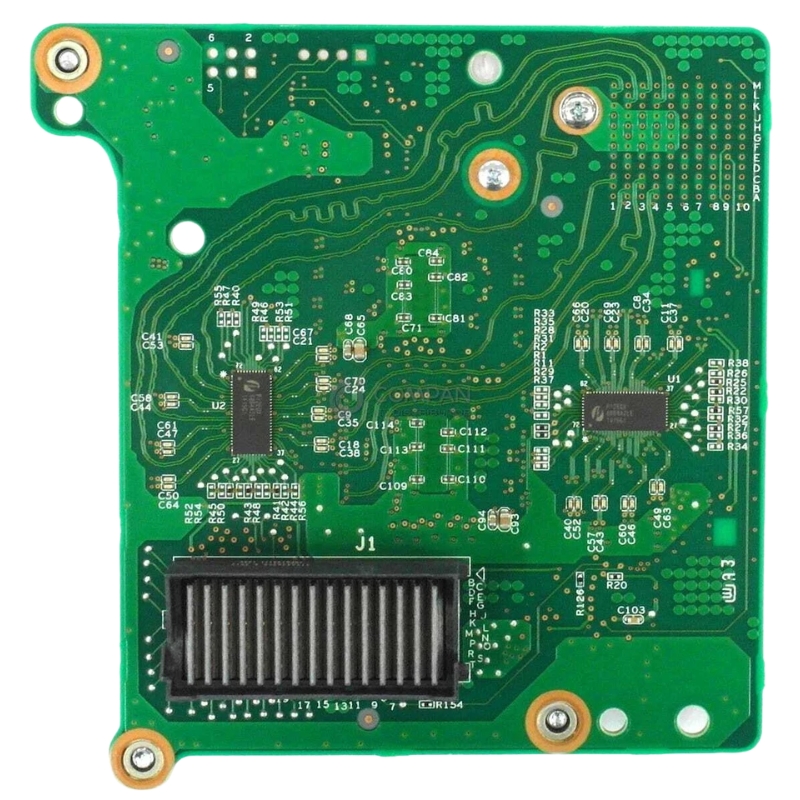
HPE 691904-001 ProLiant G8 Mezz Pass Through Board WS460C Server Mezzanine Card with PCI-Express. Excellent Refurbished with 1 year replacement warranty
| SKU/MPN | Warranty | Price | Condition | You save |
|---|---|---|---|---|
| 691904-001 | 1 Year Warranty | Contact us for a price | New Sealed in Box (NIB) | |
| 691904-001 | 1 Year Warranty | $85.00 | Excellent Refurbished | You save: $29.75 (26%) |
The HPE 691904-001 ProLiant G8 Mezz Pass Through Board WS460C Card is a high-performance mezzanine solution engineered for blade servers. This advanced adapter delivers reliable throughput, efficient virtualization support, and seamless integration with HPE BladeSystem enclosures.
The HPE 691904-001 ProLiant G8 Mezz Pass Through Board WS460C Server Mezzanine Card with PCI-Express is engineered as a critical interconnect component in enterprise blade server environments. It functions as a high-performance pass-through interface that enables seamless data and signal transmission between the blade server and external networking or storage infrastructure. Designed specifically for HPE ProLiant G8 blade systems and WS460c workstation blades, this mezzanine solution ensures efficient PCI-Express lane mapping and optimized I/O throughput for demanding virtualization, remote workstation, and enterprise computing workloads.
Mezzanine cards in ProLiant blade architecture act as modular expansion interfaces that extend server capabilities without compromising density or thermal efficiency. The HPE 691904-001 module serves as a pass-through bridge rather than an active processing adapter, allowing direct routing of signals from internal PCI-Express fabric to external interconnect modules housed in blade enclosures. This architecture supports scalable deployments where multiple blades share enclosure-level networking and storage fabrics.
The pass-through design eliminates unnecessary switching or protocol conversion, ensuring that PCI-Express signals travel directly between the server motherboard and external fabric modules. This results in reduced latency, improved deterministic performance, and consistent bandwidth utilization across multiple blade nodes within the same chassis.
This mezzanine card is fully compatible with HPE blade enclosure infrastructure, particularly systems designed for WS460c workstation blades and ProLiant G8 blade servers. It integrates with enclosure midplanes that distribute connectivity to shared network interconnect bays, ensuring centralized cable management and simplified data center architecture.
At the core of the HPE 691904-001 is a carefully engineered PCI-Express lane mapping system that maintains signal integrity across high-speed data channels. Each lane is routed through precision-engineered traces that preserve impedance matching and minimize signal degradation. This ensures that bandwidth-intensive applications such as virtual desktop infrastructure, CAD rendering, and high-performance computing workloads maintain consistent throughput.
The pass-through architecture is designed to support multi-lane PCI-Express configurations that scale according to system requirements. This scalability allows data centers to deploy blades with predictable performance characteristics, ensuring uniform behavior across compute nodes.
Signal integrity is a fundamental design priority in this mezzanine card. Controlled impedance routing, minimal trace length variation, and shielding techniques are applied to reduce electromagnetic interference. These engineering considerations help maintain low error rates and stable link training across the PCI-Express fabric.
The HPE 691904-001 utilizes a robust mechanical connector system designed for repeated insertion cycles within blade chassis environments. The electrical interface is optimized for high-density signal transmission, ensuring stable communication between the server motherboard and external interconnect modules.
Because blade servers operate in tightly packed enclosures, thermal efficiency is essential. The pass-through design minimizes active power consumption, thereby reducing heat generation and contributing to overall system cooling efficiency.
The WS460c workstation blade platform is designed for high-performance virtual desktop and workstation environments. The HPE 691904-001 mezzanine card enables these systems to interface with external GPU, networking, and storage resources through PCI-Express pass-through channels, supporting demanding graphical workloads and computational tasks.
By facilitating direct PCI-Express connectivity, the mezzanine card allows workstation blades to leverage external acceleration resources. This is particularly important in industries such as engineering simulation, media production, and scientific visualization, where GPU and high-speed storage access are critical.
When deployed within virtualized environments, the WS460c system benefits from centralized infrastructure management. The pass-through architecture supports hypervisor-based resource allocation, allowing dynamic assignment of compute and storage resources without physical reconfiguration.
The mezzanine card is commonly deployed in enterprise environments where high-density computing is required. These include data centers supporting cloud services, financial modeling systems, and large-scale simulation environments. Its passive design ensures minimal maintenance overhead while maintaining high availability standards.
In blade chassis configurations, multiple WS460c units can be installed side by side, each leveraging the HPE 691904-001 for consistent external connectivity. This enables organizations to maximize compute density while maintaining structured and manageable cabling through enclosure-based interconnect modules.
One of the primary advantages of the HPE 691904-001 pass-through board is its ability to maintain extremely low latency data transmission. Since the design avoids active switching components, signals traverse directly through the PCI-Express fabric, ensuring minimal delay between compute operations and external resource access.
Deterministic performance is critical in enterprise systems where consistent response times are required. This mezzanine card ensures that latency remains predictable under varying workload conditions, supporting mission-critical applications that depend on stable performance.
Modern enterprise applications demand high bandwidth availability. The PCI-Express pass-through architecture supports scalable lane aggregation, enabling systems to handle increasing data throughput as application requirements evolve over time.
Applications such as database analytics, real-time rendering, and virtualization platforms benefit from the high throughput enabled by this mezzanine solution. The architecture ensures that bottlenecks are minimized within the internal server interconnect path.
The mezzanine card communicates through the blade chassis midplane, which acts as the central distribution layer for power, signal, and management interfaces. This design eliminates the need for individual cabling within server racks, reducing complexity and improving airflow efficiency.
The structured topology of blade systems allows the HPE 691904-001 to function as part of a larger interconnect ecosystem. Each blade communicates through standardized pathways that ensure consistent performance across the entire chassis.
Scalability is a defining characteristic of blade-based architectures. The pass-through mezzanine card enables organizations to expand compute resources without redesigning network or storage infrastructure. Additional blades can be added seamlessly, maintaining uniform connectivity standards.
By enabling shared access to external interconnect modules, the mezzanine card supports resource pooling strategies. This improves utilization efficiency across compute clusters and reduces infrastructure redundancy.
Enterprise environments require components that can operate continuously over extended periods. The HPE 691904-001 is designed with durability in mind, ensuring stable performance throughout its lifecycle without degradation in signal quality or mechanical integrity.
Manufactured under strict quality control processes, this mezzanine card adheres to enterprise-grade standards that ensure consistency across deployments. Each unit undergoes validation testing to confirm compliance with performance and reliability benchmarks.
Since the card contains no active processing components, it requires no firmware updates or active maintenance. This significantly reduces operational overhead in large-scale data center environments where minimizing downtime is essential.
The absence of active electronic processing components reduces the potential points of failure, enhancing overall system reliability. This makes the mezzanine card suitable for mission-critical applications where uptime is a priority.
In virtual desktop infrastructure deployments, the mezzanine card enables high-speed connectivity between blade servers and shared storage or GPU resources. This supports smooth user experiences for remote desktop sessions requiring high graphical performance.
Organizations can centralize compute resources within blade enclosures while distributing workloads across multiple virtual machines. The pass-through architecture ensures that each virtual instance has efficient access to required external resources.
High-performance computing clusters benefit from the low latency and high bandwidth characteristics of the HPE 691904-001. Scientific simulations, engineering computations, and financial modeling systems rely on consistent data throughput across distributed nodes.
Consistency in interconnect behavior ensures that cluster nodes operate cohesively. The mezzanine card plays a critical role in maintaining uniform communication pathways across all blades within the system.
By utilizing chassis-based interconnects, the mezzanine card significantly reduces external cabling requirements. This simplifies data center design, improves airflow, and enhances serviceability.
Reduced cabling allows for denser rack configurations, enabling organizations to maximize physical infrastructure utilization while maintaining operational efficiency.
The PCI-Express pass-through architecture ensures compatibility with evolving enterprise interconnect standards. This future-ready design approach allows organizations to extend the lifespan of their blade infrastructure investments.
As workloads evolve toward higher bandwidth and lower latency requirements, the mezzanine card continues to provide a stable foundation for next-generation applications without requiring fundamental architectural changes.


 Contact Us
 Information
 Catalog
 Solid State Drives (SSD)
 Network Switches
 Hard Disk Drives
 HBA & Controllers
 PC & Servers
 PC & Server Memory
 CPU & Processors
 Network Routers
 Power Supplies
 Tape Drives & Libraries
 Network Devices
 Computer & Network Cables