(7% discount is applied at checkout)
Cart is empty
Your go-to destination for cutting-edge server products
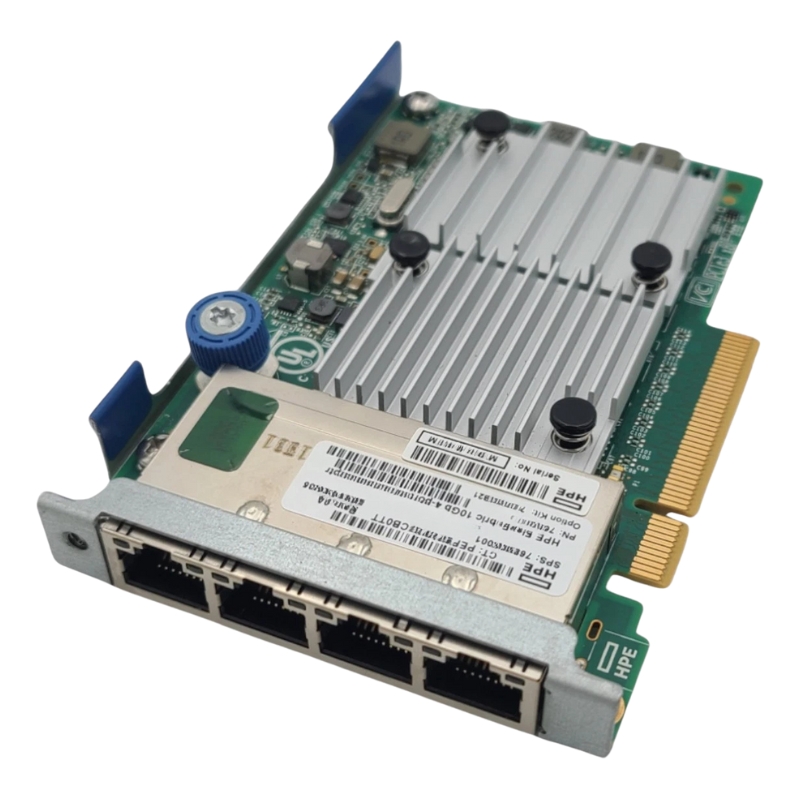


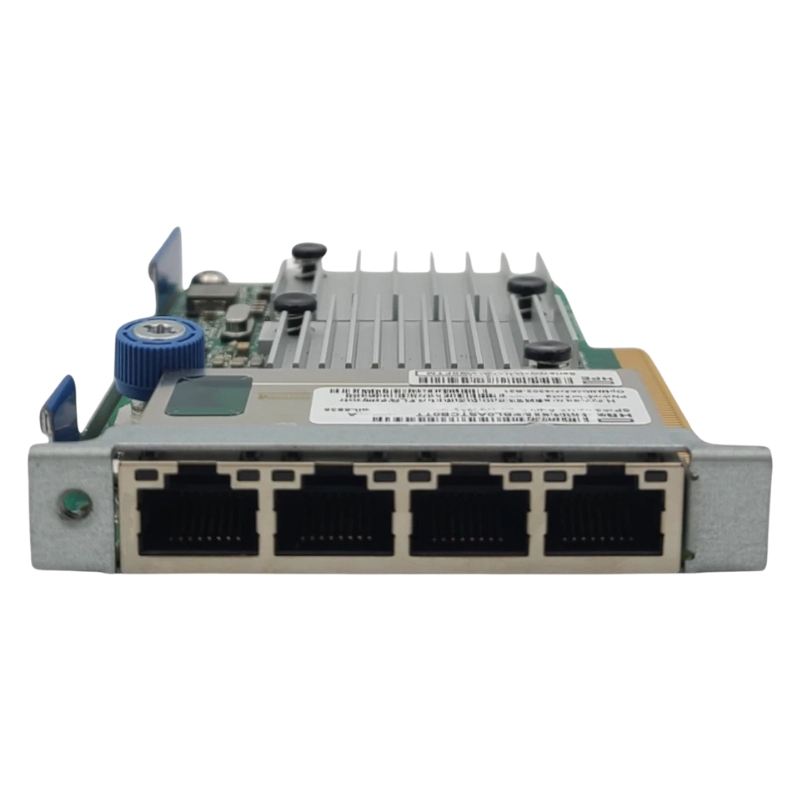
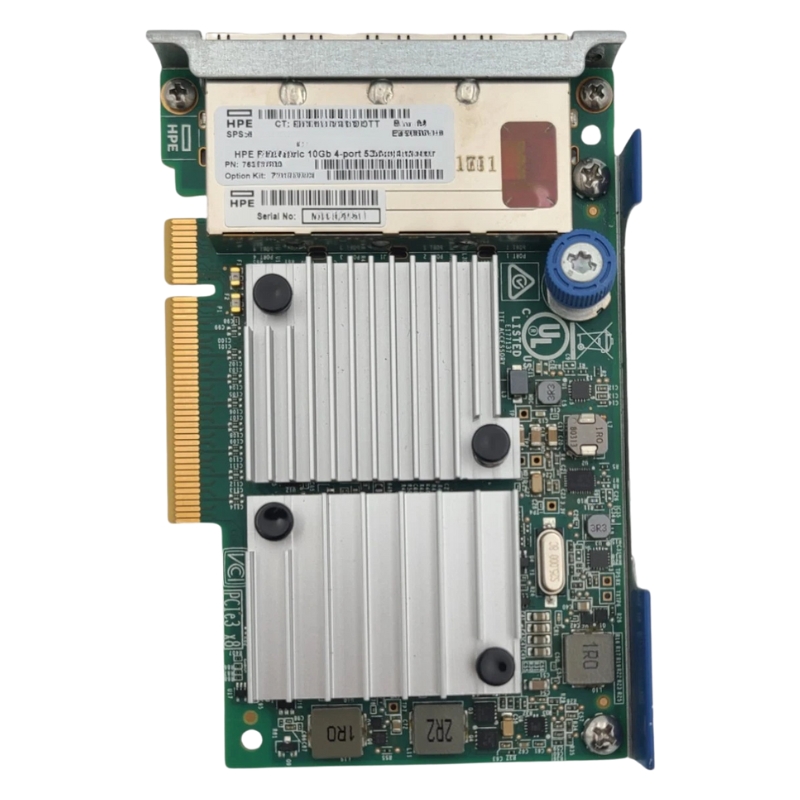
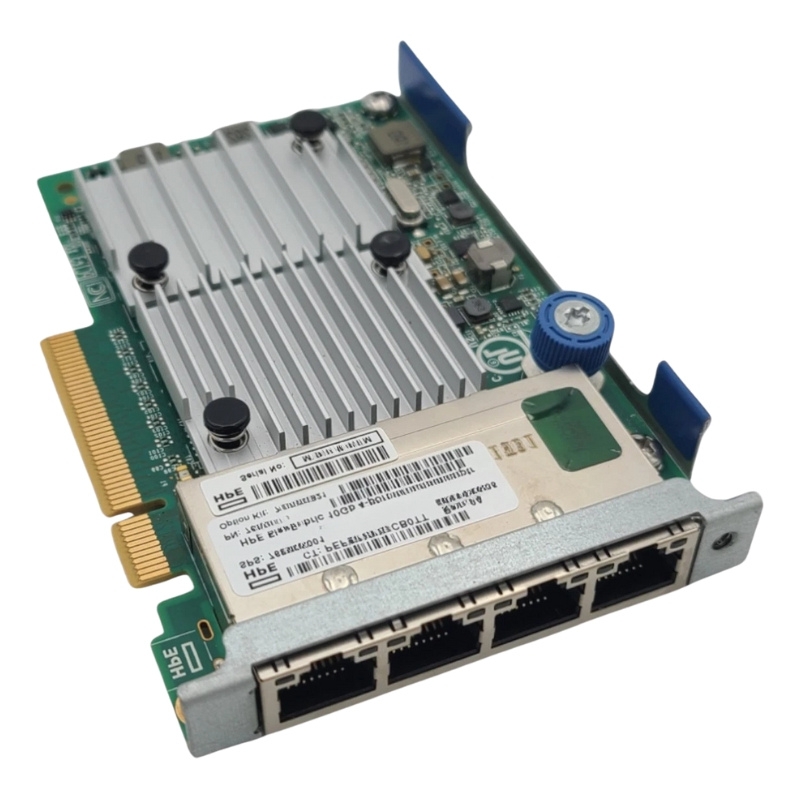
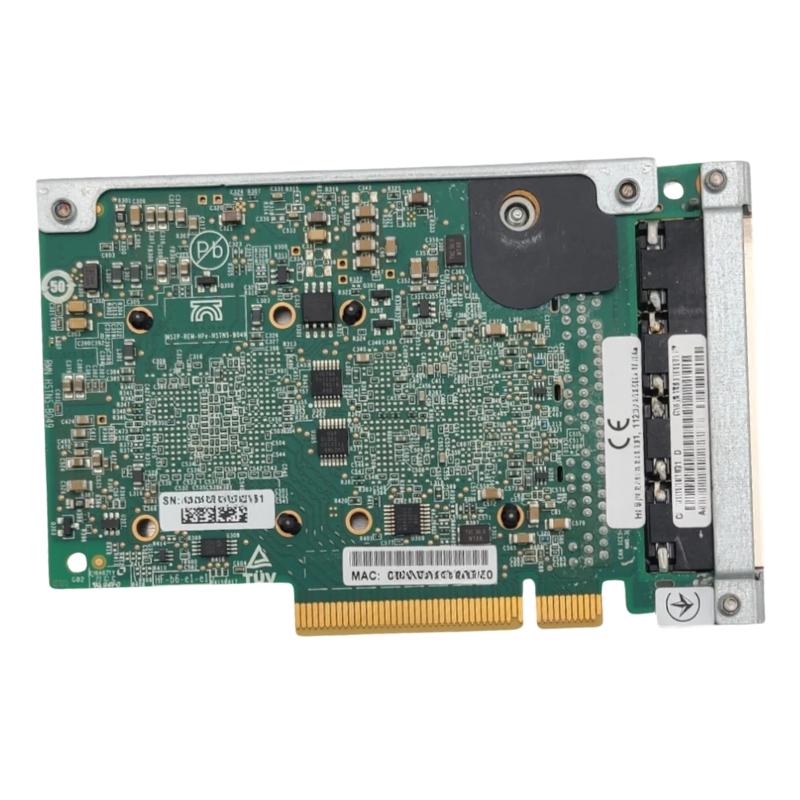
HPE 764302-B21 4 Port 10GBPS PCI Flexfabric 536flr T Express 3.0 X8 Network Adapter. Excellent Refurbished with 1 year replacement warranty
| SKU/MPN | Warranty | Price | Condition | You save |
|---|---|---|---|---|
| 764302-B21 | 1 Year Warranty | $420.00 | New Sealed in Box (NIB) | You save: $147.00 (26%) |
| 764302-B21 | 1 Year Warranty | $114.00 | Excellent Refurbished | You save: $39.90 (26%) |
The HPE 764302-B21 FlexFabric 536FLR-T is a high-speed PCI Express 3.0 x8 network adapter engineered for enterprise-grade connectivity. With four 10Gbps ports, advanced offload features, and compliance with multiple IEEE standards, it ensures reliable wired networking and optimized performance.
The HPE 764302-B21 4 Port 10Gbps PCI FlexFabric 536FLR-T Express 3.0 x8 Network Adapter represents a high-performance enterprise-class networking solution designed for modern data center environments where scalability, virtualization efficiency, and converged networking are essential. This adapter is engineered to deliver advanced FlexFabric capabilities, combining Ethernet and storage networking functionalities into a single, unified hardware platform. Built for HPE ProLiant servers, it enhances workload efficiency by reducing latency, improving throughput, and enabling seamless integration across virtualized infrastructures.
As enterprises continue to adopt cloud-based architectures and software-defined data centers, demand for robust network interface cards (NICs) such as the HPE 764302-B21 increases significantly. This adapter is designed to meet those demands by offering four independent 10 Gigabit Ethernet ports that support high-density traffic environments. It enables optimized data flow between compute, storage, and network layers, ensuring consistent application performance even under heavy workloads. Its PCI Express 3.0 x8 interface further strengthens its capability by providing sufficient bandwidth for simultaneous multi-port traffic handling.
The FlexFabric 536FLR-T architecture integrated into the HPE 764302-B21 adapter is designed for convergence and efficiency at scale. It supports a unified networking approach where traditional boundaries between storage networks and data networks are eliminated. This architecture allows administrators to simplify infrastructure while maintaining high performance and reliability.
At its core, the adapter leverages advanced controller technology capable of handling multiple data streams concurrently. Each of the four ports operates independently, enabling load distribution and redundancy in high-availability environments. This architecture significantly reduces bottlenecks that often occur in legacy networking systems, ensuring smoother data transmission across virtual machines and clustered server environments.
Additionally, the FlexFabric design ensures compatibility with modern data center protocols, enabling seamless communication between virtual switches and physical network infrastructure. This makes the adapter particularly suitable for hyper-converged infrastructure deployments where performance consistency and scalability are critical requirements.
The engineering behind the HPE FlexFabric 536FLR-T emphasizes thermal efficiency, power optimization, and signal integrity. The adapter is built using high-quality components that ensure long-term stability under continuous workloads. Its design reduces unnecessary power consumption while maintaining maximum throughput, making it suitable for enterprise environments where energy efficiency is a key concern.
The hardware optimization also extends to firmware-level enhancements that enable intelligent traffic handling. These enhancements allow the adapter to prioritize workloads dynamically based on system demand, ensuring critical applications receive the necessary bandwidth without interruption.
The PCI Express 3.0 x8 interface of the HPE 764302-B21 network adapter plays a crucial role in ensuring high-speed data transfer between the server motherboard and the network controller. PCIe 3.0 technology doubles the bandwidth efficiency compared to earlier generations, enabling faster communication between system components and reducing latency in data-heavy operations.
With the x8 lane configuration, the adapter is capable of handling large volumes of simultaneous data packets without congestion. This is particularly important in environments that rely on virtualization, database replication, and real-time analytics. The interface ensures that the full capacity of the four 10GbE ports can be utilized without performance degradation.
In enterprise deployments, data throughput is a critical factor that determines application responsiveness and system reliability. The PCIe 3.0 x8 architecture ensures that the HPE 764302-B21 adapter can sustain high throughput levels even during peak traffic conditions. This is essential for workloads such as cloud hosting, distributed computing, and high-frequency transaction processing.
The improved bandwidth also reduces CPU overhead by offloading network processing tasks to the adapter itself. This allows server processors to focus on application-level tasks rather than network packet management, resulting in improved overall system efficiency.
The four-port 10Gbps Ethernet configuration of the HPE 764302-B21 adapter provides exceptional networking flexibility for enterprise environments. Each port is capable of delivering consistent 10 Gigabit speeds, enabling a combined potential throughput that supports high-density workloads and large-scale virtual environments.
This multi-port configuration is particularly beneficial for organizations that require redundancy and load balancing. By distributing network traffic across multiple interfaces, system administrators can ensure continuous connectivity even in the event of port or link failure. This enhances system resilience and minimizes downtime in mission-critical applications.
The adapter supports intelligent traffic distribution mechanisms that allow network packets to be efficiently routed across available ports. This reduces congestion and ensures balanced utilization of network resources. The result is improved performance consistency across applications that rely heavily on network communication.
In environments where virtualization is heavily utilized, each virtual machine can be assigned dedicated bandwidth resources through virtual switching technologies. This ensures that performance remains stable even when multiple virtual workloads are operating simultaneously on the same physical host.
FlexFabric technology is one of the defining features of the HPE 764302-B21 network adapter. It enables convergence of LAN and SAN traffic over a unified infrastructure, simplifying network design and reducing hardware complexity. This convergence is particularly beneficial in modern data centers where efficiency and scalability are essential.
By integrating multiple networking functions into a single adapter, FlexFabric reduces the need for separate network interface cards and host bus adapters. This leads to lower infrastructure costs, reduced cabling complexity, and improved manageability across server environments.
Unified networking through FlexFabric provides several advantages, including simplified provisioning, reduced latency, and improved resource utilization. It enables administrators to manage network and storage traffic through a single interface, streamlining operational workflows and reducing configuration overhead.
Operational efficiency is significantly improved through reduced hardware dependencies and centralized management. This allows IT teams to focus on performance optimization rather than hardware maintenance. It also enhances scalability by allowing new workloads to be integrated into existing infrastructure with minimal configuration changes.
The HPE 764302-B21 adapter is optimized for virtualized environments, supporting technologies such as SR-IOV and network offloading. These capabilities allow virtual machines to directly access physical network resources, reducing overhead and improving performance.
SR-IOV enables the creation of multiple virtual functions from a single physical NIC, allowing each virtual machine to communicate with the network independently. This reduces latency and improves throughput in virtualized workloads, making it ideal for cloud computing environments and enterprise virtualization platforms.
Network offloading reduces CPU utilization by transferring processing tasks such as checksum calculation and packet segmentation to the adapter hardware. This enhances system performance by freeing up processor resources for application-level processing.
By reducing CPU overhead, the adapter allows for higher virtual machine density on a single physical server. This is particularly beneficial in cloud environments where maximizing hardware utilization is a key performance objective. It ensures that resources are allocated efficiently without compromising application performance.
The HPE 764302-B21 network adapter is specifically designed for integration with HPE ProLiant server platforms. This ensures seamless compatibility with system firmware, management tools, and hardware configurations. It is optimized to work within the HPE ecosystem, providing reliable performance and simplified deployment processes.
Integration with HPE management tools allows administrators to monitor network performance, configure settings, and update firmware efficiently. This reduces administrative complexity and ensures that the adapter operates at peak performance throughout its lifecycle.
The adapter supports a wide range of enterprise deployment scenarios, including virtualization clusters, cloud data centers, and high-performance computing environments. Its flexibility allows it to adapt to different workload requirements without requiring significant infrastructure modifications.


 Contact Us
 Information
 Catalog
 Solid State Drives (SSD)
 Network Switches
 Hard Disk Drives
 HBA & Controllers
 PC & Servers
 PC & Server Memory
 CPU & Processors
 Network Routers
 Power Supplies
 Tape Drives & Libraries
 Network Devices
 Computer & Network Cables