(7% discount is applied at checkout)
Cart is empty
Your go-to destination for cutting-edge server products
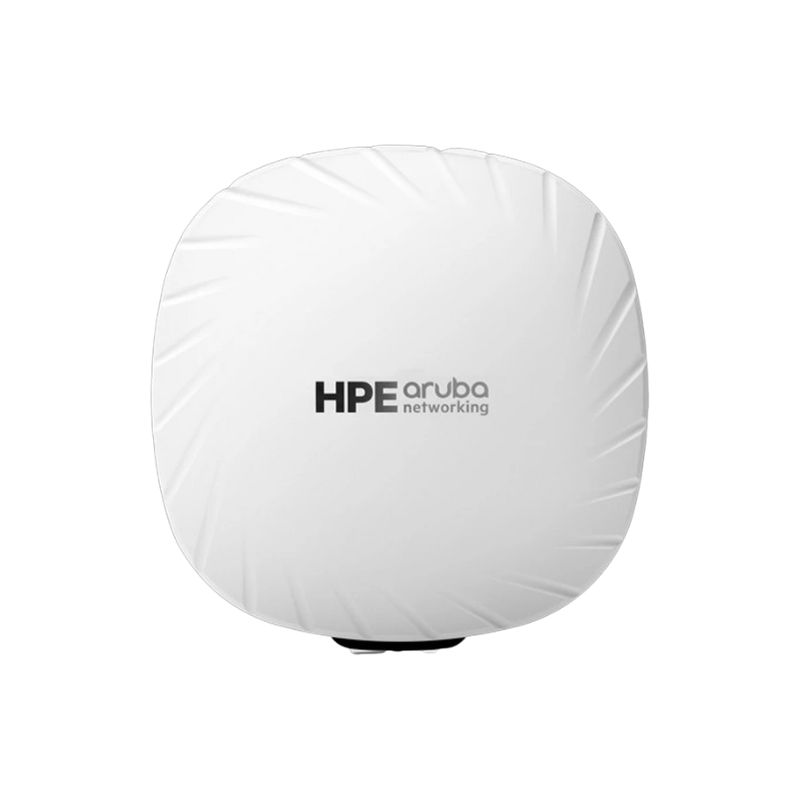


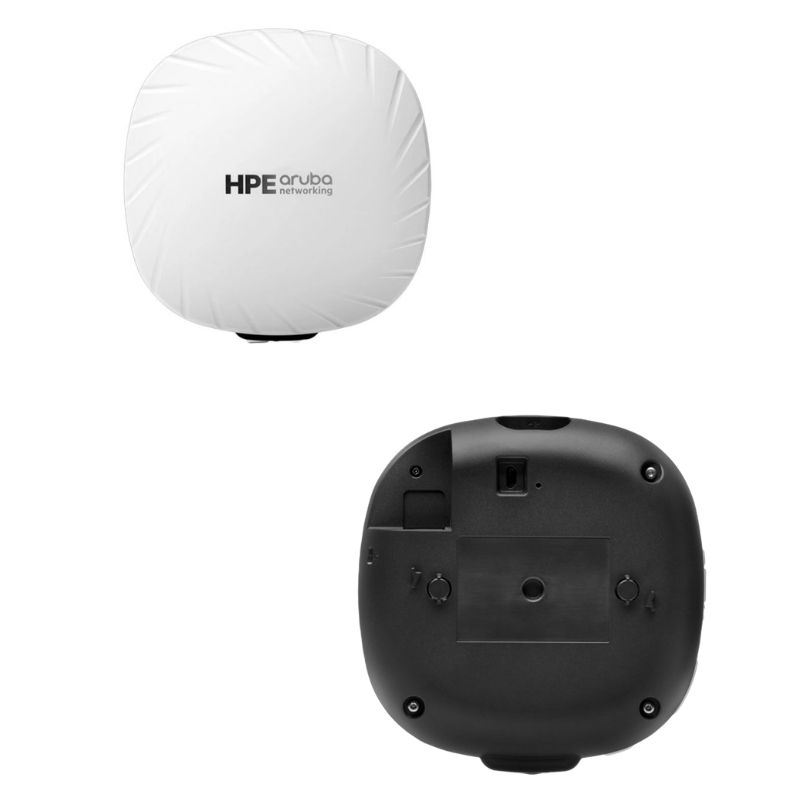
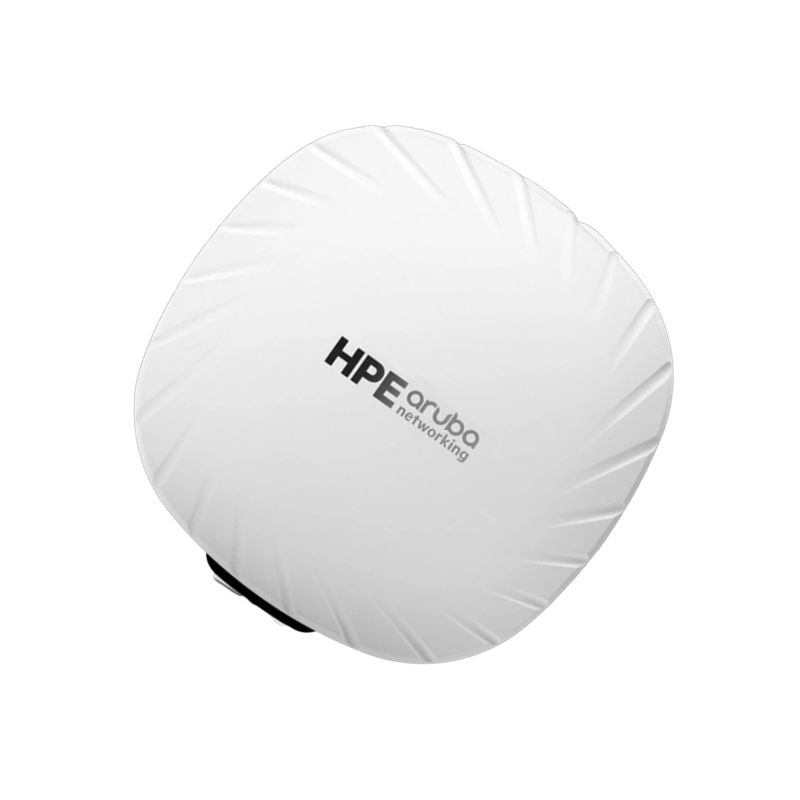
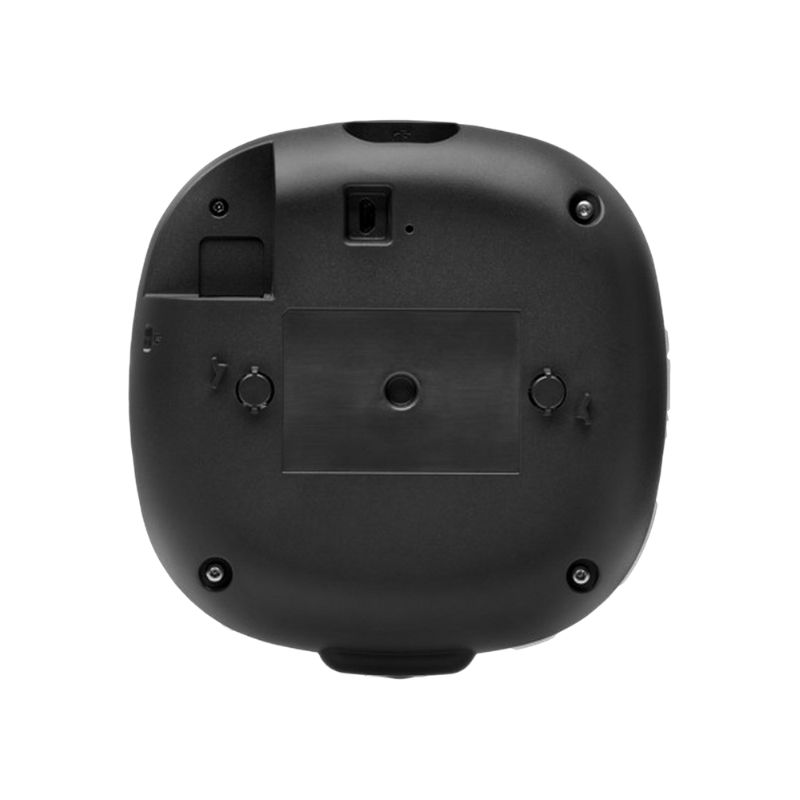
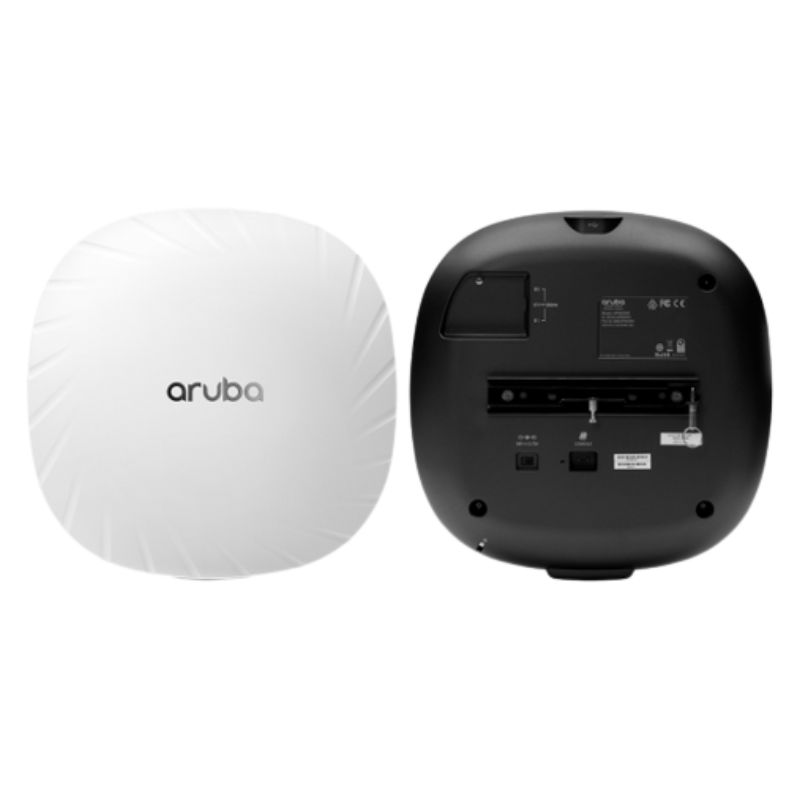
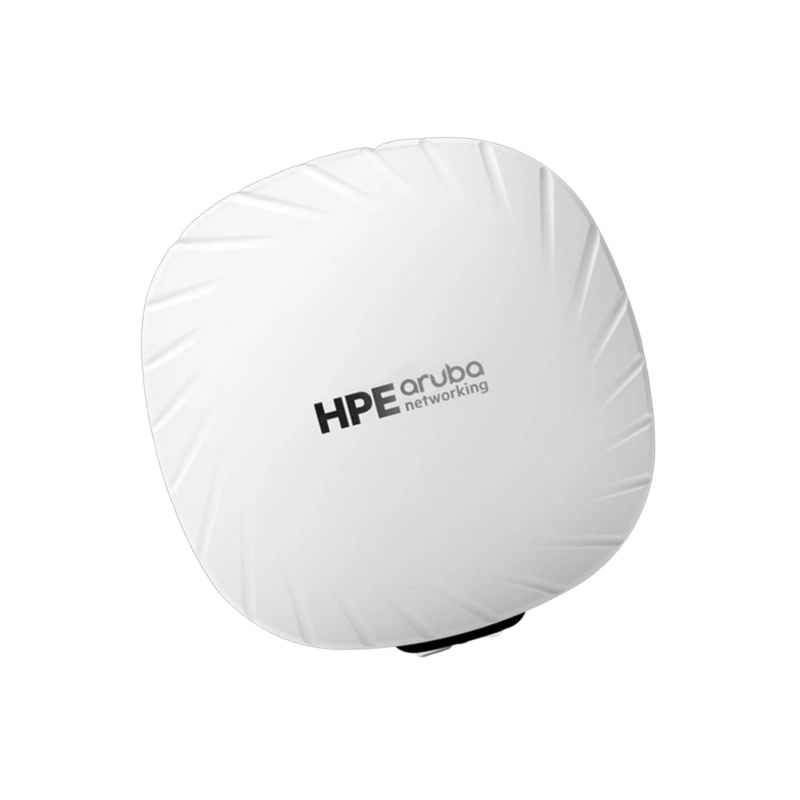
HPE AP-515-RW Aruba Networking Dual Radio 4x4:4 + 2x2:2 802.11ax Internal Antennas Unified Campus Wireless Access Point. Excellent Refurbished 1-Year Replacement Warranty
The HPE AP-515-RW is a high-performance, dual-radio wireless access point designed for unified campus networks. With advanced 802.11ax Wi-Fi 6 technology and internal antennas, it delivers seamless connectivity for large-scale enterprise environments, providing fast, reliable, and secure wireless access.
The HPE AP-515-RW Aruba Networking Dual Radio 4x4:4 + 2x2:2 802.11ax Internal Antennas Unified Campus Wireless Access Point belongs to an advanced enterprise campus wireless category engineered for high-density, high-throughput, and mission-critical networking environments. This category is designed to support large organizations, educational institutions, healthcare facilities, government campuses, and enterprise headquarters that demand scalable wireless infrastructure with intelligent automation and strong security controls. The architecture combines high-performance 802.11ax WiFi 6 technology with integrated internal antennas, multi-user MIMO capabilities, and unified management frameworks that streamline deployment and operational control.
Enterprise campus wireless access points in this performance tier are built to handle thousands of simultaneous client connections across distributed buildings and multi-floor facilities. The 4x4:4 configuration on the 5 GHz band combined with 2x2:2 operation on the 2.4 GHz band enables significant throughput gains, improved spectral efficiency, and enhanced user experience under heavy device density. The integrated antenna design ensures consistent RF coverage patterns while maintaining a clean aesthetic suitable for modern office and institutional environments.
The AP-515-RW WiFi 6 wireless standard introduces significant enhancements in spectral efficiency, latency reduction, and overall throughput. Within this category, the access point leverages Orthogonal Frequency Division Multiple Access to subdivide wireless channels into smaller resource units, allowing simultaneous transmission to multiple devices. Multi-user MIMO functionality further improves parallel communication streams, increasing aggregate network performance and reducing congestion in high-traffic areas such as lecture halls, conference centers, and open office spaces.
The 4x4:4 spatial stream configuration on the 5 GHz radio delivers substantial performance headroom for bandwidth-intensive applications including real-time collaboration platforms, high-definition video streaming, virtual desktop infrastructure, and cloud-based productivity tools. The additional 2x2:2 radio on the 2.4 GHz band ensures compatibility with legacy devices while optimizing connectivity for IoT endpoints and lower-bandwidth applications.
WiFi 6 introduces advanced scheduling techniques that significantly reduce airtime contention. Target Wake Time improves battery performance for mobile and IoT devices by coordinating transmission intervals. Basic Service Set coloring minimizes co-channel interference in environments where multiple access points operate within overlapping coverage zones. These technologies collectively improve responsiveness and maintain consistent throughput across dense campus deployments.
This enterprise campus wireless category supports unified management architectures that integrate wireless access, wired infrastructure, and network services into a centralized control platform. Access points can operate in controller-based mode, cloud-managed mode, or hybrid configurations depending on organizational requirements. Centralized orchestration simplifies large-scale deployments across multiple buildings or geographic locations.
Seamless roaming is achieved through intelligent client steering and fast transition protocols, ensuring uninterrupted connectivity for mobile users moving between classrooms, departments, or office floors. This is particularly critical for voice over WiFi, video conferencing, and latency-sensitive enterprise applications.
To accommodate the high throughput capabilities of 4x4:4 WiFi 6 radios, this category incorporates multi-gigabit Ethernet uplink interfaces. Smart Rate ports support speeds beyond traditional Gigabit Ethernet, ensuring that wireless performance is not constrained by wired backhaul limitations. This multi-gig support enables full utilization of aggregated wireless bandwidth in high-density deployments.
The AP-515-RW internal antenna architecture is engineered to provide consistent and predictable coverage patterns suitable for ceiling-mounted campus installations. Carefully tuned antenna arrays ensure optimal signal propagation, reducing dead zones and improving edge-of-cell performance. Internal antennas contribute to a streamlined appearance that aligns with modern building aesthetics while delivering enterprise-grade RF performance.
Advanced radio resource management dynamically adjusts transmit power, channel allocation, and band steering to maintain optimal coverage and minimize interference. These automated optimization capabilities reduce manual configuration requirements and improve long-term network reliability.
Cloud-based analytics platforms leverage artificial intelligence to monitor network health, detect anomalies, and recommend performance improvements. Machine learning algorithms analyze telemetry data from thousands of access points to identify interference sources, optimize channel assignments, and improve client distribution across radios. This predictive optimization reduces downtime and enhances user experience.
Security is a foundational component of this unified campus wireless category. Support for WPA3 encryption ensures strong authentication and data confidentiality for wireless clients. Enhanced open authentication protects guest access networks while maintaining user convenience. Role-based access control integrates with enterprise identity management systems to enforce granular network segmentation policies.
Built-in policy enforcement firewall capabilities inspect traffic flows and apply application-level controls. Deep packet inspection technologies enable visibility into application usage patterns and help enforce compliance requirements. Secure boot mechanisms and trusted hardware components protect the integrity of the access point firmware.
Dynamic segmentation enables automatic classification of users and devices into virtual network segments based on identity, role, or device type. This approach aligns with zero trust security frameworks, limiting lateral movement within the network and protecting sensitive data assets. Integration with centralized authentication services simplifies credential management across campus environments.
The unified campus access point category integrates Bluetooth 5 and Zigbee radios to support IoT ecosystems. This capability allows the access point to function as a gateway for asset tracking systems, environmental sensors, occupancy monitoring, and building automation technologies. Consolidating IoT connectivity within the wireless access infrastructure reduces hardware sprawl and simplifies management.
USB expansion ports allow integration with additional IoT modules or future wireless enhancements. The access point can serve as a foundational platform for smart campus initiatives that combine connectivity, analytics, and automation to improve operational efficiency.
Integrated Bluetooth capabilities enable location-based services such as indoor navigation, proximity marketing, and asset tracking. Real-time analytics provide visibility into device movement patterns and space utilization metrics. These insights support data-driven decision-making for campus administrators and facilities managers.
Campus environments often require support for hundreds of concurrent devices per access point. The 4x4:4 radio architecture significantly increases capacity for simultaneous connections, making it ideal for lecture halls, training centers, collaborative workspaces, and auditoriums. Advanced load balancing mechanisms distribute clients efficiently across available radios and neighboring access points.
Quality of Service prioritization ensures that latency-sensitive applications such as voice communications and video conferencing receive appropriate bandwidth allocation. Application-aware traffic shaping further enhances performance consistency in demanding enterprise scenarios.
Application visibility tools classify traffic flows and enable administrators to enforce bandwidth policies based on business priorities. This ensures critical enterprise applications receive adequate resources even during peak usage periods. Intelligent queue management reduces jitter and packet loss, improving real-time communication quality.
The unified campus wireless category supports deployment through centralized mobility controllers or cloud-based network management platforms. Cloud orchestration simplifies configuration, firmware management, and performance monitoring across distributed campus locations. Zero touch provisioning accelerates installation by automatically applying predefined configuration profiles upon device activation.
Hybrid management options allow organizations to transition from on-premises control to cloud-managed environments without replacing hardware. This flexibility ensures long-term investment protection and adaptability to evolving IT strategies.
Energy-efficient hardware design minimizes power consumption while maintaining high performance. Intelligent power management dynamically adjusts resource allocation based on network load. Support for modern PoE standards enables efficient power delivery over Ethernet cabling, reducing infrastructure complexity and installation cost.
Sustainability initiatives benefit from reduced operational energy requirements and extended hardware lifecycle durability. These access points are engineered for long-term reliability in demanding enterprise environments.
Adaptive power scaling allows the device to adjust radio output based on environmental conditions and coverage requirements. This not only conserves energy but also reduces interference in dense deployments. Temperature-tolerant hardware design ensures stable operation across diverse campus installation scenarios.
The HPE AP-515-RW Aruba Networking Dual Radio 4x4:4 + 2x2:2 802.11ax Internal Antennas Unified Campus Wireless Access Point category is designed to accommodate evolving wireless standards and increasing device density. Backward compatibility with legacy WiFi standards ensures seamless integration with existing client devices, while hardware capabilities support future firmware enhancements.
Integration with advanced analytics, IoT ecosystems, and cloud-managed networking frameworks ensures that campus infrastructures remain adaptable to emerging technologies. This future-ready design philosophy positions the access point category as a strategic foundation for modern digital transformation initiatives within enterprise and institutional environments.


 Contact Us
 Information
 Catalog
 Solid State Drives (SSD)
 Network Switches
 Hard Disk Drives
 HBA & Controllers
 PC & Servers
 PC & Server Memory
 CPU & Processors
 Network Routers
 Power Supplies
 Tape Drives & Libraries
 Network Devices
 Computer & Network Cables