(7% discount is applied at checkout)
Cart is empty
Your go-to destination for cutting-edge server products
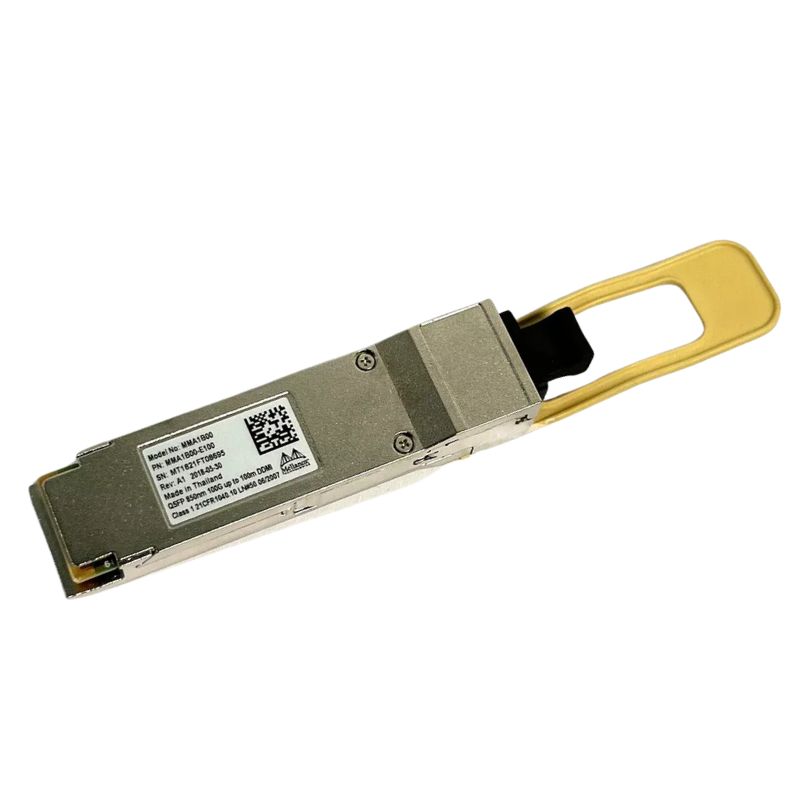


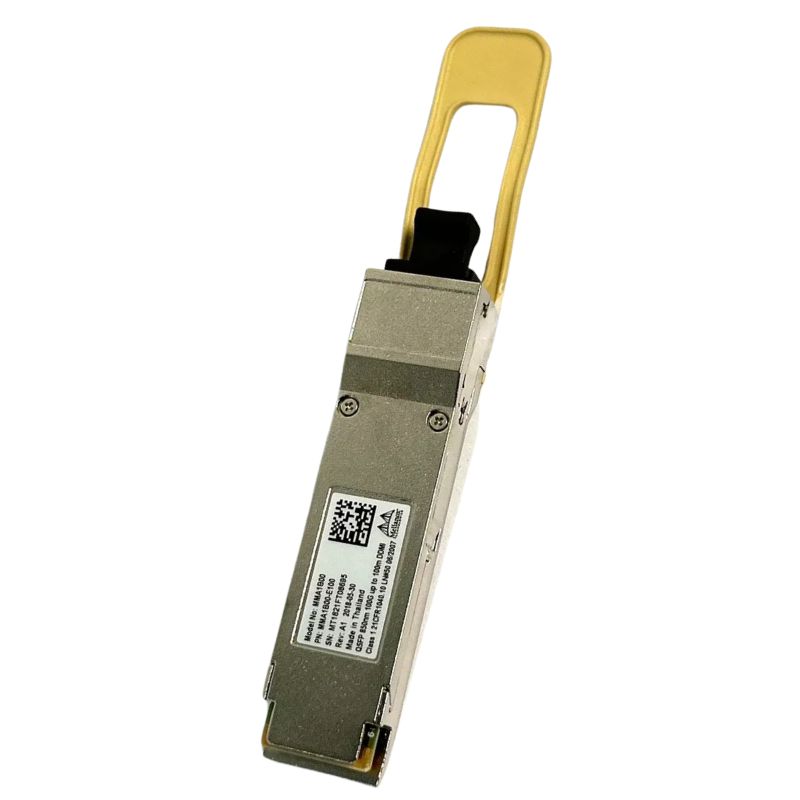
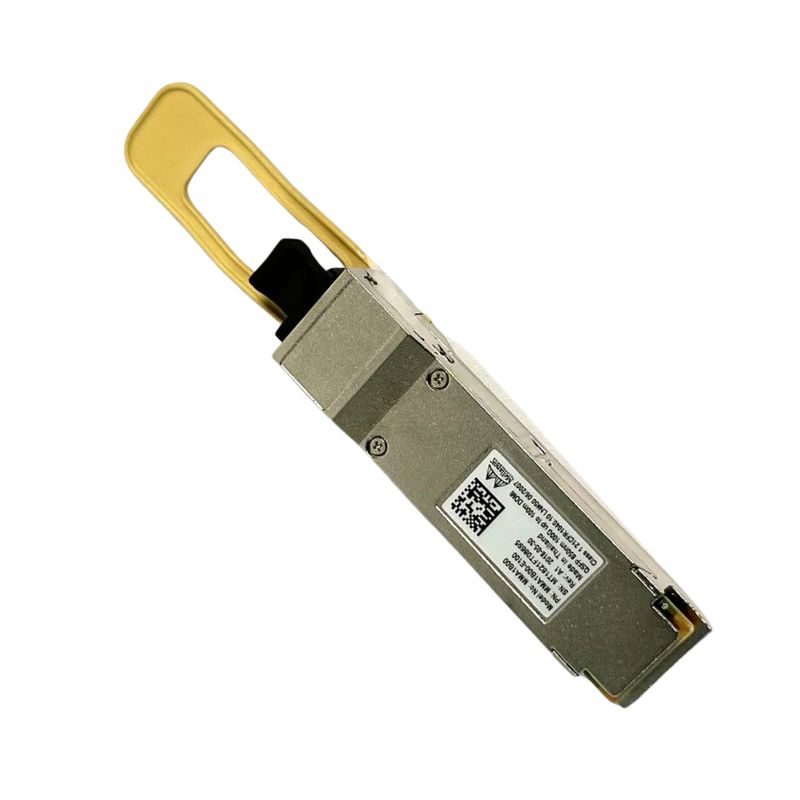
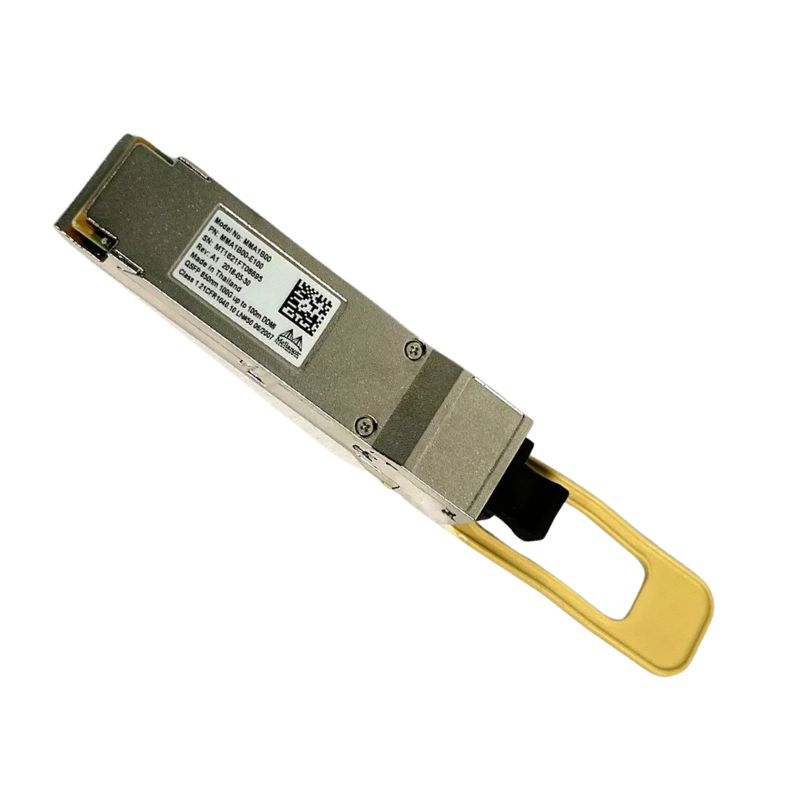
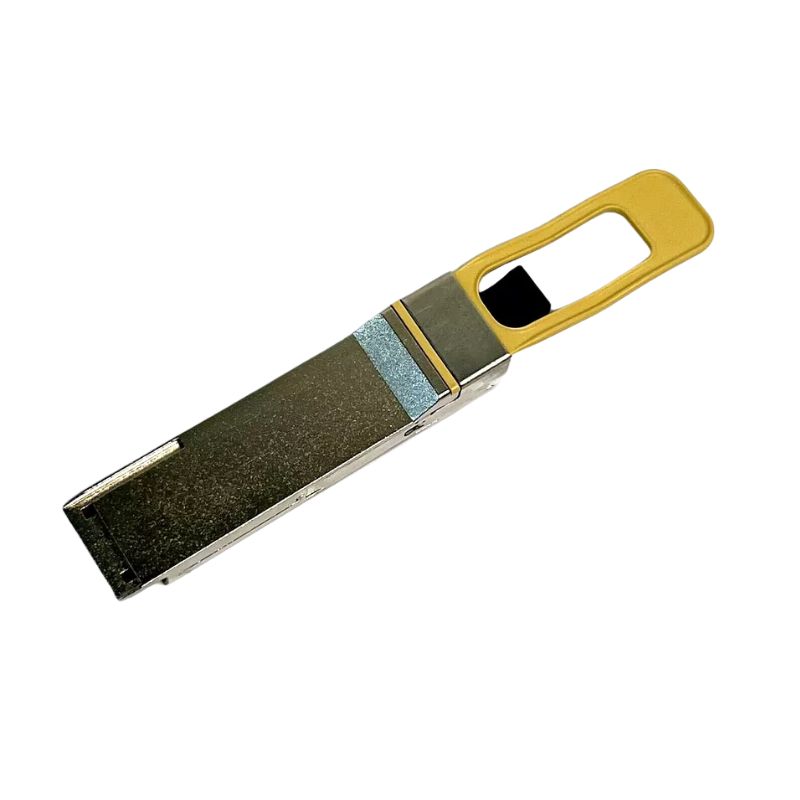
HPE JL274A X150 100g Qsfp28 Sr4 100m Mm Transceiver Module. Excellent Refurbished with 1 year replacement warranty
The HPE JL274A X150 100Gb QSFP28 SR4 transceiver module is a high-performance optical networking solution designed to deliver reliable 100 Gigabit Ethernet connectivity across multimode fiber infrastructure. Engineered for modern enterprise networks, cloud environments, virtualization platforms, and high-density data centers, this plug-in transceiver provides dependable high-speed communication while maintaining excellent signal integrity. Supporting the 100GBASE-SR4 networking standard, the module enables efficient short-range optical transmission with a maximum distance of up to 100 meters over OM4 multimode fiber and up to 70 meters over OM3 multimode fiber, making it an excellent choice for high-bandwidth switching, aggregation, and server connectivity.
The HPE JL274A X150 100g Qsfp28 Sr4 100m Mm Transceiver Module is engineered as a high-density optical interconnect solution designed for advanced data communication environments that demand ultra-fast throughput and stable signal integrity. Built around a QSFP28 form factor, the module integrates parallel multimode fiber optics to achieve high bandwidth transmission while maintaining compact physical dimensions suitable for dense switching and routing platforms. The architecture emphasizes parallel optical lanes, enabling simultaneous transmission and reception across multiple channels to support aggregated high-speed data flow.
At the core of its design is an emphasis on signal precision and minimized latency. The optical engine uses vertical-cavity surface-emitting laser technology optimized for short-reach multimode fiber infrastructure. This allows the module to operate effectively in environments where high-capacity connections are required across limited physical distances, such as within data center racks or between adjacent switching layers. The integration of advanced photonic alignment systems ensures consistent coupling efficiency between transceiver and fiber connectors.
Modern data centers require connectivity solutions that can scale with increasing computational demands, and the HPE JL274A X150 100g Qsfp28 Sr4 100m Mm Transceiver Module is designed specifically to support such environments. It enables 100 gigabit Ethernet transmission over multimode fiber, allowing rapid data exchange between high-performance switches, servers, and storage systems. This capability is essential for cloud computing infrastructures where large volumes of data must be processed in real time.
The module supports short-reach optical transmission up to approximately 100 meters, making it suitable for intra-facility connectivity. This range is optimized for structured cabling systems commonly deployed in enterprise data halls. The design ensures that signal degradation is minimized across fiber runs, preserving data integrity even in high-throughput conditions where congestion and packet density are elevated.
The QSFP28 SR4 standard represents a significant advancement in optical transceiver technology, utilizing four parallel transmit and four parallel receive lanes. Each lane operates at a high signaling rate that collectively achieves 100 gigabit Ethernet throughput. The HPE JL274A X150 100g Qsfp28 Sr4 100m Mm Transceiver Module implements this architecture with precise optical alignment to ensure balanced lane performance and minimal skew between channels.
This parallel transmission approach reduces latency and improves efficiency compared to serial-only architectures. By distributing data across multiple optical paths, the system achieves higher aggregate throughput without requiring excessively high per-lane signaling speeds. This balance improves reliability and reduces stress on individual optical components, extending operational stability over long-term deployment cycles.
Each of the four optical lanes in the module is designed to operate independently while maintaining synchronization with the overall transmission stream. This parallelism allows simultaneous data transmission and reception, significantly increasing effective bandwidth. The optical lanes are carefully calibrated to ensure consistent performance across all channels, reducing the risk of timing mismatches that could affect network reliability.
The module fully supports 100G Ethernet standards, enabling high-speed backbone connectivity within modern networking architectures. This makes it suitable for spine-leaf network topologies where high-speed interconnects are required between aggregation and core layers. The efficient handling of packet flows ensures that latency-sensitive applications such as virtualization, analytics, and high-performance computing can operate without bottlenecks.
The HPE JL274A X150 100g Qsfp28 Sr4 100m Mm Transceiver Module is widely applicable across enterprise, cloud, and high-performance computing environments. Its ability to deliver high bandwidth over short distances makes it particularly useful for intra-data center connectivity where switching nodes are densely deployed.
In cloud environments, the module supports dynamic scaling of virtualized workloads by enabling fast communication between compute clusters and storage arrays. This ensures that distributed systems can synchronize efficiently, reducing latency in data replication and workload balancing operations.
Enterprise networks rely on robust core switching infrastructure to manage internal traffic between departments, applications, and services. The transceiver module enhances core network performance by providing stable high-capacity links between core switches and distribution layers, ensuring uninterrupted data flow across organizational systems.
Artificial intelligence and high-performance computing clusters require extremely fast interconnects to handle massive datasets and parallel processing workloads. The module supports these environments by enabling rapid node-to-node communication, allowing distributed computation frameworks to operate efficiently without interconnect delays.
At the physical layer, the module employs multimode fiber technology optimized for short-range transmission. The optical signals are transmitted through fiber cores designed to support high bandwidth with minimal dispersion. This ensures that data integrity is preserved even at high transmission rates.
The QSFP28 form factor also contributes to high port density, allowing multiple modules to be installed within compact switch chassis. This density is critical in environments where space optimization is required without compromising network performance. The module’s connector interface ensures secure coupling with LC duplex connectors commonly used in structured cabling systems.
Maintaining signal integrity is a core design objective of the module. Advanced error correction mechanisms and optical calibration techniques are employed to reduce bit error rates during transmission. The parallel lane architecture helps distribute data evenly, reducing the likelihood of congestion-induced errors.
The module also incorporates internal monitoring capabilities that assist in detecting degradation in optical performance. This allows network systems to identify potential issues early and maintain consistent communication quality across the network infrastructure.
Reliability is a key factor in the design of the module, which is built to support long-term operational stability in mission-critical environments. Component selection focuses on durability and resistance to environmental stress, ensuring consistent performance over extended deployment periods.
Lifecycle engineering principles are applied to ensure that the module maintains compatibility with evolving network standards and infrastructure upgrades. This allows organizations to extend the usability of their network investments while maintaining high performance levels.
Scalability is a defining characteristic of modern network design, and the HPE JL274A X150 100g Qsfp28 Sr4 100m Mm Transceiver Module supports this through high-density deployment capabilities. By enabling multiple high-speed links within a single switching platform, it allows network architects to expand capacity without redesigning core infrastructure.
This scalability is particularly important in environments experiencing rapid data growth, where incremental upgrades are preferred over complete infrastructure replacement. The module supports this approach by providing backward-compatible deployment options within QSFP28 ecosystems.
The HPE JL274A X150 100g Qsfp28 Sr4 100m Mm Transceiver Module is designed for compatibility with a range of HPE switching and routing platforms that support QSFP28 interfaces. Its standardized form factor ensures integration into high-density switch ports without requiring specialized adapters or additional hardware modifications.
System integration is streamlined through plug-and-play functionality, allowing network administrators to deploy the module with minimal configuration. The device communicates with host systems using standardized optical signaling protocols, ensuring interoperability across supported networking equipment. This compatibility makes it suitable for both new deployments and incremental upgrades in existing infrastructures.


 Contact Us
 Information
 Catalog
 Solid State Drives (SSD)
 Network Switches
 Hard Disk Drives
 HBA & Controllers
 PC & Servers
 PC & Server Memory
 CPU & Processors
 Network Routers
 Power Supplies
 Tape Drives & Libraries
 Network Devices
 Computer & Network Cables