(7% discount is applied at checkout)
Cart is empty
Your go-to destination for cutting-edge server products
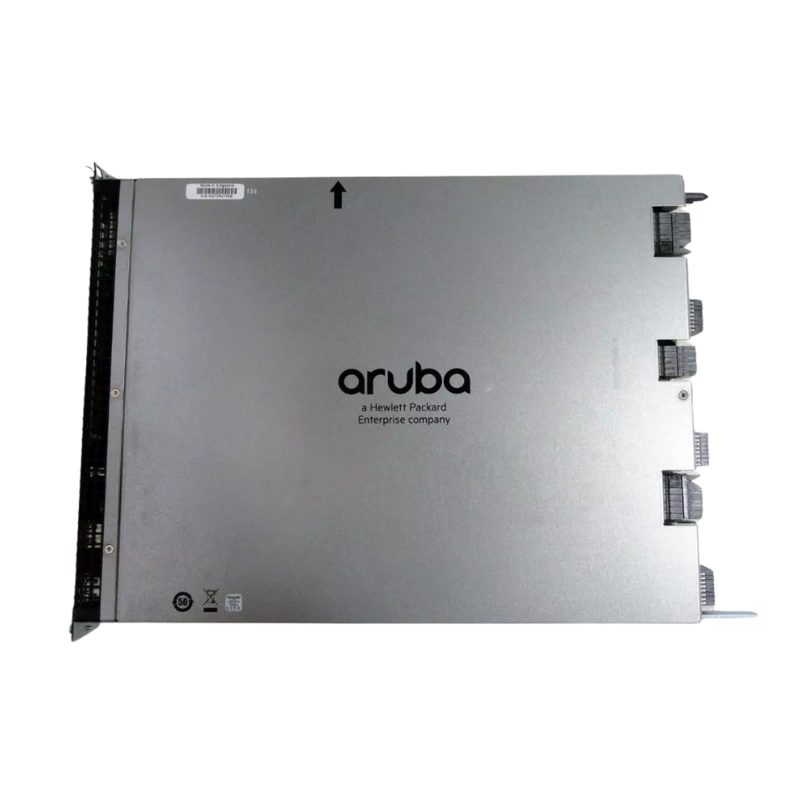


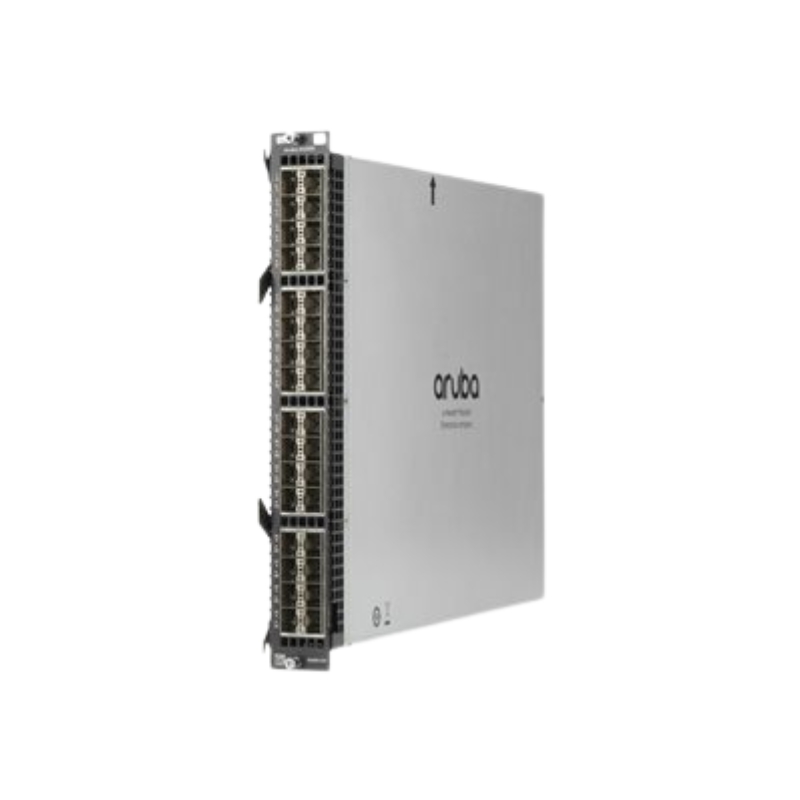
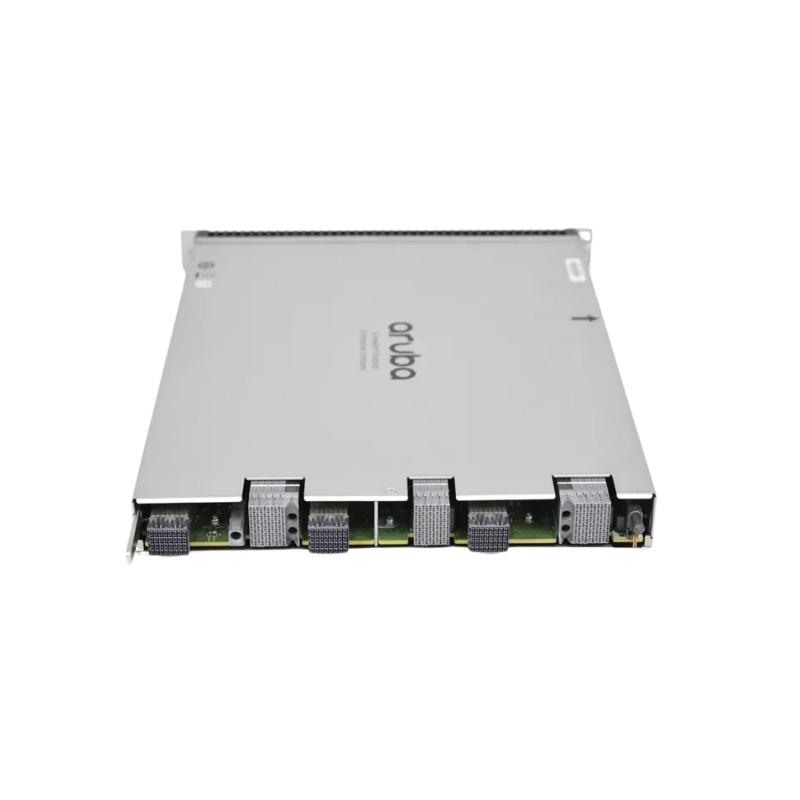
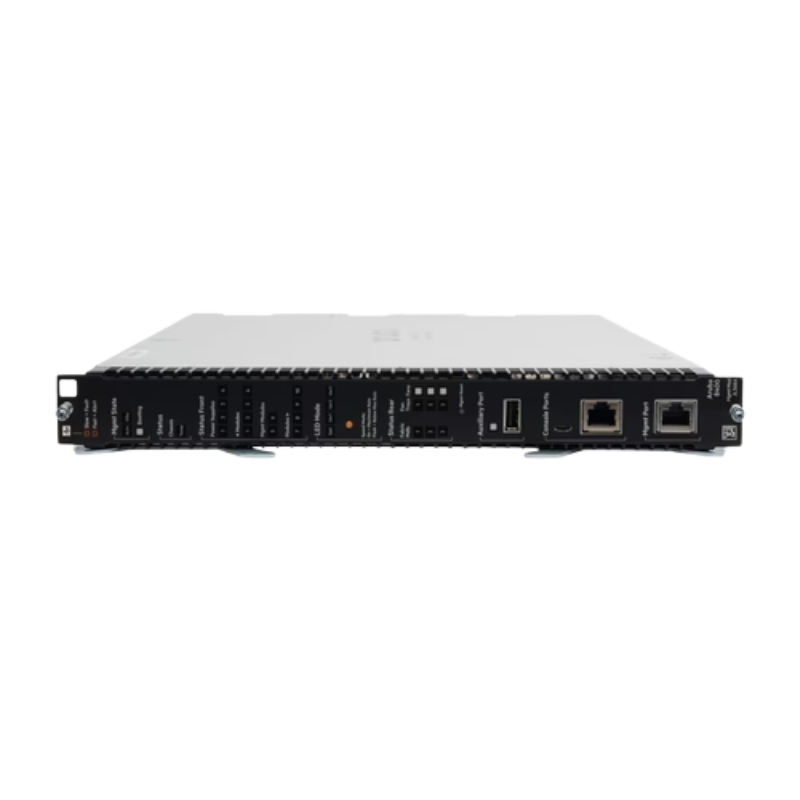
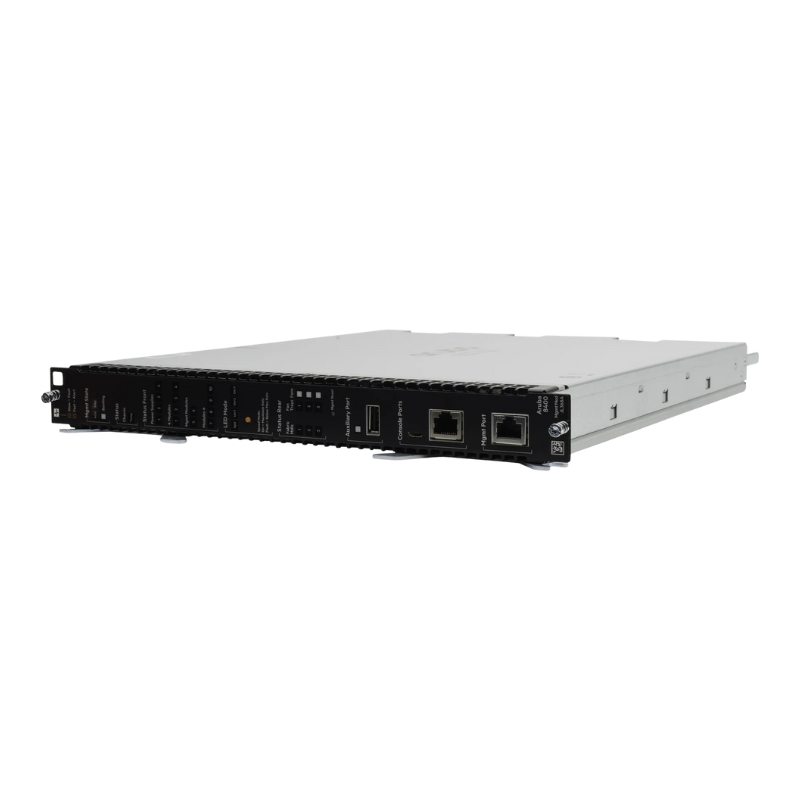
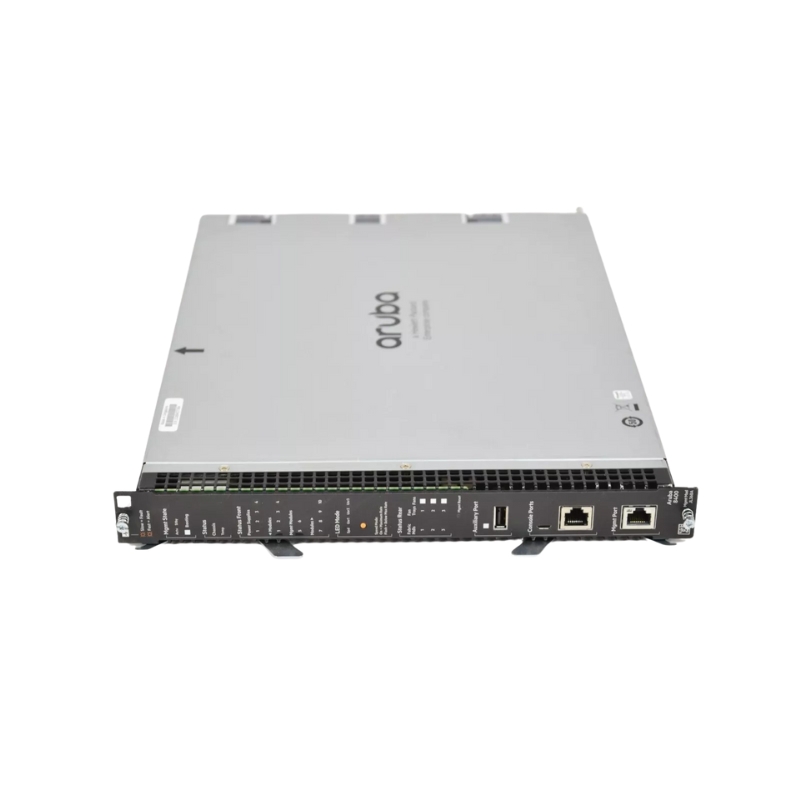
HPE JL368-61001 Aruba 8400 Management Plug-in Module for Network Management Device. Excellent Refurbished with 1 year replacement warranty
The HPE JL368-61001 Aruba 8400 Management Plug-in Module is a dedicated network management device engineered for the Aruba 8400 core switch platform. Designed as a high‑reliability plug‑in module, it centralizes control, monitoring, and configuration of the entire chassis, helping administrators streamline complex campus and data center networks. By providing out‑of‑band management access and robust supervisory capabilities, this module ensures that large‑scale deployments remain stable, secure, and easy to maintain even under heavy traffic loads.
The HPE JL368-61001 Aruba 8400 Management Plug-in Module is a high-performance network management component engineered for advanced enterprise switching environments. Developed within the ecosystem and its networking division this plug-in module is designed to extend the operational intelligence, control visibility, and administrative efficiency of Aruba 8400 Series modular switches. It functions as a central management extension that enhances orchestration capabilities in large-scale campus core and data center networks, where reliability, uptime, and scalability are critical requirements.
As modern enterprise infrastructures evolve toward distributed computing, cloud integration, and software-defined networking architectures, the need for dedicated management modules becomes increasingly significant. The Aruba 8400 Management Plug-in Module plays a vital role in ensuring that network administrators can maintain granular control over system behavior, configuration consistency, and operational monitoring across complex switching environments. It integrates seamlessly into the Aruba 8400 chassis architecture, delivering a resilient and high-availability management plane that supports mission-critical deployments.
The Aruba 8400 series is designed as a modular, chassis-based switching platform optimized for core and aggregation layer deployments. Within this architecture, the HPE JL368-61001 module serves as a dedicated management and control extension that supports system orchestration and administrative communication between hardware and software layers. It ensures that the control plane remains isolated from data plane traffic, thereby enhancing stability and minimizing operational risk during high traffic loads.
In large enterprise networks, separation of control and data functions is essential for maintaining deterministic performance. This plug-in module reinforces that separation by providing a specialized processing environment for system management tasks. It handles configuration synchronization, system health monitoring, firmware coordination, and operational logging without interfering with packet forwarding processes occurring within line cards or switching fabric modules.
The management plug-in module introduces enhanced capabilities for administrators responsible for complex network environments. These capabilities include centralized system visibility, advanced diagnostics, and streamlined configuration handling. Through its integration with ArubaOS-CX, the module ensures consistent operational behavior across distributed switching components.
Network administrators benefit from real-time system telemetry that allows continuous observation of switch performance metrics. These insights enable proactive identification of performance degradation, hardware anomalies, and configuration inconsistencies. The module also supports structured system logging, which is essential for auditing, troubleshooting, and long-term operational analysis in enterprise environments.
The design philosophy behind the module emphasizes automation and programmability. By leveraging modern APIs and orchestration interfaces within the Aruba ecosystem, the plug-in module allows network operations teams to automate repetitive administrative tasks and integrate network management into broader IT automation frameworks.
Enterprise-grade networking demands continuous uptime, and the HPE JL368-61001 module contributes directly to this requirement through redundancy and failover mechanisms. In Aruba 8400 chassis deployments, management redundancy ensures that system control remains available even in the event of a module failure or hardware disruption.
The module is engineered to support synchronized state replication across redundant management instances. This ensures that configuration data, system logs, and operational state information remain consistent across active and standby management environments. In failover scenarios, system continuity is preserved with minimal disruption, allowing network operations to continue without requiring manual intervention or extended downtime.
Scalability is a core requirement for modern networking platforms, particularly in environments that support cloud computing, virtualization, and large-scale application delivery. The Aruba 8400 Management Plug-in Module is designed to scale alongside expanding network infrastructures without introducing bottlenecks or administrative complexity.
Its architecture supports large numbers of connected devices, distributed services, and multi-tenant network environments. As organizations grow, the module helps maintain consistent operational control by centralizing management functions and reducing fragmentation across network segments. This scalability makes it suitable for enterprise campuses, service provider backbones, and high-density data center fabrics.
One of the key strengths of the Aruba 8400 Management Plug-in Module is its ability to process and organize operational telemetry data. This includes performance metrics, environmental data, interface statistics, and system health indicators. By aggregating this information in real time, the module enables intelligent decision-making and proactive network management.
Telemetry data collected through the module can be integrated into analytics platforms that provide predictive insights into network behavior. This allows administrators to anticipate potential issues before they escalate into service disruptions. It also supports capacity planning by identifying trends in bandwidth utilization, device load, and system resource consumption.
The physical design of the HPE JL368-61001 module reflects a focus on efficiency, durability, and thermal optimization. Engineered for deployment within the Aruba 8400 chassis, it adheres to strict hardware design standards that ensure compatibility and long-term operational stability.
The module’s compact form factor allows it to integrate seamlessly into the chassis without consuming excessive space or power resources. Its thermal design supports efficient heat dissipation, ensuring stable performance even under continuous operational loads. This is particularly important in high-density data center environments where thermal management is a critical concern.
The Aruba 8400 Management Plug-in Module is commonly deployed in environments that require centralized control over large-scale switching infrastructures. These include enterprise campus cores, data center aggregation layers, and service provider edge networks.
In enterprise campus deployments, the module helps unify network management across multiple buildings, departments, and distributed access layers. In data center environments, it supports virtualization and cloud orchestration by ensuring that switching infrastructure remains tightly integrated with compute and storage systems. In service provider environments, it assists in maintaining high availability and service continuity across customer-facing network services.
The module contributes to overall system performance by offloading management-related tasks from primary switching components. This ensures that packet forwarding and data processing remain unaffected by administrative workloads. As a result, network responsiveness is maintained even under heavy operational monitoring or configuration activity.
By optimizing control plane efficiency, the module helps maintain predictable system behavior, which is essential for latency-sensitive applications such as real-time communications, financial transactions, and cloud-based services.
In modern digital infrastructures, network management modules are not merely auxiliary components but strategic enablers of operational efficiency. The Aruba 8400 Management Plug-in Module enhances the ability of organizations to maintain resilient, scalable, and secure network environments that support business-critical applications.
By consolidating management functions, improving visibility, and enhancing automation capabilities, the module contributes to reduced operational overhead and improved network reliability. It plays a foundational role in enabling agile network operations and supporting long-term digital transformation initiatives within enterprise and service provider ecosystems.
The HPE JL368-61001 module is fully compatible with Aruba 8400 Series chassis systems and is designed to work alongside other modular components such as fabric modules, line cards, and power systems. Its integration ensures cohesive system behavior and consistent management functionality across the entire switching platform.
Compatibility extends across software and hardware layers, ensuring that the module operates effectively with supported versions of ArubaOS-CX and related system firmware. This ensures long-term supportability and alignment with evolving network infrastructure requirements.


 Contact Us
 Information
 Catalog
 Solid State Drives (SSD)
 Network Switches
 Hard Disk Drives
 HBA & Controllers
 PC & Servers
 PC & Server Memory
 CPU & Processors
 Network Routers
 Power Supplies
 Tape Drives & Libraries
 Network Devices
 Computer & Network Cables